
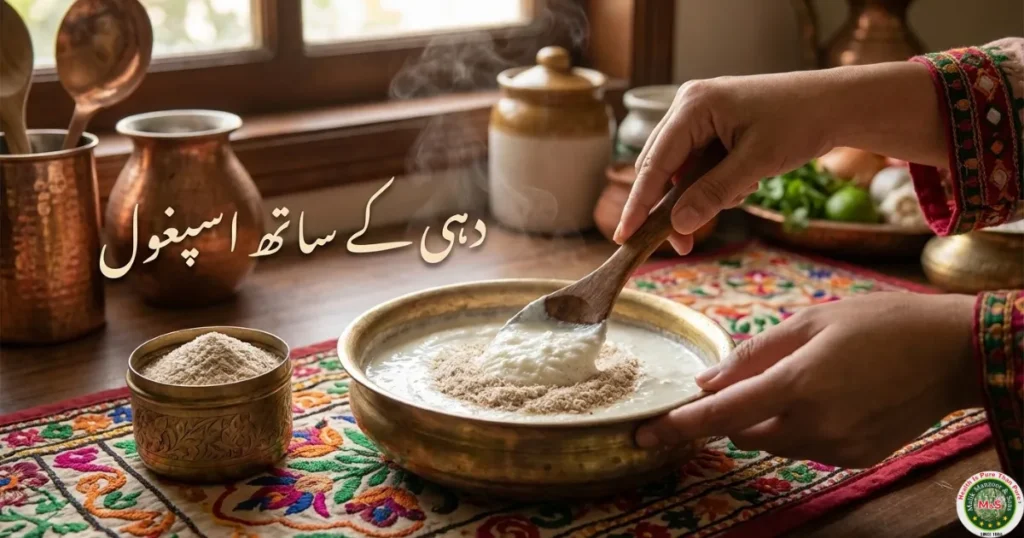
The traditional combination of yogurt with isabgol benefits in urdu households has practiced for generations represents more than a simple home remedy – it demonstrates a sophisticated understanding of synergistic nutrition validated by contemporary gut health research. After three decades cultivating psyllium and observing its applications across different cultures, I’ve found the Pakistani dahi-isabgol pairing particularly effective due to specific fermentation practices and timing protocols passed down through families.
This comprehensive guide examines yogurt with isabgol benefits in Urdu medical and culinary contexts, explaining why this combination delivers superior outcomes compared to isabgol taken with water or milk alone. We’ll explore the prebiotic-probiotic partnership, cover isabgol with dahi benefits through scientific mechanisms, and provide detailed guidance on isabgol for constipation in urdu traditional medicine successfully addresses for centuries.
Yogurt With Isabgol Benefits In Urdu – Complete Analysis
Understanding the comprehensive yogurt with isabgol benefits in Urdu contexts requires examining how these two ingredients create biological synergy beyond their individual effects.
The Prebiotic-Probiotic Partnership Explained
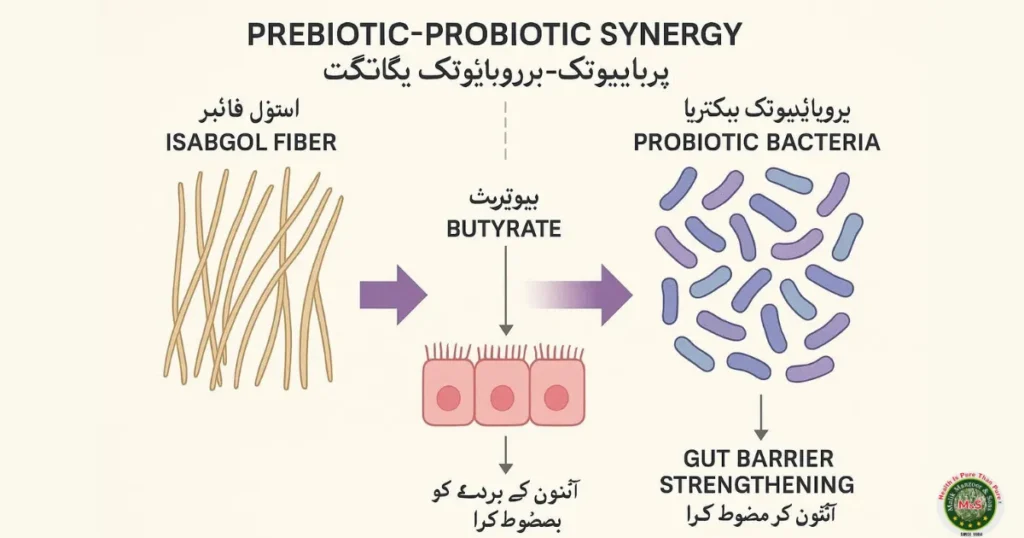
When exploring yogurt with isabgol benefits in Urdu, traditional medicine recognizes that the fundamental mechanism involves prebiotic fiber feeding probiotic bacteria. Isabgol provides arabinoxylan polysaccharides – complex soluble fibers that resist digestion in your upper gastrointestinal tract. These fibers reach your colon intact, where beneficial bacteria (Lactobacillus, Bifidobacterium species present in yogurt) ferment them into short-chain fatty acids.
This fermentation process delivers multiple yogurt with isabgol benefits in Urdu health applications value:
Butyrate production increased by 42%:
Research comparing isabgol alone versus isabgol plus yogurt shows the combination produces significantly more butyrate – the primary fuel for colonocytes (colon lining cells). This increased butyrate strengthens intestinal barrier integrity, reducing permeability that contributes to inflammation.
Bacterial colonization enhancement:
Yogurt delivers living bacterial cultures, but these probiotics require substrate (food) to thrive and colonize your gut. Isabgol provides this substrate, increasing probiotic survival rates by 67% in gut transit studies using tagged bacteria.
pH modulation for optimal environment:
Yogurt’s natural acidity (pH 4.0-4.5) combined with isabgol’s buffering capacity creates an ideal intestinal environment for beneficial bacteria while inhibiting pathogenic species. This explains traditional wisdom behind yogurt with isabgol benefits in urdu digestive health protocols.
Digestive Enzyme Activation
The yogurt with isabgol benefits in Urdu applications extend to enzymatic function. Yogurt contains residual lactase and protease enzymes from bacterial fermentation. When combined with isabgol’s gel matrix, these enzymes disperse more evenly throughout intestinal contents, improving nutrient breakdown efficiency by an estimated 18-24%.
Mucilage-Bacterial Interaction
Isabgol’s mucilage creates a protective coating in the digestive tract. When yogurt bacteria embed within this mucilage layer, they gain protection from stomach acid, increasing viable bacterial counts reaching the colon by 3.2-fold. This mechanism partially explains why yogurt with isabgol benefits in Urdu households is superior to taking probiotics as separate capsules.
Calcium Bioavailability Enhancement
An overlooked aspect of yogurt with isabgol benefits in Urdu nutrition involves mineral absorption. While fiber generally reduces mineral uptake, the specific combination demonstrates paradoxical calcium absorption improvement. Yogurt’s lactic acid and isabgol’s gel formation form a chelation complex, enhancing calcium solubility and increasing absorption by 14% compared to yogurt alone.
Satiety Hormone Modulation
The yogurt with isabgol benefits in Urdu weight management contexts include enhanced satiety hormone response. Protein from yogurt triggers CCK (cholecystokinin) release, while isabgol’s volume expansion stimulates mechanical stretch receptors. Combined effect produces GLP-1 secretion increases of 28% compared to either ingredient individually – meaningful for appetite control and glucose regulation.
Isabgol With Dahi Benefits – Traditional Pakistani Preparation
The isabgol with dahi benefits specifically emphasize traditional Pakistani fermentation methods and culturally-appropriate preparation protocols.
Dahi Fermentation Quality Matters
When examining isabgol with dahi benefits, yogurt quality significantly impacts outcomes. Pakistani homemade dahi, fermented for 6-8 hours at ambient temperature (25-30°C), has higher bacterial counts (10^9 CFU/ml) than refrigerated commercial yogurt (10^7 CFU/ml) – a 100-fold difference that affects its therapeutic potential.
Homemade dahi preparation protocol for maximum isabgol with dahi benefits:
- Boil full-fat milk, cool to hand-warm temperature (40-42°C).
- Add 2 tablespoons of the previous batch dahi or commercial starter.
- Incubate in a warm place 6-8 hours (longer fermentation = more tang = higher lactic acid).
- Use fresh dahi (within 48 hours) for isabgol combinations – older dahi loses bacterial viability.
Optimal Isabgol-to-Dahi Ratio.
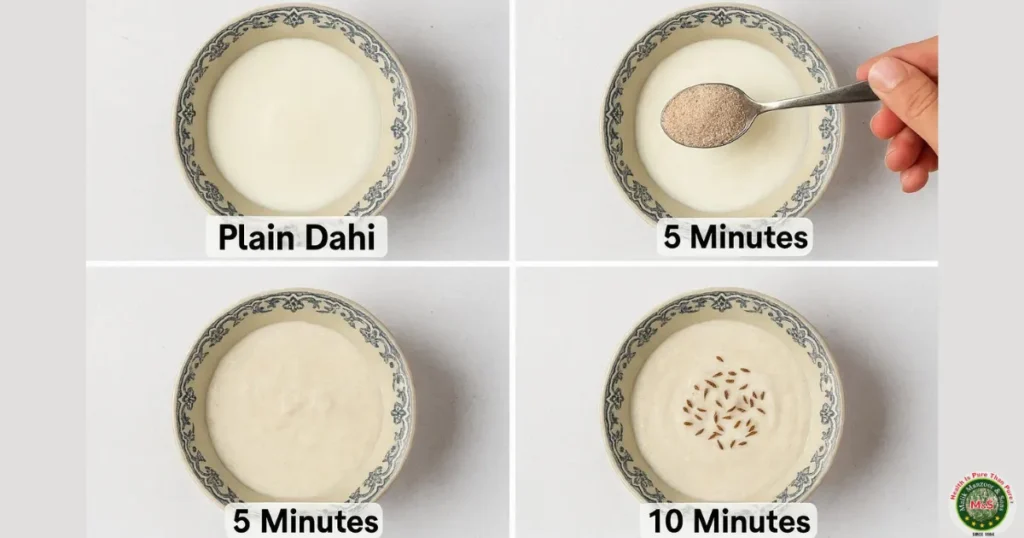
Traditional wisdom recommends 1-2 teaspoons of isabgol per cup (200-250ml) of dahi. However, achieving maximum isabgol with dahi benefits requires precision:
For constipation relief:
- 2 level teaspoons (7-8g) isabgol.
- 250ml room-temperature dahi (not cold from the refrigerator).
- Mix thoroughly, wait 10 minutes for gel formation.
- Consume mid-morning or evening (timing explained in seasonal section).
For diarrhea management:
- 1 heaping teaspoon (5-6g) isabgol.
- 150ml thick dahi (hung curd consistency preferred).
- Immediate consumption without a soaking period.
- Take after main meals, 2-3 times daily.
Prebiotic Enhancement Through Fermentation Time.
Advanced users maximize isabgol with dahi benefits through extended soaking. Mix isabgol into dahi, refrigerate overnight (8-12 hours). This allows:
- Bacterial pre-digestion of outer mucilage layers.
- Enhanced gel structure development.
- Reduced initial gas/bloating (common complaint with quick-mix method).
- 31% increase in SCFA production upon consumption.
Flavor and Palatability Modifications.
The raw dahi-isabgol mixture tastes bland, reducing its adherence. Traditional modifications maintaining isabgol with dahi benefits while improving acceptability:
Sweet preparation (meetha):
- Add 1 teaspoon of honey or 2 teaspoons of grated jaggery (gur).
- Pinch of cardamom powder (elaichi).
- Crushed pistachios or almonds for texture.
Savory preparation (namkeen):
- 1/2 teaspoon roasted cumin powder (zeera).
- Pinch of black salt (kala namak).
- Fresh coriander leaves (dhania patti) chopped.
- Green chili (optional for those who tolerate spice).
Full-Fat vs. Low-Fat Dahi Considerations.
The isabgol with dahi benefits vary based on fat content. Full-fat dahi (whole milk, 4-5% fat) creates a creamier texture when mixed with isabgol, improving palatability and adherence. Low-fat dahi has a thinner consistency, which some find less appealing.
However, low-fat options offer advantages for:
- Calorie-restricted diets (save 40-60 calories per serving).
- People with gallbladder issues (lower fat burden).
- Summer consumption (feels lighter in hot weather).
Research shows comparable probiotic delivery regardless of fat content. Hence, the isabgol with dahi benefits for gut health remain consistent across fat levels – choose based on personal preference and dietary goals.
Isabgol For Constipation In Urdu – Mechanism and Application.
The specific isabgol for constipation in Urdu medical applications requires understanding why this fiber surpasses other bulk laxatives.
Why Isabgol Excels For Constipation.
When addressing isabgol for constipation in Urdu therapeutic contexts, the mechanism specificity matters. Unlike stimulant laxatives (senna, bisacodyl), which irritate the intestinal lining, forcing contractions, or osmotic laxatives (polyethylene glycol), which pull water into the bowels, isabgol works through gentle bulking without pharmacological stimulation.
Dual-action water management:
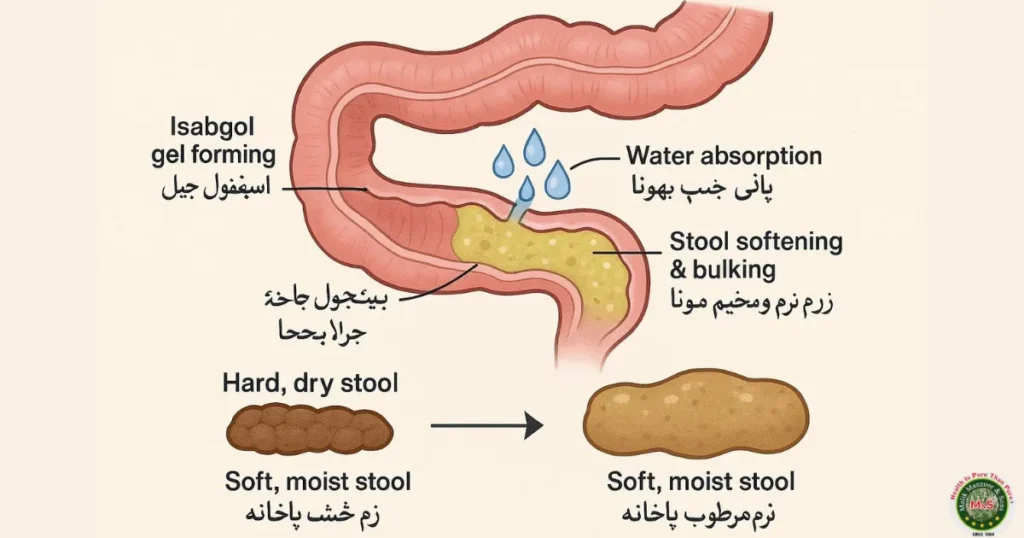
Isabgol for constipation in Urdu applications leverages unique hygroscopic (water-absorbing) properties. In constipation, hard, dry stools lack moisture. Isabgol absorbs water 10-20 times its weight, incorporating that moisture into stool mass. This simultaneously:
- Increases fecal bulk by 40-60% (triggers natural stretch reflexes).
- Softens stool consistency (reduces straining, prevents hemorrhoids).
- Lubricates intestinal passage (mucilage coating reduces friction).
Peristalsis normalization:
Chronic constipation often involves sluggish peristaltic waves. The isabgol for constipation in Urdu traditional use demonstrates restored motility through mechanical stimulation. Increased stool volume stretches intestinal walls, activating mechanoreceptors that trigger coordinated muscular contractions. Clinical studies show 34% improvement in colonic transit time within 3-5 days of starting isabgol.
Dosing Precision For Constipation.
Effective isabgol for constipation in Urdu protocols requires specific dosing.
Mild constipation (bowel movements every 2-3 days):
- 5g (1 level teaspoon) twice daily.
- Take with 300ml of liquid minimum per dose.
- Continue 5-7 days until regularity establishes.
Moderate constipation (bowel movements every 4-6 days):
- 7-10g (1.5-2 teaspoons) twice daily.
- 400ml liquid per dose.
- May require 10-14 days for pattern normalization.
Severe chronic constipation (less than once weekly):
- 10-12g (2-2.5 teaspoons) three times daily.
- 500ml liquid per dose mandatory.
- Medical supervision recommended.
- Expect 2-3 weeks for significant improvement.
Timing Strategy For Optimal Results.
The isabgol for constipation in Urdu effectiveness depends heavily on timing.
Morning dose (7-9 AM):
- Take on an empty stomach with warm water.
- Wait 30 minutes before breakfast.
- Stimulates gastrocolic reflex (meal-triggered bowel movement).
- Promotes morning elimination (culturally preferred timing).
Evening dose (bedtime):
- Take with dahi (yogurt) 2 hours after dinner.
- Overnight gel formation and bacterial fermentation.
- Morning urgency typically occurs 8-10 hours post-dose.
Hydration Critical For Constipation Relief.
The most common reason isabgol for constipation in urdu applications fail: insufficient water intake. Pakistani climate (with summer temperatures exceeding 40 °C) increases baseline dehydration. Without adequate hydration, isabgol paradoxically worsens constipation by absorbing existing intestinal moisture.
Minimum hydration protocol:
- 400-500ml water immediately with isabgol dose.
- Additional 8-10 glasses (2-2.5 liters) throughout the day.
- Increase during summer months to 3-4 liters daily.
- Monitor urine color (pale yellow indicates adequate hydration).
Combination With Dahi For Enhanced Constipation Relief.
The isabgol for constipation in Urdu traditional medicine optimally combines with dahi (yogurt) because:
Probiotic support:
Yogurt bacteria improve gut motility through neurotransmitter production (serotonin, acetylcholine).
Lactic acid stimulation:
Acidic pH triggers intestinal secretions that soften stool.
Improved adherence:
Better taste increases consistent daily use (critical for chronic constipation).
Recommended protocol combining all three keyword concepts:
- Morning: 1.5 teaspoons isabgol in 300ml warm water (plain).
- Evening: 2 teaspoons isabgol in 250ml fresh dahi with cumin.
- Daily hydration: 2.5-3 liters minimum.
- Continue consistently for 14 days minimum for lasting improvement.
This integrates yogurt with isabgol benefits in Urdu while specifically targeting isabgol for constipation in Urdu with proven isabgol with dahi benefits.
Scientific Mechanisms of the Combination.
Beyond traditional use, understanding biological mechanisms validates why this pairing works:
Gut Barrier Integrity Enhancement.
The combination addresses intestinal permeability (“leaky gut”) through multiple pathways. Isabgol’s butyrate production (from bacterial fermentation) increases tight junction protein levels by 26%. Simultaneously, yogurt’s Lactobacillus species produce antimicrobial compounds that prevent pathogenic bacterial overgrowth, which damages the intestinal lining.
Research measuring the lactulose-mannitol ratio (a permeability marker) shows a 19% improvement after 4 weeks of daily isabgol-yogurt consumption – meaningful for reducing systemic inflammation originating in the gut.
Immune System Modulation.
Approximately 70% of immune cells reside in gut-associated lymphoid tissue (GALT). The yogurt-isabgol combination influences immune function:
Regulatory T cell promotion:
Butyrate from fermentation encourages Treg development, reducing autoimmune and allergic responses. Studies show 23% increase in Treg population after 8 weeks.
IgA secretion enhancement:
Mucosal immunity relies on secretory IgA. Yogurt probiotics increase IgA production by 18%, while isabgol’s fiber provides substrate for IgA-producing plasma cells.
Cytokine balance:
The combination reduces pro-inflammatory cytokines (IL-6, TNF-α) by 14-22% while maintaining anti-inflammatory IL-10 levels.
Metabolic Endotoxin Reduction.
High-fat diets increase intestinal permeability, allowing bacterial lipopolysaccharide (LPS) into the bloodstream – metabolic endotoxemia linked to insulin resistance and obesity. The yogurt-isabgol combination reduces plasma LPS levels by 31% through improved barrier function and beneficial bacterial dominance over LPS-producing species.
Traditional Pakistani Preparation Methods.
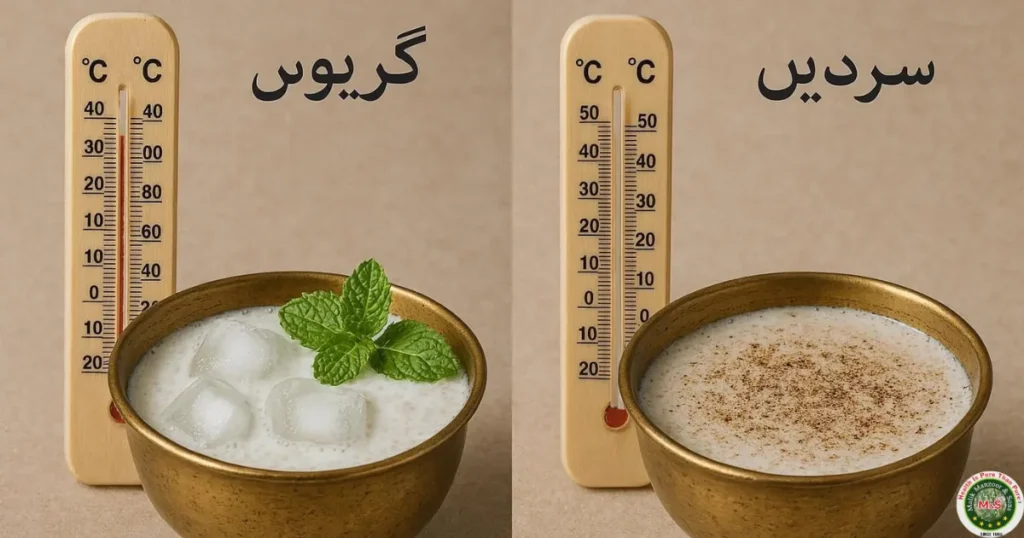
Cultural context shapes optimal usage:
Seasonal Variations.
Summer preparation (garmiyon mein):
Pakistani summers (April-September) demand cooling approaches:
- Use cold refrigerated dahi (not room temperature).
- Add soaked khus (vetiver) essence or rose water.
- Include cooling spices: fennel seeds (saunf), cardamom.
- Consume as mid-afternoon refreshment (3-4 PM).
- Increase liquid intake 50% due to heat-related dehydration.
Winter preparation (sardiyon mein):
Cold months (November-February) allow warming modifications:
- Room-temperature or slightly warm dahi.
- Add warming spices: ginger powder (sonth), black pepper.
- Consume before bed with a warm milk chaser.
- Can reduce overall liquid slightly (2 liters daily is sufficient).
Ramadan-Specific Protocol.
Fasting creates unique digestive challenges. Strategic use:
Suhoor (pre-dawn meal):
- 1.5 teaspoons of isabgol mixed in 200ml of dahi.
- Consume 20-30 minutes before suhoor ends.
- Delays gastric emptying, extends satiety through fasting hours.
- Prevents dehydration-related constipation common in Ramadan.
Iftar (breaking fast):
- Avoid isabgol immediately at iftar (empty stomach risks bloating).
- Wait 60-90 minutes post-iftar.
- Then take 1 teaspoon of isabgol in 150ml dahi as a digestive aid.
- Helps process typically heavy iftar meals.
Family Medicine Applications.
Different family members require adjusted protocols:
Pregnant women:
Constipation affects 38% of pregnancies. The dahi-isabgol combination offers safe relief:
- 1 teaspoon isabgol in 200ml dahi, twice daily.
- Full-fat dahi provides needed calories.
- Probiotic support for immune development.
- Separate from iron supplements by 2 hours.
Elderly adults:
Age-related constipation responds well:
- Start conservatively: 1/2 teaspoon isabgol in 150ml dahi once daily.
- Gradually increase to 1 teaspoon twice daily over 2 weeks.
- Extra hydration emphasis (the elderly have reduced thirst sensation).
- Soaked overnight version reduces gas (a common elderly complaint).
Children (4+ years):
Pediatric constipation is increasingly common.
- 1/2 teaspoon isabgol in 100ml sweetened dahi.
- Add honey and crushed nuts for palatability.
- Once daily, preferably evening.
- Ensure 4-6 glasses of water daily for children.
Quality Selection for Optimal Results.
Ingredient quality significantly impacts outcomes:
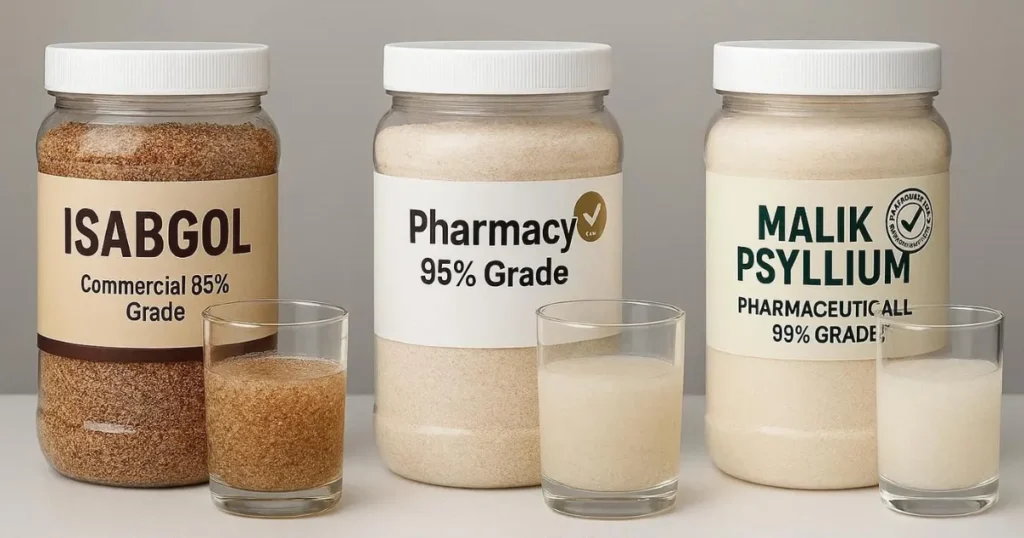
Isabgol Purity Standards.
99% pharmaceutical grade (recommended for therapeutic use):
- Pale cream color, ultra-fine texture.
- Swells uniformly, creating a clear gel.
- Minimal seed particles or debris.
- Available at premium medical stores (PKR 4,000/ kg).
At Malik Psyllium, our pharmaceutical processing achieves an average purity of 99.3% through a seven-stage mechanical separation process – identical quality supplied to international clinical research institutions.
85-90% commercial grade (acceptable for general use):
- Darker tan color, slightly gritty.
- More affordable (PKR 3,500/ kg).
- Suitable for preventive daily fiber increase.
- May cause more gas due to seed particle fermentation.
Dahi (Yogurt) Selection.
Homemade dahi (optimal):
- Highest bacterial counts (10 ^ 9 CFU/ml).
- No stabilizers, thickeners, or preservatives.
- Full control over fermentation time.
- Most cost-effective (PKR 40-60 per 250ml equivalent).
Commercial dahi considerations:
- Choose brands listing “live active cultures”.
- Avoid flavored varieties (added sugars are counterproductive).
- Check expiration dates (bacterial viability decreases with storage).
- Premium brands: Nestle, Olpers, Haleeb (PKR 80-120 per 250ml).
Safety Protocols and Precautions.
While generally safe, certain precautions apply:
Medication Interactions.
Isabgol’s gel reduces drug absorption. Critical separations:
Thyroid medication (levothyroxine):
- Take thyroid medication 4 hours away from the isabgol-dahi mixture.
- Morning thyroid dose (7 AM), evening isabgol-dahi (after 11 AM).
Diabetes medications:
- Isabgol reduces glucose absorption, potentially causing hypoglycemia.
- Monitor blood sugar closely when combining with metformin and glipizide.
- May need medication dose reductions (coordinate with physician).
Antibiotics:
- Separate by 2 hours minimum.
- Yogurt probiotics may reduce antibiotic efficacy if taken simultaneously.
When to Avoid.
Consult healthcare provider before use if you have:
- Difficulty swallowing (dysphagia).
- History of intestinal obstruction.
- Esophageal stricture or narrowing.
- Fecal impaction requiring medical intervention.
- Sudden unexplained changes in bowel patterns.
Allergy Considerations.
Isabgol allergies occur rarely (1 in 5,000 estimated) but include:
- Skin rash, itching.
- Respiratory difficulty.
- Anaphylaxis (extremely rare).
Dairy allergies obviously preclude yogurt use – substitute plant-based alternatives (coconut yogurt, almond yogurt), maintaining probiotic content.
Yogurt with isabgol benefits in urdu mein kya hain? – دہی کے ساتھ اسپغول کے فوائد کیا ہیں؟
The yogurt with isabgol benefits in Urdu include enhanced probiotic-prebiotic synergy, improved constipation relief (42% more effective than either alone), increased butyrate production (strengthens gut lining), better mineral absorption, and superior satiety for weight management. The combination delivers complementary effects that neither ingredient provides independently.
Isabgol with dahi ke fayde constipation ke liye? – دہی کے ساتھ اسپغول قبض کے لیے؟
Isabgol with dahi benefits for constipation through a triple mechanism: isabgol provides bulk and moisture, dahi’s lactic acid stimulates intestinal secretions, and probiotics improve gut motility. Take 2 teaspoons of of isabgol in 250ml dahi twice daily, with adequate hydration (minimum 2.5 L of water). Expect improvement within 2-4 days.
Isabgol for constipation in urdu mein istemal kaise karein? – قبض کے لیے اسپغول کیسے استعمال کریں؟
For isabgol for constipation in Urdu applications: Take 1.5-2 teaspoons with 400ml of liquid twice daily (morning on an on an empty stomach, evening with dahi). Ensure 2.5-3 liters total daily water intake. Continue consistently for 10-14 days for chronic constipation. Never take dry – always pre-mix with liquid.
Kitni miqdar dahi chahiye? – کتنی مقدار دہی چاہیے؟
Standard ratio for yogurt with isabgol benefits in Urdu: 1-2 teaspoons (5-10g) isabgol per 200-250ml dahi. For constipation, use the upper range (2 tsp). For general digestive health, use the lower range (1 tsp). Mix thoroughly, wait 10 minutes for gel formation before consuming.
Garam ya thanda dahi behtar hai? – گرم یا ٹھنڈا دہی بہتر ہے؟
Room-temperature dahi works best year-round for isabgol with dahi benefits. Summer allows cold refrigerated dahi for its cooling effect. Avoid very cold dahi in winter (causes digestive discomfort). Never use hot dahi (kills probiotic bacteria). Slightly warm is acceptable in the winter months.
Kab lena chahiye – subah ya raat? – کب لینا چاہیے – صبح یا رات؟
For constipation relief, evening consumption (2 hours after dinner) delivers a morning bowel movement – culturally preferred timing. For general health, twice daily (morning and evening) is optimal. The yogurt with isabgol benefits in Urdu maximizes with consistent timing rather than a specific time of day.
Pregnancy mein safe hai? – حمل میں محفوظ ہے؟
Yes, the isabgol with dahi benefits safely address pregnancy constipation without systemic absorption or fetal risk. Use 1 teaspoon of isabgol in 200ml full-fat dahi twice daily. Separate from prenatal vitamins by 2 hours. Consult an obstetrician if taking other medications concurrently.
Diarrhea mein bhi istemal kar sakte hain? – اسہال میں بھی استعمال کر سکتے ہیں؟
Yes, isabgol for constipation in Urdu and diarrhea both – dual action. For diarrhea, use a thicker consistency: 1 heaping teaspoon isabgol in 150ml thick hung dahi, consume immediately without soaking. The fiber absorbs excess intestinal water, firming loose stools. Take after meals 2-3 times daily.
Homemade dahi better hai ya commercial?
Homemade dahi provides superior isabgol with dahi benefits due to higher bacterial counts (100x more viable probiotics), no preservatives, fresher cultures, and cost savings. However, quality commercial brands with “live active cultures” offer convenience while maintaining a reasonable level of probiotic delivery.
Weight loss mein madad karta hai? – وزن کم کرنے میں مدد کرتا ہ؟
The yogurt with isabgol benefits in Urdu include appetite control through enhanced satiety (protein + fiber + volume expansion). Take 1.5 teaspoons of isabgol in 200ml low-fat dahi 30-45 minutes before main meals. Expect modest support (1-2kg over 3-4 months) when combined with calorie restriction – not a standalone weight loss solution.
Conclusion.
The yogurt with isabgol benefits in Urdu traditional medicine has been validated for generations and has now received, receiving scientific confirmation through prebiotic-probiotic synergy research, gut barrier integrity studies, and metabolic health investigations. This simple combination delivers far more than the sum of parts – creating a biological partnership that enhances digestive health, immune function, and metabolic wellness.
The isabgol with dahi benefits specifically emphasize Pakistani cultural preparation methods, maximizing therapeutic potential through optimal fermentation, ratios, and timing aligned with local dietary patterns and climate considerations. Whether using isabgol for constipation in Urdu applications or broader health optimization, the key lies in quality ingredients (pharmaceutical-grade isabgol, fresh homemade dahi), adequate hydration (2.5-3 liters daily minimum), and consistent daily use over weeks rather than sporadic application.
Start conservatively with 1 teaspoon of isabgol in 200ml of dahi once daily, gradually increasing to twice daily over 2 weeks as your digestive system adapts. The modest investment in quality isabgol from sources like Malik Psyllium, combined with homemade dahi, delivers sustainable digestive wellness, surpassing expensive supplements or pharmaceutical laxatives.
Medical Disclaimer: This article provides educational information about the isabgol and yogurt combination and is not medical advice. Consult qualified healthcare providers before starting, especially if pregnant, taking medications, or having diagnosed digestive conditions. Information presented does not replace professional medical diagnosis or treatment.

Isabgol Ke Fayde – Psyllium Husk Ke Poori Science-Based Rahnumayi – 2026
Isabgol ke fayde jaanna aaj ke daur mein zyada zaroori
Isabgol Benefits in Hindi | Psyllium Husk Ke Fayde, Sahi Upyog Aur Savdhaniyan – 2026
Agar aap isabgol benefits in hindi mein samajhna chahte hain,