
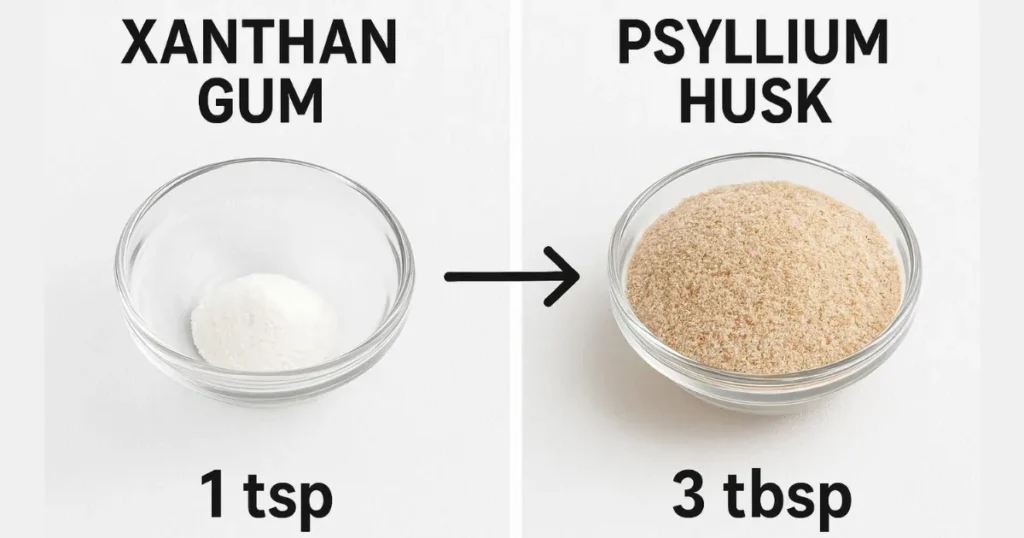
Can psyllium husk replace xanthan gum in your recipes? This question comes up constantly in gluten-free and keto baking. While both act as binding agents, using xanthan gum substitute psyllium husk requires understanding critical differences in how they work, proper conversion ratios, and when substitution succeeds or fails. Xanthan gum and psyllium husk aren’t identical – they create different textures, require different quantities, and behave distinctly under heat.
In this comprehensive guide, I’ll explain exactly when you can use psyllium husk as a xanthan gum substitute, precise conversion ratios for different recipes, how to adjust liquid content when substituting, which applications work best with each binder, and common mistakes that ruin substitution attempts. You’ll discover the science behind both ingredients and master the art of successful substitution in breads, cakes, sauces, and more.
Understanding Xanthan Gum and Psyllium Husk
Before discussing xanthan gum substitute psyllium husk strategies, let’s understand what makes each unique.
What Is Xanthan Gum?
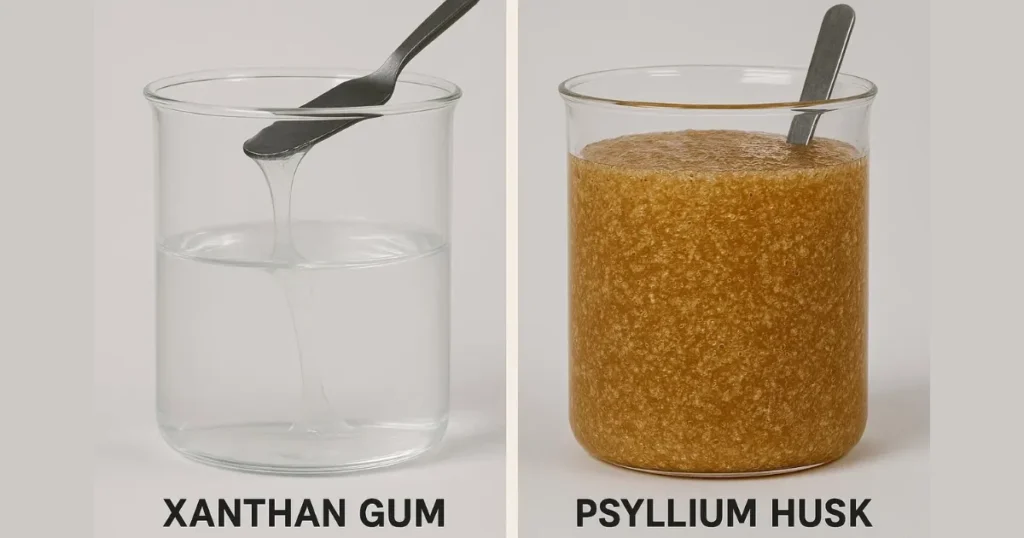
Xanthan gum is a polysaccharide produced by fermenting simple sugars with Xanthomonas campestris bacteria. It’s widely used in gluten-free baking and processed foods as a thickener and stabilizer.
Key properties:
- Extremely powerful binding with tiny amounts (1/2 -1 teaspoon per recipe).
- Creates viscosity in liquids instantly.
- Doesn’t absorb much water.
- Works in cold and hot applications.
- Neutral flavor and clear appearance.
- Creates a slightly elastic, stretchy texture.
What Is Psyllium Husk?
Psyllium husk comes from Plantago ovata seeds, grown primarily in Pakistan’s ideal climate. It’s pure soluble fiber that forms a gel when hydrated.
Key properties:
- Powerful binding but requires more quantity (2-3 tablespoons per recipe).
- Absorbs 10-12 times its weight in water.
- Creates thick, viscous gel.
- Works best with heat activation.
- Slightly earthy smell when baking (dissipates when cool).
- Creates firm, bread-like texture.
Quality matters:
Pakistani psyllium demonstrates 85-99% purity and 12:1 swelling capacity compared to 60-75% purity and 8:1 swelling from other regions. This dramatically affects substitution success.
Can You Use Psyllium Husk as Xanthan Gum Substitute?
The short answer: sometimes, but not always. Success depends on the recipe type and your expectations.
When Substitution Works Well.
Bread and flatbreads:
Psyllium excels in yeast breads, quick breads, and flatbreads. It creates a superior structure and bread-like texture compared to xanthan gum.
Pizza dough:
Psyllium makes a better pizza crust – more authentic chew and better crisp on edges.
Thick batters:
Pancakes, waffles, and thick muffin batters adapt well to using psyllium husk as a xanthan gum substitute.
Binding applications:
Meatballs, veggie burgers, and similar applications where you need ingredients held together.
When Substitution Fails.
Delicate cakes:
Xanthan gum creates lighter, fluffier cakes. Psyllium produces a denser, heavier texture unsuitable for layer cakes or cupcakes.
Thin batters:
Crepes, thin pancakes, and pourable batters become too thick with psyllium.
Cold applications:
Salad dressings, cold sauces, and no-bake recipes need xanthan gum’s instant thickening. Psyllium requires heat and time to activate.
Clear liquids:
Xanthan gum stays invisible in liquids. Psyllium creates cloudiness and visible gel particles.
Ice cream and frozen desserts:
Xanthan gum prevents ice crystal formation better than psyllium.
Conversion Ratios: Xanthan Gum Substitute Psyllium Husk.
When substituting, ratios matter enormously. You cannot use 1:1 substitution.
Basic Conversion Guidelines.
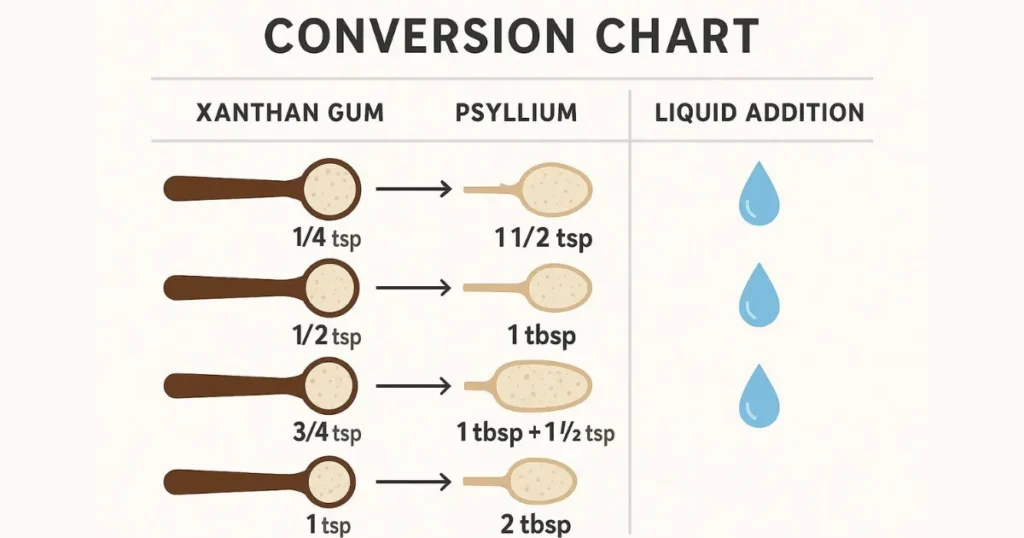
General rule: Replace 1 teaspoon xanthan gum with 2-3 tablespoons psyllium husk powder.
Detailed conversions:
| Xanthan Gum Amount | Psyllium Husk Powder | Psyllium Whole Husks |
| ½ teaspoon | 1-1.5 tablespoons | 2 tablespoons |
| 1 teaspoon | 2-3 tablespoons | 3-4 tablespoons |
| 1.5 teaspoons | 3-4 tablespoons | 5-6 tablespoons |
| 2 teaspoons | 4-5 tablespoons | 6-8 tablespoons |
Why such different amounts?
Xanthan gum is incredibly concentrated. A tiny amount creates significant thickening. Psyllium requires more volume to achieve similar binding because it works through water absorption rather than viscosity creation.
Recipe-Specific Conversions.
For bread (per loaf):
- Xanthan gum: 1 teaspoon.
- Psyllium substitute: 3 tablespoons psyllium husk powder.
- Additional liquid needed: +3 -4 tablespoons water.
For pizza dough:
- Xanthan gum: 1 teaspoon.
- Psyllium substitute: 2.5 tablespoons psyllium husk powder.
- Additional liquid needed: +2 -3 tablespoons water.
For muffins (12 muffins):
- Xanthan gum: 1/2 teaspoon.
- Psyllium substitute: 1.5 tablespoons psyllium husk powder.
- Additional liquid needed: +2 tablespoons liquid.
For pancakes:
- Xanthan gum: 1/2 teaspoon.
- Psyllium substitute: 1 tablespoon psyllium husk powder.
- Additional liquid needed: +3 tablespoons liquid.
Adjusting Liquid When Using Psyllium Husk as Xanthan Gum Substitute.
This is the most critical adjustment when using psyllium husk as a xanthan gum substitute.
Why Liquid Adjustment Matters.
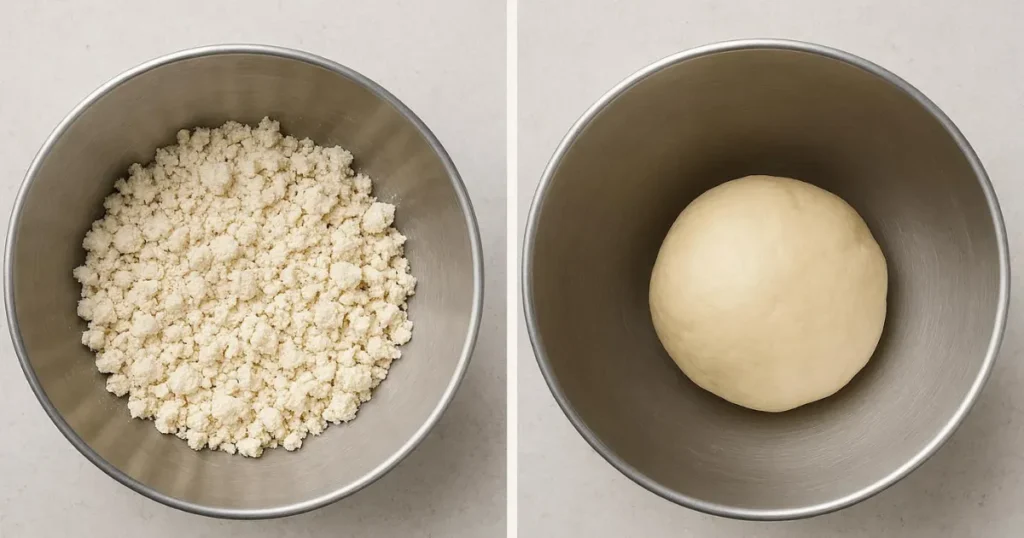
Xanthan gum barely absorbs water – it creates viscosity without much absorption. Psyllium absorbs massive amounts of liquid, up to 12 times its weight.
If you substitute psyllium without adding liquid, your recipe will be:
- Too thick or dry.
- Crumbly and falling apart.
- Difficult to mix.
- Dense and heavy.
How Much Liquid to Add.
Basic rule: Add 2-3 tablespoons of liquid per tablespoon of psyllium husk powder.
Liquid calculation example:
- Original recipe calls for 1 teaspoon xanthan gum.
- You substitute with 2.5 tablespoons of psyllium.
- Add 5-7 tablespoons (1/3 to 1/2 cup) additional liquid.
What Liquids Work.
Best options:
- Water (most neutral).
- Milk or plant-based milk (adds richness).
- Eggs (adds protein and binding).
- Oil (improves moisture and texture).
Avoid:
- Thick liquids like yogurt (already thick).
- Very acidic liquids in excess (can affect rise).
Timing Considerations.
Unlike xanthan gum’s instant action, psyllium needs time to absorb liquid:
Mixing process:
- Mix psyllium with dry ingredients thoroughly.
- Add liquids and mix just until combined.
- Let batter/dough rest 5-10 minutes.
- Mix again briefly before using.
- Work relatively quickly – psyllium continues thickening.
This resting period allows full hydration, preventing dry spots or overly thick texture.
Texture Differences: Xanthan Gum vs Psyllium Husk.
Understanding texture helps set proper expectations when using psyllium husk as a xanthan gum substitute.
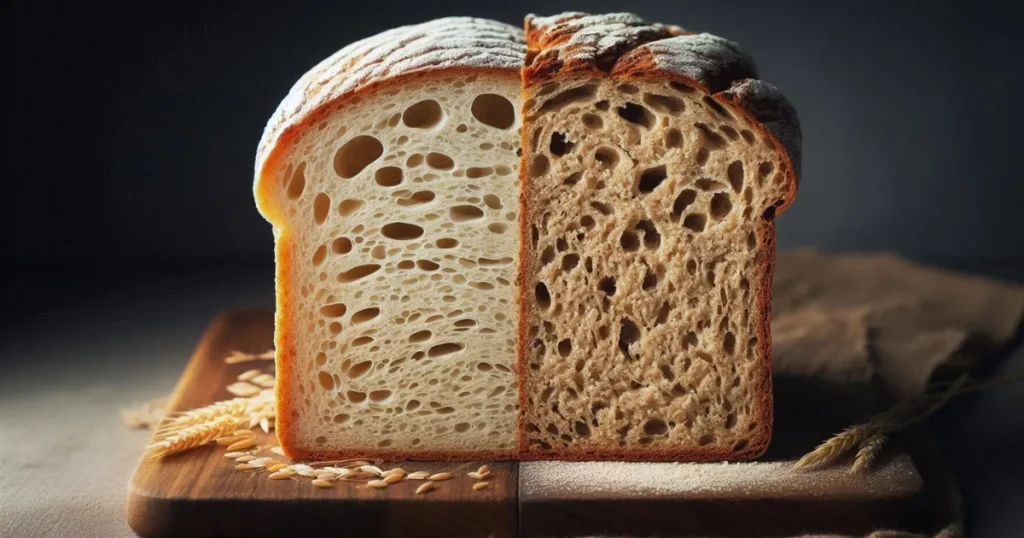
Xanthan Gum Texture Profile.
Creates:
- Light, airy structure.
- Slight elasticity and stretch.
- Smooth, fine crumb.
- Tender mouthfeel.
- Slightly sticky quality.
Best for:
Recipes where you want a delicate, soft texture – cakes, cookies, tender breads.
Psyllium Husk Texture Profile.
Creates:
- Firm, substantial structure.
- Chewy, bread-like quality.
- Coarser, more rustic crumb.
- Hearty mouthfeel.
- Moisture retention over time.
Best for:
Recipes where you want authentic bread texture, structural integrity, or rustic appeal.
Which Texture Is Better?
Neither is universally better – they serve different purposes:
Choose psyllium when:
- Making sandwich bread that needs to hold fillings.
- Creating pizza dough that needs structural integrity.
- Baking hearty, rustic breads.
- Seeking fiber benefits alongside binding.
- Working with keto or high-protein recipes.
Choose xanthan gum when:
- Baking delicate cakes or pastries.
- Making smooth sauces or dressings.
- Creating light, fluffy textures.
- Working with cold applications.
- Preferring neutral flavor and appearance.
Step-by-Step: Substituting Psyllium for Xanthan Gum in Recipes.
Let me walk you through the practical substitution process.
Before You Start.
Check your psyllium quality:
Use pure psyllium husk powder (not whole husks or capsules) from reliable sources. Premium Pakistani psyllium, like Malik Psyllium, ensures consistent results.
Read the recipe completely:
Understand what texture the original recipe aims to achieve. This helps you decide if substitution makes sense.
Have extra liquid ready:
Keep water or milk nearby for adjustments. Psyllium absorption varies slightly by batch and humidity.
Substitution Process.
Step 1:
Calculate amounts Use the conversion chart: 1 teaspoon xanthan gum = 2-3 tablespoons psyllium husk powder.
Step 2:
Increase liquid. Add 2-3 tablespoons of liquid for every tablespoon of psyllium.
Step 3:
Mix dry ingredients. Thoroughly combine psyllium with all dry ingredients. This prevents clumping.
Step 4:
Combine wet and dry. Mix wet ingredients into the dry mixture. The batter/dough will seem correct initially.
Step 5:
Rest the mixture. Let it sit 5-10 minutes. Psyllium will absorb liquid and thicken noticeably.
Step 6:
Assess consistency. After resting, check the thickness. Add 1-2 tablespoons more liquid if too thick.
Step 7:
Work efficiently. Shape or pour into pans within 15 minutes. Psyllium continues thickening over time.
Step 8:
Bake immediately. Don’t let psyllium batters/doughs sit long after final mixing. Bake promptly for the best rise.
Common Mistakes Using Psyllium Husk as Xanthan Gum Substitute.
Mistake 1: Using 1:1 Substitution.
This is the most common error. People replace 1 teaspoon of xanthan gum with 1 teaspoon of psyllium. Results are weak binding and poor structure.
Solution: Use proper ratios – 1 teaspoon xanthan gum = 2-3 tablespoons psyllium.
Mistake 2: Not Adding Extra Liquid.
Substituting without liquid adjustment creates dry, crumbly, dense results.
Solution: Add 2-3 tablespoons of liquid for every tablespoon of psyllium husk powder.
Mistake 3: Skipping Rest Time.
Mixing and immediately baking prevent proper hydration. Texture suffers.
Solution: Always rest batter/dough 5-10 minutes after mixing for full psyllium activation.
Mistake 4: Using Whole Husks Instead of Powder.
Whole psyllium husks create a coarse, grainy texture unsuitable for most baking.
Solution: Use finely ground psyllium husk powder for smooth results.
Mistake 5: Expecting Identical Results.
Psyllium and xanthan gum create different textures. Expecting exact replication leads to disappointment.
Solution: Adjust expectations. Embrace psyllium’s heartier, bread-like quality rather than seeking perfect xanthan gum imitation.
Mistake 6: Substituting in Unsuitable Recipes.
Trying to use psyllium in delicate cakes or cold applications where it doesn’t work.
Solution: Reserve psyllium substitution for breads, pizza dough, thick batters, and binding applications where it excels.
Pros and Cons: Xanthan Gum Substitute Psyllium Husk.
Let me provide an honest assessment based on extensive baking experience.
Advantages of Using Psyllium.
Nutritional benefits:
- Adds 4-5g fiber per serving.
- Supports digestive health.
- Promotes satiety.
- Zero net carbs (perfect for keto).
- Feeds beneficial gut bacteria.
Better bread texture:
- Creates a more authentic bread-like quality.
- Superior moisture retention.
- Better structural integrity for sandwiches.
- Excellent for artisan-style baking.
Cost effectiveness:
- Often less expensive per use.
- Longer shelf life when stored properly.
- Multipurpose (supplement and baking ingredient).
Natural appeal:
- Derived from plant seeds (not bacterial fermentation).
- Whole food source.
- Appeals to clean-eating preferences.
Disadvantages of Using Psyllium.
More complicated:
- Requires liquid adjustments.
- Needs resting time.
- Less forgiving of measurement errors.
- Continues thickening over time.
Limited applications:
- Doesn’t work in cold recipes.
- Unsuitable for delicate baked goods.
- Creates cloudiness in clear liquids.
- Not ideal for ice cream or frozen desserts.
Appearance concerns:
- Can cause purple/blue discoloration with baking soda.
- Visible gel particles in some applications.
- Slightly earthy smell during baking.
Larger quantities needed:
- Requires 6-8 times more volume than xanthan gum.
- Takes up more storage space.
- More noticeable in the final product.
Recipe Adjustments: Practical Examples.
Converting Gluten-Free Bread Recipe.
Original recipe:
- 2 cups gluten-free flour blend.
- 1 teaspoon xanthan gum.
- 1 cup water.
- Other ingredients.
Converted using psyllium:
- 2 cups gluten-free flour blend.
- 3 tablespoons psyllium husk powder.
- 1⅓cups water (added ⅓cup more).
- Other ingredients unchanged.
Result: Heartier, more authentic bread texture with better structural integrity.
Converting Keto Pizza Dough.
Original recipe:
- 1½ cups almond flour.
- ½teaspoon xanthan gum.
- 2 eggs.
- ½ cup mozzarella.
Converted using psyllium:
- 1 ½cups almond flour.
- 1.5 tablespoons psyllium husk powder.
- 2 eggs.
- ½cup mozzarella.
- 3 tablespoons warm water (added).
Result: Better crisp, improved chew, easier handling without tearing.
Converting Pancake Recipe.
Original recipe:
- 1 cup flour.
- ½ teaspoon xanthan gum.
- 1 cup milk.
- 1 egg.
Converted using psyllium:
- 1 cup flour.
- 1 tablespoon psyllium husk powder.
- 1 ¼cups milk (added ¼cup).
- 1 egg.
- Let batter rest 5 minutes before cooking.
Result: Thicker, heartier pancakes with better structural integrity.
When NOT to Use Psyllium Husk as Xanthan Gum Substitute.
Honest guidance matters. Don’t attempt psyllium substitution in these applications:
Cakes and Cupcakes.
Delicate cake recipes need xanthan gum’s light touch. Psyllium creates a dense, heavy texture that ruins tender cakes.
Exception: Dense, rustic cakes like carrot cake or banana bread may work with psyllium.
Salad Dressings and Cold Sauces.
These need instant thickening without heat. Psyllium doesn’t activate properly in cold applications and creates gel particles.
No exceptions: Always use xanthan gum for cold sauces and dressings.
Clear Beverages or Smoothies.
Psyllium creates cloudiness and visible particles. It’s designed for this (fiber supplement use), but when you want clear liquid, it fails.
Thin Crepes or Delicate Pancakes.
Ultra-thin batters don’t work with psyllium’s thickening power. You’ll get thick, gummy crepes.
Ice Cream and Frozen Desserts.
Xanthan gum prevents ice crystal formation and creates a smooth texture. Psyllium doesn’t perform this function effectively.
Quality Matters: Why Pakistani Psyllium Works Best.
When using xanthan gum substitute psyllium husk, quality dramatically affects success rates.
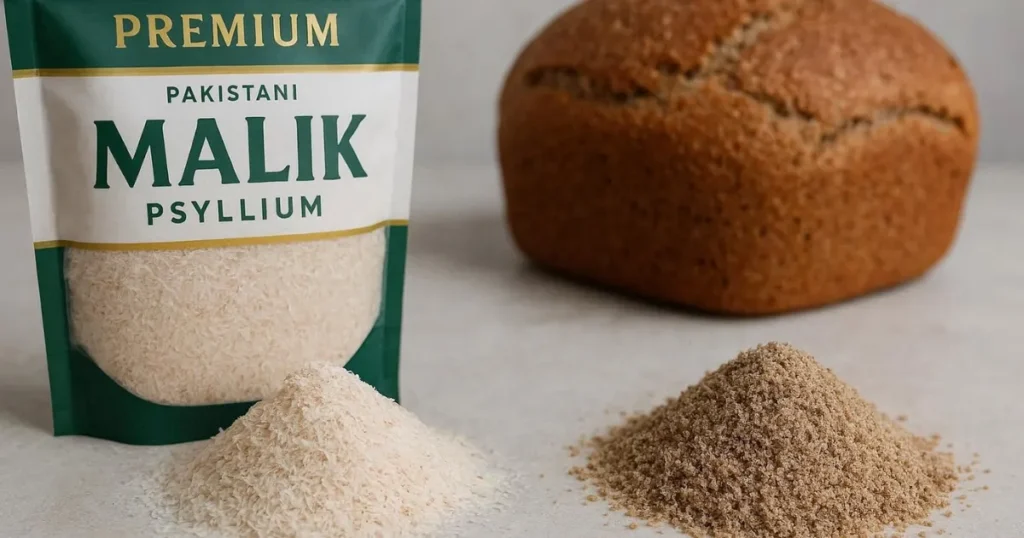
Why Pakistani psyllium is superior:
Higher purity (85-99% vs 60-75%):
More pure fiber means more predictable behavior and better binding.
Superior swelling (12:1 vs 8:1):
Better gel formation creates a stronger structure and more reliable results.
Finer grind consistency:
Uniform particle size integrates smoothly without graininess.
Better color:
Lighter color reduces purple discoloration issues in baked goods.
Consistent batch-to-batch:
Reliable quality means your substitution ratios work consistently.
When you use premium psyllium from sources like Malik Psyllium, you need less product for equivalent results, get more consistent outcomes, and achieve better overall texture. Low-grade psyllium from other regions often disappoints in substitution applications, leading people to incorrectly conclude that psyllium doesn’t work when the real issue is quality.
Combining Xanthan Gum and Psyllium Husk.
Instead of full substitution, some recipes benefit from using both binders together.
Why Combine Them?
Complementary strengths:
- Xanthan gum provides elasticity and lightness.
- Psyllium adds structure and moisture retention.
- Together they create texture that neither achieves alone.
Ideal Ratios for Combination.
For bread:
- 1/2 teaspoon xanthan gum + 1.5 tablespoons psyllium husk powder.
- Creates a lighter texture than psyllium alone, a stronger structure than xanthan alone.
For pizza dough:
- 1/4 teaspoon xanthan gum + 1 tablespoon psyllium husk powder.
- Perfect balance of chew and structural integrity.
For muffins:
- 1/4 teaspoon xanthan gum + 1 tablespoon psyllium husk powder.
- Light interior with good moisture retention.
Liquid Adjustments with Combination.
Add liquid primarily for psyllium content: 2 tablespoons per tablespoon of psyllium, regardless of xanthan gum presence.
Storage and Shelf Life Considerations.
Both binders have different storage needs affecting their viability as substitutes.
Xanthan Gum Storage.
- Shelf life: 2-3 years when stored properly.
- Storage: Airtight container in a cool, dry place.
- Signs of degradation: Clumping, reduced thickening power.
Psyllium Husk Storage.
- Shelf life: 12-18 months when stored properly.
- Storage: Airtight container in a cool, dry place (refrigeration extends life).
- Signs of degradation: Rancid smell, reduced swelling, and clumping.
- Storage tip: Buy psyllium in quantities you’ll use within 12 months. Fresh psyllium performs significantly better than the old product when used as a xanthan gum substitute.
Can I substitute psyllium husk for xanthan gum in all recipes?
No, psyllium works well in breads, pizza dough, and thick batters but fails in delicate cakes, cold applications, and thin batters where xanthan gum is necessary.
What’s the conversion ratio for xanthan gum substitute psyllium husk?
Replace 1 teaspoon xanthan gum with 2-3 tablespoons psyllium husk powder, and add 4-6 tablespoons additional liquid to compensate for psyllium’s water absorption.
Why does my recipe turn out dry when I substitute psyllium for xanthan gum?
Psyllium absorbs 10-12 times its weight in water, while xanthan gum barely absorbs any. You must add 2-3 tablespoons of liquid for every tablespoon of psyllium used.
Can I use whole psyllium husks instead of powder as a xanthan gum substitute?
Whole husks work but create a coarse texture. Use 1.5 x the amount of whole husks compared to powder, or grind whole husks before using for smoother results.
Does psyllium husk work as a xanthan gum substitute in cold recipes?
No, psyllium requires heat and time to activate properly. Use xanthan gum for cold sauces, dressings, and no-bake recipes where psyllium won’t work.
How much psyllium husk equals 1 teaspoon xanthan gum?
2-3 tablespoons of psyllium husk powder equals 1 teaspoon of xanthan gum in binding power, though texture differences remain regardless of the ratio used.
Why does my bread turn purple when using psyllium instead of xanthan gum?
Psyllium reacts with baking soda/powder, creating a harmless purple color. Use blonde psyllium, add lemon juice, or substitute cream of tartar to prevent discoloration.
Is psyllium husk healthier than xanthan gum as a substitute?
Psyllium provides 4-5g fiber per serving, supports digestive health, and offers prebiotic benefits. Xanthan gum is neutral with minimal nutritional impact. Choose based on recipe needs.
Conclusion.
Using psyllium husk as a xanthan gum substitute works excellently in specific applications – breads, pizza dough, thick batters, and binding applications – but fails in others like delicate cakes, cold sauces, and thin batters. Success requires understanding the fundamental differences between these binders: xanthan gum creates instant viscosity with minimal water absorption, while psyllium forms a thick gel by absorbing 10-12 times its weight in liquid. This means you can not simply swap them 1:1 – proper conversion ratios (1 teaspoon xanthan gum = 2-3 tablespoons psyllium husk powder) and crucial liquid adjustments (add 2-3 tablespoons per tablespoon of psyllium) determine whether your substitution succeeds or fails.
The texture differences matter as much as conversion ratios. Xanthan gum produces light, elastic, delicate structures perfect for cakes and tender breads, while psyllium creates firm, chewy, substantial textures ideal for sandwich breads and pizza. Neither is universally better – they excel in different applications. Choose psyllium when you want authentic bread texture, fiber benefits, and structural integrity; stick with xanthan gum for delicate baking, cold applications, and light textures.
Quality significantly impacts substitution success. Premium Pakistani psyllium with 85-99% purity and 12:1 swelling ratio produces dramatically better results than lower-grade alternatives. When using xanthan gum substitute psyllium husk in your recipes, start with breads and thick batters where psyllium excels, master the liquid adjustment technique, allow proper resting time for hydration, and set realistic expectations about texture differences. With practice and proper technique, psyllium becomes a valuable alternative that adds nutritional benefits alongside binding power, though it will never perfectly replicate xanthan gum’s unique properties in all applications.

Isabgol Ke Fayde – Psyllium Husk Ke Poori Science-Based Rahnumayi – 2026
Isabgol ke fayde jaanna aaj ke daur mein zyada zaroori
Isabgol Benefits in Hindi | Psyllium Husk Ke Fayde, Sahi Upyog Aur Savdhaniyan – 2026
Agar aap isabgol benefits in hindi mein samajhna chahte hain,