
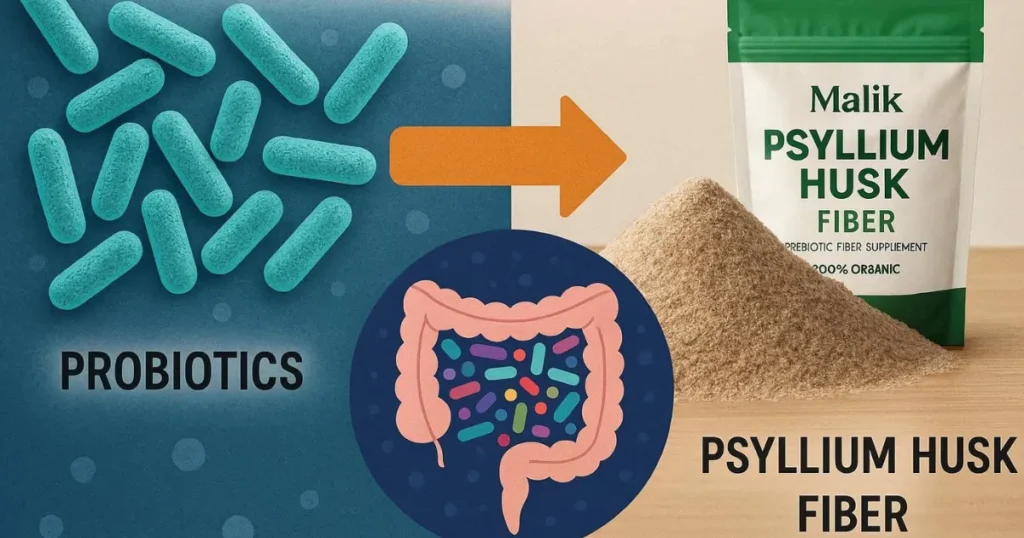
Many people search for “psyllium husk probiotic”, thinking psyllium contains live beneficial bacteria, but here’s the important clarification: psyllium husk isn’t a probiotic itself – it’s actually a powerful prebiotic that feeds and supports the probiotics (beneficial bacteria) already in your gut. This distinction matters because understanding how psyllium and probiotics work together unlocks superior digestive health, enhanced immunity, and optimal gut microbiome balance.
This comprehensive guide explains the prebiotic nature of psyllium husk, how it creates the perfect environment for probiotic bacteria to thrive, why combining psyllium with probiotic supplements delivers synergistic benefits, and practical strategies for optimizing your gut microbiome through this powerful fiber-bacteria partnership. Whether you’re managing digestive issues, boosting immunity, or optimizing overall wellness, understanding the psyllium husk probiotic connection provides a science-backed pathway to lasting gut health.
Understanding Psyllium Husk: Prebiotic, Not Probiotic
Let me clarify an essential distinction that affects how you use psyllium for gut health.
The Probiotic vs. Prebiotic Difference
Probiotics are:
- Live beneficial bacteria (Lactobacillus, Bifidobacterium)
- Found in yogurt, kefir, sauerkraut, kimchi, supplements
- Colonize your intestines
- Provide direct health benefits
Prebiotics are:
- Non-digestible fiber compounds
- Food that feeds beneficial bacteria
- Found in psyllium, inulin, resistant starch
- Support probiotic growth and activity
Psyllium husk is a prebiotic fiber, not a psyllium husk probiotic. It doesn’t contain bacteria—it feeds them.
Why This Matters
When people search for “psyllium husk probiotic,” they’re usually seeking:
- Ways to improve gut bacteria balance
- Natural digestive health solutions
- Combinations that optimize microbiome health
- Understanding of how psyllium supports probiotics
The answer lies in the powerful prebiotic properties of psyllium that make it an essential partner to probiotic bacteria.
How Psyllium Husk Acts as a Prebiotic Fiber
Understanding the prebiotic mechanism reveals why psyllium is so valuable for gut health.
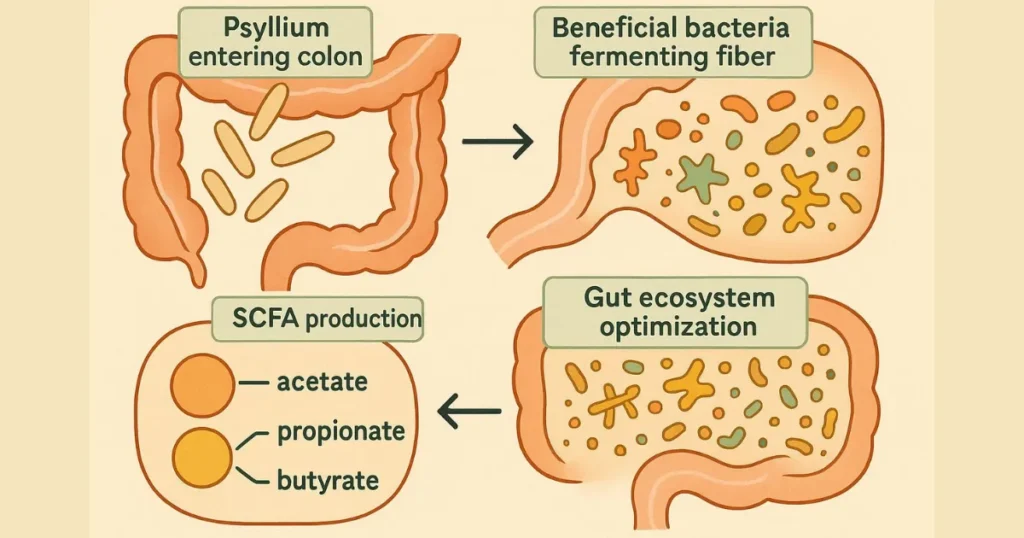
The Prebiotic Process
Step 1 – Psyllium Reaches Colon Intact:
- Resistant to digestion in stomach and small intestine
- Soluble and insoluble fiber remains structurally intact
- Arrives in colon where beneficial bacteria reside
Step 2 – Bacterial Fermentation Begins:
- Beneficial bacteria (especially Bifidobacteria and Lactobacillus) ferment psyllium fiber
- Bacteria use fiber as energy source
- Population of good bacteria increases
Step 3 – Production of Beneficial Compounds:
- Fermentation produces short-chain fatty acids (SCFAs)
- Butyrate: Nourishes colonocytes, reduces inflammation
- Propionate: Regulates appetite, improves liver function
- Acetate: Provides energy, supports immune function
Step 4 – Ecosystem Optimization:
- Good bacteria multiply and strengthen
- Pathogenic bacteria populations decrease
- Intestinal pH becomes more acidic (favorable environment)
- Gut barrier function improves
This prebiotic effect makes psyllium husk an essential foundation for probiotic success.
The Synergistic Benefits of Combining Psyllium and Probiotics
When you use psyllium husk probiotic partner, the combined benefits exceed either alone.
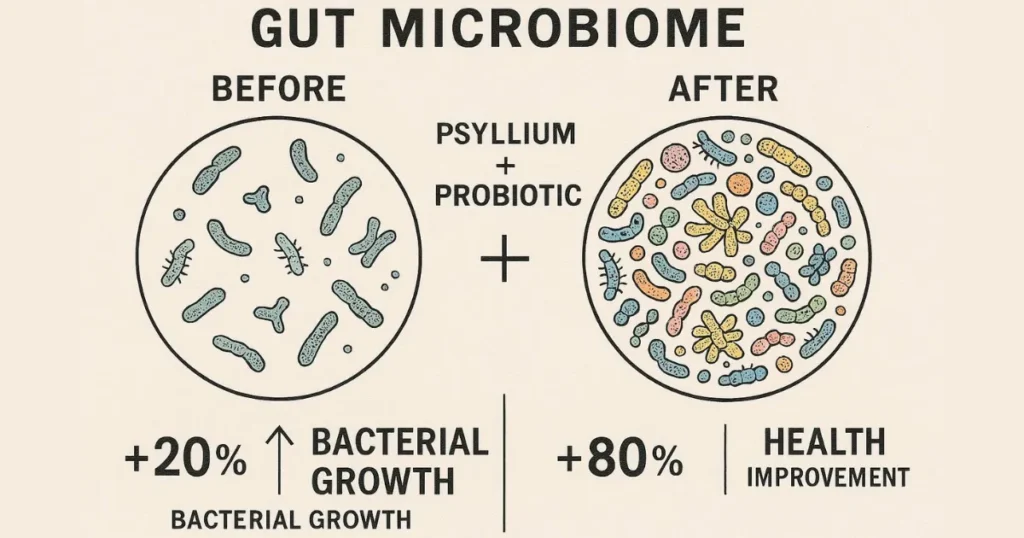
Enhanced Bacterial Colonization
Probiotics alone:
- May struggle to establish in hostile gut environment
- Can be destroyed by stomach acid
- May not receive adequate nutrition to thrive
Probiotics + Psyllium prebiotic:
- Psyllium provides food source for colonization
- Creates favorable acidic environment
- Helps probiotics survive and multiply
- Significantly improves bacterial survival rates
Studies show combining prebiotics like psyllium husk probiotics increases beneficial bacteria populations by 100-1000x compared to probiotics alone.
Improved SCFA Production
The combination produces more short-chain fatty acids:
- Butyrate increases 50-200%: Stronger anti-inflammatory effects
- Propionate rises 40-150%: Better metabolic regulation
- Acetate elevates 30-100%: Enhanced energy and immunity
These compounds deliver benefits throughout your body, not just your gut.
Strengthened Intestinal Barrier
“Leaky gut” prevention:
- Tight junctions between intestinal cells strengthen
- Bacterial endotoxins can’t escape into bloodstream
- Systemic inflammation decreases
- Autoimmune trigger exposure reduces
Enhanced immune function:
- 70-80% of immune cells reside in gut
- Healthy microbiome trains immune system properly
- Better pathogen defense
- Reduced allergic responses
Metabolic Improvements
The psyllium-probiotic combination:
- Improves insulin sensitivity
- Enhances glucose metabolism
- Reduces cholesterol more effectively
- Supports healthy weight management
- Decreases inflammation markers
Best Probiotic Strains to Combine with Psyllium Husk
Not all probiotics work equally well with psyllium prebiotic fiber.
Top Beneficial Strains
Bifidobacterium Species:
- B. longum
- B. bifidum
- B. lactis
- B. breve
Why they work well:
Bifidobacteria preferentially ferment psyllium fiber, producing high levels of beneficial SCFAs. They thrive on this prebiotic fuel.
Lactobacillus Species:
- L. acidophilus
- L. rhamnosus
- L. plantarum
- L. casei
Why they work well:
Lactobacilli use psyllium to establish strong colonies, producing lactic acid that creates favorable gut pH and inhibits pathogens.
Combination Products
Look for probiotic supplements containing:
- Multiple Bifidobacterium strains (2-4 different species)
- Multiple Lactobacillus strains (2-4 different species)
- Minimum 10-50 billion CFU (colony-forming units) per dose
- Shelf-stable or refrigerated options based on quality
Practical Guide: How to Combine Psyllium and Probiotics
Strategic timing and dosing maximize the synergistic benefits.
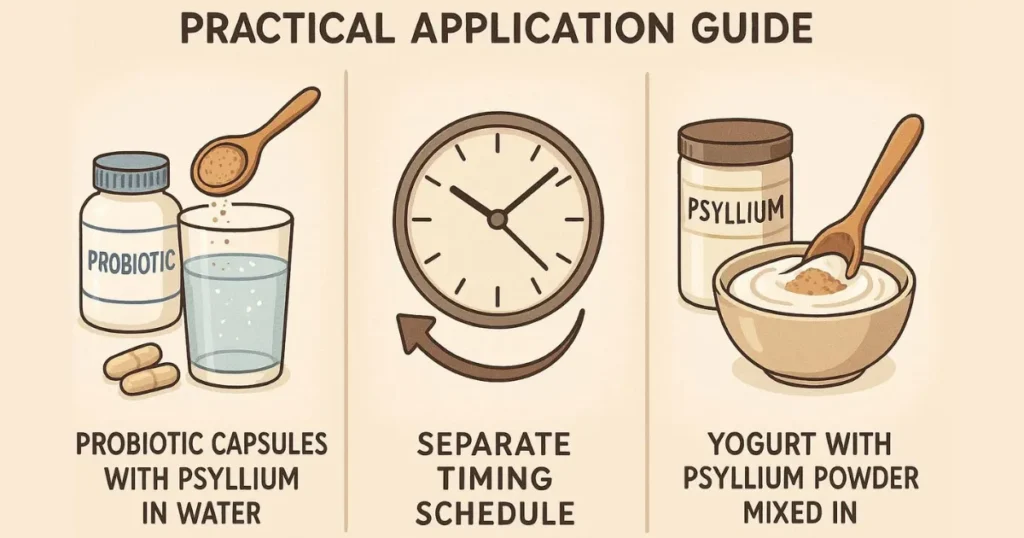
Option 1: Take Together
Method:
Mix psyllium and probiotic supplement simultaneously
Advantages:
- Probiotic bacteria immediately receive prebiotic nutrition
- Simplified routine (one timing to remember)
- Synergistic effect begins immediately
How to do it:
- Take probiotic capsule with water
- Immediately mix and consume psyllium
- Or blend both into smoothie
Option 2: Separate Timing
Method:
Take probiotics and psyllium at different times
Advantages:
- Some prefer probiotics on empty stomach
- Allows flexibility in routine
- Still provides prebiotic benefit throughout day
Suggested schedule:
- Morning: Probiotics on empty stomach
- 30 minutes later: Breakfast
- Evening: Psyllium with or after dinner
Option 3: Food-Based Approach
Method:
Combine psyllium with probiotic-rich foods
Natural food sources:
- Mix psyllium husk powder into yogurt (contains L. bulgaricus, S. thermophilus)
- Add to kefir (contains 10-30+ bacterial strains)
- Blend with fermented milk drinks
- Consume alongside sauerkraut, kimchi, or other fermented foods
Advantages:
- Whole-food approach
- Additional nutrients from fermented foods
- Often more affordable than supplements
- Tastier for some people
Dosage Recommendations for Optimal Gut Health
Balancing psyllium prebiotic and probiotic dosing matters for results.
Psyllium Dosage for Prebiotic Effect
| Goal | Daily Psyllium Amount | Timing |
| Basic prebiotic support | 5-10 grams | Once daily |
| Gut microbiome optimization | 10-15 grams | Split into 2 doses |
| IBS/digestive issues | 10-20 grams | 2-3 doses with meals |
| Maximum prebiotic effect | 15-20 grams | Split into 2-3 doses |
Probiotic Dosage Guidelines
- General health maintenance: 5-10 billion CFU daily
- Active gut repair: 10-50 billion CFU daily
- Post-antibiotic restoration: 50-100 billion CFU daily (short-term)
- Chronic digestive issues: 25-100 billion CFU daily with medical guidance
Timeline for Results
Week 1-2:
- Initial changes in bowel regularity
- Some gas and bloating (adaptation)
- Beginning of bacterial colonization
Week 3-4:
- Digestive comfort improves
- More consistent bowel movements
- Reduced bloating as microbiome adapts
Week 6-8:
- Significant microbiome changes detectable
- Enhanced immune function
- Improved metabolic markers
- Sustained digestive wellness
Month 3+:
- Fully optimized gut ecosystem
- Maximum prebiotic-probiotic synergy
- Long-term health benefits established
Scientific Evidence: Psyllium’s Prebiotic Effects
Research validates psyllium’s powerful prebiotic properties.
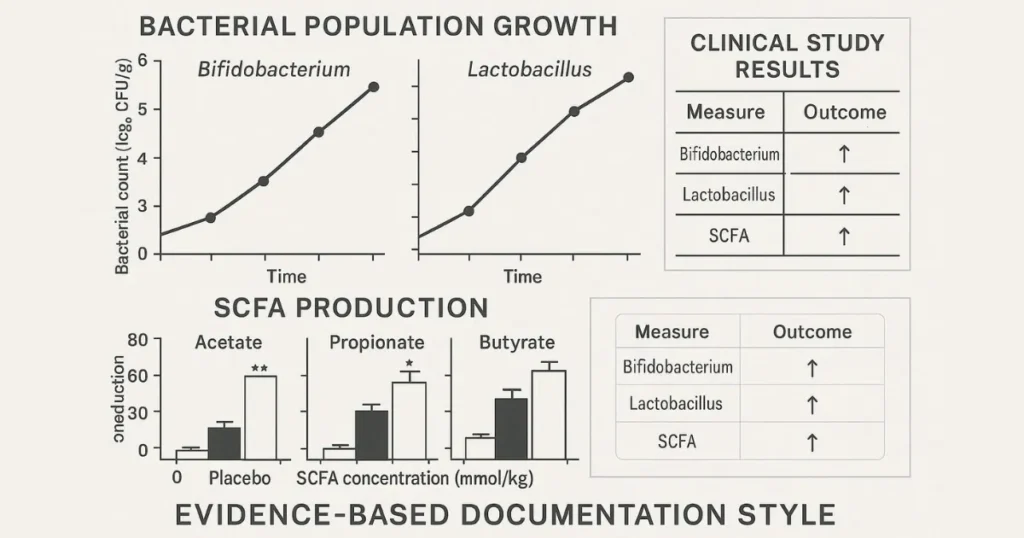
Microbiome Studies
Bacterial population changes:
- Bifidobacterium increases: 50-300% with regular psyllium use
- Lactobacillus populations: 40-200% elevation
- Pathogenic bacteria: 20-50% reduction
- Overall microbiome diversity: Significantly enhanced
SCFA Production Research
Studies measuring short-chain fatty acid production:
- Butyrate levels increase 100-250% with psyllium
- Total SCFA production rises 80-200%
- Benefits correlate with dose (10-20g optimal)
Clinical Health Outcomes
Trials combining psyllium with probiotics show:
- IBS symptom reduction: 40-60% improvement
- Inflammatory markers: 20-40% decrease in CRP
- Immune function: Enhanced antibody response
- Metabolic health: Better glucose control and lipid profiles
Comparison to Other Prebiotics
| Prebiotic | Tolerability | Bifidobacteria Growth | Additional Benefits |
| Psyllium | Excellent | High | Cholesterol, blood sugar, regularity |
| Inulin | Moderate (gas) | Very high | Calcium absorption |
| FOS | Poor (gas) | High | None significant |
| Resistant starch | Good | Moderate | Blood sugar control |
Psyllium offers the best balance of prebiotic effects, tolerability, and additional health benefits.
Natural Food Sources: Building a Prebiotic-Probiotic Diet
Whole-food approaches complement psyllium supplementation.
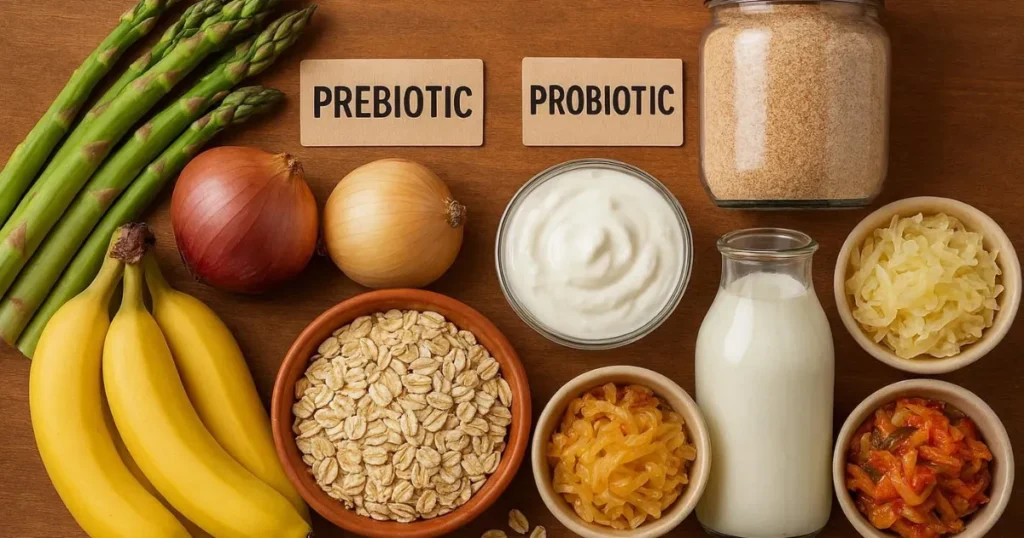
Prebiotic Foods to Combine with Psyllium
Fiber-rich vegetables:
- Asparagus
- Onions and garlic
- Jerusalem artichokes
- Leeks
- Chicory root
Fruits:
- Bananas (especially slightly green)
- Apples with skin
- Berries
Whole grains:
- Oats
- Barley
- Whole wheat
Legumes:
- Lentils
- Chickpeas
- Black beans
Probiotic Foods
Fermented dairy:
- Yogurt with live cultures
- Kefir (highest bacterial diversity)
- Traditional buttermilk
- Some cheeses (aged cheddar, gouda, Swiss)
Fermented vegetables:
- Sauerkraut (unpasteurized)
- Kimchi
- Fermented pickles
- Fermented beets
Other fermented foods:
- Kombucha
- Miso
- Tempeh
- Natto
Sample Daily Menu
Breakfast: Yogurt with psyllium, berries, oats
- Provides probiotics (yogurt) + prebiotics (psyllium, oats, berries)
Lunch: Salad with chickpeas, vegetables
- Prebiotic fiber from legumes and vegetables
Snack: Kombucha
- Additional probiotics
Dinner: Grilled chicken, sautéed asparagus with garlic, kimchi on side
- Prebiotic vegetables + probiotic fermented food
Evening: Psyllium in water or smoothie
- Additional prebiotic boost
This approach provides 30-40+ grams of total fiber including psyllium, multiple probiotic sources, and diverse nutrients.
Special Applications: Using Psyllium as Probiotic Partner
Specific health conditions benefit from strategic psyllium-probiotic combinations.
Post-Antibiotic Gut Restoration
The problem:
Antibiotics kill beneficial bacteria along with pathogens
The solution:
- High-dose probiotics (50-100 billion CFU)
- Daily psyllium (10-15 grams)
- Continue 4-8 weeks post-antibiotic
Timeline:
Microbiome typically restores in 4-12 weeks with this approach vs. 6+ months without intervention.
IBS Management
For IBS-C (constipation-predominant):
- Psyllium 10-20 grams daily
- Bifidobacterium-rich probiotics
- Combined approach shows 50-70% symptom improvement
For IBS-D (diarrhea-predominant):
- Start with lower psyllium (5-10 grams)
- Lactobacillus-rich probiotics
- Gradually increase fiber as tolerated
Inflammatory Bowel Support
Ulcerative colitis:
- Psyllium improves remission maintenance
- VSL#3 (specific probiotic blend) well-studied
- Medical supervision essential
Crohn’s disease:
- More cautious approach required
- Some benefit from gentle prebiotic-probiotic support
- Always coordinate with gastroenterologist
Weight Management Enhancement
Psyllium-probiotic combination supports weight loss through:
- Enhanced satiety from psyllium
- Improved metabolic function from healthy microbiome
- Better blood sugar control
- Reduced inflammation affecting weight
Studies show 20-30% better weight loss results when combining prebiotics and probiotics with caloric restriction vs. diet alone.
Common Mistakes When Combining Psyllium and Probiotics
Avoid these errors that reduce effectiveness.
Mistake 1: Taking Antibiotics without Protection
The problem:
Antibiotics can kill probiotic supplements taken simultaneously
Solution:
- Take probiotics 2-3 hours from antibiotic doses
- Continue probiotics for 4-8 weeks after finishing antibiotics
- Add psyllium throughout and after treatment
Mistake 2: Insufficient Psyllium Dosing
The problem:
2-5 grams psyllium provides minimal prebiotic benefit
Solution:
Minimum 10 grams daily for meaningful prebiotic effect, 15-20 grams for optimal results
Mistake 3: Poor-Quality Probiotics
The problem:
Many probiotic products contain dead bacteria or insufficient CFU counts
Look for:
- Third-party tested brands
- Guaranteed CFU count at expiration (not manufacturing)
- Multiple bacterial strains
- Proper storage (refrigerated if required)
Mistake 4: Inadequate Hydration
The problem:
Psyllium without water causes severe constipation
Solution:
Minimum 8 oz water with psyllium, 8 oz after, 8-10 glasses daily total
Mistake 5: Expecting Immediate Results
The problem:
Microbiome changes take weeks to months
Reality:
Allow 4-8 weeks for significant benefits, 3-6 months for complete optimization
Quality Considerations for Psyllium Prebiotic Use
Source and purity affect prebiotic effectiveness.
Why Pakistani Psyllium is Superior for Prebiotic Function
Higher mucilage content (12-15% vs. 8-10%):
- More soluble fiber for bacterial fermentation
- Enhanced SCFA production
- Better prebiotic outcomes
Superior purity (98-99%):
- No contaminants that disrupt microbiome
- Consistent bacterial response
- Reliable prebiotic effects
Better fermentability:
- Optimal fiber structure for bacterial digestion
- Produces more butyrate and other SCFAs
- Superior microbiome support
At Malik Psyllium, our pharmaceutical-grade processing ensures the prebiotic properties remain intact and effective.
Testing for Prebiotic Quality
Premium manufacturers test:
- Fiber composition and structure
- Microbial purity (must be contaminant-free)
- Fermentability in laboratory models
- SCFA production potential
These tests ensure the psyllium will effectively feed your probiotic bacteria.
Troubleshooting Common Issues
Solutions to challenges when combining psyllium and probiotics.
Issue: Excessive Gas and Bloating
Causes:
- Starting with too much psyllium too quickly
- High-dose probiotics overwhelming system
- Both introduced simultaneously
Solutions:
- Start with 5 grams psyllium, increase slowly over 2-3 weeks
- Begin with lower-dose probiotics (5-10 billion CFU)
- Introduce one at a time, add second after 1-2 weeks
- Consider digestive enzymes temporarily
Issue: No Improvement in Symptoms
Possible reasons:
- Insufficient dosing (less than 10g psyllium)
- Low-quality or dead probiotics
- Inadequate time (need 4-8 weeks minimum)
- Underlying condition requiring medical attention
Solutions:
- Increase to therapeutic dose (10-20g psyllium)
- Switch to higher-quality probiotic supplement
- Continue consistent use for 8-12 weeks
- Consult healthcare provider if no improvement
Issue: Constipation Worsening
Causes:
- Inadequate water intake
- Too much psyllium too soon
- Imbalanced probiotic strains
Solutions:
- Increase water to 10-12 glasses daily
- Reduce psyllium dose temporarily
- Switch to Bifidobacterium-dominant probiotics
- Add magnesium supplement if needed
Issue: Diarrhea or Loose Stools
Causes:
- Too much psyllium for current gut state
- Die-off reaction from pathogenic bacteria
- Probiotic strain mismatch
Solutions:
- Reduce psyllium to 5 grams daily
- Continue probiotics (die-off is temporary, 3-7 days)
- Try Lactobacillus-dominant formulas
- Add binding foods (bananas, rice, applesauce)
Advanced Strategies: Maximizing Prebiotic-Probiotic Synergy
Expert-level approaches for optimal gut health with Psyllium Husk Probiotic.
Rotating Probiotic Strains
Strategy: Change probiotic formulas every 2-3 months
Rationale:
- Prevents bacterial monoculture
- Introduces diverse beneficial species
- Optimizes ecosystem diversity
Example rotation:
- Months 1-3: Bifidobacterium-dominant formula
- Months 4-6: Lactobacillus-dominant formula
- Months 7-9: Multi-strain comprehensive blend
Continue psyllium consistently throughout—it feeds all beneficial bacteria.
Adding Other Prebiotics
Synergistic combinations:
- Psyllium (bulk, SCFAs)
- Inulin (Bifidobacteria specialization)
- Resistant starch (butyrate production)
Approach:
Add one additional prebiotic every 4-6 weeks to avoid overwhelming digestive system.
Targeted Supplement Timing
For immune support:
- Probiotics first thing morning on empty stomach
- Psyllium with breakfast
- Maximizes immune cell interaction
For metabolic optimization:
- Psyllium 20 minutes before meals
- Probiotics with first meal of day
- Enhances glucose and lipid metabolism
For digestive healing:
- Probiotics between meals
- Psyllium with meals
- Add L-glutamine for intestinal repair
Is psyllium husk a probiotic or prebiotic?
Psyllium husk is a prebiotic, not a probiotic. It doesn’t contain live beneficial bacteria (that’s what probiotics are). Instead, psyllium provides non-digestible fiber that feeds the beneficial bacteria already in your gut, helping them multiply and produce health-promoting compounds like short-chain fatty acids.
Can you take psyllium husk with probiotics together?
Yes, taking psyllium and probiotics together is not only safe but highly beneficial. The combination is synergistic – psyllium provides nutrition for probiotic bacteria, helping them colonize and thrive. Studies show combining prebiotics like psyllium with probiotics increases beneficial bacteria populations by 100-1000x compared to probiotics alone.
How does psyllium husk support gut bacteria?
Psyllium reaches your colon intact where beneficial bacteria ferment it as food. This fermentation produces short-chain fatty acids (butyrate, propionate, acetate) that nourish intestinal cells, reduce inflammation, improve immunity, and support metabolic health. Psyllium particularly boosts Bifidobacterium and Lactobacillus populations by 50-300%.
What’s the best way to combine psyllium and probiotics?
Take 10-15 grams psyllium daily (split into 1-2 doses) with quality probiotic supplements containing 10-50 billion CFU of multiple Bifidobacterium and Lactobacillus strains. Can take together or separately. Start with 5 grams psyllium and lower-dose probiotics, increasing gradually over 2-3 weeks. Maintain excellent hydration.
How long until psyllium and probiotics improve gut health?
Initial changes occur within 1-2 weeks (improved regularity). Significant microbiome shifts require 4-8 weeks of consistent daily use. Complete gut ecosystem optimization takes 3-6 months. Benefits include enhanced bacterial diversity, increased SCFA production, improved digestive comfort, stronger immunity, and better metabolic markers.
Does psyllium kill probiotics or reduce their effectiveness?
No, psyllium enhances probiotic effectiveness, not reduces it. As a prebiotic fiber, psyllium feeds beneficial bacteria, helping them survive, colonize, and multiply. The combination produces significantly better outcomes than probiotics alone. However, take probiotics 2-3 hours from antibiotics (which can kill beneficial bacteria).
What probiotic strains work best with psyllium husk?
Bifidobacterium species (B. longum, B. bifidum, B. lactis, B. breve) and Lactobacillus species (L. acidophilus, L. rhamnosus, L. plantarum, L. casei) work exceptionally well with psyllium. These strains preferentially ferment psyllium fiber, producing high levels of beneficial short-chain fatty acids. Look for multi-strain formulas with 10-50 billion CFU.
Can psyllium replace probiotics for gut health?
No, they serve different complementary functions. Probiotics provide beneficial bacteria that need to colonize your gut. Psyllium provides food (prebiotic fiber) for those bacteria. Both are valuable, but combining them delivers superior results – 100-1000x better bacterial colonization and 50-200% more SCFA production versus either alone.
Conclusion
While “psyllium husk probiotic” is a common search term, understanding that psyllium functions as a powerful prebiotic – not a probiotic itself – unlocks its true potential for gut health optimization. Psyllium doesn’t contain beneficial bacteria, but it creates the perfect nutritional environment for probiotic bacteria to colonize, multiply, and produce health-promoting compounds like butyrate, propionate, and acetate that benefit your entire body.
The synergistic combination of psyllium prebiotic fiber with probiotic supplements or probiotic-rich foods delivers benefits far exceeding either alone: 100-1000x better bacterial colonization, 50-200% increased SCFA production, strengthened intestinal barrier function, enhanced immune response, and improved metabolic health. Research consistently demonstrates that prebiotics like psyllium are essential for probiotic success – bacteria need fuel to thrive.
Pakistani psyllium with superior 12-15% mucilage content provides optimal prebiotic function, delivering more fermentable fiber for beneficial bacteria and producing higher levels of therapeutic short-chain fatty acids. When combined with quality probiotic supplements containing Bifidobacterium and Lactobacillus strains at 10-50 billion CFU, this partnership creates lasting gut microbiome optimization over 4-12 weeks of consistent use.
Success requires strategic implementation: start with 5-10 grams daily psyllium and lower-dose probiotics, increase gradually over 2-3 weeks, maintain excellent hydration (8-10 glasses daily), and allow 4-8 weeks for significant microbiome changes. Whether you’re restoring gut health post-antibiotics, managing IBS, supporting weight loss, or optimizing overall wellness, the prebiotic-probiotic partnership offers a science-backed, natural approach to achieving and maintaining a healthy, diverse, resilient gut ecosystem that supports lifelong health.

Isabgol Ke Fayde – Psyllium Husk Ke Poori Science-Based Rahnumayi – 2026
Isabgol ke fayde jaanna aaj ke daur mein zyada zaroori
Isabgol Benefits in Hindi | Psyllium Husk Ke Fayde, Sahi Upyog Aur Savdhaniyan – 2026
Agar aap isabgol benefits in hindi mein samajhna chahte hain,