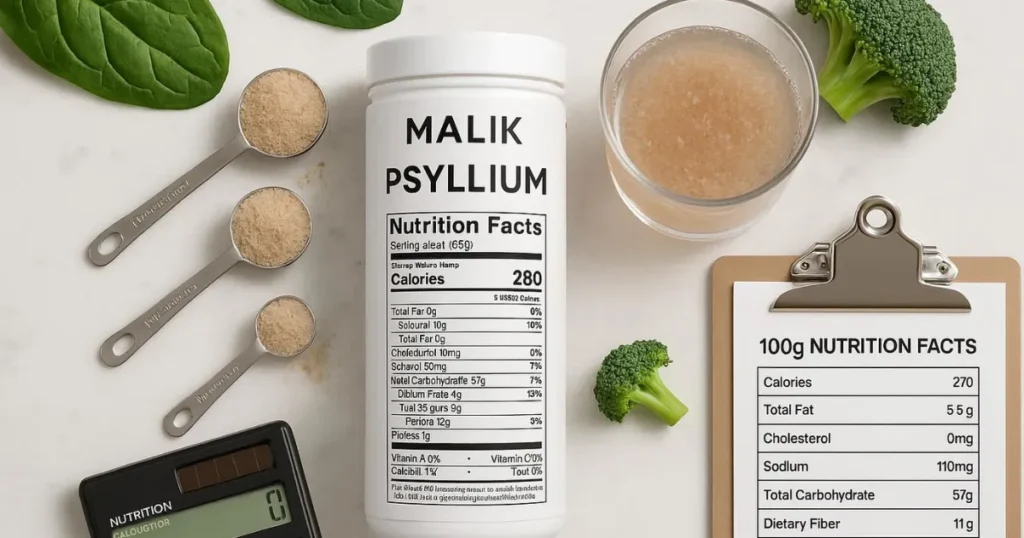
When it comes to natural dietary supplements, few ingredients pack as much nutritional punch as psyllium husk powder. Whether you’re blending it into your morning smoothie, baking low-carb bread, or simply mixing it with water for digestive support, understanding psyllium husk powder nutrition 100g helps you unlock its full potential for your health journey.
As someone who’s spent decades cultivating and processing premium psyllium in Pakistan’s fertile fields, I’ve witnessed firsthand how this humble seed coating transforms lives. The psyllium husk powder nutrition facts reveal why this fiber-rich superfood has become a staple in health-conscious kitchens worldwide – from managing weight to supporting heart health and everything in between.
This comprehensive guide breaks down every nutrient, calorie, and health benefit hiding in those 100 grams of psyllium powder sitting in your cabinet. You’ll discover exactly what makes this plant-based fiber extraordinary, how it compares to other dietary fibers, and practical ways to incorporate it into your daily routine without the guesswork.
What Makes Psyllium Husk Powder Nutrition Facts Unique?
Psyllium husk powder comes from the seeds of Plantago ovata, a plant primarily grown in regions with specific climatic conditions. The nutritional profile is dominated by one exceptional component: soluble dietary fiber. Unlike many plant-based powders that offer a mix of nutrients, psyllium is essentially pure fiber with minimal calories, making it a strategic addition to virtually any eating pattern.
The powder form offers superior mixability compared to whole husks, dissolving smoothly in liquids and integrating seamlessly into recipes. This processing doesn’t diminish its nutritional value – in fact, it concentrates the fiber content per gram, giving you more digestive benefits in smaller serving sizes.
The Fiber Advantage
Soluble fiber forms a gel-like substance when mixed with water. This unique property explains most of psyllium’s health benefits, from slowing digestion to binding with cholesterol. The powder contains approximately 70-80% soluble fiber, with the remainder being insoluble fiber that adds bulk to stool.
Psyllium Husk Powder Nutrition 100g: Complete Breakdown
Let’s examine the detailed nutritional composition of 100 grams of pure psyllium husk powder nutrition 100g. These values represent the standard nutritional profile, though slight variations may occur based on processing methods and source quality.
Macronutrient Profile
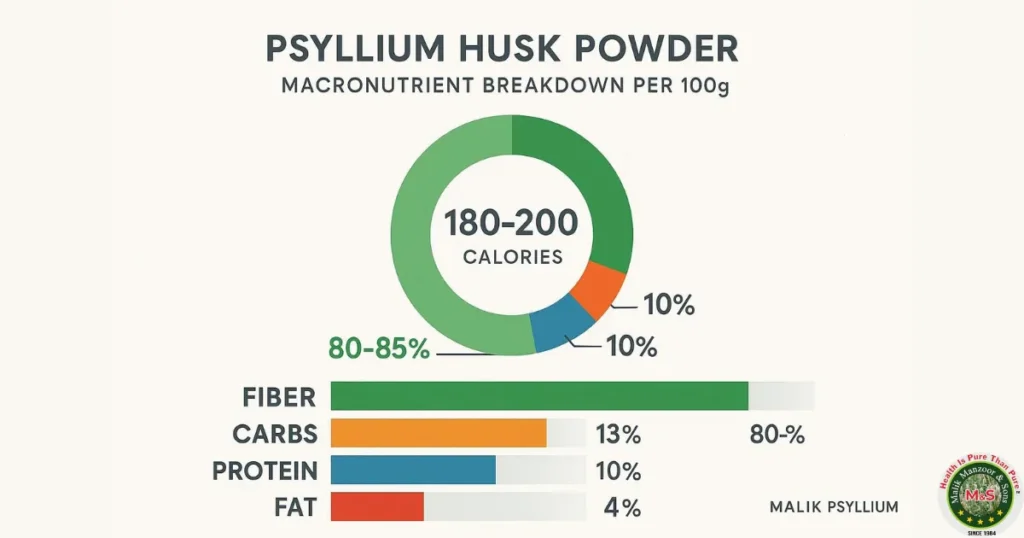
Calories: Approximately 180-200 kcal per 100g
Despite being calorie-conscious, psyllium isn’t calorie-free. However, considering typical serving sizes (5-10 grams), you’re consuming only 9-20 calories per serving – negligible in most dietary contexts.
Total Carbohydrates: 85-88 grams per 100g
- Dietary Fiber: 80-85 grams
- Sugars: 0-1 gram
- Net Carbs: 0-3 grams
This breakdown reveals why psyllium is beloved in low-carb and ketogenic communities. The overwhelming majority of carbohydrates come from fiber, which doesn’t spike blood sugar or contribute significantly to caloric intake since fiber isn’t fully digested.
Protein: 2-4 grams per 100g
Minimal protein content means psyllium won’t replace your protein sources, but it complements protein-rich diets by supporting digestive health.
Fat: 0.5-1 gram per 100g
Negligible fat content makes psyllium suitable for low-fat dietary patterns and doesn’t contribute significantly to daily fat intake.
Micronutrient Content
While psyllium’s micronutrient profile isn’t its main attraction, it does provide trace amounts of essential minerals:
Iron: Approximately 2-4 mg per 100g (15-25% Daily Value).
Particularly relevant for individuals following plant-based diets who need diverse iron sources.
- Calcium: 20-30 mg per 100g (2-3% Daily Value).
- Magnesium: 15-25 mg per 100g (4-6% Daily Value).
- Potassium: 60-80 mg per 100g (1-2% Daily Value).
- Sodium: Very low, typically 5-15 mg per 100g.
The low sodium content makes it suitable for sodium-restricted diets.
Vitamin Content.
Psyllium contains trace amounts of B-vitamins, though not in significant quantities to meet daily requirements. Its nutritional value lies primarily in its exceptional fiber content rather than vitamins.
Psyllium Husk Powder Nutrition Facts: What the Numbers Mean for Your Health.
Understanding raw numbers is one thing; translating them into health outcomes is where the real value lies. Let’s decode how these nutritional facts impact your body systems.
Digestive System Support.
With 80+ grams of dietary fiber per 100 grams, psyllium provides approximately 16 grams of fiber in a standard 20-gram daily dose – more than half the recommended daily fiber intake for adults (25-38 grams). This concentration makes meeting fiber goals dramatically easier.
The soluble fiber absorbs water in the digestive tract, forming a viscous gel that:
- Softens stool consistency for easier elimination.
- Adds bulk to promote regular bowel movements.
- Feeds beneficial gut bacteria (prebiotic effect).
- Slows stomach emptying for prolonged satiety.
Blood Sugar Management.
The near-zero net carbohydrate content, combined with high soluble fiber creates a blood sugar-friendly profile. Psyllium slows the absorption of sugars from meals, helping prevent post-meal glucose spikes. Studies have shown regular psyllium consumption can improve glycemic control in individuals with type 2 diabetes.
Cholesterol and Heart Health.
Soluble fiber binds with bile acids in the intestine. Since bile acids contain cholesterol, this binding reduces cholesterol reabsorption, prompting the liver to use more cholesterol from the bloodstream to produce new bile acids. This mechanism can lower LDL (bad) cholesterol levels by 5-15% with consistent use.
Weight Management.
At roughly 2 calories per gram of fiber, psyllium offers exceptional satiety per calorie. The gel-forming property creates physical fullness, reducing overall calorie intake when consumed before meals. The low net carb count makes it compatible with various weight loss approaches, from calorie counting to low-carb diets.
Comparison: Psyllium vs Other Fiber Sources.
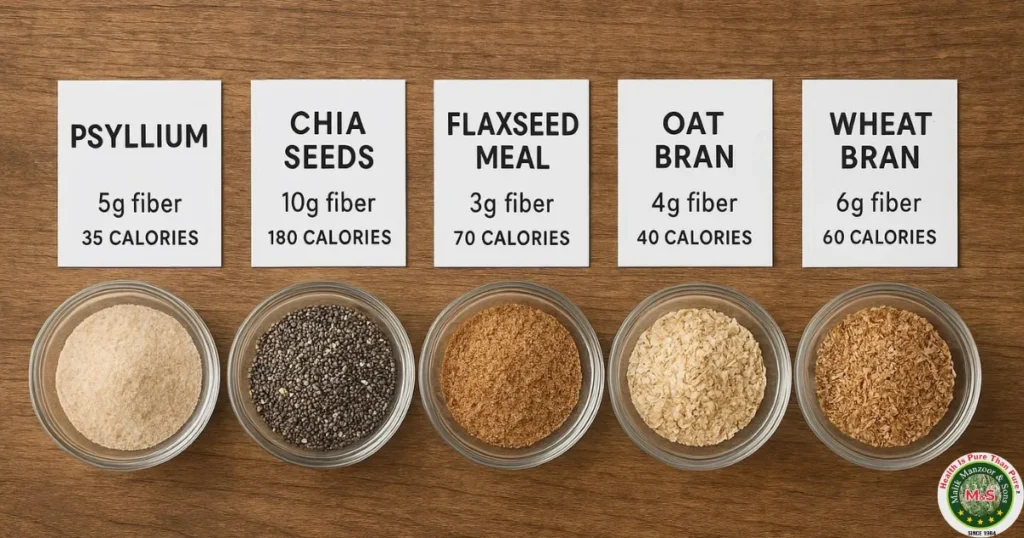
How does psyllium husk powder nutrition 100g profile stack up against other popular fiber supplements and foods?
| Fiber Source (per 100g) | Total Fiber | Soluble Fiber | Calories | Net Carbs |
| Psyllium Husk Powder | 80-85g | 70-75g | 180-200 | 0-3g |
| Chia Seeds | 34g | 15-20g | 486 | 8g |
| Flaxseed Meal | 27g | 8-10g | 534 | 2g |
| Oat Bran | 15g | 5-7g | 246 | 50g |
| Wheat Bran | 43g | 2-4g | 216 | 15g |
| Inulin Powder | 85-90g | 85-90g | 150-200 | 0-5g |
Key Takeaways:
- Psyllium offers the highest soluble fiber concentration among whole-food sources.
- Lower calorie content per gram of fiber compared to seed-based options.
- Minimal net carbs make it superior for low-carb diets compared to grain-based fibers.
- Inulin provides comparable fiber density but may cause more digestive discomfort initially.
Serving Size Matters: Translating Psyllium Husk Powder Nutrition 100g to Daily Use.
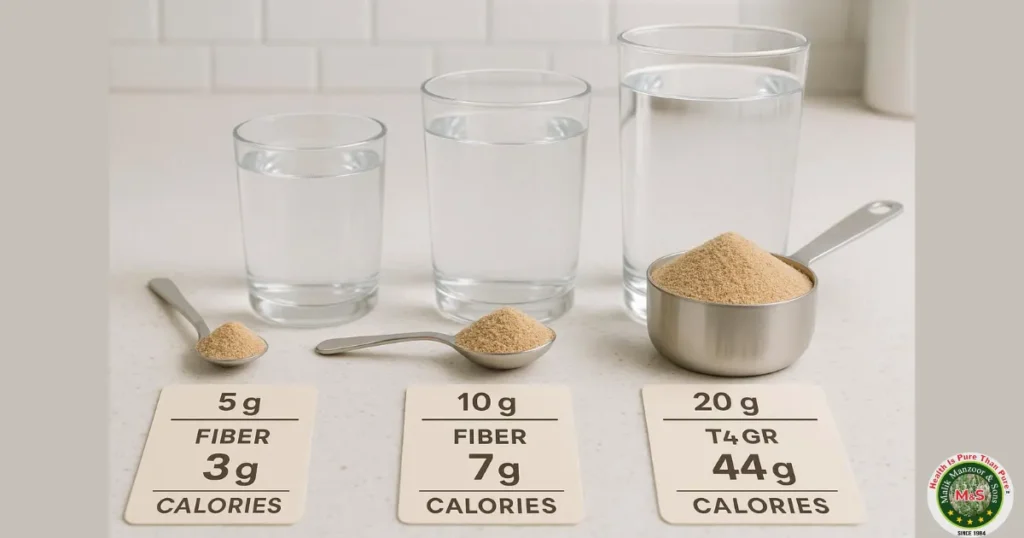
Most people don’t consume psyllium husk powder nutrition 100g daily, nor should they. Standard servings range from 5-10 grams, taken 1-3 times daily. Let’s translate the nutrition facts into practical serving sizes.
Single 5-Gram Serving.
- Calories: 9-10 kcal.
- Dietary Fiber: 4-4.5 grams (16-18% Daily Value).
- Net Carbs: 0-0.15 grams.
- Protein: 0.1-0.2 grams.
- Fat: Trace amounts.
Standard 10-Gram Serving.
- Calories: 18-20 kcal.
- Dietary Fiber: 8-8.5 grams (32-34% Daily Value).
- Net Carbs: 0-0.3 grams.
- Protein: 0.2-0.4 grams.
- Fat: Trace amounts.
Maximum Recommended Daily Intake (20-25 grams).
- Calories: 36-50 kcal.
- Dietary Fiber: 16-21 grams (64-84% Daily Value).
- Net Carbs: 0-0.75 grams.
- Protein: 0.4-1 gram.
- Fat: 0.1-0.25 grams.
How to Read Labels: Quality Indicators in Psyllium Husk Powder Nutrition Facts.
Not all psyllium powder is created equal. When reviewing product labels, several factors indicate superior nutritional quality:
Purity Percentage.
Premium psyllium should contain 95%+ pure husk powder. Some products add fillers like maltodextrin or dextrose, which increase net carbs and reduce fiber concentration per gram. Always check for “100% pure psyllium husk powder” on labels.
Fiber Content Per Serving.
Labels should list at least 4 grams of fiber per 5-gram serving. Lower fiber content suggests dilution or lower-quality husks.
Minimal Additives.
Quality products list only one ingredient: psyllium husk powder nutrition 100g. Avoid products with artificial flavors, sweeteners, or preservatives unless specifically seeking flavored varieties for palatability.
Certification Marks.
- Look for certifications indicating quality control:
- Organic certification (if prioritizing pesticide-free products).
- GMP (Good Manufacturing Practices) certification.
- Third-party testing verification.
At Malik Psyllium, our vertically integrated production – from seed to powder – ensures every batch meets these quality standards, delivering the nutritional profile your body deserves.
Maximizing Nutritional Benefits: Best Practices.
Getting the full nutritional value from psyllium requires proper consumption techniques.
Hydration is Critical.
For every 5 grams of psyllium, consume at least 250ml (8 oz) of water. Insufficient fluid intake can lead to:
- Intestinal blockage.
- Reduced effectiveness.
- Uncomfortable bloating.
The fiber needs water to form its beneficial gel. Skimping on liquids defeats the purpose and creates health risks.
Timing Considerations.
Before Meals:
Consuming 30 minutes before eating maximizes satiety effects for weight management.
With Meals:
Taking alongside meals slows carbohydrate absorption, beneficial for blood sugar control.
Between Meals:
Helps maintain regularity without affecting nutrient absorption from meals.
Gradual Introduction.
Start with 5 grams daily, increasing by 2-3 grams every 3-4 days until reaching your target dose. This gradual approach allows gut bacteria to adjust, minimizing gas and bloating.
Consistency Over Quantity.
Regular daily use (even smaller amounts) produces better results than sporadic high doses. The cholesterol-lowering and blood sugar benefits require consistent fiber intake.
Nutritional Synergies: What to Pair with Psyllium Husk Powder Nutrition 100g.
Certain nutrient combinations enhance psyllium’s benefits:
Probiotics.
Psyllium feeds beneficial gut bacteria. Pairing it with probiotic-rich foods (yogurt, kefir, fermented vegetables) or supplements amplifies digestive health benefits.
Healthy Fats.
While psyllium itself is fat-free, consuming it with meals containing healthy fats (avocado, nuts, olive oil) supports the absorption of fat-soluble vitamins.
Protein.
Adding psyllium to protein shakes or smoothies creates a more balanced, filling meal replacement that stabilizes blood sugar better than protein alone.
Avoid: Medications and Supplements.
Take psyllium at least 2 hours before or after medications or other supplements. Its binding properties may reduce the absorption of:
- Diabetes medications.
- Cholesterol-lowering drugs.
- Certain minerals (iron, calcium).
- Some antidepressants.
Special Dietary Considerations.
Psyllium Husk powder nutrition facts make it compatible with numerous dietary approaches:
Ketogenic and Low-Carb Diets.
With virtually zero net carbs, psyllium is keto-friendly and won’t disrupt ketosis. It addresses the common low-carb challenge of reduced fiber intake.
Diabetic Diets.
The blood sugar-stabilizing effects make psyllium valuable for diabetic meal planning. However, individuals on glucose-lowering medications should monitor blood sugar levels when starting psyllium.
Gluten-Free Living.
Psyllium is naturally gluten-free, making it safe for celiac disease and gluten sensitivity. Many use it as a binder in gluten-free baking to replace gluten’s structural properties.
Vegan and Vegetarian Diets.
As a plant-based fiber source, psyllium fits seamlessly into plant-forward eating patterns while helping address potential fiber gaps.
Low-FODMAP Protocols.
In small amounts (up to 10 grams), psyllium is considered low-FODMAP and tolerated by many with IBS, though individual responses vary.
Common Nutritional Myths Debunked.
Myth 1: “More Fiber Equals More Nutrition”.
Reality: While psyllium delivers exceptional fiber, it’s not a complete food. You still need a balanced diet with proteins, fats, vitamins, and minerals from diverse sources.
Myth 2: “Psyllium Prevents Nutrient Absorption”.
Reality: When properly spaced from meals (2 hours), psyllium doesn’t significantly impact nutrient absorption. The concern arises only with concurrent consumption of medications.
Myth 3: “All Fiber Supplements Have the Same Nutritional Value”.
Reality: Soluble versus insoluble fiber ratios matter tremendously. Psyllium’s high soluble content provides different benefits than insoluble fiber sources like wheat bran.
Myth 4: “Zero Net Carbs Means Zero Calories”.
Reality: Fiber does provide approximately 2 calories per gram through fermentation by gut bacteria. Psyllium isn’t completely calorie-free, just very low-calorie.
Recipes That Leverage Psyllium Husk Powder Nutrition 100g Profile.
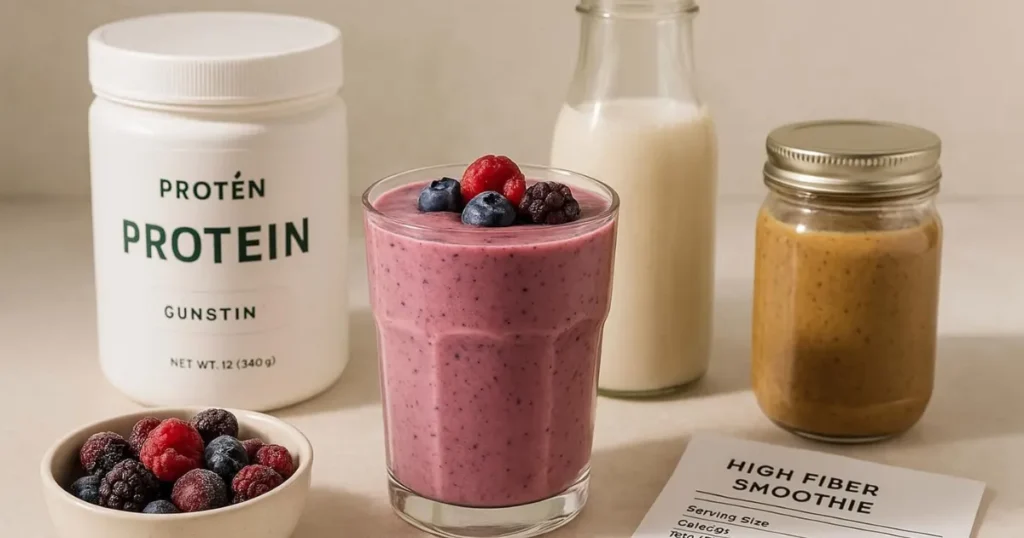
High-Fiber Breakfast Smoothie.
Nutritional Boost: 8g fiber, minimal calories.
Ingredients:
- 1 cup unsweetened almond milk (30 calories).
- 1 scoop vanilla protein powder (120 calories).
- 10g psyllium husk powder (20 calories).
- 1 cup frozen berries (70 calories).
- 1 tablespoon almond butter (90 calories).
Instructions:
- Blend almond milk, protein powder, and berries until smooth.
- Add psyllium and almond butter.
- Pulse briefly (3-5 seconds) to incorporate.
- Let rest 2 minutes to thicken.
- Add water if too thick.
Total Nutrition: 330 calories, 28g protein, 8g fiber, 8g net carbs.
Low-Carb Psyllium Bread.
Per Slice: 2g net carbs, 4g fiber, 80 calories.
Ingredients:
- 30g psyllium husk powder.
- 6 large eggs.
- 150g almond flour.
- 2 tsp baking powder.
- 1 tsp salt.
- 250ml warm water.
Instructions:
- Whisk eggs with water.
- Mix dry ingredients separately.
- Combine wet and dry, stir quickly.
- Pour into a greased loaf pan immediately.
- Bake at 175°C ( 350°F ) for 60 minutes.
- Cool completely before slicing.
Digestive Wellness Tea.
Per Serving: 5g fiber, 10 calories.
Ingredients:
- 5g psyllium husk powder.
- 250ml warm water.
- 1 tsp honey (optional).
- Fresh lemon juice (optional).
Instructions:
- Mix psyllium into warm (not hot) water.
- Stir vigorously for 30 seconds.
- Add honey and lemon if desired.
- Drink immediately before the gel forms.
- Follow with additional 250ml plain water.
Best Time: First thing in the morning or before bed for overnight digestive support.
Storage and Shelf Life: Preserving Psyllium Husk Powder Nutrition Facts Value.
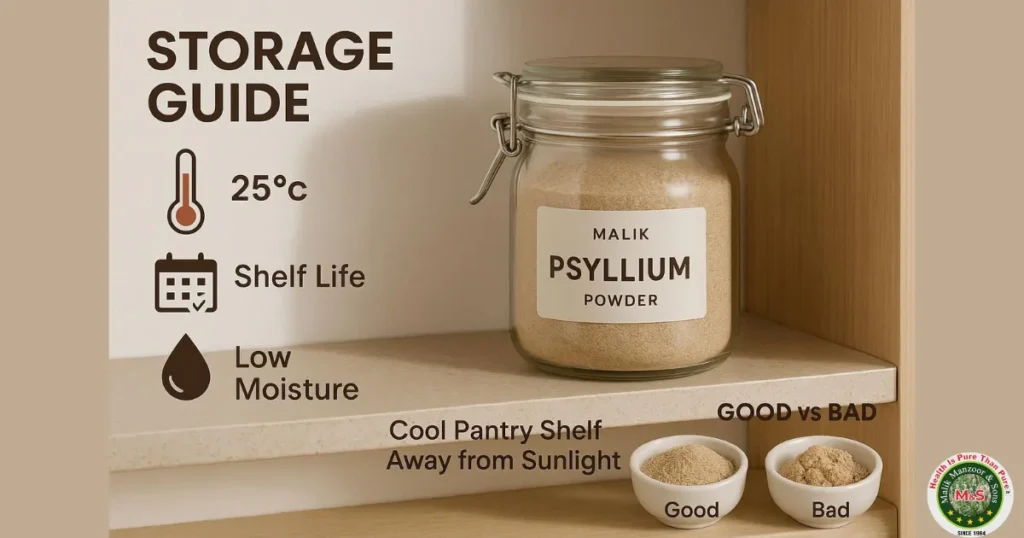
Proper storage maintains psyllium’s nutritional integrity:
Ideal Conditions:
- Cool, dry location (below 25°C/77°F).
- Airtight container to prevent moisture absorption.
- Protected from direct sunlight.
- Away from strong-smelling substances (psyllium absorbs odors).
Shelf Life:
- Unopened: 2-3 years from the manufacture date.
- Opened: 12-18 months with proper storage.
Signs of Degradation:
- Clumping (indicates moisture exposure).
- Off odors.
- Color changes (should remain light tan/cream).
Tracking Your Intake: Practical Applications.
For Weight Loss.
- Daily Target: 15-20 grams psyllium (120-160 calories)
- Fiber Contribution: 12-16 grams (48-64% daily value)
- Protocol: 5g before each main meal with 250ml water.
Track alongside total calorie intake. The satiety effect should reduce overall calories by 100-300 per day without conscious restriction.
For Cholesterol Management.
- Daily Target: 10-15 grams psyllium
- Fiber Contribution: 8-12 grams
- Protocol: 5g with breakfast and dinner.
Monitor cholesterol levels every 4-6 weeks. Studies show a 5-15% LDL reduction with a 10-20g daily intake over 8 weeks.
For Blood Sugar Control.
- Daily Target: 10-15 grams psyllium
- Fiber Contribution: 8-12 grams
- Protocol: 5g before carbohydrate-rich meals.
Test blood glucose 2 hours post-meal to observe the blunting effect on sugar spikes.
For General Digestive Health.
- Daily Target: 10 grams psyllium
- Fiber Contribution: 8 grams (32% daily value)
- Protocol: 5g twice daily, morning and evening.
Adjust timing based on individual bowel movement patterns. For constipation relief, evening doses work best for most people.
Psyllium Husk Powder Nutrition Facts Advantages: Pros and Cons.
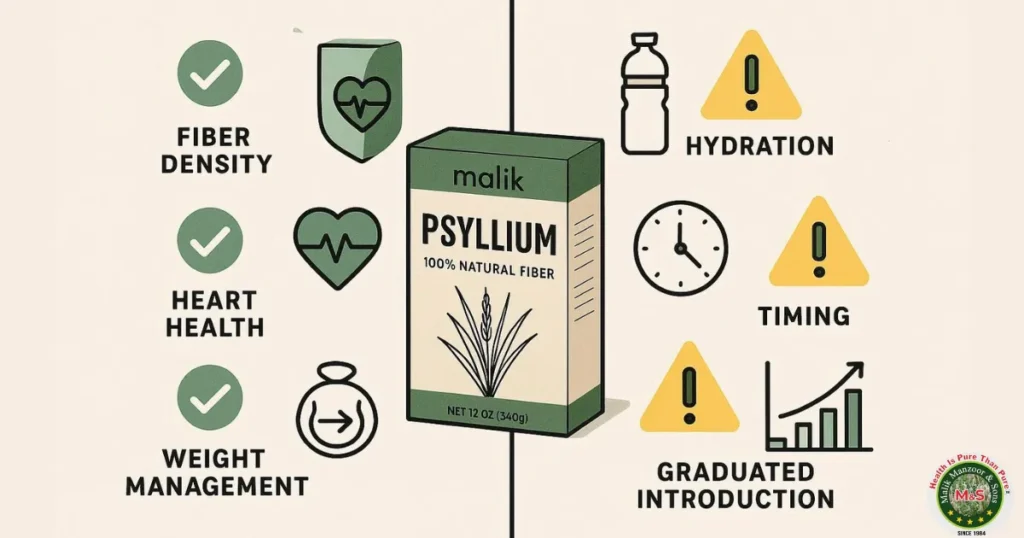
Advantages.
- Exceptional Fiber Density: Delivers more soluble fiber per calorie than virtually any food source.
- Blood Sugar Friendly: Minimal impact on glucose levels makes it suitable for diabetics.
- Heart Health Support: Proven LDL cholesterol reduction through bile acid binding.
- Weight Management Aid: High satiety-to-calorie ratio supports calorie reduction without hunger.
- Dietary Flexibility: Compatible with keto, vegan, gluten-free, and most therapeutic diets.
- Minimal Processing Required: Retains natural nutritional profile without synthetic fortification.
- Cost-Effective Nutrition: Provides more fiber per dollar than most food sources.
- Long Shelf Life: Maintains nutritional value for months when properly stored.
Considerations.
- Requires Adequate Hydration: Insufficient water intake negates benefits and creates risks.
- Potential Drug Interactions: May affect medication absorption when taken concurrently.
- Initial Digestive Adjustment: Gas and bloating are possible during the first 1-2 weeks.
- Not a Complete Nutrient Source: Provides fiber but lacks proteins, fats, and most vitamins.
- Texture Challenges: Some find the gel-like consistency unpalatable.
- Gradual Introduction Necessary: Rapid increases can cause significant digestive discomfort.
- Quality Variations: Lower-grade products may contain fillers, reducing nutritional value.
Real-World Applications: Case Examples.
Case Study 1: Managing Type 2 Diabetes.
A 52-year-old incorporating 15 grams daily psyllium (providing 12g fiber, approximately 30 calories) experienced:
- Average blood glucose reduction: 18 mg/dL.
- HbA1c improvement: 0.8%.
- No medication changes required.
The nutritional profile’s near-zero net carbs allowed diabetes-friendly supplementation without complicating carbohydrate counting.
Case Study 2: Weight Loss Support.
A 38-year-old using 20 grams daily (16g fiber, 40 calories) before meals reported:
- Average daily calorie reduction: 200-250 calories.
- 12-week weight loss: 6.2 kg (13.7 lbs).
- No hunger or deprivation feelings.
The minimal caloric addition (40 calories) was offset by reduced intake at meals, creating a net caloric deficit.
Case Study 3: Cholesterol Management.
A 45-year-old with borderline-high cholesterol taking 10 grams daily (8g fiber, 20 calories) for 12 weeks showed:
- Total cholesterol decrease: 28 mg/dL.
- LDL cholesterol decrease: 22 mg/dL.
- HDL unchanged (desirable).
The negligible fat content ensured no dietary cholesterol contribution, while the fiber actively reduced serum levels.
Making Informed Choices: Psyllium Husk Powder Nutrition Facts Quality Indicators.
When evaluating psyllium products based on nutritional information:
Premium Indicators:
- Fiber content: 80-85g per 100g.
- Total carbohydrates closely match fiber content.
- Minimal additives or fillers.
- Clear source identification (country/region).
- Third-party testing certification.
Red Flags:
- Fiber content below 70g per 100g (indicates dilution).
- Significant sugar content (added sweeteners).
- Unspecified “proprietary blends”.
- Vague origin information.
- Unrealistic health claims.
Whether seeking bulk orders or retail quantities, prioritizing these quality markers ensures you receive the nutritional profile you’re paying for.
Integration with Medical Nutrition Therapy.
Healthcare practitioners increasingly recommend psyllium as part of therapeutic nutrition protocols:
Cardiovascular Nutrition Plans:
The cholesterol-lowering properties support heart disease management alongside dietary fat modifications.
Diabetes Meal Planning:
The blood sugar-stabilizing effects complement carbohydrate counting and glycemic index approaches.
Inflammatory Bowel Disease:
The gentle bulking action and SCFA production support remission maintenance in some patients (though individual tolerance varies).
Pre-Surgical Prep:
High fiber loads before colonoscopy or certain surgeries help clear the digestive tract naturally.
Environmental and Nutritional Sustainability.
Psyllium’s nutritional efficiency extends to environmental sustainability. The crop requires:
- Minimal water compared to many fiber sources.
- Few agricultural inputs (pesticides, fertilizers).
- Short growing season (3-4 months).
- Full plant utilization (no waste products).
From a nutritional-ecological perspective, psyllium delivers maximum fiber nutrition with minimal environmental footprint – approximately 0.2 kg CO2 equivalent per 100g fiber, compared to 0.8-1.2 kg for many grain-based fibers.
What are the complete psyllium husk powder nutrition facts per serving?
A typical 10-gram serving contains approximately 18-20 calories, 8-8.5 grams of dietary fiber, 0.2-0.4 grams of protein, trace amounts of fat, and virtually zero net carbohydrates. This represents 32-34% of the recommended daily fiber intake with minimal caloric impact.
How many calories are in 100 grams of psyllium husk powder?
Pure psyllium husk powder contains approximately 180-200 calories per 100 grams. However, standard serving sizes range from 5-10 grams, providing only 9-20 calories per serving, making it an extremely low-calorie fiber source.
Does psyllium husk powder contain any protein or healthy fats?
Psyllium contains minimal protein (2-4 grams per 100g) and trace amounts of fat (0.5-1 gram per 100g). It’s primarily a fiber source rather than a protein or fat source, and should be part of a balanced diet including adequate proteins and healthy fats from other foods.
What vitamins and minerals are in psyllium husk powder?
Psyllium provides small amounts of iron (2-4mg per 100g), calcium (20-30mg), magnesium (15-25mg), and potassium (60-80mg). While these contribute to daily intake, psyllium’s primary nutritional value comes from its exceptional fiber content rather than vitamins or minerals.
Is psyllium husk powder suitable for ketogenic diets?
Yes, psyllium is highly keto-friendly with only 0-3 grams of net carbohydrates per 100 grams. The overwhelming majority of carbohydrates come from fiber, which doesn’t impact blood sugar or ketosis. It helps address the common low-carb challenge of insufficient fiber intake.
Can I get enough fiber from psyllium alone?
While psyllium provides exceptional fiber density, a healthy diet should include fiber from diverse sources including vegetables, fruits, legumes, and whole grains. Psyllium works best as a supplement to, not a replacement for, dietary fiber from whole foods.
How does organic psyllium differ nutritionally from conventional?
Organic and conventional psyllium have virtually identical nutritional profiles – same fiber content, calories, and micronutrients. Organic certification ensures pesticide-free growing practices but doesn’t change the inherent nutritional composition.
Does cooking or baking affect psyllium’s nutritional value?
Heat doesn’t significantly degrade the fiber content in psyllium, so its nutritional value remains stable when baked into breads or cooked. However, the gel-forming properties may be altered by high temperatures, affecting texture and consistency.
What’s the optimal daily amount for health benefits?
Most research supports 10-20 grams daily (8-16 grams fiber) for cholesterol management, blood sugar control, and digestive regularity. Start with 5 grams daily and gradually increase to avoid digestive discomfort, always with adequate water.
How should I read labels to ensure quality nutritional content?
Look for products listing at least 4 grams fiber per 5-gram serving, minimal additives, and “100% pure psyllium husk powder” as the only ingredient. Fiber content below 70 grams per 100 grams suggests dilution or lower quality.
Final Thoughts: Nutritional Simplicity with Powerful Impact.
The psyllium husk powder nutrition 100g breakdown reveals a remarkable nutritional profile: approximately 180-200 calories, 80-85 grams of primarily soluble fiber, and virtually no net carbohydrates, all in a plant-based package that supports digestive health, cardiovascular function, blood sugar management, and weight control.
Understanding these psyllium husk powder nutrition facts empowers you to harness this natural fiber strategically, whether you’re managing specific health conditions, pursuing wellness goals, or simply ensuring adequate fiber intake in your daily routine. The numbers tell a clear story: exceptional nutritional efficiency that delivers maximum health benefits with minimal calories.
From supporting gut microbiome diversity to lowering cholesterol and promoting satiety, psyllium’s nutritional value extends far beyond its basic macronutrient profile. When you choose quality products from trusted sources committed to purity and potency, you’re investing in one of nature’s most nutritionally efficient health tools.

Isabgol Ke Fayde – Psyllium Husk Ke Poori Science-Based Rahnumayi – 2026
Isabgol ke fayde jaanna aaj ke daur mein zyada zaroori
Isabgol Benefits in Hindi | Psyllium Husk Ke Fayde, Sahi Upyog Aur Savdhaniyan – 2026
Agar aap isabgol benefits in hindi mein samajhna chahte hain,