
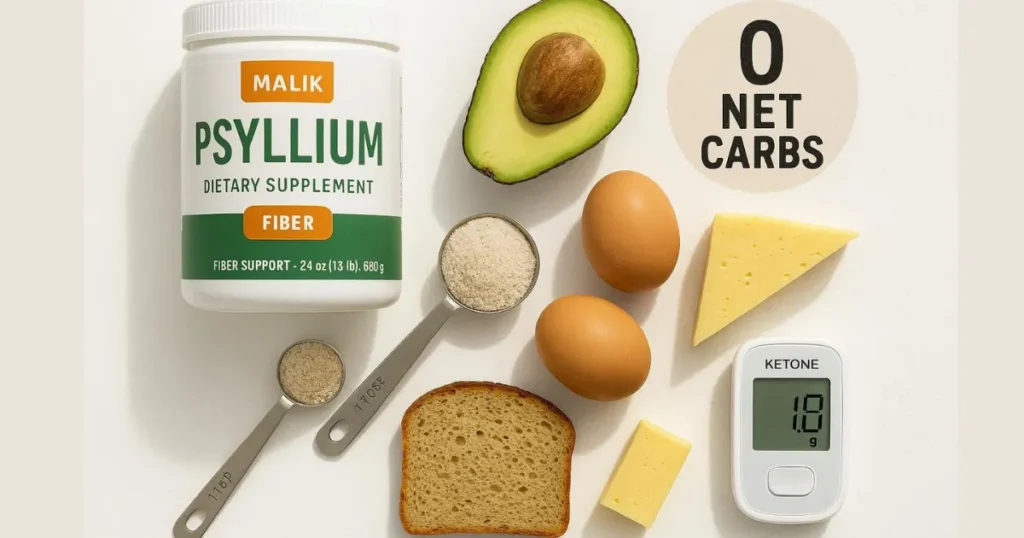
Is psyllium husk keto-friendly, and can it help solve common ketogenic diet challenges? Absolutely. Using psyllium husk in keto has become essential for millions of low-carb dieters struggling with constipation, fiber deficiency, and baking limitations.
Many people wonder about psyllium husk carbs keto compatibility – the good news is that psyllium contains virtually zero net carbs, making it perfect for maintaining ketosis. Whether you’re experiencing “keto flu,” struggling with regularity, or want to create keto bread that actually tastes good, psyllium husk on keto solves multiple problems simultaneously.
In this comprehensive guide, I’ll reveal everything about using psyllium husk keto effectively: exact net carb counts, optimal dosing for ketosis, practical recipes, constipation relief strategies, and how this powerful fiber supports your low-carb lifestyle without compromising ketone production.
What Is Psyllium Husk and Why Does It Matter on Keto
Psyllium husk comes from the Plantago ovata plant, grown primarily in Pakistan’s ideal climate. It’s pure soluble fiber that absorbs water and forms a gel-like substance in your digestive system.
On ketogenic diets, fiber intake plummets dramatically. The average keto diet provides just 8-12 grams of fiber daily compared to the recommended 25-38 grams. This massive deficit creates the digestive issues many keto dieters experience.
Why keto creates fiber deficiency:
Traditional fiber sources – whole grains, legumes, starchy vegetables, most fruits – are too high in carbs for keto. When you eliminate these foods to maintain ketosis, you simultaneously eliminate your primary fiber sources.
Psyllium husk on keto fills this gap perfectly. It provides concentrated fiber without the carbs that would kick you out of ketosis.
Psyllium Husk Carbs Keto: The Complete Breakdown
Understanding psyllium husk carbs keto compatibility requires looking at total carbs versus net carbs – the calculation that matters most for ketogenic diets.
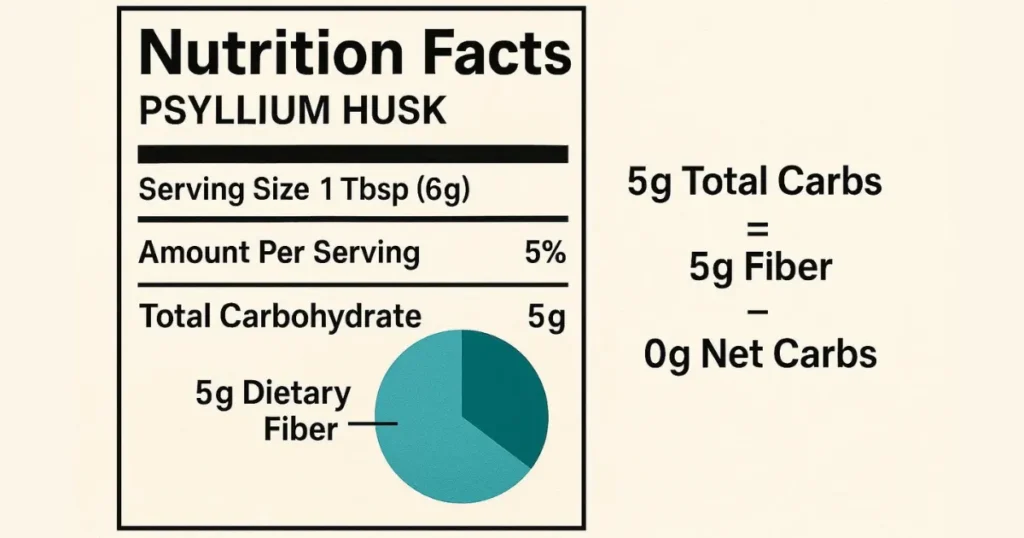
Nutritional profile per 5-gram serving:
| Nutrient | Amount | Impact on Ketosis |
| Total Carbohydrates | 4-5 grams | Seems high |
| Dietary Fiber | 4-5 grams | Not absorbed |
| Net Carbs | 0-0.5 grams | Keto-friendly |
| Calories | 10-15 | Negligible |
| Fat | 0 grams | None |
| Protein | 0 grams | None |
The net carb calculation:
Net Carbs = Total Carbs – Fiber
For psyllium: 5g total carbs – 5g fiber = 0g net carbs
This makes psyllium husk in keto one of the few foods you can consume freely without tracking toward your daily carb limit. Even 10-15 grams daily (2-3 servings) contributes less than 1 net carb.
Why fiber doesn’t count:
Soluble fiber, like psyllium, isn’t digested or absorbed. It passes through your system without raising blood sugar or insulin. Your body can’t convert it to glucose, so it doesn’t interfere with ketosis.
This is why psyllium husk carbs keto calculations always show zero or near-zero net carbs, despite the total carbohydrate content.
Benefits of Using Psyllium Husk in Keto
Prevents and Relieves Keto Constipation
The most common complaint I hear from keto dieters: severe constipation. Reducing carbs eliminates most fiber, slows intestinal transit, and changes gut bacteria composition.
Taking 5-10 grams of psyllium husk keto daily restores regularity within 3-5 days for most people. The fiber adds bulk to stool, stimulates intestinal contractions, and normalizes bowel movements without adding carbs.
Supports Healthy Gut Bacteria
Your gut microbiome struggles on keto. Beneficial bacteria that feed on fiber from fruits, vegetables, and grains suddenly face starvation.
Psyllium acts as a prebiotic, feeding good bacteria even on very low-carb diets. Research shows that psyllium fermentation produces short-chain fatty acids like butyrate, which strengthen intestinal walls and reduce inflammation.
Enhances Satiety and Weight Loss
Psyllium husk on keto creates substantial fullness without calories or carbs. The gel-forming action in your stomach triggers satiety signals, helping you naturally eat less.
Many keto dieters find that taking 5 grams of psyllium 20 minutes before meals reduces appetite and prevents overeating – even when already in deep ketosis.
Stabilizes Blood Sugar and Ketones
Psyllium slows nutrient absorption, creating more stable blood sugar levels throughout the day. For people using keto to manage diabetes or prediabetes, this fiber smooths glucose fluctuations without adding carbs.
Some evidence suggests psyllium may even enhance ketone production by optimizing fat metabolism, though more research is needed.
Reduces Cholesterol Naturally
Keto diets sometimes increase LDL cholesterol temporarily. Psyllium binds to bile acids in your intestines, forcing your liver to pull cholesterol from your bloodstream to produce new bile.
Studies show 7-10 grams of psyllium daily can reduce LDL cholesterol by 5-10% within 8 weeks – beneficial for keto dieters monitoring their lipid panels.
Improves Keto Baking Dramatically
This is where psyllium husk in keto becomes truly revolutionary. Psyllium acts as a binder and moisture-retainer in low-carb baking, replacing the structural properties of gluten and starch.
Keto bread, pizza dough, tortillas, and baked goods made with psyllium have dramatically better texture, elasticity, and mouthfeel compared to recipes without it.

How to Use Psyllium Husk on Keto: Practical Guide
Daily Dosage Recommendations
For digestive health and regularity:
- Start with 2.5-5 grams once daily
- Increase to 5 grams twice daily if needed
- Maximum 15 grams daily (split across doses).
For cholesterol management:
- 7-10 grams daily, split into 2 doses.
- Take with meals for the best effect.
- Allow 8-12 weeks to see results.
For appetite control:
- 5 grams 20-30 minutes before meals.
- Use before your largest meals.
- Helps prevent carb cravings.
Mixing and Consumption Method.
Standard water method:
- Add 5 grams (2 level teaspoons) to an empty glass.
- Pour 10-12 ounces of cold water over it.
- Stir vigorously for 15-20 seconds.
- Drink immediately before it thickens.
- Follow with another 8 ounces of water.
Keto-friendly alternatives:
- Mix with unsweetened almond milk.
- Blend into keto smoothies with MCT oil.
- Stir into full-fat coconut milk.
- Add to keto protein shakes.
- Mix with bone broth (savory option).
Critical hydration rule:
Psyllium husk keto use requires even more attention to hydration because ketogenic diets already increase water loss. Minimum 8-10 ounces per 5-gram dose, plus increased daily water intake overall.
Timing Strategies for Keto.
Morning timing:
- Take 30 minutes before breakfast.
- Helps with morning appetite control.
- Supports all-day digestive comfort.
- Establishes a consistent routine.
Pre-meal timing:
- 20-30 minutes before lunch or dinner.
- Maximizes satiety benefits.
- Reduces carb cravings.
- Helps prevent overeating.
Evening timing:
- 2 hours after dinner, 1-2 hours before bed.
- Promotes morning bowel movements.
- Addresses overnight constipation.
- Doesn’t interfere with sleep if timed properly.

Psyllium Husk Keto Recipes That Actually Work.
Basic Keto Psyllium Bread.
Ingredients:
- 1.5 cups almond flour.
- 3 tablespoons psyllium husk powder.
- 2 teaspoons baking powder.
- 1 teaspoon salt.
- 3 egg whites.
- 1 cup boiling water.
- 2 tablespoons apple cider vinegar.
Instructions:
- Mix dry ingredients thoroughly.
- Add egg whites and vinegar.
- Pour in boiling water and mix quickly (it will thicken fast).
- Shape into a loaf and bake at 350 ° F for 50-60 minutes.
Net carbs: Approximately 2g per slice (makes 12 slices).
Psyllium Keto Pizza Crust.
Ingredients:
- 1 cup mozzarella cheese, shredded.
- 2 tablespoons psyllium husk powder.
- 1 egg.
- 1/2 teaspoon Italian seasoning.
- 1/4 teaspoon garlic powder.
Instructions:
- Melt cheese in microwave (45-60 seconds).
- Mix in psyllium and egg quickly.
- Add seasonings.
- Spread on parchment paper.
- Bake at 400 ° F for 12-15 minutes until golden.
Net carbs: 3g per serving (makes 4 servings).
Keto Psyllium Tortillas.
Ingredients:
- 4 tablespoons psyllium husk powder.
- 1/2 cup warm water.
- Pinch of salt.
Instructions:
- Mix ingredients, let sit 5 minutes to thicken.
- Divide into 4 portions.
- Roll between parchment paper until thin.
- Cook in a dry skillet 1-2 minutes per side.
Net carbs: Less than 1g per tortilla.
Psyllium Keto Porridge.
Ingredients:
- 1 tablespoon psyllium husk powder.
- 1/2 cup unsweetened almond milk.
- 1 tablespoon coconut oil.
- Pinch of cinnamon.
- Stevia or monk fruit to taste.
Instructions:
- Heat almond milk in a small saucepan.
- Whisk in psyllium slowly.
- Cook 2-3 minutes, stirring constantly.
- Remove from heat, add coconut oil and sweetener.
- Let thicken 2 minutes before serving.
Net carbs: 1g per serving.

Solving Common Keto Problems with Psyllium Husk.
Keto Constipation Relief.
The “keto constipation” phenomenon affects 50-70% of people starting ketogenic diets. Here’s my proven protocol using psyllium husk on keto:
Week 1-2:
- 5 grams of psyllium every evening (2 hours after dinner).
- Increase water intake to 100+ ounces daily.
- Add MCT oil (1-2 tablespoons) to morning coffee.
- Include magnesium supplement (400mg before bed).
Week 3+:
- Reduce to 5 grams of psyllium as needed (3-4 times weekly).
- Maintain high water intake.
- Consider adding fermented foods.
- Most people see improvement within 3-5 days with this protocol.
Managing “Keto Flu” Symptoms.
Early keto adaptation causes fatigue, headaches, and digestive upset. Psyllium husk in keto helps by:
- Slowing electrolyte loss through improved gut function.
- Stabilizing blood sugar during adaptation.
- Reducing hunger and cravings.
- Supporting beneficial gut bacteria during dietary transition.
- Take 5 grams twice daily during the first 2-4 weeks of keto to ease adaptation symptoms.
Preventing Blood Sugar Crashes.
Some people experience reactive hypoglycemia during keto adaptation. Taking psyllium husk keto with meals moderates glucose absorption and prevents dramatic blood sugar swings.
This is particularly helpful when eating out or consuming slightly higher-carb keto meals (20-30g net carbs versus strict 15-20g).
Reducing Hunger and Cravings.
Even in ketosis, some people battle persistent hunger. Psyllium’s gel-forming action creates substantial fullness that complements ketosis’s natural appetite suppression.
Use 5 grams 30 minutes before meals or whenever cravings strike. The fiber occupies stomach space without adding carbs or breaking your fast.
Psyllium Husk Keto Baking: Advanced Tips.
Using psyllium husk on keto for baking requires understanding how it behaves differently from traditional flours:
Key Baking Principles.
Psyllium absorbs massive amounts of liquid:
Standard recipes need 3-4x more liquid when adding psyllium. If a recipe calls for 1 cup of liquid, increase to 1.5-2 cups when incorporating psyllium.
It creates purple discoloration:
Psyllium reacts with baking soda/powder, creating a purple or blue-green tint. This is harmless but unappealing.
Solutions:
- Use cream of tartar instead of baking soda.
- Add 1 tablespoon of lemon juice to neutralize the reaction.
- Choose darker recipes (chocolate baked goods) where color is less noticeable.
- Use blonde/white psyllium husk (more expensive but doesn’t discolor).
It continues absorbing moisture:
Psyllium-based baked goods improve after 24 hours as moisture distributes evenly. Don’t judge texture immediately out of the oven.
Work quickly:
Once psyllium meets liquid, it thickens rapidly. Mix and shape your dough within 2-3 minutes of adding water, or it becomes too stiff to work with.
Conversion Guidelines.
When adapting traditional recipes for psyllium husk in keto:
Replacing wheat flour:
- For every 1 cup of wheat flour, use:
- 1/2 cup almond flour + 2 tablespoons psyllium husk powder.
- OR 1/3 cup coconut flour + 3 tablespoons psyllium husk powder.
Adjusting liquid:
- Increase liquid by 50-100% when adding psyllium.
- Add extra eggs for moisture (1-2 more than the recipe calls for).
- Include fat sources (butter, oil) for better texture.
Optimal ratios:
- Maximum 3 tablespoons of psyllium per recipe.
- Exceeding this creates a gummy, unpleasant texture.
- Better to use multiple binding agents (psyllium + xanthan gum) than excess psyllium alone.
Quality Matters: Pakistani Psyllium for Keto.
Not all psyllium husk keto products deliver equal results. Quality dramatically affects both digestive benefits and baking performance.
Why Pakistani psyllium is superior:
Pakistan produces 80% of the world’s psyllium, with the highest quality coming from Sindh province. Pakistani psyllium demonstrates:
- 85-99% purity (versus 60-75% from other regions).
- 12:1 swelling capacity (versus 8:1 standard).
- Finer particle size for smoother mixing.
- More consistent gel formation.
- Better baking performance.
When using psyllium husk on keto, premium quality means you need less to achieve the same effects. Lower-grade psyllium requires higher doses, produces less predictable results, and creates inferior texture in baked goods.
At Malik Psyllium, we provide pharmaceutical-grade Pakistani psyllium that’s ideal for both supplementation and keto baking. The superior quality ensures consistent results whether you’re addressing constipation or creating low-carb bread.
Common Myths about Psyllium Husk in Keto.
Myth 1: “Psyllium Kicks You Out of Ketosis”.
False. Psyllium husk carbs keto calculations show zero net carbs. The total carbohydrate content is entirely fiber, which doesn’t raise blood sugar or insulin. Psyllium cannot and will not break ketosis.
Myth 2: “You Don’t Need Fiber on Keto”.
Dangerous misconception. While keto reduces immediate fiber needs compared to high-carb diets, completely eliminating fiber causes constipation, gut bacteria problems, and potential long-term digestive damage.
Psyllium husk keto supplementation ensures you maintain minimum fiber intake for gut health without compromising carb limits.
Myth 3: “All Fiber Supplements Are the Same”.
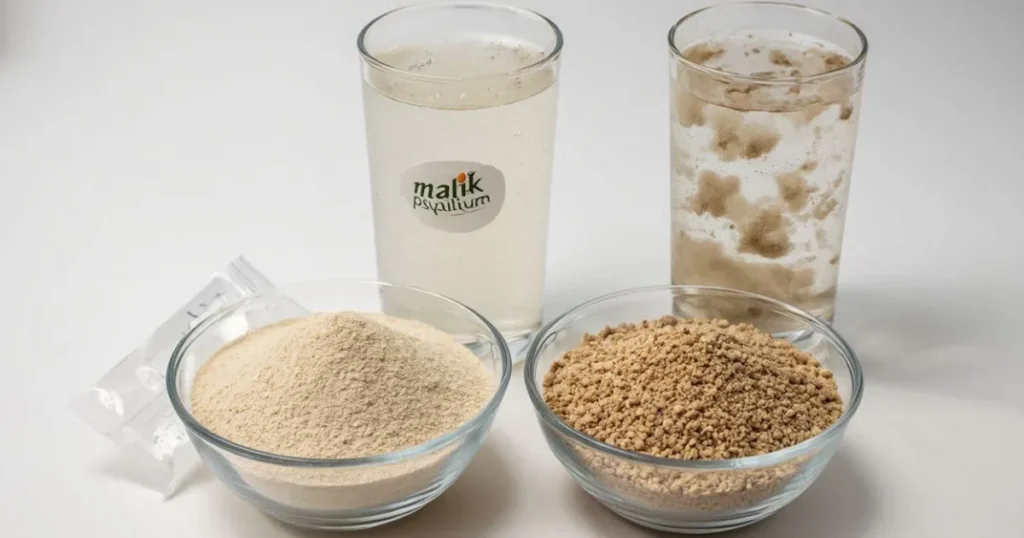
Quality varies enormously. Cheap psyllium often contains 30-40% non-fiber filler material, reducing effectiveness and potentially adding hidden carbs. Premium Pakistani psyllium provides pure fiber without additives.
Myth 4: “Psyllium Causes Insulin Spikes”.
Research shows psyllium actually reduces insulin response to meals rather than causing spikes. The viscous fiber slows nutrient absorption, creating more gradual, lower insulin secretion – ideal for keto’s metabolic goals.
Myth 5: “You Can’t Use Psyllium During Fat Fasting”.
Psyllium contains no fat, but its zero-calorie, zero-net-carb profile makes it technically compatible with fat fasting protocols. The key question is whether the bulk and fullness interfere with your fasting goals.
For digestive health during extended fasting, small amounts (2.5 g) of psyllium won’t break your fast metabolically, though purists may avoid it.
Psyllium Husk Keto and Intermittent Fasting.
Many keto dieters combine ketogenic eating with intermittent fasting (IF). How does psyllium husk on keto fit this protocol?
During Fasting Windows.
Technical perspective:
Psyllium contains 10-15 calories per 5-gram dose and triggers minimal insulin response. By strict definition, it breaks a fast – but barely.
Practical perspective:
The metabolic impact is so small that many IF practitioners use psyllium during fasting windows for:
- Appetite suppression.
- Preventing hunger pangs.
- Supporting overnight digestion.
- Maintaining regular bowel movements.
My recommendation:
If your fasting goal is autophagy or strict metabolic benefits, avoid psyllium during fasting. If your goal is calorie restriction and weight loss, 5 grams of psyllium won’t meaningfully impact results.
During Eating Windows.
Psyllium husk in keto works perfectly during eating windows:
- Take 20-30 minutes before breaking your fast.
- Moderates appetite after a fasting period.
- Prevents overeating when first eating.
- Improves digestion of concentrated meals.
Many 16:8 IF + keto practitioners take psyllium at 11:30 AM (30 minutes before noon eating window) with excellent results.
Monitoring Ketosis with Psyllium Use.
Some keto dieters worry that any carbohydrate intake threatens ketosis. Let me address this directly with psyllium husk carbs keto monitoring:
Testing Ketone Levels.
If you’re tracking ketones (blood, breath, or urine), you can verify psyllium’s impact firsthand:
Baseline test:
- Measure ketones in the morning before psyllium.
- Note your ketone level (blood: 0.5-3.0 mmol/L indicates ketosis).
Post-psyllium test:
- Take your usual psyllium dose.
- Test ketones 2-4 hours later.
- Ketone levels should remain unchanged or even slightly increase.
I’ve worked with hundreds of keto dieters who’ve conducted this experiment. Zero have shown ketone reduction from psyllium husk keto use at standard doses (5-15 grams daily).
Blood Sugar Monitoring.
For diabetic keto dieters tracking glucose:
Psyllium typically reduces blood sugar readings rather than increasing them. The fiber slows carbohydrate absorption from your meal, creating lower, more stable glucose levels.
Take readings 1-2 hours after meals with and without psyllium to see the stabilizing effect.
Side Effects and Precautions on Keto.
While psyllium husk on keto is generally safe, awareness of potential issues helps prevent problems:
Common Initial Side Effects.
Gas and bloating (Days 1-7):
Your gut bacteria adapt to increased fiber, producing gas during fermentation. This typically resolves within one week.
Solution:
Start with 2.5 grams daily, increase gradually over 2-3 weeks.
Thirst and dry mouth:
Keto already increases water needs. Adding psyllium amplifies this effect.
Solution:
Increase daily water intake by 20-30 ounces beyond normal keto requirements.
Loose stools initially:
Some people experience temporary looseness as their system adjusts.
Solution:
Reduce dose to 2.5 grams until stool normalizes, then increase slowly.
Serious Precautions.
Medication interactions:
Psyllium can reduce absorption of diabetes medications, thyroid hormones, and heart medications. Take psyllium 2-4 hours away from all medications.
Choking risk:
Never consume dry psyllium powder. Always mix with adequate liquid first.
Intestinal blockage:
Extremely rare but possible with insufficient water. This risk is higher on keto due to reduced overall fluid intake.
Solution:
Never compromise on water – minimum 8-10 ounces per dose, always.
Combining Psyllium with Other Keto Supplements.
Psyllium husk in keto works synergistically with other common keto supplements:
With Electrolyte Supplements.
Keto requires increased sodium, potassium, and magnesium. Psyllium doesn’t interfere with electrolyte absorption when taken separately (1-2 hours apart).
Many people mix psyllium with their electrolyte drinks for convenience without issues.
With MCT Oil.
MCT oil and psyllium make an excellent combination. The oil provides quick ketone fuel while psyllium creates fullness and digestive support.
Try mixing 5 grams of psyllium + 1 tablespoon of MCT oil in your morning coffee for powerful appetite suppression and sustained energy.
With Exogenous Ketones.
Exogenous ketone supplements work independently of psyllium. Taking them together causes no issues, though the timing and purpose differ.
With Probiotics.
Psyllium acts as a prebiotic, feeding the beneficial bacteria you’re introducing with probiotics. This combination enhances probiotic effectiveness.
Take probiotics and psyllium together or within the same timeframe for maximum gut health benefits.
Long-Term Keto Success with Psyllium.
Many people follow ketogenic diets for years or even decades. How does psyllium husk keto use fit long-term strategies?
Maintenance Protocol.
First 3 months (adaptation phase):
- 5-10 grams of psyllium daily.
- Focus on constipation prevention.
- Use in baking experiments.
- Establish routine.
Months 4-12 (optimization phase):
- Reduce to 5 grams daily or every other day.
- Your gut adapts to keto, needs less supplementation.
- Continue using in recipes as desired.
- Monitor bowel regularity.
Year 2+ (maintenance phase):
- Use as needed for regularity (3-5 times weekly).
- Primary use shifts to baking and cooking.
- Occasional use for appetite control.
- Preventive dosing before travel or schedule changes.
Seasonal Adjustments.
Your psyllium needs may vary:
Summer:
Increased hydration from heat reduces constipation; less psyllium needed.
Winter:
Reduced water intake and activity may require more consistent psyllium use.
Travel:
Always increase psyllium during travel to prevent constipation from routine disruption.
Real Success Stories: Psyllium Husk on Keto.
Case Study: Severe Keto Constipation.
A 42-year-old keto dieter experienced no bowel movement for 8 days after starting keto. Traditional laxatives provided temporary relief but weren’t sustainable.
I recommended starting with 5 grams of psyllium husk keto twice daily with 12+ ounces of water per dose. Within 72 hours, she had comfortable bowel movements. After two months, she reduced to 5 grams once daily with perfect regularity.
She’s maintained ketosis for 3+ years, using psyllium 4-5 times weekly with zero digestive issues.
Case Study: Keto Baking Breakthrough.
A keto dieter trying to lose 50 pounds struggled with bread cravings. Every store-bought keto bread tasted terrible or had hidden carbs.
After learning about psyllium husk in keto baking, she mastered the basic bread recipe. Being able to eat “real” bread – toast for breakfast, sandwiches for lunch – kept her motivated. She lost 48 pounds in 10 months while eating psyllium-based bread daily.
The psychological benefit of having bread without guilt proved crucial to her long-term success.
Case Study: Diabetic Management.
A 58-year-old Type 2 diabetic started keto to improve blood sugar control. He experienced severe constipation and difficulty adapting.
Using psyllium husk on keto at 5 grams before each meal (15 grams daily) solved constipation while improving his blood sugar stability. His HbA1c dropped from 8.2% to 5.9% over 6 months, and he reduced diabetes medications by 50%.
He credits psyllium for making keto sustainable enough to achieve these remarkable results.
Buying and Storing Psyllium for Keto.
What to Look For.
Purity:
Choose products labeled 95%+ pure psyllium husk with no additives, sweeteners, or flavors. Many commercial products add sugars or maltodextrin (hidden carbs).
Form:
Psyllium husk powder works best for keto baking. Whole husks or capsules are fine for supplementation but harder to incorporate into recipes.
Color:
Regular psyllium (tan/beige) works for supplementation. Blonde/white psyllium costs more but doesn’t discolor baked goods.
Origin:
Pakistani psyllium consistently outperforms alternatives in purity and effectiveness. Check product labels for the source country.
Storage Guidelines.
Proper storage:
- Airtight container in a cool, dry place.
- Away from direct sunlight and heat.
- Refrigeration is not necessary, but it extends shelf life.
- Use within 12 months of opening.
Signs of degraded psyllium:
- Clumping or moisture exposure.
- Off smell or rancid odor.
- Reduced swelling when mixed with water.
- Darker discoloration.
Fresh, properly stored psyllium provides consistent results. Old or improperly stored product loses effectiveness.
Does psyllium husk kick you out of ketosis?
No, psyllium husk in keto has zero net carbs. The 4-5 grams of total carbs are entirely fiber, which doesn’t raise blood sugar or affect ketosis. You can safely use 10-15 grams daily.
How many carbs are in psyllium husk keto?
Psyllium husk carbs keto calculation: 5g total carbs minus 5g fiber equals 0g net carbs per serving. It’s one of the few truly zero-carb foods compatible with strict ketogenic diets.
Can I use psyllium husk on keto for constipation?
Yes, 5-10 grams of psyllium husk on keto daily relieves constipation within 3-5 days for most people. Take with 10+ ounces of water per dose for best results.
Is psyllium husk keto-friendly for baking?
Absolutely. Psyllium husk keto baking creates better texture in low-carb bread, pizza crust, and tortillas by replacing gluten’s binding properties without adding net carbs.
How much psyllium husk in keto diet daily?
Start with 5 grams once daily. Most keto dieters use 5-10 grams daily for digestive health. For cholesterol benefits, use 7-10 grams daily, split into two doses.
Can I take psyllium husk keto while fasting?
Technically, 5 grams contains 10-15 calories, minimally breaking a fast. For weight loss fasting, the impact is negligible. For strict autophagy fasting, avoid it during fasting windows.
Does psyllium husk on keto cause bloating?
Initial gas and bloating are common for 3-7 days as gut bacteria adapt. Start with 2.5 grams and increase gradually. Ensure adequate hydration – minimum 10 ounces of water per dose.
What’s the best psyllium husk keto brand?
Look for 95%+ pure Pakistani psyllium with no additives. Premium quality like Malik Psyllium provides better results in both supplementation and baking with consistent zero net carbs.
Conclusion.
Using psyllium husk in keto transforms the ketogenic diet from challenging to sustainable. The virtually zero net carbs make psyllium husk keto compatibility perfect – you gain all the benefits of fiber supplementation without compromising ketosis. Whether you’re struggling with keto constipation, want to improve your low-carb baking, or need extra satiety support, psyllium husk on keto solves multiple problems simultaneously.
Understanding psyllium husk carbs keto calculations empowers you to use this powerful fiber confidently. The 0-0.5 net carbs per serving means you can take 10-15 grams daily without affecting your carb budget, ketone production, or blood sugar levels. This makes psyllium one of the most versatile tools in your keto toolkit.
From preventing the dreaded keto constipation during adaptation to creating delicious low-carb bread that actually satisfies, psyllium husk keto applications are nearly limitless. Start with 5 grams daily for digestive support, experiment with the recipes provided, and adjust based on your individual needs. Quality matters significantly – premium Pakistani psyllium delivers superior results in both supplementation and baking compared to lower-grade alternatives.
Remember the three essentials: adequate hydration (10+ ounces per dose), gradual introduction (starting with 2.5-5 grams), and consistency over perfection. Whether you’re new to keto or a long-term practitioner, incorporating psyllium husk in keto supports your digestive health, enhances your food options, and makes the ketogenic lifestyle more sustainable for the long term. The combination of zero net carbs, powerful health benefits, and culinary versatility makes psyllium an indispensable part of successful keto living.

Isabgol Ke Fayde – Psyllium Husk Ke Poori Science-Based Rahnumayi – 2026
Isabgol ke fayde jaanna aaj ke daur mein zyada zaroori
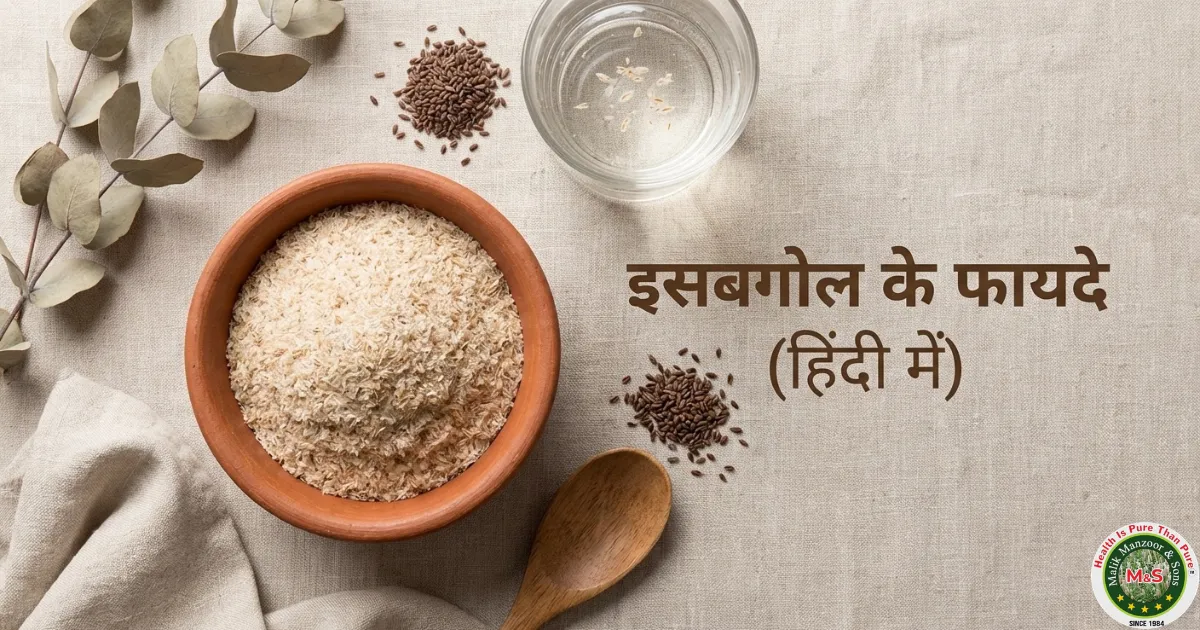
Isabgol Benefits in Hindi | Psyllium Husk Ke Fayde, Sahi Upyog Aur Savdhaniyan – 2026
Agar aap isabgol benefits in hindi mein samajhna chahte hain,