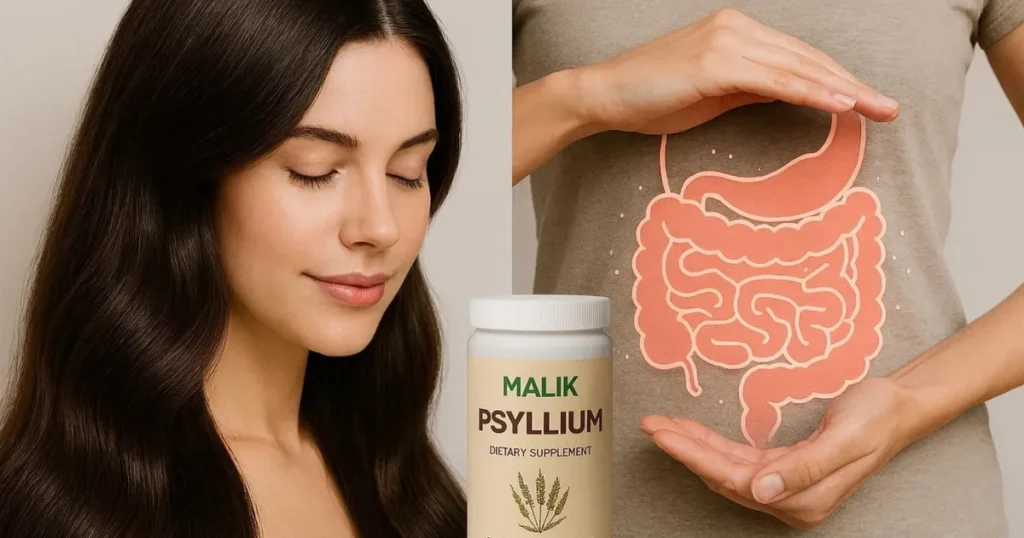
The relationship between psyllium husk hair loss and overall wellness is more connected than most people realize. While psyllium won’t regrow hair like prescription medications, the link between gut health, nutrient absorption, and hair vitality is scientifically established. If you’re experiencing thinning hair or excessive shedding, addressing digestive health with fiber might be a missing piece of your hair restoration puzzle.
Hair loss affects millions globally, with causes ranging from genetics and hormones to nutritional deficiencies and chronic inflammation. What many don’t consider is how poor gut health sabotages hair growth. When your digestive system isn’t functioning optimally, you can’t properly absorb the vitamins, minerals, and proteins your hair follicles desperately need. This is where understanding psyllium husk hair loss connections becomes valuable.
Psyllium husk doesn’t directly stimulate hair follicles or block DHT like specialized treatments. Instead, it works indirectly by optimizing digestive function, reducing systemic inflammation, supporting hormone balance, and ensuring your body can actually utilize the nutrients from your diet. For people experiencing hair loss linked to digestive issues, chronic constipation, inflammatory conditions, or nutrient malabsorption, addressing these root causes with psyllium may support healthier hair growth.
This comprehensive guide explores the science connecting psyllium husk hair loss prevention through gut health optimization. You’ll learn how digestive wellness affects hair, which hair loss types may benefit from fiber supplementation, proper protocols for using psyllium to support hair health, realistic expectations versus myths, and how to integrate fiber into a comprehensive hair restoration approach. Whether you’re dealing with gradual thinning, post-illness shedding, or chronic hair loss, understanding this gut-hair connection could transform your approach to treatment.
Understanding Hair Loss: Types and Root Causes
Before exploring how psyllium husk hair loss prevention works, let’s clarify what causes hair to fall out.
Common Hair Loss Types
Androgenetic alopecia (pattern baldness):
Genetic hair loss triggered by sensitivity to DHT hormone. The most common type affecting both men and women.
Telogen effluvium:
Temporary excessive shedding triggered by stress, illness, surgery, or nutritional deficiencies. Hair usually regrows once the trigger is addressed.
Alopecia areata:
An Autoimmune condition where the immune system attacks hair follicles, causing patchy loss.
Nutritional deficiency hair loss:
Thinning from inadequate iron, zinc, protein, biotin, or vitamins. Often accompanies digestive disorders.
Inflammatory hair loss:
Chronic inflammation affecting scalp health and follicle function.
Understanding your hair loss type helps determine whether psyllium husk hair loss support might be beneficial.
The Gut-Hair Connection
Your digestive health profoundly impacts hair growth through several mechanisms:
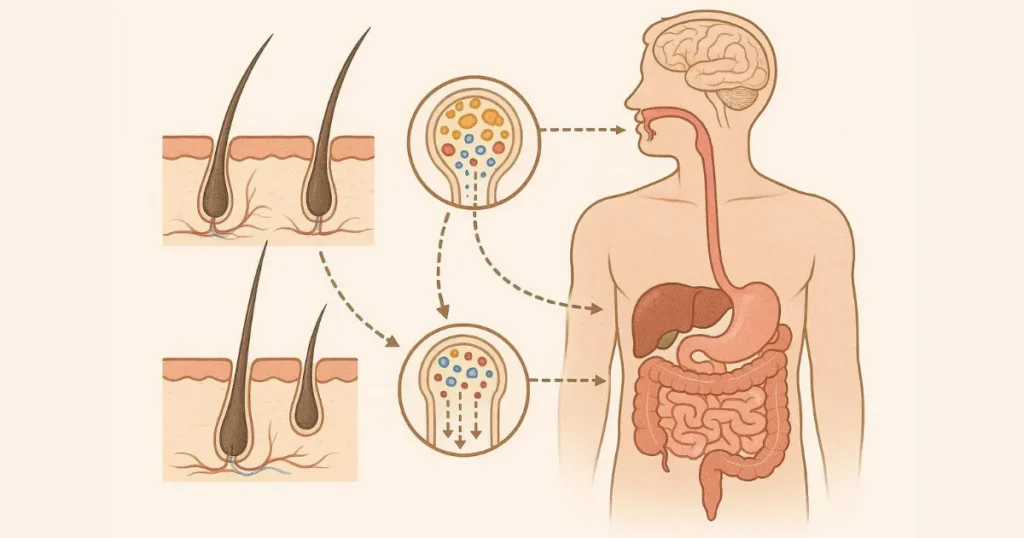
Nutrient absorption:
Even perfect diets fail if your gut can’t extract and absorb nutrients. Compromised digestion leads to deficiencies that directly cause hair loss.
Inflammation control:
Chronic gut inflammation triggers systemic inflammation, including scalp inflammation that disrupts follicle function.
Hormone regulation:
Your gut microbiome helps metabolize and eliminate excess hormones. Dysbiosis contributes to hormonal imbalances affecting hair.
Toxin elimination:
Constipation allows toxins to be reabsorbed, increasing oxidative stress throughout your body, including hair follicles.
This gut-hair axis explains why addressing digestive health with psyllium husk hair loss protocols makes scientific sense.
How Psyllium Husk Supports Hair Health Indirectly
Let me explain the mechanisms through which psyllium husk hair loss support works indirectly to create conditions for healthier hair.
Optimizing Nutrient Absorption
Psyllium improves nutrient absorption in several ways:
Regular elimination prevents constipation:
When waste moves through your system efficiently, nutrients have optimal contact time with intestinal walls for absorption without excessive fermentation or toxin buildup.
Gut barrier support:
Psyllium feeds beneficial bacteria that produce butyrate, which nourishes colon cells and strengthens intestinal barrier function. A healthier barrier means better nutrient transport.
Blood sugar stabilization:
By slowing glucose absorption, psyllium prevents blood sugar spikes and crashes that can interfere with nutrient metabolism and hormone balance.
Better nutrient absorption means your hair follicles receive the iron, zinc, biotin, protein, and vitamins they need for robust growth – a key factor in psyllium husk hair loss prevention.
Reducing Systemic Inflammation
Chronic inflammation is increasingly recognized as a hair loss contributor. Psyllium husk hair loss support includes anti-inflammatory effects:
Microbiome improvement:
Psyllium acts as a prebiotic, feeding beneficial bacteria that reduce inflammatory compounds and support immune regulation.
SCFA production:
Bacterial fermentation of psyllium produces short-chain fatty acids with proven anti-inflammatory properties throughout the body.
Toxin binding:
By binding and removing inflammatory toxins and excess hormones from your digestive tract, psyllium reduces systemic inflammatory burden.
Lower inflammation creates a healthier environment for hair follicles to function optimally.
Supporting Hormone Balance
Hormonal imbalances – particularly excess estrogen or DHT – contribute to hair loss in both men and women. While psyllium husk hair loss approaches don’t directly block DHT like finasteride, fiber supports hormone balance:
Estrogen elimination:
Fiber binds to excess estrogen in the digestive tract, preventing its reabsorption. This is particularly relevant for women experiencing hair thinning related to estrogen dominance.
Insulin sensitivity:
By improving blood sugar control, psyllium supports insulin sensitivity. Insulin resistance contributes to hormonal imbalances affecting hair.
Cortisol regulation:
Improved gut health supports the stress response system, potentially moderating cortisol’s hair-damaging effects.
These hormonal benefits make psyllium husk hair loss protocols valuable for hormonally-driven thinning.
Detoxification Support
Your body eliminates toxins through several pathways, with bowel movements being primary. Constipation forces toxin reabsorption, increasing oxidative stress. Psyllium husk hair loss prevention includes:
Regular toxin elimination:
Daily bowel movements ensure toxins don’t accumulate.
Heavy metal binding:
Psyllium can bind to some heavy metals, supporting their removal.
Liver support:
By efficiently removing waste, psyllium reduces liver burden, allowing it to focus on other detoxification tasks.
Reduced toxic load means less oxidative stress, damaging hair follicles.
Which Hair Loss Types Benefit from Psyllium Husk
Not all hair loss responds to digestive optimization. Let me clarify when psyllium husk hair loss support is most relevant.
Hair Loss Likely to Benefit
Nutritional deficiency-related thinning:
If malabsorption prevents your body from utilizing dietary nutrients, improving digestive health with psyllium husk hair loss protocols can help by enhancing absorption of iron, zinc, biotin, and protein.
Post-illness or stress-induced shedding (telogen effluvium):
After major stressors, supporting recovery with optimal nutrition absorption helps hair regrowth. Psyllium husk hair loss support creates conditions for faster recovery.
Hormone-related thinning:
Women with estrogen dominance or individuals with insulin resistance may benefit from psyllium’s hormone-balancing effects as part of a comprehensive hair loss treatment.
Inflammatory hair loss:
If chronic inflammation contributes to your hair loss, psyllium’s anti-inflammatory effects through gut health improvement can support better follicle function.
Digestive disorder-related hair loss:
People with IBS, constipation, or other digestive issues often experience hair thinning from poor nutrient absorption. Addressing these issues with psyllium husk hair loss protocols tackles the root causes.
Hair Loss Unlikely to Benefit Significantly
Advanced androgenetic alopecia:
While psyllium husk hair loss support creates healthier conditions overall, it won’t reverse genetic pattern baldness or significantly slow DHT-driven loss. Medical treatments (finasteride, minoxidil) remain necessary.
Alopecia areata:
This autoimmune condition requires medical intervention. Psyllium supports overall health but isn’t a primary treatment.
Traction or chemical damage:
Mechanical or chemical damage needs direct treatment. Psyllium husk hair loss protocols support recovery but don’t reverse damage.
Realistic expectations are crucial when incorporating psyllium into hair restoration approaches.
Practical Protocol for Using Psyllium Husk for Hair Health
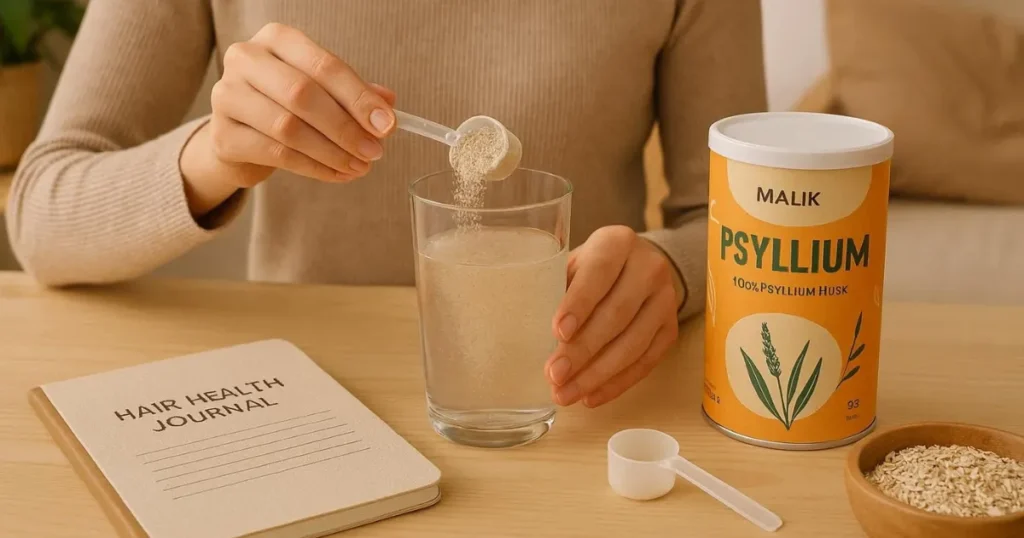
If you want to try psyllium husk hair loss support as part of your hair restoration strategy, follow this evidence-based protocol.
Starting Protocol
Week 1-2:
- Begin with 1/2 teaspoon psyllium husk powder once daily
- Mix with 8-10 oz of water, drink immediately
- Take between meals for optimal nutrient absorption timing
- Follow with another 8 oz of water
Week 3-4:
- Increase to 1 teaspoon once daily or 1/2 teaspoon twice daily
- Maintain excellent hydration (10-12 glasses daily).
- Monitor bowel movements and digestive comfort.
Week 5+:
- Reach maintenance dose of 1-2 teaspoons daily.
- Split into two doses if preferred.
- Continue indefinitely as part of wellness routine.
This gradual approach optimizes psyllium husk hair loss support benefits while preventing digestive discomfort.
Timing for Hair Health Benefits.
Between meals (optimal):
Taking psyllium 1-2 hours after meals ensures it doesn’t interfere with nutrient absorption from food.
Before bed (alternative):
Some people prefer evening doses for morning regularity.
Consistent timing:
Daily consistency matters more than specific timing. Choose a schedule you’ll maintain.
For psyllium husk hair loss protocols, timing that supports both digestive health and nutrient absorption is ideal.
Hydration Requirements.
Inadequate water sabotages both psyllium effectiveness and hair health:
Minimum requirements:
- 8-10 oz water with each psyllium dose.
- Another 8 oz within 30 minutes.
- 10-12 glasses total throughout the day.
Dehydration affects both bowel function and hair follicle health, so proper hydration amplifies psyllium husk hair loss support benefits.
Quality Matters for Hair Health.
For internal use affecting your entire body, including hair follicles, psyllium quality is critical. Premium Pakistani psyllium from sources like Malik Psyllium offers 95-99% purity, ensuring you’re getting pure fiber without contaminants that could introduce additional toxins or inflammatory compounds affecting hair health.
Combining Psyllium with Other Hair Loss Treatments.
Psyllium husk hair loss support works best as part of a comprehensive hair restoration, not as a standalone treatment.
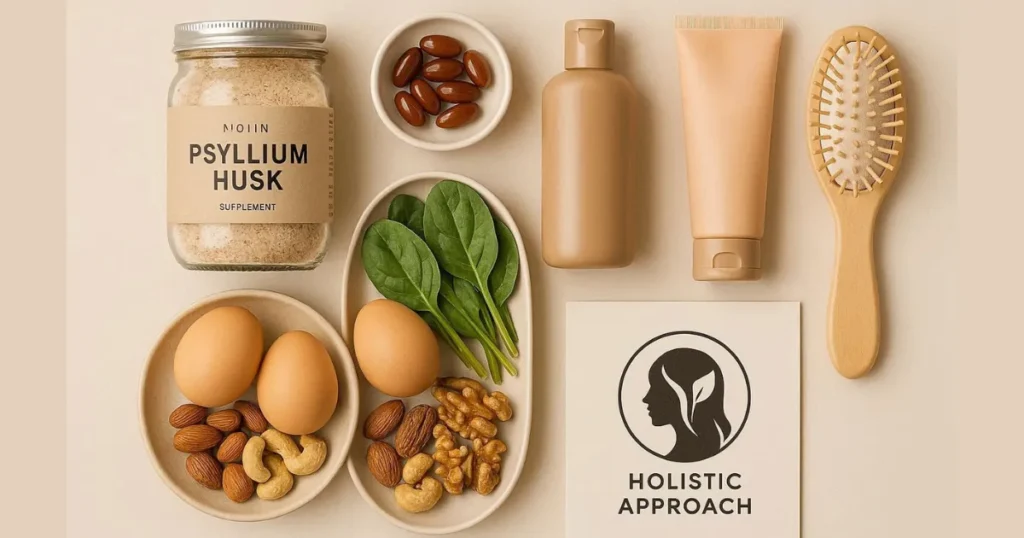
Medical Treatments.
Minoxidil (Rogaine):
Topical treatment that stimulates follicles. Combine with psyllium husk hair loss protocols to ensure your body can support new growth with adequate nutrition.
Finasteride (Propecia):
DHT blocker for pattern baldness. Psyllium supports overall health during treatment but doesn’t replace medical intervention.
PRP (Platelet-Rich Plasma):
Medical procedure using your blood to stimulate growth. Psyllium husk hair loss support optimizes your nutritional status for better PRP results.
Low-level laser therapy:
Light therapy stimulating follicles. Combined with psyllium’s systemic health benefits for a comprehensive approach.
Nutritional Supplements.
Biotin (5,000-10,000 mcg daily):
Supports hair structure. Psyllium husk hair loss protocols improve biotin absorption from supplements and food.
Iron (if deficient):
Critical for hair growth. Enhanced absorption with optimized digestion makes iron supplementation more effective.
Zinc (15-30 mg daily):
Supports follicle function. Better gut health improves zinc utilization.
Vitamin D:
Influences hair follicle cycling. Psyllium husk hair loss support doesn’t directly affect vitamin D but supports overall wellness.
Omega-3 fatty acids:
Anti-inflammatory support for scalp health. Complements psyllium’s anti-inflammatory effects.
Lifestyle Modifications.
Stress management:
Critical for hair health. Psyllium husk hair loss benefits extend to supporting stress resilience through the gut-brain axis.
Sleep quality:
Hair grows during sleep. The gut-sleep connection means psyllium’s digestive benefits may indirectly support better sleep.
Protein intake:
Hair is primarily protein. Ensure adequate intake (0.8-1g per pound body weight) so that improved absorption via psyllium husk hair loss protocols has material to work with.
Scalp care:
Regular massage, gentle handling, sulfate-free products. External care plus internal support creates a comprehensive approach.
Realistic Expectations and Timeline.
Understanding what psyllium husk hair loss support can and cannot achieve prevents disappointment.
What You Can Expect.
Timeline for digestive improvements:
1-2 weeks for regular bowel movements, 4-8 weeks for significant gut health changes.
Timeline for hair benefits:
Hair grows slowly (1/2 inch monthly). If psyllium husk hair loss protocols help by addressing deficiencies or inflammation, visible improvements take 3-6 months minimum.
Degree of improvement:
Modest improvements in hair thickness, reduced shedding, or better growth quality rather than dramatic regrowth, especially if genetics are the primary factor.
Complementary benefits:
Even if psyllium husk hair loss support doesn’t dramatically improve hair, digestive health, cholesterol, and blood sugar benefits make it worthwhile.
What You Cannot Expect.
Miracle regrowth:
Psyllium won’t regrow hair in advanced baldness or reverse years of loss.
Rapid results:
Hair restoration takes months to years regardless of approach.
Standalone solution:
Psyllium husk hair loss protocols work best combined with other evidence-based treatments.
Universal effectiveness:
Individual responses vary based on hair loss cause, overall health, genetics, and consistency.
Common Myths About Psyllium Husk Hair Loss.
Let me address misconceptions about fiber and hair health.
Myth 1: “Psyllium Directly Grows Hair”.
False. Psyllium husk hair loss support works indirectly through improved digestion, nutrient absorption, and reduced inflammation – not by directly stimulating follicles.
Myth 2: “More Fiber Equals More Hair Growth”.
Wrong. Excessive fiber can reduce nutrient absorption and cause digestive distress. Optimal dosing (1-2 teaspoons daily) provides benefits without drawbacks.
Myth 3: “Psyllium Replaces Medical Hair Loss Treatment”.
Absolutely not. For pattern baldness, medical treatments (finasteride, minoxidil) remain necessary. Psyllium husk hair loss protocols complement but don’t replace them.
Myth 4: “All Hair Loss Responds to Digestive Health”.
False. Genetic, autoimmune, or mechanical hair loss requires targeted treatment. Psyllium helps primarily when poor gut health contributes to nutritional deficiencies or inflammation.
Myth 5: “You’ll See Results in Weeks”.
Unrealistic. Even when psyllium husk hair loss support addresses underlying issues, hair growth takes 3-6 months minimum to show visible improvement.
Scientific Perspective on Gut Health and Hair.
The gut-hair connection isn’t pseudoscience – it’s supported by emerging research.
The Gut-Skin-Hair Axis.
Research increasingly shows that gut microbiome composition affects skin and hair health through:
Immune regulation:
70% of immune cells reside in gut tissue. Microbiome balance influences systemic immune function, including autoimmune hair loss.
Nutrient synthesis:
Gut bacteria produce biotin, vitamin K, and other nutrients supporting hair growth.
Inflammation modulation:
Dysbiosis promotes systemic inflammation, while balanced microbiomes reduce it.
Hormone metabolism:
Gut bacteria influence estrogen, testosterone, and cortisol metabolism – all affecting hair.
These mechanisms explain why psyllium husk hair loss protocols based on gut health optimization have scientific validity.
Research on Fiber and Health.
While specific studies on psyllium husk hair loss are limited, research shows:
Fiber improves nutrient absorption:
Studies confirm that optimal fiber intake supports micronutrient bioavailability.
Anti-inflammatory effects:
Clinical trials demonstrate psyllium’s ability to reduce inflammatory markers.
Hormone regulation:
Research shows dietary fiber influences estrogen metabolism and insulin sensitivity.
These established benefits create plausible mechanisms for psyllium husk hair loss support.
Individual Variation.
Genetics, microbiome composition, diet quality, stress levels, and underlying health conditions all affect whether psyllium husk hair loss protocols help you specifically. Personalized experimentation with professional guidance yields best results.
Safety Considerations.
While generally safe, using psyllium for hair health requires awareness of potential issues.
Medication Interactions.
Psyllium can affect medication absorption. Take medications 2-4 hours away from psyllium, especially:
- Thyroid hormones.
- Diabetes medications.
- Heart medications.
- Antidepressants.
For people taking hair loss medications like finasteride or spironolactone, proper timing ensures psyllium husk hair loss support doesn’t interfere with treatment.
Hydration Is Critical.
Inadequate water with psyllium causes constipation – exactly what you’re trying to prevent for hair health. Always drink 10-12 glasses daily when using psyllium husk hair loss protocols.
Starting Gradually.
Beginning with excessive doses causes bloating and gas. The gradual protocol prevents discomfort while allowing gut microbiome adaptation.
Contraindications.
Avoid psyllium if you have:
- Bowel obstruction.
- Difficulty swallowing.
- Esophageal narrowing.
- Appendicitis.
These conditions make psyllium dangerous regardless of whether you’re using it for psyllium husk hair loss support or digestive health.
Monitoring Your Progress.
Track whether psyllium husk hair loss protocols are helping.
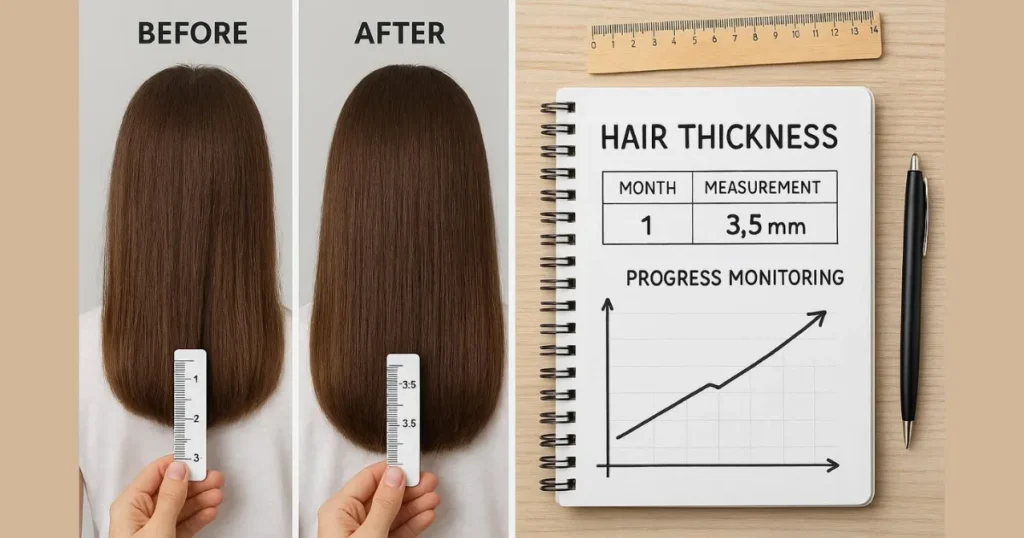
Hair Metrics to Monitor.
Shedding count: Count hairs lost during washing/brushing. Normal is 50-100 daily. Track weekly averages.
- Hair thickness: Measure ponytail circumference monthly or compare strand diameter.
- Growth rate: Mark scalp reference points and measure growth monthly.
- Photography: Monthly photos in consistent lighting show subtle changes invisible day-to-day.
- Scalp health: Note reduced itching, flaking, or inflammation.
Digestive Health Markers.
Since psyllium husk hair loss benefits work through gut health, also track:
- Bowel movement frequency and quality.
- Bloating or gas reduction.
- Energy levels.
- Skin clarity (often improves with better gut health).
Timeline for Assessment.
Give psyllium husk hair loss protocols at least 4-6 months before judging effectiveness. Hair changes slowly, and gut health improvements precede visible hair benefits.
Integrating Psyllium into Hair-Healthy Lifestyle.
Maximize psyllium husk hair loss support with complementary lifestyle factors.
Hair-Supporting Diet.
Combine psyllium with:
- Protein-rich foods: Eggs, fish, chicken, legumes (1g per pound body weight).
- Iron sources: Red meat, spinach, lentils.
- Zinc foods: Oysters, pumpkin seeds, beef.
- Biotin sources: Eggs, nuts, sweet potatoes.
- Omega-3s: Fatty fish, walnuts, flaxseed.
Psyllium husk hair loss protocols optimize absorption of these critical nutrients.
Stress Reduction.
Chronic stress damages hair through cortisol elevation and disrupted gut health. The gut-brain axis means psyllium’s benefits for digestive health may support stress resilience, but also:
- Practice meditation or yoga.
- Ensure adequate sleep (7-9 hours).
- Exercise regularly.
- Seek counseling if needed.
Avoid Hair Damage.
While using psyllium husk hair loss support internally:
- Minimize heat styling.
- Use gentle, sulfate-free products.
- Avoid tight hairstyles.
- Protect from sun damage.
- Handle wet hair carefully.
Internal and external care work synergistically.
Quality and Sourcing for Best Results.
For psyllium husk hair loss protocols affecting your entire system, quality matters tremendously.
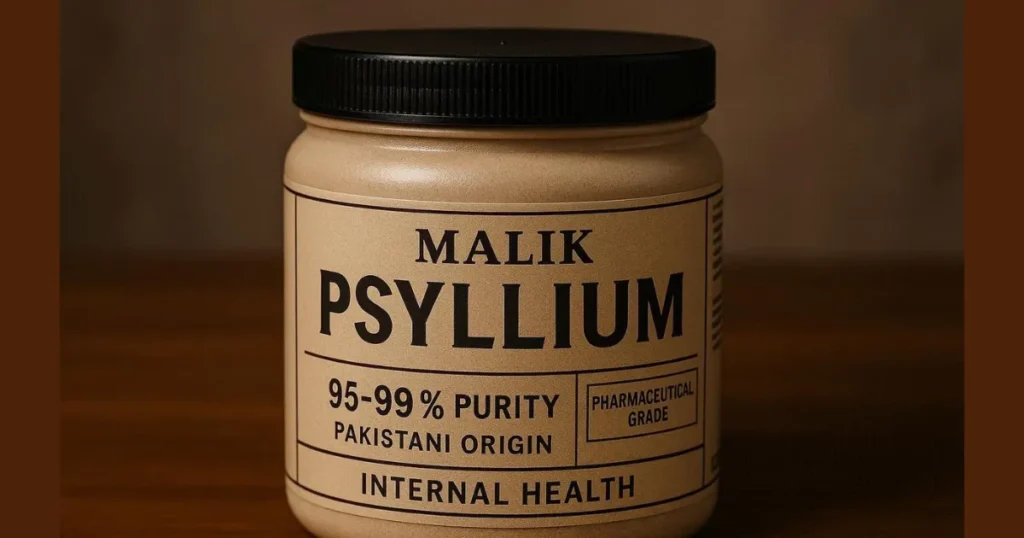
Why Pakistani Psyllium Excels.
Pakistan’s Sindh province produces the world’s finest psyllium with 95-99% purity. This matters for hair health because:
- No contaminants: Pure fiber without seed particles or processing residues that could introduce toxins.
- Consistent results: Predictable fiber content ensures reliable dosing.
- Better tolerance: Higher purity means less bloating and digestive upset.
Premium sources like Malik Psyllium provide pharmaceutical-grade quality essential for internal use affecting hair, skin, and overall health.
Storage and Freshness.
Proper storage maintains psyllium quality:
- Airtight containers.
- Cool, dry location.
- Away from moisture and sunlight.
- Check expiration dates.
Fresh, properly stored psyllium provides maximum benefits for psyllium husk hair loss support.
Can psyllium husk help with hair loss?
Psyllium husk hair loss support works indirectly by improving nutrient absorption, reducing inflammation, and supporting hormone balance through better gut health. It doesn’t directly regrow hair but creates optimal conditions for growth.
How long until I see hair growth results from psyllium?
If psyllium husk hair loss protocols help your specific situation, expect 3-6 months minimum for visible improvements. Hair grows slowly at 1/2 inch monthly, and gut health changes precede hair benefits.
What’s the best dose of psyllium for hair health?
For psyllium husk hair loss support, use 1-2 teaspoons daily, split into 1-2 doses with excellent hydration (10-12 glasses of water). Start with 1/2 teaspoon and increase gradually over 4 weeks.
Does psyllium work for all types of hair loss?
No, psyllium husk hair loss benefits are most relevant for thinning related to poor nutrient absorption, inflammation, or digestive issues. Genetic pattern baldness requires medical treatment; psyllium provides complementary support only.
Can I combine psyllium with hair loss medications?
Yes, psyllium husk hair loss protocols combine safely with minoxidil, finasteride, or other treatments. Take psyllium 2-4 hours away from medications to prevent absorption interference. Consult your doctor about timing.
Will psyllium cause hair loss or thinning?
No, properly dosed psyllium (1-2 teaspoons daily with adequate water) doesn’t cause hair loss. Excessive fiber might reduce nutrient absorption, but normal doses support health rather than harm it.
What quality of psyllium is best for hair health?
Choose pharmaceutical-grade psyllium with 95-99% purity from reputable sources like Pakistani Malik Psyllium. High purity ensures no contaminants or impurities that could affect overall health and hair.
Should I take psyllium if I have other digestive issues?
If you have digestive disorders contributing to hair loss through poor nutrient absorption, psyllium husk hair loss support may help. Start gradually and work with your gastroenterologist to ensure safety.
Conclusion.
The connection between psyllium husk hair loss prevention and gut health represents an indirect but scientifically plausible approach to supporting hair vitality. While psyllium won’t replace medical treatments for pattern baldness or regrow hair in advanced loss, it creates optimal conditions for hair health by improving nutrient absorption, reducing systemic inflammation, supporting hormone balance, and ensuring efficient toxin elimination.
Understanding that psyllium husk hair loss support works through digestive optimization rather than direct follicle stimulation sets realistic expectations. For people experiencing hair thinning related to poor gut health, nutritional deficiencies, chronic inflammation, or digestive disorders, addressing these root causes with psyllium may contribute to healthier, stronger hair over time.
The key to successful psyllium husk hair loss protocols lies in consistency, quality, and integration with comprehensive hair care. Start with 1/2 teaspoon daily, increase gradually to 1-2 teaspoons, maintain excellent hydration, and give your body at least 4-6 months to show improvements. Combine with proper nutrition, stress management, gentle hair handling, and medical treatments when necessary.
Quality matters tremendously for internal use, affecting your entire system. Pakistani psyllium from reputable sources like Malik Psyllium provides the pharmaceutical-grade purity (95-99%) essential for safe, effective supplementation. When you’re addressing health from the inside out, premium quality isn’t optional – it’s the foundation of success.
Remember that hair restoration is a marathon, not a sprint. Psyllium husk hair loss support represents one evidence-based tool in your comprehensive approach, working quietly behind the scenes to create the healthy internal environment your hair follicles need to thrive. Combined with patience, consistency, and realistic expectations, it can contribute meaningfully to your hair health journey.

Isabgol Ke Fayde – Psyllium Husk Ke Poori Science-Based Rahnumayi – 2026
Isabgol ke fayde jaanna aaj ke daur mein zyada zaroori
Isabgol Benefits in Hindi | Psyllium Husk Ke Fayde, Sahi Upyog Aur Savdhaniyan – 2026
Agar aap isabgol benefits in hindi mein samajhna chahte hain,