Understanding psyllium husk carbs and mineral content like iron is essential for anyone following low-carb diets, managing nutrition tracking, or evaluating fiber supplements for specific dietary needs. Many people wonder whether psyllium fits into ketogenic or diabetic meal plans, and what nutritional value beyond fiber it provides.
This comprehensive guide breaks down the exact carbohydrate content, net carbs calculation, psyllium husk iron levels, and complete mineral profile of this powerful fiber supplement. You’ll discover why psyllium works perfectly for low-carb lifestyles, how its unique carbohydrate structure differs from regular carbs, and what micronutrients it contributes to your daily intake. Whether you’re counting macros, managing blood sugar, or simply seeking complete nutritional transparency, you’ll find precise, research-backed answers here.
Psyllium Husk Carbs: Breaking Down the Numbers
Let me provide exact figures for psyllium husk carbs so you can accurately track your macronutrient intake.
Total Carbohydrates per Serving
For one tablespoon (approximately 10 grams) of pure psyllium husk:
- Total carbohydrates: 8-9 grams
- Dietary fiber: 7-8 grams
- Sugars: Less than 0.5 grams
- Starch: Negligible (less than 0.2 grams)
This means that approximately 85-90% of the total carbohydrate content is dietary fiber.
Net Carbs Calculation
The crucial calculation for low-carb diets:
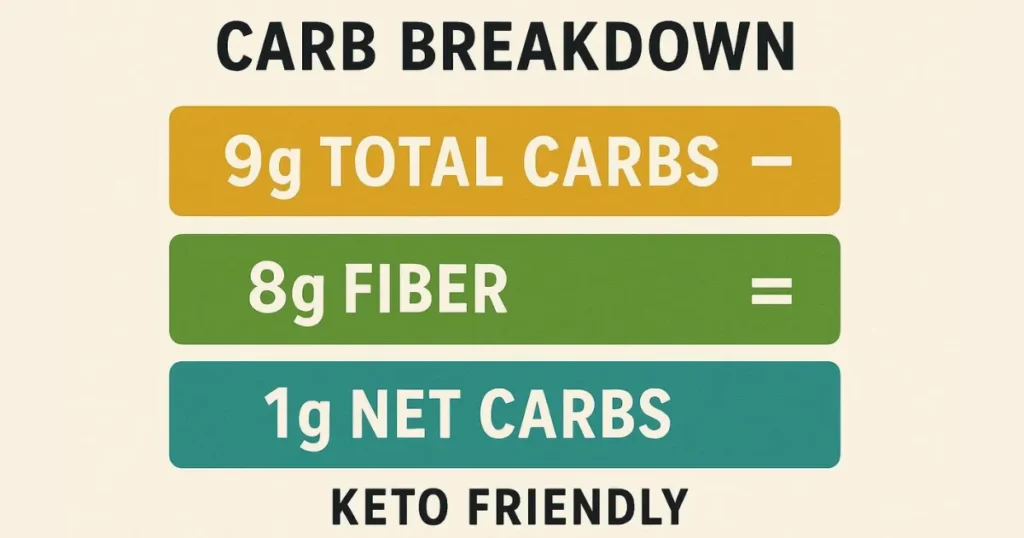
- Total carbs: 8-9 grams
- Minus dietary fiber: 7-8 grams
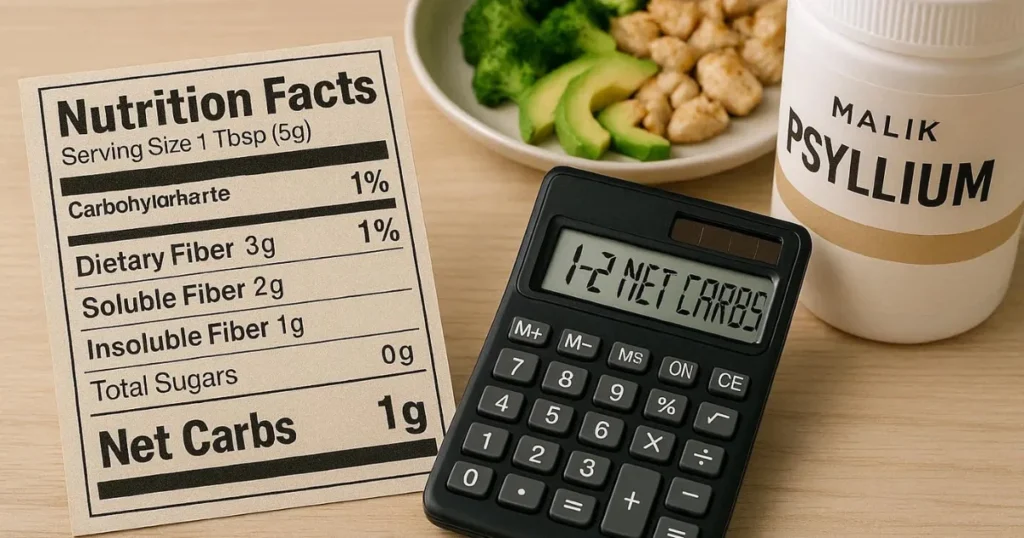
- Net carbs: 1-2 grams per tablespoon
Net carbs represent the carbohydrates that impact blood sugar levels. Since fiber isn’t digested and absorbed like other carbohydrates, it’s subtracted from the total.
Why This Matters
For people following:
- Ketogenic diets: 1-2 net carbs easily fits daily 20-50g limits
- Low-carb diets: Minimal impact on 50-100g daily allowances
- Diabetic meal plans: Doesn’t significantly raise blood glucose
- Weight management: Provides satiety without caloric density
Carbohydrate Structure
The psyllium husk carbs consist primarily of:
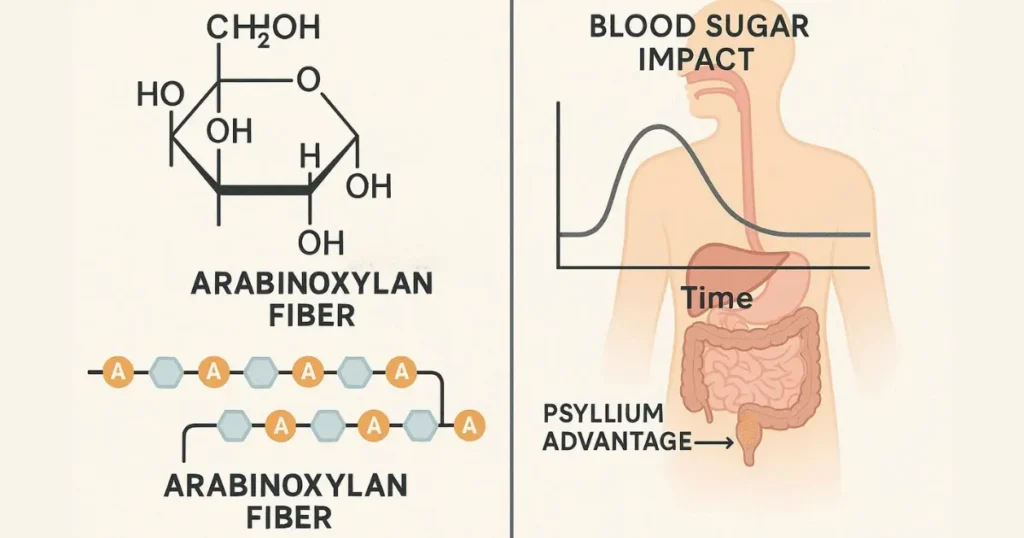
- Arabinoxylans: Complex polysaccharides (soluble fiber)
- Cellulose: Structural insoluble fiber
- Mucilage: Gel-forming polysaccharides
- Simple sugars: Minimal amounts (xylose, arabinose) bound in fiber
How Psyllium Carbs Differ From Regular Carbohydrates.
Understanding the unique nature of psyllium husk carbs helps explain why they’re diet-friendly.
Digestibility Differences
Regular Carbs (Starch, Sugar):
- Broken down by digestive enzymes
- Absorbed as glucose in small intestine
- Raise blood sugar levels
- Provide 4 calories per gram
- Count toward net carbs
Psyllium Fiber Carbs:
- Resist human digestive enzymes
- Pass through small intestine intact
- Don’t raise blood sugar
- Provide 0-2 calories per gram
- Don’t count toward net carbs
Glycemic Response
The glycemic index (GI) measures blood sugar impact:
- White bread: GI of 75
- White rice: GI of 73
- Table sugar: GI of 65
- Psyllium husk: GI of 0-1
Psyllium not only has zero glycemic impact itself but actually reduces the glycemic impact of foods consumed with it.
Metabolic Fate
Regular carbs:
- Converted to glucose → absorbed → enters bloodstream → used for energy or stored
Psyllium carbs:
- Remain intact through stomach and small intestine → reach colon → fermented by bacteria → produce short-chain fatty acids (minimal calories)
Insulin Response
This is critical for diabetics and insulin-resistant individuals:
- Regular carbs trigger insulin release proportional to glucose absorption
- Psyllium carbs don’t trigger insulin release
- Actually slow insulin response when taken with meals
- Help stabilize blood sugar patterns over time
Psyllium Husk Iron Content and Mineral Profile.
Beyond carbohydrates, let me detail the psyllium husk iron levels and other minerals present.
Iron Content per Serving
One tablespoon (10 grams) of psyllium husk contains:
- Iron: 0.5-1.5 mg
- This represents 3-8% of the daily recommended intake
- The iron is in non-heme form (plant-based)
Daily Iron Requirements
For context:
- Adult men: 8 mg daily
- Adult women (pre-menopause): 18 mg daily
- Adult women (post-menopause): 8 mg daily
- Pregnant women: 27 mg daily
Psyllium provides a modest iron contribution but isn’t a primary iron source.
Complete Mineral Profile
Per tablespoon (10 grams), psyllium husk contains:
| Mineral | Amount | % Daily Value |
| Iron | 0.5-1.5 mg | 3-8% |
| Potassium | 30-40 mg | 1% |
| Calcium | 10-15 mg | 1% |
| Magnesium | 5-8 mg | 1-2% |
| Phosphorus | 5-10 mg | <1% |
| Zinc | 0.1-0.3 mg | 1-2% |
| Copper | Trace amounts | <1% |
| Manganese | Trace amounts | <1% |
Why Minimal Mineral Content?
Psyllium husk represents the outer seed coating, which contains primarily structural carbohydrates (fiber) rather than nutrient storage components. The seed endosperm (removed during processing) contains most minerals and proteins.
Iron Bioavailability
The psyllium husk iron is non-heme iron, which:
- Has lower absorption rate (2-20%) than heme iron from meat
- Absorption enhanced by vitamin C
- Can be inhibited by phytates (also present in psyllium)
- Not a reliable primary iron source
Psyllium Husk Carbs in Different Dietary Contexts.
Let me explain how the carbohydrate content fits various nutritional approaches.
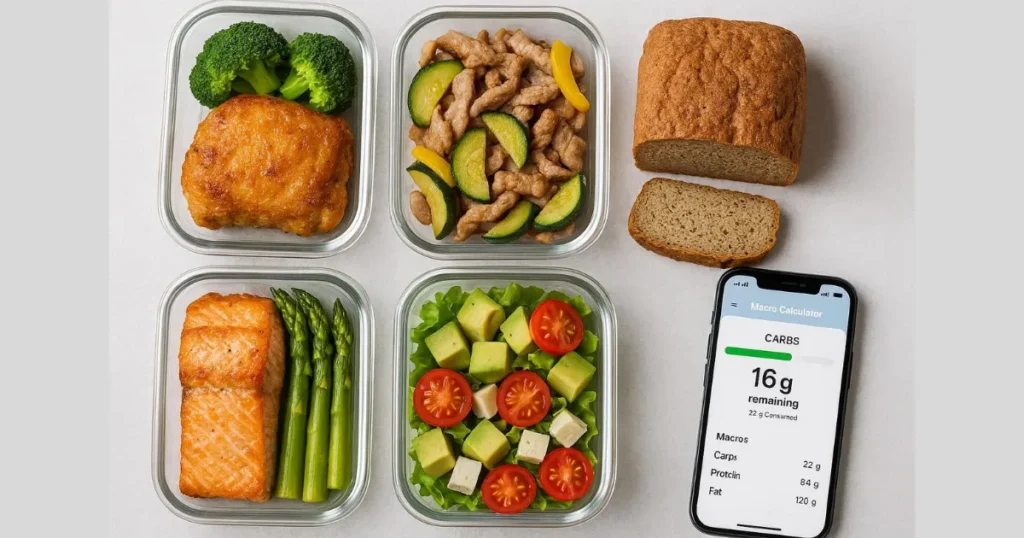
Ketogenic Diet Compatibility
The keto diet typically limits net carbs to 20-50 grams daily to maintain ketosis.
Psyllium’s Role:
- 1-2 net carbs per tablespoon easily fits macros
- Fiber helps prevent “keto constipation”
- Doesn’t interrupt ketone production
- Can be used in keto baking to replace flour
Daily keto usage:
- 2-3 tablespoons provides 14-24 grams fiber
- Only 2-6 grams net carbs
- Leaves ample room for vegetable carbs
Low-Carb Diets (50-100g Net Carbs)
For less restrictive low-carb approaches:
- Psyllium’s 1-2 net carbs per serving is negligible
- Can be used multiple times daily
- Provides fiber often lacking in low-carb eating
- Supports digestive regularity
Diabetic Meal Planning
For diabetes management:
- Minimal impact on blood glucose
- Actually improves glycemic control when taken with meals
- Fiber slows carbohydrate absorption
- Helps achieve A1C improvements
Studies show: 5-10 grams of psyllium with meals can reduce post-meal blood sugar spikes by 20-30%.
Carnivore and Zero-Carb Diets
Even on extremely restrictive carnivore diets:
- Some practitioners include psyllium for fiber
- The 1-2 net carbs considered acceptable by many
- Helps with digestive transit despite no plant foods
- Not strictly carnivore but pragmatically useful
Paleo and Whole30
Both approaches have different stances:
- Paleo: Generally accepts psyllium as a natural plant fiber
- Whole30: Typically avoids during the 30-day reset
Carbohydrate Concerns and Common Misconceptions.
Let me address frequent misunderstandings about psyllium husk carbs.
Myth 1: High Carb Content Means Bad for Low-Carb Diets
False. The distinction between total carbs and net carbs is critical. Psyllium’s carbohydrates are almost entirely fiber, which doesn’t impact blood sugar or ketosis. Focus on net carbs (1-2g), not total carbs (8-9g).
Myth 2: Fiber Kicks You Out of Ketosis
Not true. Fiber doesn’t raise blood glucose or insulin levels. You can consume substantial fiber while maintaining ketosis. The body doesn’t convert fiber to glucose the way it does starch and sugar.
Myth 3: All Psyllium Products Have the Same Carb Count
Not accurate. Flavored psyllium products often contain added sugars:
- Plain psyllium: 1-2 net carbs per tablespoon
- Flavored products: May contain 5-15 net carbs per serving from sweeteners
- Always check labels on flavored varieties
Myth 4: Psyllium Carbs Are “Empty Calories”
Misleading terminology. Psyllium provides minimal calories (30-35 per tablespoon), but delivers substantial health benefits through fiber:
- Improves cholesterol profiles
- Stabilizes blood sugar
- Supports digestive health
- Feeds beneficial gut bacteria
Myth 5: The Carbs in Psyllium Cause Weight Gain
False. The fiber creates satiety, actually supporting weight loss. The minimal net carbs don’t contribute meaningfully to energy storage or weight gain. Clinical studies show psyllium aids weight management, not hinders it.
Iron and Mineral Considerations.
Understanding psyllium husk iron content helps set realistic nutritional expectations.
Iron Supplementation Timing
If taking iron supplements:
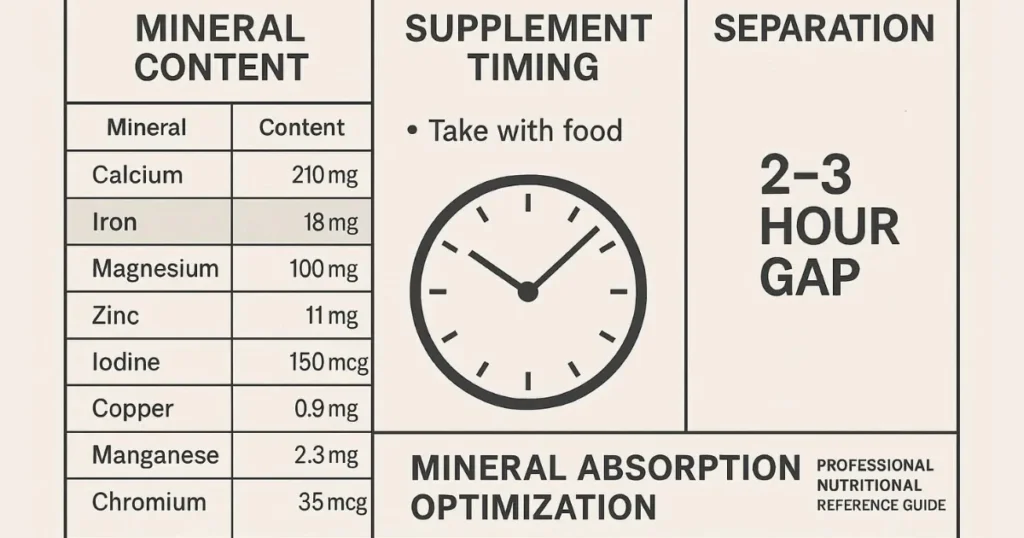
- Separate from psyllium by 2-3 hours
- Fiber can bind minerals and reduce absorption
- This applies to all mineral supplements
- Take psyllium away from medication times
Iron Deficiency and Psyllium Use
For individuals with iron deficiency anemia:
- Psyllium is safe to use
- Won’t significantly worsen deficiency
- But won’t help correct it either
- Focus on iron-rich foods and supplements
- Maintain the 2-3 hour separation
Enhancing Iron Absorption
When consuming psyllium that contains small amounts of iron:
- Pair with vitamin C sources to enhance absorption
- Avoid with tea, coffee (tannins inhibit iron absorption)
- Consider timing with meals containing heme iron
Other Mineral Interactions
Psyllium can temporarily affect absorption of:
- Calcium: Minor reduction if taken together
- Zinc: Slight binding effect
- Magnesium: Minimal impact
- Potassium: No significant interaction
Solution: Take psyllium at least 2 hours before or after mineral supplements or mineral-rich meals to avoid any interference.
Long-Term Mineral Status
Research shows that regular psyllium consumption doesn’t cause:
- Long-term mineral deficiencies
- Significant nutrient depletion
- Bone health issues
- Anemia (when adequate minerals consumed through diet)
The temporary binding effects during digestion don’t translate to chronic deficiency in people eating balanced diets.
Complete Nutritional Profile Beyond Carbs and Iron.
Let me provide the full nutritional picture of psyllium husk.
Macronutrient Breakdown (Per Tablespoon/10g)
- Calories: 30-35
- Protein: 0.5-1 gram
- Fat: <0.5 grams
- Total carbohydrates: 8-9 grams
- Dietary fiber: 7-8 grams
- Net carbs: 1-2 grams
- Sugars: <0.5 grams
Vitamin Content
Psyllium provides minimal vitamins:
- Vitamin K: Trace amounts
- B vitamins: Negligible quantities
- No vitamins A, C, D, or E in significant amounts
The value of psyllium lies in fiber, not vitamin content.
Caloric Density
With 30-35 calories per tablespoon:
- Extremely low caloric density
- Most “calories” come from fiber fermentation
- Provides 0-2 calories per gram (vs. 4 for digestible carbs)
- Helps create caloric deficit for weight management
Sodium Content
- Sodium: 2-5 mg per tablespoon
- Negligible for most diets
- Suitable for low-sodium meal plans
- No blood pressure concerns
Cholesterol and Fat
- Zero cholesterol (plant-based)
- Virtually zero fat (<0.5g)
- No saturated or trans fats
- Heart-healthy profile
This complete profile confirms psyllium as a pure fiber supplement with minimal nutritional contribution beyond its therapeutic fiber content.
Practical Applications for Carb-Conscious Individuals.
Here’s how to incorporate psyllium while managing the psyllium husk carbs effectively.
Daily Dosing for Low-Carb Diets
Conservative Approach (5g/day):
- 1 teaspoon daily
- Provides 0.5-1 net carbs
- 3.5-4 grams fiber
- Good for strict keto (under 20g net carbs)
Moderate Approach (10g/day):
- 1 tablespoon daily
- Provides 1-2 net carbs
- 7-8 grams fiber
- Suitable for most low-carb diets
Therapeutic Approach (15-20g/day):
- 1.5-2 tablespoons daily
- Provides 2-4 net carbs
- 10.5-16 grams fiber
- For cholesterol/blood sugar management
Timing Strategies
- Morning dose: Take with breakfast to improve satiety throughout the day.
- Pre-meal: Consume 20-30 minutes before main meals to slow glucose absorption and reduce appetite.
- Evening dose: Take before dinner to support overnight digestive processes.
Recipe Integration
Psyllium works in low-carb recipes:
- Keto bread (2-3 tablespoons per loaf)
- Low-carb pancakes (1-2 tablespoons per batch)
- Protein shake thickener (1 teaspoon)
- Keto crackers or pizza crust
Each application adds minimal net carbs while improving texture and fiber content.
Tracking Psyllium in Nutrition Apps.
When logging psyllium husk carbs in diet tracking apps, follow these guidelines.
Accurate Entry
In MyFitnessPal, Cronometer, or Carb Manager:
- Search for “Psyllium husk, plain”
- Verify fiber content (should be 7-8g per tablespoon)
- Check that net carbs calculate to 1-2g
- Avoid entries for flavored products unless that’s what you’re using
Custom Entry Creation
For precision, create a custom food:
- Serving size: 1 tablespoon (10g)
- Calories: 35
- Total carbs: 9g
- Fiber: 8g
- Protein: 1g
- Fat: 0g
- Net carbs: Auto-calculate or enter as 1g
Daily Macro Impact
For someone on 1,800 calories, 20g net carbs (strict keto):
- 2 tablespoons psyllium = 2-4g net carbs (10-20% of limit)
- Leaves 16-18g for vegetables and other sources
- Still very manageable
For 100g net carb limit (moderate low-carb):
- Even 3 tablespoons (3-6g net carbs) = only 3-6% of limit
- Negligible impact on daily allowance
Pakistani Psyllium Quality and Nutritional Consistency.
Geographic origin affects the reliability of psyllium husk carbs and mineral content.
Why Pakistani Psyllium Is Superior
Pakistan’s Sindh and Punjab provinces produce:
- Consistent fiber content: 70-85% by weight
- Higher purity: 98-99% in premium grades
- Reliable macros: Batch-to-batch consistency
- Better processing: Preserves natural composition
Quality Affects Nutrition Labels
Lower-quality psyllium may contain:
- More seed material (higher protein, different carb ratios)
- Processing additives
- Inconsistent fiber percentages
- Variable net carb calculations
Premium Pakistani psyllium from reputable sources like Malik Psyllium ensures label accuracy.
Testing Standards
High-quality producers test every batch for:
- Total dietary fiber content
- Moisture levels (affects weight accuracy)
- Purity percentage
- Contaminant screening
- This testing ensures the nutrition facts match the actual product, crucial for precise macro tracking.
Special Considerations for Mineral Absorption.
Let me address how psyllium husk iron and other minerals interact with overall nutrition.
Optimal Timing for Nutrient Absorption
Morning routine:
- Take psyllium first thing
- Wait 30 minutes
- Eat iron-rich breakfast
Supplement schedule:
- Morning: Psyllium
- Mid-morning: Calcium supplement
- Lunch: With food (no psyllium)
- Afternoon: Iron supplement
- Dinner: Psyllium if desired (2+ hours after iron)
Maximizing Iron Intake
For those monitoring iron:
- Focus on heme iron sources (meat, fish, poultry)
- Include vitamin C with non-heme iron meals
- Consider iron-fortified foods
- Don’t rely on psyllium for iron contribution
Addressing Mineral Concerns
If worried about mineral absorption with regular psyllium use:
- Eat mineral-rich foods throughout the day
- Take a quality multivitamin/mineral (timed away from psyllium)
- Get periodic blood tests (iron, calcium, zinc levels)
- Adjust timing if deficiencies develop
Research consistently shows that when psyllium is used as directed and timed appropriately, it doesn’t cause nutritional deficiencies in people eating balanced diets.
Comparing Psyllium Carbs to Other Fiber Supplements.
Understanding how psyllium husk carbs compare to alternatives helps you choose wisely.
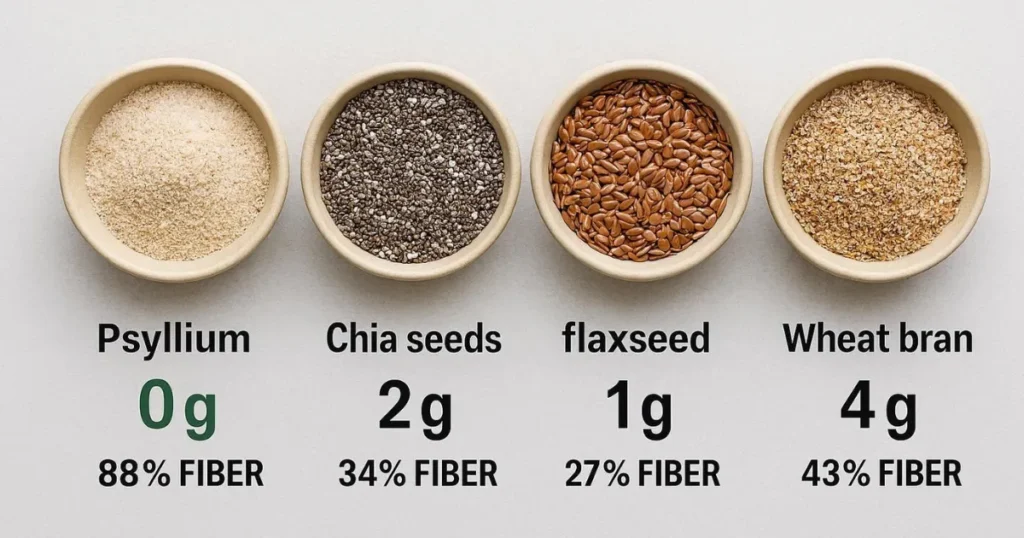
Psyllium vs. Chia Seeds
Per tablespoon:
- Psyllium: 9g total carbs, 8g fiber, 1g net carbs
- Chia: 12g total carbs, 10g fiber, 2g net carbs
Chia has slightly more total carbs but similar net carbs. Psyllium provides more concentrated soluble fiber.
Psyllium vs. Flaxseed
Per tablespoon:
- Psyllium: 9g total carbs, 8g fiber, 1g net carbs
- Flaxseed: 8g total carbs, 7g fiber, 1g net carbs
Similar carb profiles. Flaxseed adds omega-3s and lignans but has less soluble fiber than psyllium.
Psyllium vs. Wheat Bran
Per tablespoon:
- Psyllium: 9g total carbs, 8g fiber, 1g net carbs
- Wheat bran: 6g total carbs, 3g fiber, 3g net carbs
Wheat bran has MORE net carbs despite lower total carbs, plus it contains gluten. Psyllium is superior for low-carb diets.
Psyllium vs. Inulin
Per tablespoon:
- Psyllium: 9g total carbs, 8g fiber, 1g net carbs
- Inulin: 8g total carbs, 8g fiber, 0g net carbs
Inulin has zero net carbs but causes more gas. Psyllium provides bulk-forming benefits inulin lacks.
How many carbs are in psyllium husk per tablespoon?
Psyllium husk contains 8-9 grams of total carbohydrates per tablespoon (10g), with 7-8 grams being dietary fiber. This results in only 1-2 grams of net carbs – the number that impacts blood sugar and ketosis. This makes psyllium ideal for keto and low-carb diets.
What are the net carbs in psyllium husk for keto?
Net carbs equal total carbs minus fiber. For psyllium husk: 9g total carbs – 8g fiber = 1g net carbs per tablespoon. This minimal net carb content fits easily within ketogenic macro limits of 20-50g daily, making psyllium perfectly keto-friendly.
How much iron is in psyllium husk?
Psyllium husk contains 0.5-1.5 mg of iron per tablespoon (10g), providing approximately 3-8% of daily iron requirements. This is non-heme (plant-based) iron with lower absorption rates. Psyllium isn’t a significant iron source and shouldn’t be relied upon for iron supplementation.
Does psyllium husk interfere with iron absorption?
Yes, psyllium can temporarily bind minerals, including iron, during digestion, reducing absorption. Take iron supplements or eat iron-rich meals at least 2-3 hours before or after consuming psyllium to avoid this interaction. Long-term psyllium use doesn’t cause iron deficiency in balanced diets.
Are psyllium husk carbs bad for diabetics?
No, psyllium husk carbs are excellent for diabetics. The carbohydrates are primarily fiber that doesn’t raise blood glucose. In fact, psyllium improves glycemic control by slowing glucose absorption when taken with meals, often reducing post-meal blood sugar spikes by 20-30%.
Can you eat psyllium husk on a zero-carb diet?
Some zero-carb or carnivore dieters include psyllium despite the 1-2 net carbs per serving, considering it pragmatically acceptable for digestive support. Others avoid it strictly. It depends on individual interpretation – technically not zero-carb, but practically minimal impact on ketosis or blood glucose.
Does psyllium husk contain any vitamins or minerals besides iron?
Psyllium contains minimal micronutrients: trace amounts of potassium (30-40mg), calcium (10-15mg), magnesium (5-8mg), zinc, and copper per tablespoon. It provides negligible vitamins. The primary value is concentrated fiber content, not vitamin or mineral density.
Will psyllium husk carbs kick me out of ketosis?
No, the 1-2 net carbs per tablespoon of psyllium won’t disrupt ketosis. The carbohydrates are indigestible fiber that doesn’t raise blood glucose or insulin levels. You can consume 2-3 tablespoons daily (2-6 net carbs) and easily maintain ketosis while benefiting from fiber support.
Conclusion.
Understanding the psyllium husk carbs profile – with only 1-2 net carbs per tablespoon despite 8-9 total carbs – reveals why this fiber supplement fits perfectly into low-carb, ketogenic, and diabetic meal plans. The carbohydrate content consists almost entirely of indigestible fiber that doesn’t raise blood sugar, trigger insulin, or interrupt ketosis, making it one of the most diet-friendly fiber sources available.
While psyllium husk iron content (0.5-1.5 mg per tablespoon) provides a modest mineral contribution, it shouldn’t be considered a primary iron source. The value of psyllium lies in its exceptional fiber density and therapeutic effects rather than its vitamin or mineral content. By timing psyllium intake appropriately – at least 2 hours from mineral supplements and iron-rich meals – you can enjoy its benefits without compromising nutrient absorption.
Pakistani psyllium from Sindh and Punjab provinces offers superior quality with consistent nutritional profiles, reliable fiber content, and accurate labeling that supports precise macro tracking. Whether you’re managing weight, controlling blood sugar, reducing cholesterol, or simply optimizing digestive health on a low-carb diet, psyllium’s unique carbohydrate structure and minimal net carb impact make it an invaluable tool.
Focus on net carbs, not total carbs, when evaluating psyllium’s place in your nutrition plan. The fiber that makes up those total carbohydrates delivers powerful health benefits without the metabolic consequences of digestible carbohydrates.

Isabgol Ke Fayde – Psyllium Husk Ke Poori Science-Based Rahnumayi – 2026
Isabgol ke fayde jaanna aaj ke daur mein zyada zaroori
Isabgol Benefits in Hindi | Psyllium Husk Ke Fayde, Sahi Upyog Aur Savdhaniyan – 2026
Agar aap isabgol benefits in hindi mein samajhna chahte hain,