Over three decades working with psyllium cultivation and processing have taught me that most people view this remarkable fiber as just another laxative supplement. That oversimplification misses the broader picture of psyllium husk nutritional benefits – and why understanding the specific fiber benefits of this plant extends far beyond simple digestive regularity.
Psyllium husk, derived from the seed coating of Plantago ovata, represents one of nature’s most versatile soluble fibers. Having worked directly with cultivation across Pakistan’s prime growing regions and exported psyllium to markets worldwide, I’ve watched scientific understanding of psyllium husk benefits evolve from a simple bulk laxative to a recognized tool for cardiovascular health, metabolic support, and comprehensive digestive wellness.
This guide examines psyllium husk uses and benefits through both scientific evidence and practical experience, explaining what this fiber actually does in your body, how to use it safely, and what quality factors matter when choosing a product.
What Psyllium Husk Is and Where It Comes From
Psyllium husk is the thin, fibrous outer coating removed from psyllium seeds during processing. The plant Plantago ovata thrives in specific climatic conditions – hot days, cool nights, and well-drained sandy loam soils. Pakistan produces approximately 70% of the world’s commercial psyllium supply, with cultivation concentrated in Punjab and Sindh provinces, where conditions favor high mucilage content in the seed husks.
After harvest, seeds undergo mechanical separation to remove the husk layer. This husk, which accounts for roughly 25-30% of the seed weight, contains the concentrated fiber content that gives psyllium its functional properties. The remaining seed core has minimal fiber value.

The Nutritional Profile That Defines Psyllium Husk Fiber Benefits
Understanding psyllium husk nutritional benefits starts with examining its unique fiber composition. Psyllium husk consists primarily of soluble fiber – specifically, a highly branched arabinoxylan polysaccharide with exceptional water-holding capacity. This nutritional makeup is what separates psyllium from ordinary fiber supplements.
In simple terms, when psyllium contacts moisture, its fiber structure absorbs water rapidly and forms a viscous gel. This gel-forming property differentiates psyllium from many other fiber sources. While wheat bran or cellulose provides primarily insoluble fiber that adds bulk without binding water, psyllium’s soluble fiber creates a thick, gel-like substance that affects how food moves through your digestive system and how your body processes nutrients.
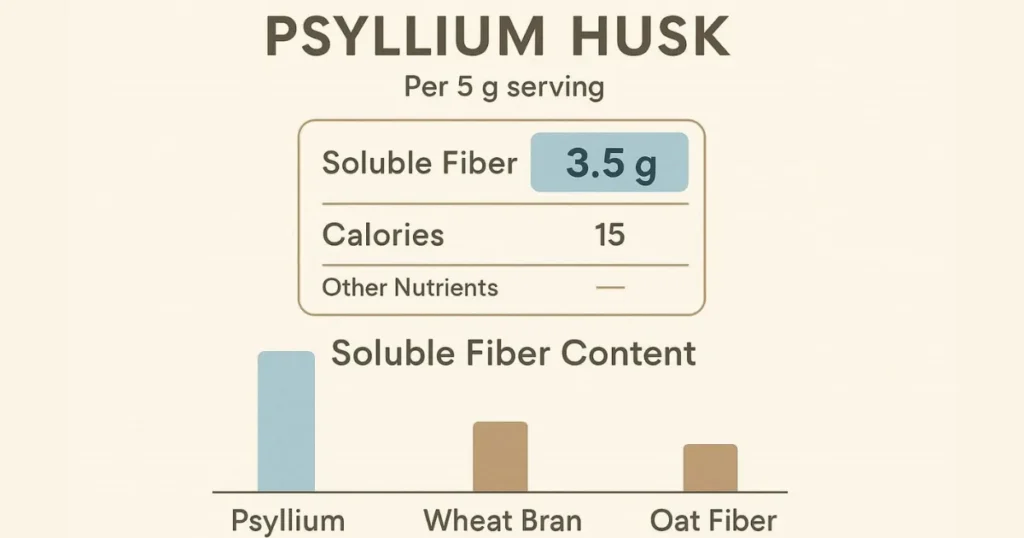
A standard serving of psyllium husk powder (approximately 5 grams) typically provides:
- 3-4 grams of soluble fiber (representing the primary nutritional value).
- Minimal insoluble fiber content.
- Negligible calories (approximately 10-20 calories per serving).
- Minimal protein or fat.
- Trace minerals from the plant material.
This concentrated soluble fiber content explains why relatively small doses produce measurable effects – the psyllium husk fiber benefits derive almost entirely from this high-purity soluble fiber concentration.
How Psyllium Husk Works in Your Body.
Understanding psyllium husk benefits requires looking at what happens when you consume it. The mechanism is straightforward but has multiple downstream effects that explain the diverse uses and benefits of this fiber.
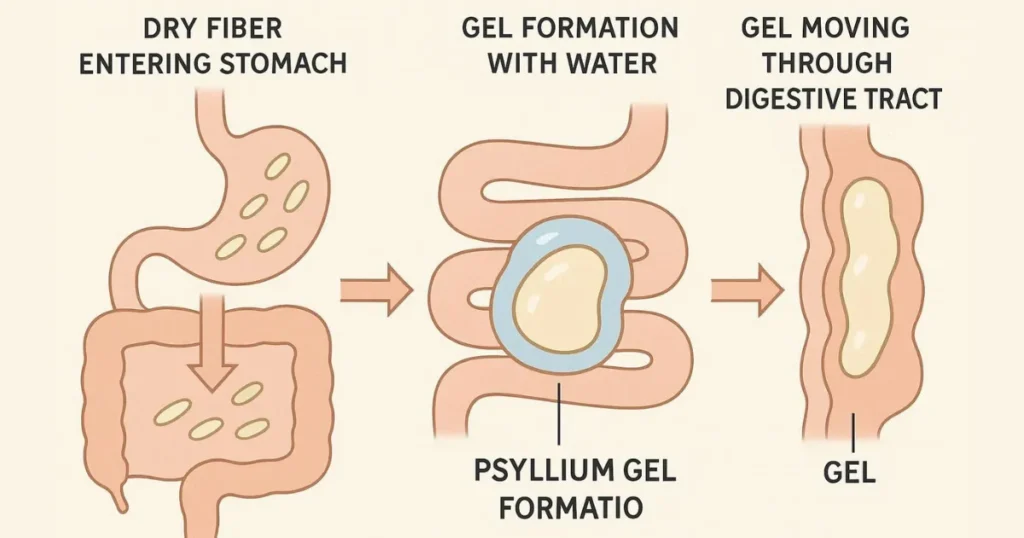
When psyllium husk powder mixes with water or fluids in your stomach and intestines, the fiber structure swells significantly – expanding to roughly 10-20 times its dry weight. This creates a gel-like mass that moves through your digestive tract.
The Digestive Tract Journey.
As the psyllium gel travels through your intestines, it:
Increases stool bulk and softness:
The gel adds mass to intestinal contents while keeping them hydrated, making stools easier to pass.
Regulates transit time:
The gel slows rapid transit (helpful for diarrhea) and speeds slow transit (helpful for constipation).
Feeds beneficial gut bacteria:
The gel reaches the colon, where bacteria ferment portions of the fiber, producing short-chain fatty acids that support gut health.
Binds to bile acids:
The gel traps bile acids used in fat digestion, forcing your liver to draw cholesterol from your bloodstream to produce replacement bile.
This multi-action mechanism explains why psyllium can address both constipation and diarrhea – it normalizes stool consistency and transit time rather than simply pushing things through faster like stimulant laxatives.
Metabolic Effects Beyond Digestion.
The gel formation also slows nutrient absorption in your small intestine. This creates a more gradual rise in blood glucose after meals rather than sharp spikes. Additionally, by binding bile acids that contain cholesterol, psyllium prompts your body to use circulating cholesterol to synthesize new bile acids – effectively removing cholesterol from your bloodstream.
These mechanisms underpin the broader psyllium husk nutritional benefits that extend to cardiovascular and metabolic health.
5 Evidence-Based Psyllium Husk Benefits: From Digestion to Heart Health.
Research on psyllium spans decades and includes numerous clinical trials examining diverse psyllium husk uses and benefits. Here’s what the evidence consistently supports:
1. Digestive Regularity and Bowel Health.
The most well-established psyllium husk fiber benefits center on digestive health. Psyllium reliably improves bowel movement frequency and consistency in people experiencing constipation. Clinical studies show psyllium increases stool weight and decreases whole gut transit time, making it effective for chronic constipation management.
The same gel-forming property that softens hard stools also firms loose stools by absorbing excess water. This dual-action capability makes psyllium useful for managing diarrhea and for people with irritable bowel syndrome (IBS) who experience alternating constipation and diarrhea.
Unlike stimulant laxatives that work by irritating the intestinal lining or forcing muscle contractions, psyllium functions as a gentle bulk-forming agent. It doesn’t create dependency or reduce your body’s natural ability to produce bowel movements – a critical distinction when evaluating long-term psyllium husk uses and benefits.
2. Cardiovascular Support Through Cholesterol Reduction.
Among the most significant psyllium husk nutritional benefits is its impact on cardiovascular health markers. Multiple studies demonstrate that regular psyllium consumption lowers total cholesterol and LDL (“bad”) cholesterol levels through a specific mechanism involving bile acid binding.
The process works like this: psyllium’s gel binds bile acids in your intestine, which interrupts cholesterol recycling. Your liver must then pull cholesterol from circulation to make new bile acids, effectively lowering blood cholesterol levels.
Research indicates that consuming approximately 10 grams of psyllium daily can reduce LDL cholesterol by 5-10% when maintained for several weeks. This effect appears most pronounced in people with elevated baseline cholesterol levels. Some studies show that adding psyllium to statin therapy can produce cholesterol reductions equivalent to doubling the statin dose.
The U.S. Food and Drug Administration recognizes this benefit, allowing products containing psyllium to carry a health claim about reducing heart disease risk when consumed as part of a diet low in saturated fat and cholesterol.
3. Blood Glucose Management and Insulin Response.
For people with type 2 diabetes or prediabetes, the psyllium husk fiber benefits extend to blood sugar control. The gel slows carbohydrate digestion and glucose absorption, resulting in lower post-meal blood glucose spikes and improved glycemic control over time.
Studies show that taking psyllium before or with meals can reduce postprandial (after-meal) blood glucose rises by approximately 20-30%. Some research also indicates modest improvements in fasting glucose (reductions of 15-37 mg/dL) and hemoglobin A1C (a marker of long-term blood sugar control) when psyllium is used regularly for several months.
This metabolic benefit represents one of the key psyllium husk nutritional benefits for people managing diabetes or metabolic syndrome.
4. Weight Management Support Through Satiety.
While not a primary weight loss tool, psyllium husk benefits include modest support for weight management efforts through increased satiety. The gel expands in your stomach, creating a feeling of fullness that may reduce overall food intake.
A comprehensive meta-analysis examining psyllium’s effects on weight found that supplementation (typically 10-15 grams daily before meals) resulted in modest reductions of 1-3 kilograms over several months when combined with calorie restriction. The primary value lies in appetite regulation rather than direct fat burning or metabolic acceleration.
5. Prebiotic Effects and Gut Microbiome Support.
Though psyllium isn’t completely fermented like some other prebiotics (such as inulin), gut bacteria do ferment portions of it in the colon. This fermentation produces short-chain fatty acids, including butyrate, which serves as fuel for colon cells and may have anti-inflammatory properties.
While psyllium’s prebiotic effects are less pronounced than dedicated prebiotic fibers, regular consumption does modestly influence gut bacterial populations and support overall digestive health – adding another dimension to the comprehensive psyllium husk uses and benefits.
Understanding the Complete Nutritional Benefits of Psyllium Husk Fiber.
When examining psyllium husk nutritional benefits from a comprehensive perspective, the fiber delivers value across multiple body systems:
Digestive System.
- Normalized bowel function.
- Relief from both constipation and diarrhea.
- Support for healthy gut bacterial populations.
- Reduced symptoms in IBS patients.
Cardiovascular System.
- Lower total and LDL cholesterol levels.
- Reduced blood pressure in hypertensive individuals.
- Decreased cardiovascular disease risk markers.
Metabolic System.
- Improved glycemic control in diabetics.
- Reduced insulin resistance.
- Enhanced satiety and modest weight management support.
Nutritional Contribution.
- Significant soluble fiber intake (addressing the common fiber gap in modern diets).
- Minimal caloric addition.
- No significant vitamin or mineral content (psyllium is valued for fiber, not micronutrients).
This multi-system impact is what makes psyllium husk fiber benefits particularly valuable for people seeking comprehensive health support from a single supplement.
How to Use Psyllium Husk Properly to Maximize Benefits.
Proper usage maximizes psyllium husk benefits and minimizes side effects. Here’s what matters based on both research and practical experience:
Dosage Guidelines for Different Health Goals.
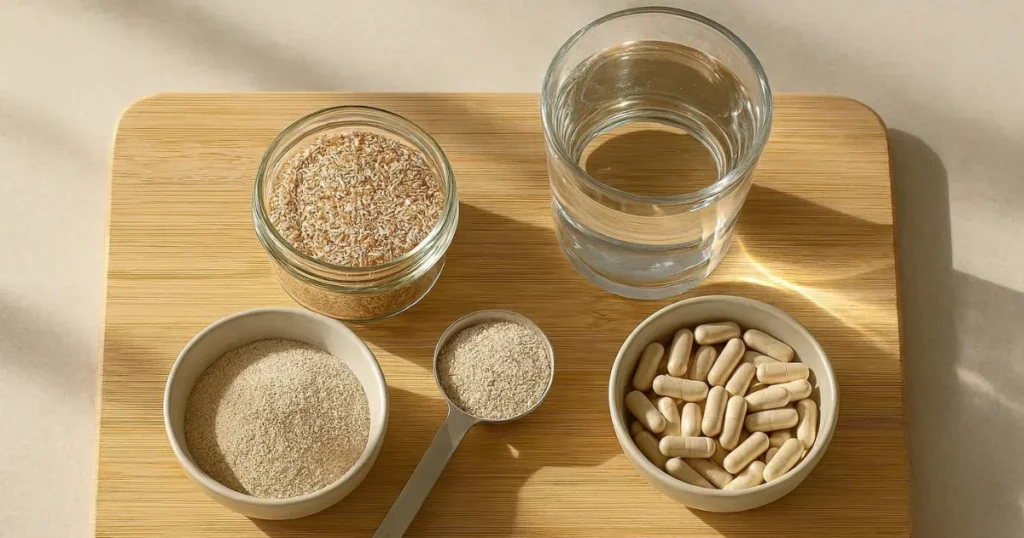
Start with a low dose – approximately 2.5 grams (roughly half a teaspoon of powder) once daily. Gradually increase over 1-2 weeks to the typical maintenance dose appropriate for your health goals:
- For digestive regularity: 5-7 grams daily.
- For cholesterol management: 10-12 grams daily, divided into 2-3 doses.
- For blood sugar control: 5-10 grams daily, taken before or with meals.
- For weight management support: 10-15 grams daily, divided into doses before meals.
Individual needs vary based on overall diet, fiber intake from other sources, and specific health goals.
The Critical Role of Water in Unlocking Fiber Benefits.
This cannot be overstated: Always consume psyllium with adequate fluid. Mix each dose with at least 240ml (8 ounces) of water or other liquid, and drink additional water throughout the day.
Insufficient fluid intake with psyllium can cause the fiber to swell and create a blockage in your esophagus or intestines – a serious complication. The fiber’s water-absorbing capacity is its strength, but only when enough water is available to support the gel formation process.
Proper hydration is not optional – it’s essential for realizing psyllium husk fiber benefits safely.
Timing Considerations for Optimal Results.
Timing affects which psyllium husk benefits you maximize:
Morning routine:
Taking psyllium first thing supports digestive regularity throughout the day.
Pre-meal timing:
For blood sugar management, consume 10-15 minutes before meals to allow gel formation.
Before meals for satiety:
For weight management, take 30-60 minutes before eating to enhance fullness.
Medication separation:
Always separate psyllium intake by at least 2-3 hours from medications.
Forms and Preparation Methods.
Psyllium is available in several forms, each offering the same core psyllium husk nutritional benefits:
- Husk powder: The most concentrated form, requiring mixing with liquid.
- Whole husks: Less processed, similar properties to powder but coarser texture.
- Capsules: Convenient but require drinking significant water separately.
- Flavored preparations: Pre-mixed products, often with added sweeteners.
From a quality perspective, pure husk powder without additives offers the most fiber per serving and allows you to control sweeteners and flavors. When working with commercial psyllium, we grade husks by purity (typically 85%, 95%, or 99% purity) and mesh size. Higher purity and finer mesh generally indicate better quality and more consistent gel formation – factors that directly impact the effectiveness of psyllium husk fiber benefits.
Side Effects and Safety Considerations.
While psyllium is generally well-tolerated, certain side effects and precautions deserve attention when pursuing psyllium husk uses and benefits:
Common Digestive Effects.
When starting psyllium or increasing dosage too quickly, you may experience:
- Gas and bloating: Bacterial fermentation in the colon produces gas as gut bacteria adapt to increased fiber.
- Abdominal cramping: Usually mild and temporary as your digestive system adjusts.
- Initial changes in bowel habits: Frequency or consistency may shift before normalizing.
These effects typically diminish within a few days to two weeks as your gut adapts. Starting with low doses and increasing gradually minimizes these issues while still allowing you to achieve the desired psyllium husk benefits.
Choking and Obstruction Risk.
Dry psyllium powder can swell rapidly if not mixed with adequate liquid, potentially causing choking or esophageal obstruction. People with swallowing difficulties, esophageal strictures, or other anatomical narrowing should avoid psyllium or use it only under medical supervision.
Never consume psyllium powder dry. Always pre-mix with liquid and drink immediately – this is non-negotiable for safe realization of psyllium husk fiber benefits.
Allergic Reactions.
Though relatively rare, allergic reactions to psyllium can occur. Symptoms may include:
- Skin rash or itching.
- Difficulty breathing.
- Swelling of the face, lips, or throat.
- Anaphylaxis in severe cases.
People with allergies to other plant materials or those who work in environments with psyllium dust exposure may have a higher risk. If you experience allergic symptoms, discontinue use immediately and seek medical attention if symptoms are severe.
Drug Interactions and Absorption Interference.
Psyllium’s gel-forming property can physically trap medications in the intestine, reducing their absorption. This affects numerous medication classes including:
- Diabetes medications: Psyllium may enhance blood sugar-lowering effects, requiring dose adjustments.
- Blood thinners: Warfarin absorption may be affected.
- Carbamazepine (seizure medication): Reduced absorption reported in studies.
- Lithium: Potential reduction in absorption.
- Thyroid hormones: Timing separation is essential for proper absorption.
- Digoxin: Heart medication that requires careful spacing.
Always take medications at least 2-3 hours before or after psyllium doses. Inform your healthcare provider about psyllium use, especially if you take medications with narrow therapeutic windows where absorption changes matter significantly.
When to Consult a Healthcare Provider.
Speak with a doctor before using psyllium if you:
- Have difficulty swallowing or a history of esophageal problems.
- Experience sudden changes in bowel habits.
- Have inflammatory bowel disease or intestinal obstruction.
- Take multiple medications.
- Have diabetes requiring insulin or medication adjustments.
- Are you pregnant or breastfeeding?
Psyllium is not a treatment for serious gastrointestinal conditions. If you experience severe abdominal pain, rectal bleeding, or failure to pass stool despite psyllium use, seek medical evaluation.
Common Myths About Psyllium Husk Benefits and Uses.
Several misconceptions about psyllium husk benefits persist despite evidence to the contrary:
Myth: Psyllium causes dependency like stimulant laxatives.
Reality: Psyllium is a bulk-forming fiber, not a stimulant. It doesn’t force intestinal contractions or train your bowel to stop working independently. You can use it long-term without losing natural bowel function – this is one of the key advantages when considering long-term psyllium husk uses and benefits.
Myth: More fiber always equals better results.
Reality: Excessive fiber intake without adequate water can worsen constipation or cause discomfort. Individual fiber needs vary based on overall diet, activity level, and digestive health. Quality and consistency matter more than maximum quantity when seeking psyllium husk fiber benefits.
Myth: All psyllium products deliver identical nutritional benefits.
Reality: Purity levels, mesh size, and processing quality vary significantly between products. Lower-grade contains more psyllium seed particles and less pure husk fiber, affecting gel formation and effectiveness. Industrial processing standards also influence final product quality and the consistency of psyllium husk nutritional benefits.
Myth: Psyllium husk fiber benefits replace the need for dietary fiber from food.
Reality: While psyllium provides concentrated soluble fiber, a healthy diet requires diverse fiber sources, including fruits, vegetables, and whole grains, which offer additional nutrients and different fiber types. Psyllium supplements dietary fiber intake, but doesn’t substitute for whole food sources.
Myth: The nutritional benefits of psyllium husk work immediately.
Reality: While some people experience initial effects within 12-24 hours, the full range of psyllium husk benefits – particularly cholesterol reduction and glycemic control – develops over weeks of consistent daily use. Cardiovascular benefits typically require 4-6 weeks of regular consumption to manifest.
Quality and Sourcing: What to Look For in Psyllium Products.
Having processed psyllium for export markets, I can share what distinguishes high-quality psyllium from inferior grades – factors that directly impact the effectiveness of psyllium husk benefits:
Purity Standards That Affect Fiber Benefits.
Commercial psyllium is graded by purity, which directly affects the concentration of psyllium husk nutritional benefits:
- 85% purity: Lower grade with more seed particles and plant matter.
- 95% purity: Standard commercial grade suitable for most applications.
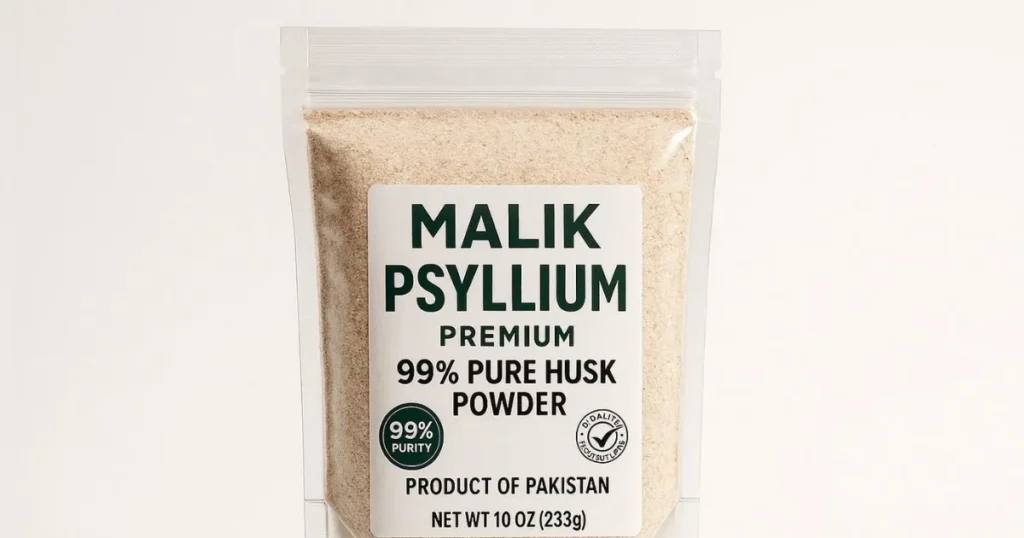
- 99% purity: Premium grade with minimal contamination.
Higher purity means more uniform gel formation, less gritty texture, and more consistent delivery of psyllium husk fiber benefits. For therapeutic use, a purity of 95% or higher is preferable.
Geographic Origin and Processing Standards.
Pakistan’s psyllium-growing regions – particularly around Bahawalnagar, Vehari, and areas of Sindh – produce psyllium with naturally high mucilage content due to favorable soil and climate conditions. The region’s established processing infrastructure ensures proper husk separation and quality control.
India also produces psyllium, primarily in Gujarat and Rajasthan. Both Pakistan and India supply global markets, with quality depending more on specific processing facilities and grading standards than country of origin alone.
At Malik Psyllium, our processing adheres to export-grade standards, with multiple mechanical separation stages to achieve 99% purity. This level of processing removes seed particles and plant debris that can affect texture, gel consistency, and the reliable delivery of psyllium husk nutritional benefits.
Color, Particle Size, and Quality Indicators.
High-quality psyllium husk appears light tan to cream-colored. Darker material may indicate oxidation or the presence of seed particles. Finer mesh sizes (85-mesh or higher) produce a smoother texture when mixed with liquid, though coarser grades work equally well for fiber content.
When selecting psyllium products to maximize psyllium husk fiber benefits, look for:
- Clear purity statements (95% or higher preferred).
- Origin transparency.
- Absence of unnecessary additives.
- Fine, uniform particle size.
- Light, consistent color.
- Reputable processing standards.
Practical Applications: Integrating Psyllium Husk Uses and Benefits Into Daily Life.
Incorporating psyllium into your routine doesn’t require complicated protocols. Here are practical ways to access psyllium husk benefits:
Simple Integration Methods.
Morning digestive health routine:
Mix 5 grams of psyllium powder with 300 mL of water or juice first thing in the morning. Drink immediately, then follow with another glass of water. This supports digestive regularity throughout the day and leverages fundamental psyllium husk fiber benefits.
Pre-meal blood sugar management:
For glycemic control, mix psyllium with water 10-15 minutes before meals. The gel formation begins during this window, helping slow nutrient absorption when you eat – one of the key psyllium husk uses and benefits for diabetics.
Smoothie addition:
Blend psyllium powder into fruit smoothies. The existing liquid content ensures proper hydration while the flavors mask psyllium’s neutral taste. Drink promptly before the mixture thickens excessively.
Baking substitute for gluten-free applications:
Psyllium powder works as a gluten-free binding agent in baking, though this requires recipe adjustment. Start with 1-2 teaspoons per recipe and increase the liquid content to account for psyllium’s water absorption.
Dietary Context for Maximum Nutritional Benefits.
Psyllium husk nutritional benefits work best as part of overall dietary patterns that include:
- Adequate daily water intake (at least 2 liters for most adults).
- Varied fiber sources from fruits, vegetables, and whole grains.
- Balanced macronutrient intake.
- Regular meal timing.
- Whole food emphasis.
It supplements but doesn’t replace whole food fiber sources. Think of psyllium as insurance against fiber gaps rather than your sole fiber strategy. The complete spectrum of psyllium husk uses and benefits emerges when it complements, rather than replaces, a fiber-rich diet.
How long does it take for psyllium husk to work for constipation?
Most people experience effects within 12-72 hours of starting psyllium. Full benefits for regular bowel movements typically develop within one week of consistent daily use. Individual response time varies based on baseline fiber intake, hydration level, and severity of constipation. The digestive psyllium husk benefits accumulate with consistent use.
Can I take psyllium husk every day long-term?
Yes, psyllium is considered safe for long-term daily use when consumed with adequate water. Unlike stimulant laxatives, it doesn’t create dependency. Many people use it continuously for months or years as part of their dietary routine to maintain psyllium husk fiber benefits without adverse effects.
What’s the difference between psyllium husk and psyllium powder?
These terms often refer to the same product – ground psyllium husk. “Whole psyllium husks” are larger flakes, while “psyllium powder” or “psyllium husk powder” is finely ground. Both deliver similar psyllium husk nutritional benefits and fiber content, though powder dissolves more quickly in liquid.
Does psyllium husk help with weight loss?
Psyllium may support weight management by increasing feelings of fullness, but it doesn’t cause significant weight loss on its own. Research shows modest effects (1-3 kg over several months) when combined with calorie restriction. Weight management is one of several psyllium husk uses and benefits, but it is not a primary application.
Can psyllium husk cause bloating?
Yes, particularly when starting use or increasing dosage too quickly. Gas and bloating occur as gut bacteria ferment the fiber. These effects usually diminish within 1-2 weeks as your digestive system adapts. Starting with small doses and gradually increasing minimizes this issue while allowing you to build up to full psyllium husk fiber benefits.
Can psyllium husk cause bloating?
Yes, particularly when starting use or increasing dosage too quickly. Gas and bloating occur as gut bacteria ferment the fiber. These effects usually diminish within 1-2 weeks as your digestive system adapts. Starting with small doses and gradually increasing minimizes this issue while allowing you to build up to full psyllium husk fiber benefits.
How much water should I drink with psyllium husk?
Mix each dose with at least 240ml (8 ounces) of water or other liquid. Drink additional water throughout the day – at least 2 liters total for most adults. Sufficient hydration is absolutely critical to safely accessing psyllium husk benefits. Insufficient fluid intake increases the risk of choking, esophageal obstruction, or worsened constipation.
What are the main psyllium husk nutritional benefits compared to other fibers?
Psyllium provides exceptionally high soluble fiber content (70-80% of total fiber) compared to most plant-based fibers. This soluble fiber forms a unique gel that delivers multi-system benefits, including cholesterol reduction, blood sugar control, and normalized bowel function. The psyllium husk nutritional benefits are concentrated in the fiber content, with minimal calories or other nutrients.
Are the psyllium husk fiber benefits different from eating high-fiber foods?
Psyllium provides concentrated soluble fiber in small servings, while whole foods provide diverse fiber types plus vitamins, minerals, and phytonutrients. The psyllium husk fiber benefits complement but don’t replace whole food nutrition. Psyllium excels at delivering specific therapeutic doses of soluble fiber, while whole foods provide broader nutritional value. Both have distinct roles in a healthy diet.
Conclusion.
Psyllium husk benefits extend well beyond simple constipation relief, though that remains a primary and well-validated use. The unique gel-forming properties of this soluble fiber support cardiovascular health through cholesterol reduction, assist blood sugar management for people with diabetes, contribute to weight management efforts through enhanced satiety, and support overall digestive wellness.
The comprehensive psyllium husk nutritional benefits stem from its exceptionally high soluble fiber content and the resulting gel formation that impacts multiple body systems. From digestive regulation to metabolic support, the evidence-based psyllium husk fiber benefits justify its position as one of the most studied and recommended dietary fiber supplements.
Safe, effective use requires attention to adequate hydration – this cannot be emphasized enough. The same water-absorbing capacity that delivers psyllium husk benefits can cause serious problems if you don’t consume sufficient fluids. Starting with low doses and gradually increasing allows your digestive system to adapt while minimizing gas and bloating.
When selecting psyllium products, quality matters significantly. Higher purity levels and proper processing, whether from Pakistan’s major growing regions or other sources, ensure consistent performance, better tolerance, and reliable delivery of psyllium husk uses and benefits.
Psyllium isn’t a miracle supplement, and claims about dramatic weight loss or disease cure overstate the evidence. What it does offer is a well-researched, generally safe way to increase soluble fiber intake with multiple modest but meaningful health benefits when used properly as part of a balanced diet. The diverse psyllium husk nutritional benefits, combined with decades of safety data, make it a valuable tool for people seeking to improve digestive health, support cardiovascular function, and enhance metabolic wellness.
Medical Disclaimer.
This article provides educational information about psyllium husk and is not intended as medical advice. Psyllium may interact with medications and is not suitable for everyone. Consult a healthcare provider before starting psyllium supplements, especially if you have pre-existing medical conditions, take medications, or experience persistent digestive symptoms requiring professional evaluation.

Isabgol Ke Fayde – Psyllium Husk Ke Poori Science-Based Rahnumayi – 2026
Isabgol ke fayde jaanna aaj ke daur mein zyada zaroori
Isabgol Benefits in Hindi | Psyllium Husk Ke Fayde, Sahi Upyog Aur Savdhaniyan – 2026
Agar aap isabgol benefits in hindi mein samajhna chahte hain,