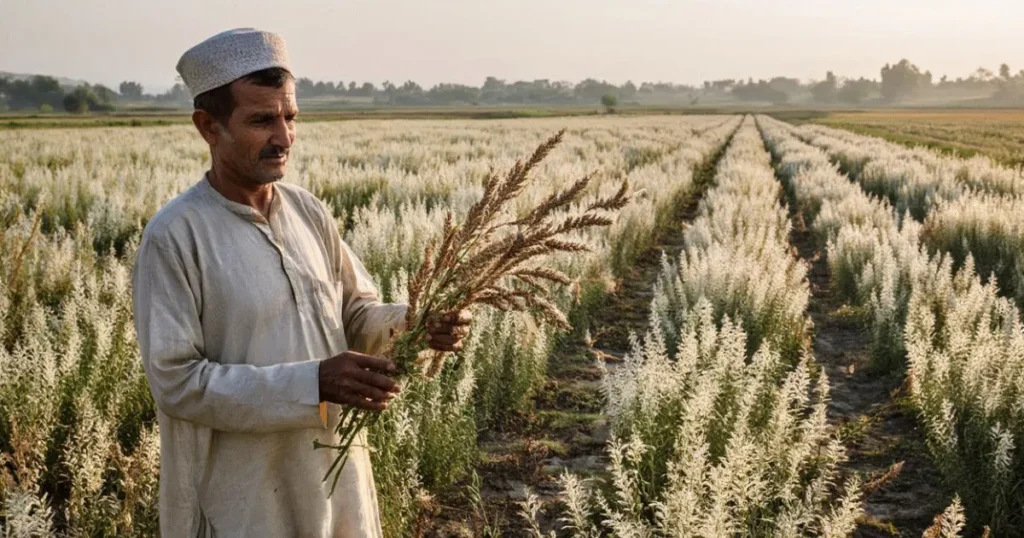
Have you ever wondered where that fiber supplement in your medicine cabinet actually comes from? Let me introduce you to the ispaghol plant – a remarkable herb that has been cultivated in my Pakistani fields for over two decades. Known as isabgol ka poda in Urdu and the psyllium husk plant in English, this modest-looking crop has become my life’s passion and a cornerstone of natural wellness across South Asia.
The ispaghol plant, scientifically named Plantago ovata, produces the valuable psyllium husk that millions rely on for digestive health. Whether you call it the isabgol plant in Hindi or the ispaghula husk plant in medical terminology, you’re talking about the same incredible botanical wonder. Today, I’ll share everything you need to know about this extraordinary plant – from its botanical characteristics to its cultivation, health benefits, and cultural significance in Pakistan and beyond.
What is the Ispaghol Plant? (Plantago ovata).
The ispaghol plant is a small annual herb belonging to the Plantaginaceae family. Its scientific name, Plantago ovata, comes from the Latin word “planta” (sole of the foot) due to the rosette-like leaf arrangement that resembles a footprint. This psyllium husk plant has been used medicinally for centuries, originating in the Mediterranean region and southwestern Asia.
Plantago ovata thrives in semi-arid climates with sandy soils – conditions perfectly met in Pakistan, particularly in Sindh and Punjab provinces. The plant produces tiny seeds surrounded by a thin, translucent coating called the husk or “bhusi” in Urdu. This husk is what we harvest and process at Malik Psyllium.
The term “psyllium” comes from the Greek word “psylla,” meaning flea, because the seeds resemble tiny fleas. The ispaghula husk plant is specifically cultivated for its mucilaginous seed coating, which contains approximately 70% soluble fiber. This fiber is what gives psyllium husk plant uses their therapeutic value – absorbing water and forming a gel that supports digestive health.
Understanding the isabgol plant meaning in traditional medicine helps us appreciate why it’s been valued for millennia. In Ayurveda, it’s considered a cooling herb that balances digestive fire. In Unani medicine, practiced widely in Pakistan, the ispaghol plant is used to treat everything from constipation to inflammation.
Ispaghol Plant Identification: How It Looks.
Recognizing the isabgol ka poda is essential whether you’re cultivating it commercially or growing it in your home garden. Let me describe what you’ll see when you encounter this psyllium husk plant.
Size and Structure:
The ispaghol plant is relatively small, reaching just 12-18 inches (30-45 cm) in height at full maturity. It’s an annual herb, completing its entire lifecycle within one growing season of approximately 120-130 days.
Leaves:
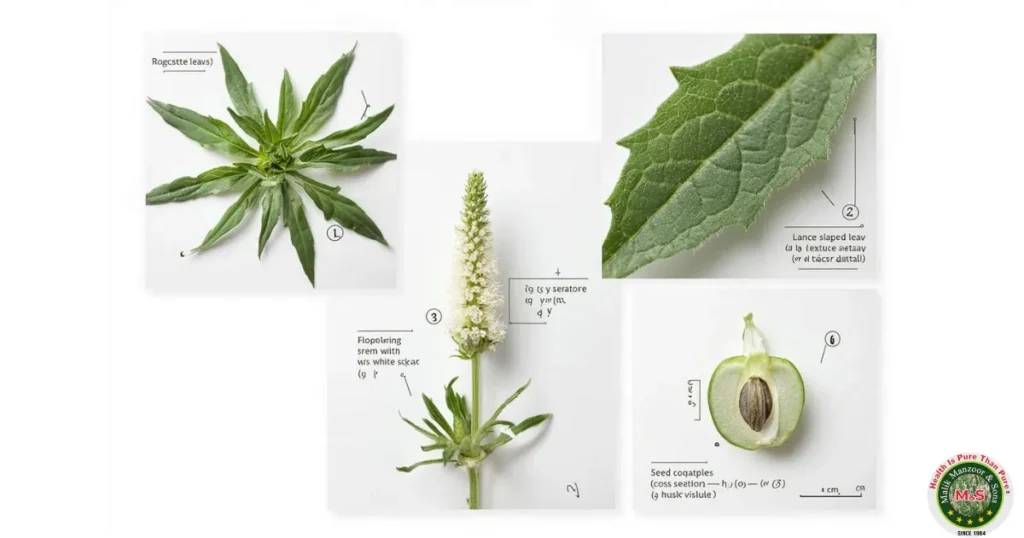
The isabgol plant initially forms a basal rosette – a circular arrangement of leaves growing close to the ground. These leaves are linear to lanceolate (lance-shaped), about 1-10 cm long and 1-4 mm wide. They have a slightly hairy texture (pubescent) and entire margins with no serrations. The leaves are green to grayish-green in color.
Stems:
As the psyllium husk plant matures, it sends up multiple flowering stems from the center of the rosette. These stems are slender, erect, and leafless, reaching 10-45 cm tall. Each isabgol ka poda can produce anywhere from 5 to 20 flowering stems, depending on growing conditions.
Flowers:
The ispaghula husk plant produces tiny, inconspicuous flowers arranged in dense cylindrical spikes at the top of each stem. Each spike is about 1-5 cm long. The flowers are white to pinkish in color with four petals. They’re wind-pollinated, so you won’t see bees or butterflies visiting them.
Seeds and Husks:
After flowering, the isabgol plant develops small capsules, each containing two seeds. The seeds themselves are tiny – about 2 mm long – and oval-shaped. Most importantly, each seed is surrounded by that valuable translucent husk that swells dramatically when exposed to water. This is what we harvest and process.
Growth Stages:
You’ll notice distinct phases as the psyllium husk plant grows: first the ground-hugging rosette (weeks 1-6), then rapid stem elongation (weeks 6-10), flowering (weeks 10-13), and finally seed maturation when the plant turns from green to yellowish-brown (weeks 13-17).
Ispaghol Ka Poda – Meaning & Cultural Importance.
In Urdu, “ispaghol ka poda” literally translates to “ispaghol plant” or “the plant of ispaghol.” But the cultural significance goes much deeper than simple translation. The isabgol ka poda holds a special place in Pakistani households, where it’s been a trusted home remedy for generations.
Ask any Pakistani grandmother, “Ispaghol ka poda kya hota hai?” (What is the ispaghol plant?), and she’ll tell you it’s nature’s gentle cleanser. In traditional Pakistani medicine, the psyllium husk plant is considered cooling and moistening – perfect for balancing the body’s heat, especially in our hot climate.
In my travels across Pakistan, I’ve observed how the isabgol plant is integrated into daily wellness routines. Many families keep isabgol husk in their kitchens alongside spices and teas. It’s common to mix it with yogurt, milk, or water as a bedtime ritual for digestive comfort.
The cultural importance extends to agriculture, too. For farmers in Sindh and Punjab, the ispaghol plant represents economic opportunity. It’s a cash crop that fits perfectly into crop rotation schedules – planted after monsoon crops are harvested and before summer planting begins.
Religious and spiritual contexts matter too. During Ramadan, many people use isabgol to manage digestive adjustments from fasting. The gentle, natural properties of the psyllium husk plant align with Islamic medicine traditions that emphasize dietary wellness.

Names of Ispaghol in Different Languages.
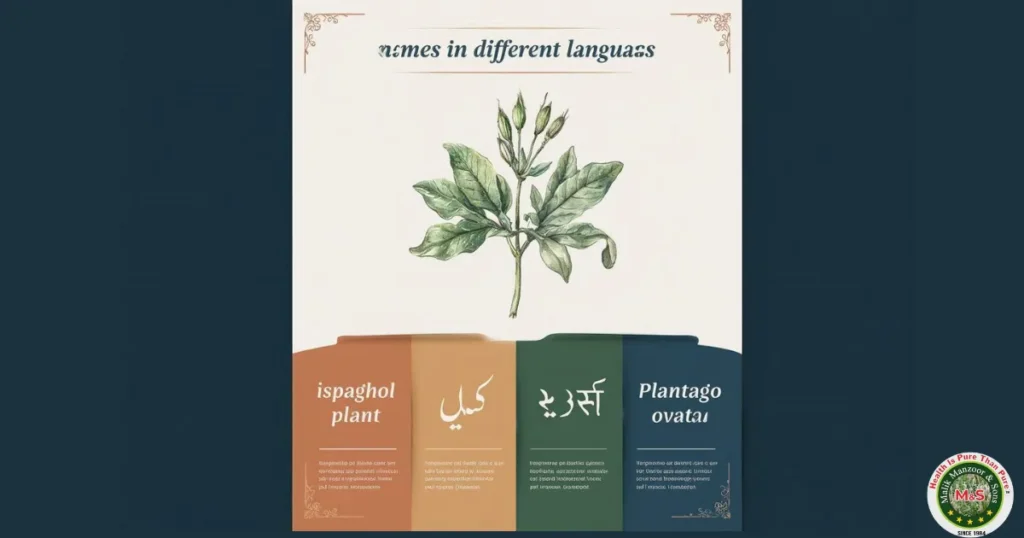
Understanding the isabgol plant’s various names helps you find information and products across different regions and medical systems:
| Language | Name |
| English | Psyllium / Psyllium Husk Plant |
| Urdu | Ispaghol (اسپغول) |
| Hindi | Isabgol (ईसबगोल) |
| Scientific | Plantago ovata |
| Arabic | Ispaghul (إسباغول) |
| Persian | Ispaghul |
| Tamil | Isabgol Vithai |
The isabgol plant in Hindi is written as “ईसबगोल का पौधा” (isabgol ka paudha). Both Hindi and Urdu speakers use nearly identical terms, though pronunciation varies slightly. In some Indian regions, you’ll also hear it called “ghoda jeera” (horse cumin) because the seeds somewhat resemble cumin seeds.
Knowing these names is practical. When shopping in local markets in Pakistan or India, asking for “ispaghol” gets immediate recognition. In medical contexts or when reading research, you’ll encounter “Plantago ovata” or “psyllium husk plant.” All refer to the same remarkable herb.
Where is the Ispaghol Plant Found?
The psyllium husk plant has specific geographical preferences. Originally native to the Mediterranean region, Iran, and parts of Pakistan and India, Plantago ovata now grows primarily in these traditional regions, plus some experimental cultivation elsewhere.
The isabgol plant thrives in semi-arid climates with well-defined seasons – cool winters for growth and warm springs for seed maturation. This is why it’s concentrated in specific regions rather than being widely distributed.
Isabgol Plant in Pakistan.
Pakistan is one of the world’s leading producers of psyllium husk, and the ispaghol plant has found its perfect home here. Let me share specific details about cultivation in my country.
Major Growing Regions:
Sindh province, particularly districts like Mirpur Khas, Sanghar, and Tharparkar, accounts for the majority of Pakistan’s isabgol ka poda cultivation. The sandy soils and semi-arid climate of lower Sindh provide ideal conditions. Punjab province, especially areas around Bahawalpur and Rahim Yar Khan, also grows significant quantities.
Production Statistics:
Pakistan produces approximately 8,000-12,000 metric tons of psyllium husk annually, depending on growing conditions. We cultivate the isabgol plant on roughly 60,000-80,000 hectares. This makes Pakistan one of the largest producers globally, and our quality is often considered superior due to optimal growing conditions.
Availability in Local Markets:
You’ll find isabgol husk readily available in Pakistani markets – from small neighborhood stores to large supermarkets. Medical stores stock it prominently, and specialty spice shops carry both whole seeds and processed husk. At Malik Psyllium, we supply both domestic and international markets with premium-quality products harvested from our carefully managed fields.
The ispaghul plant in Pakistan isn’t just an agricultural commodity – its part of our heritage. Many farmers have cultivated it for generations, passing down knowledge about optimal planting times, soil management, and harvest techniques.
How to Grow the Ispaghol Plant (Home & Farm Guide).
Whether you’re a commercial farmer or a home gardener curious about cultivation, growing the psyllium husk plant is achievable with the right conditions. Here’s what you need to know:
Soil Requirements:
- Sandy loam to loam soil works best for the isabgol ka poda.
- Good drainage is essential – waterlogged soil kills plants.
- pH between 7.0-8.0 (neutral to slightly alkaline).
- Avoid heavy clay soils.
Climate Needs:
- Cool winters and warm springs (October-March in Pakistan).
- Temperature range: 15-25 ° C during the growing season.
- Moderate rainfall: 250-400mm total.
- Full sun exposure: minimum 6-8 hours daily.
Seed Sowing Method:
- Prepare a fine seedbed by plowing 2-3 times.
- Sow seeds in October-November.
- Use 4-5 kg seeds per hectare (commercial) or 2-3 grams per square meter (home garden).
- Plant 1-2 cm deep in rows 20-25 cm apart.
- Mix seeds with sand for uniform distribution.
- Lightly cover and firm the soil.
Water Schedule:
- First irrigation immediately after sowing.
- Second watering when seedlings emerge (7-10 days).
- Subsequent irrigation every 15-20 days, depending on rainfall.
- Critical periods: rosette stage, flowering, seed development.
- Total water need: 300-350mm throughout the growing season.
Harvesting & Drying:
- Harvest when 80-90% of seed spikes turn brown (February-March).
- Cut plants at ground level.
- Bundle and field-dry for 2-3 days.
- Thresh to separate seeds from plant material.
- Sun-dry seeds to 10-12% moisture content.
- Mill gently to separate valuable husk from seeds.
For home gardens, the ispaghol plant makes an interesting educational project. Plant a small patch in fall, maintain consistent moisture, and observe the complete lifecycle. While home-scale yields won’t be commercial, you’ll gain appreciation for where your supplements come from.
Health Benefits of Ispaghol.
The psyllium husk plant has earned its reputation as a digestive health powerhouse. Let me explain the scientifically-backed benefits that have made isabgol a household name.
Digestive Health:
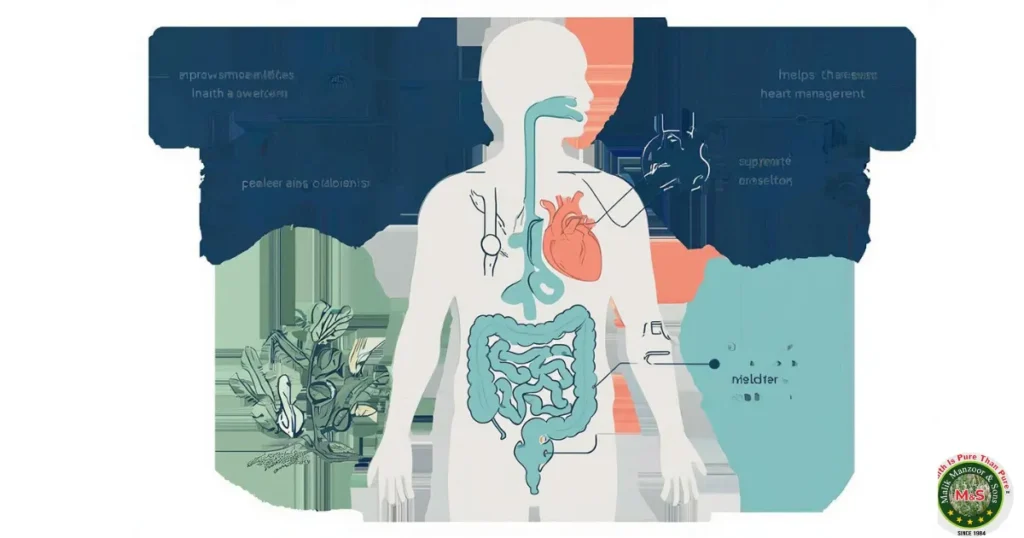
The ispaghola husk plant’s soluble fiber forms a gel when mixed with water. This gel adds bulk to stool while keeping it soft, making bowel movements comfortable and regular. It works for both constipation and diarrhea – normalizing stool consistency regardless of which direction the problem lies.
Cholesterol Control:
Multiple clinical studies confirm that isabgol ka poda fiber effectively lowers LDL (bad) cholesterol. The fiber binds to bile acids in your intestines, forcing your liver to use cholesterol to produce more bile. I’ve personally seen my cholesterol drop 22 points after three months of consistent use.
Weight Loss Support:
The psyllium husk plant creates lasting fullness. When taken before meals, it expands in your stomach and signals satiety to your brain. This natural appetite suppression helps you eat smaller portions without feeling deprived – a sustainable approach to weight management.
IBS & Constipation Relief:
For people with irritable bowel syndrome, isabgol provides gentle, consistent relief. Unlike harsh laxatives, this natural fiber source works with your body’s rhythms. It’s particularly effective for IBS-C (constipation-predominant) but also helps with alternating symptoms.
Additional Benefits:
- Blood sugar management: slows glucose absorption.
- Colon health: feeds beneficial gut bacteria.
- Heart health: reduces blood pressure and inflammation.
- Prebiotic effects: supports healthy gut microbiome.
These benefits come from the unique properties of the ispaghula husk plant – specifically its high soluble fiber content and gel-forming ability. This is why it’s recommended by gastroenterologists and nutritionists worldwide.
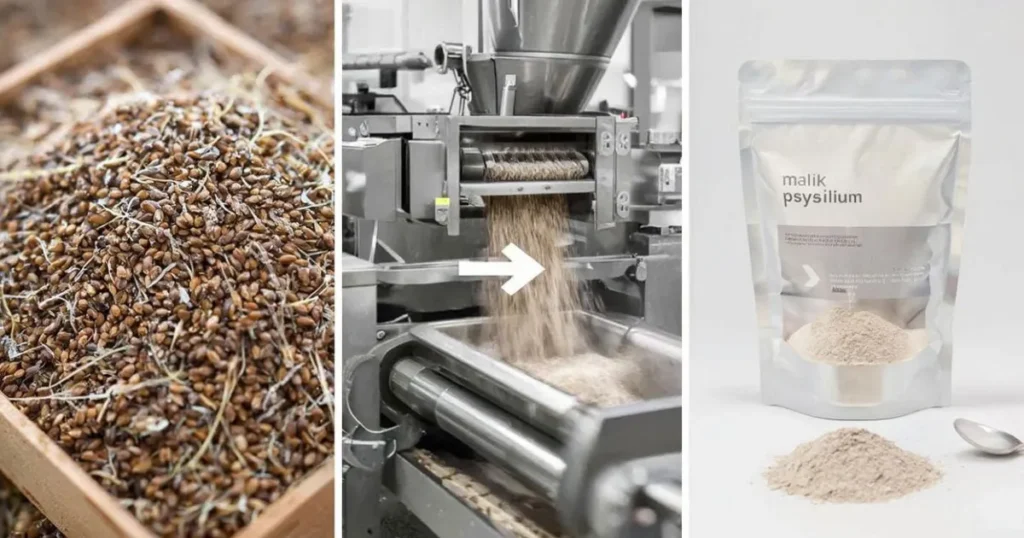
How Psyllium Husk is made from the Ispaghol Plant.
Understanding the journey from the isabgol plant to the husk powder in your jar helps you appreciate the product’s value. At Malik Psyllium, we’ve refined this process over decades.
Seed Harvesting:
After the psyllium husk plant matures (120-130 days), we carefully harvest when the seed spikes turn brown. Timing is crucial – too early and the husk is underdeveloped; too late and the seeds shatter from the isabgol ka poda and fall to the ground.
Threshing:
Harvested plants are dried and threshed to separate seeds from stalks and other plant material. We use mechanical threshers for efficiency while ensuring minimal damage to the delicate seed coating.
Cleaning:
Raw seeds go through multiple cleaning stages. We remove plant debris, soil particles, and broken material using screens and air classifiers. Clean seeds are essential for a pure final product.
Milling:
This is where the magic happens. The ispaghol plant seeds pass through specialized mills that gently crack them, releasing the husk while keeping the inner seed intact. This requires precise pressure – too little leaves husk attached; too much damages the valuable fiber structure.
Separation:
We use air separation and fine screening to isolate pure husk from seeds and any remaining material. The husk is lighter and more irregular in shape, allowing effective separation.
Grinding:
Depending on customer requirements, we grind the husk to various particle sizes – from coarse to ultra-fine powder. Finer powder mixes more easily with liquids but has the same fiber content.
Quality Control:
Every batch undergoes rigorous testing for purity, swelling capacity, moisture content, and microbial safety. We test for heavy metals, pesticide residues, and contamination to meet international standards.
The psyllium husk plant yields approximately 25-30% husk by weight of cleaned seeds. This means from 1000 kg of seeds, we extract 250-300 kg of pure husk – the valuable end product that reaches consumers worldwide.
Culinary & Ayurvedic Uses.
The isabgol plant has deep roots in traditional medicine and culinary practices across South Asia. Let me share how it’s been used for centuries.
Traditional Pakistani Uses:
In Pakistani households, ispaghol is more than medicine – it’s part of daily wellness. Common preparations include:
- Mixed with cold milk before bedtime for gentle overnight relief.
- Stirred into yogurt (dahi) with a pinch of salt for cooling digestive support.
- Combined with rose water (gulab ka pani) for traditional beauty treatments.
- Blended with fruit juices for a nutritious, filling beverage.
Ayurvedic Significance:
In Ayurveda, the isabgol ka poda is classified as having cooling properties (sheet virya) and sweet taste (madhura rasa). Ayurvedic practitioners prescribe it for:
- Balancing Pitta dosha (excess heat in the body).
- Treating “ama” (toxic accumulations in the digestive tract).
- Supporting “agni” (digestive fire) without overstimulating it.
- Providing bulk and lubrication for comfortable elimination.
The psyllium husk plant is particularly valued in Ayurveda for its ability to work gently without forcing or depleting the body. It’s considered a “sattvic” food – pure and promoting clarity.
Unani Medicine Applications:
Unani medicine, widely practiced in Pakistan, recognizes ispaghul as cold and moist in temperament (second degree). Traditional hakims use isabgol for:
- Cooling internal inflammation.
- Treating hemorrhoids (bawaseer).
- Managing urinary tract issues.
- Soothing irritated mucous membranes.
Modern Culinary Uses:
Today, health-conscious cooks incorporate psyllium husk into:
- Gluten-free baking as a binding agent.
- Smoothies for added fiber.
- Homemade protein bars.
- Low-carb bread recipes.
- Overnight oats for extra thickness.
The ispaghola husk plant has successfully transitioned from traditional remedy to modern superfood, maintaining its therapeutic value while adapting to contemporary dietary needs.
Difference Between Ispaghol Seeds and Husk.
Many people ask me: “Should I use the whole seeds or just the husk from the isabgol plant?” Let me clarify the important distinctions.
Ispaghol Seeds:
- Contain the husk plus the inner seed.
- About 25-30% of seed weight is the valuable husk.
- Less fiber per gram compared to pure husk.
- Require grinding for the body to access the husk.
- Sometimes used whole as a mild laxative.
- Less commonly available commercially.
Ispaghol Husk (Bhusi):
- Pure outer coating separated from seeds.
- Concentrated fiber source – about 70% soluble fiber.
- Mixes more easily with liquids.
- More effective per gram.
- Standard form sold commercially.
Which is Better?
For therapeutic purposes, pure husk from the psyllium husk plant is superior because:
- You get more fiber per serving.
- It dissolves more completely.
- Dosing is more precise.
- It’s easier on digestion.
- Quality control is better.
The isabgol ka poda seeds are fine for traditional use if you grind them fresh, but for consistent results and convenience, processed husk is the better choice. This is why virtually all commercial products and medical recommendations specify “psyllium husk” rather than whole seeds.
Buying Guide: How to Choose Quality Ispaghol.
Not all psyllium husk plant products are created equal. After decades in this industry, I can guide you to make informed purchasing decisions.
Where to Buy Ispaghol Husk:
- Medical stores (dawakhanas) in Pakistan.
- Health food stores.
- Online retailers.
- Direct from processors like Malik Psyllium.
- Organic specialty shops.
- Some grocery stores.
Pure Organic Options:
Look for products labeled “organic” or “certified organic” if you prefer isabgol from plants grown without synthetic pesticides. At Malik Psyllium, we offer organic options, with the organic commanding a premium due to stricter cultivation requirements.
Organic certification ensures the ispaghol plant was grown following specific standards – no synthetic fertilizers, pesticides, or GMOs. For most people, conventional high-quality husk works perfectly well, but organic is available for those who prefer it.
Signs of Adulteration:
Unfortunately, some unscrupulous sellers adulterate isabgol ka poda products. Watch for:
Color:
Pure husk is light beige to nearly white. Dark brown color or black specks suggest contamination with seed material or other substances.
Swelling Test:
Mix a teaspoon with water. Quality psyllium husk plant fiber should absorb 10-14 times its weight and form a clear gel within seconds. Poor swelling indicates an inferior product.
Texture:
Should be fine and uniform. Gritty texture or visible seed pieces indicate incomplete processing or adulteration.
Smell:
Should be nearly odorless or slightly earthy. Musty or off odors suggest improper storage or contamination.
Price:
Extremely cheap isabgol is suspicious. Quality processing has costs, and prices significantly below the market average often indicate an adulterated product.
Packaging:
Professional packaging with clear labeling, batch numbers, and expiration dates indicates a reputable manufacturer. Avoid loose, unlabeled products.
Purity Testing:
Premium brands like Malik Psyllium provide testing certificates showing purity levels, heavy metal analysis, and microbial testing. Don’t hesitate to ask for these documents.
When buying ispaghula husk plant products, remember that quality directly affects effectiveness. Investing in pure, properly processed husk ensures you receive the full health benefits this remarkable plant offers.
Side Effects & Precautions.
While the isabgol plant is generally very safe, it’s important to understand potential side effects and who should exercise caution.
Common Side Effects:
- Initial bloating and gas (usually resolves within a week).
- Abdominal cramping if taken without enough water.
- Allergic reactions in rare cases (itching, hives, difficulty breathing).
Who Should Avoid It
- People with intestinal obstructions or narrowing.
- Those with difficulty swallowing (dysphagia).
- Anyone with a known allergy to psyllium husk plant products.
- People with undiagnosed abdominal pain.
Medical Interaction Note:
This is crucial: isabgol ka poda fiber can reduce the absorption of certain medications. Always take psyllium husk at least 2 hours before or 4 hours after medications, especially:
- Diabetes medications.
- Heart medications.
- Thyroid hormones.
- Carbamazepine.
- Lithium.
Safety Guidelines:
- Always mix with adequate liquid (minimum 8 oz water per teaspoon).
- Never consume dry powder.
- Start with small doses and increase gradually.
- Drink plenty of water throughout the day.
- Consult your doctor if you’re on medications or have digestive disorders.
Pregnancy and Breastfeeding:
The ispaghula husk plant is generally considered safe during pregnancy and breastfeeding, often recommended for pregnancy-related constipation. However, always consult your obstetrician before starting any supplement.
Most people tolerate isabgol beautifully when used properly. The key is adequate hydration and gradual introduction. Listen to your body and adjust accordingly.
What is the Ispaghol plant called in English?
The ispaghol plant is called “psyllium” or “psyllium husk plant” in English. The scientific name is Plantago ovata. It’s also known as “blonde psyllium” to distinguish it from related species.
What is the scientific name of Ispaghol?
The scientific name of the isabgol plant is Plantago ovata. It belongs to the Plantaginaceae family. The genus name “Plantago” refers to the plant family, while “ovata” describes the oval-shaped seeds.
Where does the Isabgol plant grow in Pakistan?
The isabgol ka poda grows primarily in Sindh province (especially Mirpur Khas, Sanghar, and Tharparkar districts) and southern Punjab (Bahawalpur and Rahim Yar Khan areas). These regions provide ideal sandy soil and semi-arid climate conditions.
Can I grow a psyllium husk plant at home?
Yes, you can grow the ispaghol plant in home gardens if you have a suitable climate (cool winters, warm springs) and well-draining soil. Plant seeds 1-2 cm deep in fall, maintain consistent moisture, and harvest after 120 days. It makes an interesting educational project.
What climate does the Ispaghula plant need?
The psyllium husk plant needs a semi-arid climate with cool winters (15-25 ° C during growth), warm springs for seed maturation, moderate rainfall (250-400mm), full sun exposure, and well-draining sandy loam soil. These conditions are naturally found in Pakistan and northwestern India.
Is Ispaghol a herb or medicine?
The isabgol plant is both – it’s an annual medicinal herb. Botanically, it’s classified as an herb (non-woody plant). Medicinally, it’s used as a natural remedy and fiber supplement. The husk contains therapeutic soluble fiber used to treat digestive issues.
What is the difference between Ispaghol and Isabgol?
There is no difference -” ispaghol” and “isabgol” are simply different transliterations of the same Urdu/Hindi word (اسپغول/ ईसबगोल). Both refer to the psyllium husk plant (Plantago ovata). Regional pronunciation varies slightly, but they’re identical products.
Is psyllium husk safe for daily use?
Yes, isabgol ka poda fiber is generally safe for daily long-term use when taken with adequate water. Many people use it daily for years without problems. However, maintain 2-4 hour spacing from medications and consult your doctor if you have medical conditions.
How long does the Ispaghol plant take to grow?
The ispaghula husk plant takes approximately 120-130 days from sowing to harvest. In Pakistan, we plant in October-November and harvest in February-March. Growth stages include: germination (7-10 days), rosette development (30-40 days), flowering (40-50 days), and seed maturation (30-40 days).
Is the Ispaghol plant good for weight loss?
Yes, the psyllium husk plant supports weight management by creating lasting fullness and reducing appetite. When taken before meals with water, the fiber expands in your stomach, helping you eat less naturally. It’s not a magic solution but an effective tool combined with healthy eating.
Conclusion: The Remarkable Ispaghol Plant.
Standing in my fields today, watching another healthy crop of isabgol ka poda near maturity, I’m filled with gratitude for this remarkable plant. The ispaghol plant connects us to ancient wellness wisdom while providing modern health solutions backed by science.
From its humble appearance – a small herb with modest flowers – the psyllium husk plant delivers extraordinary benefits. Whether you call it isabgol plant in Hindi, ispaghula husk plant in medical contexts, or simply psyllium, you’re talking about nature’s gentle yet powerful digestive remedy.
Pakistan’s role in cultivating Plantago ovata is significant. Our climate, soil, and centuries of agricultural expertise produce some of the world’s finest isabgol. At Malik Psyllium, we’re proud to continue this tradition while embracing modern quality standards and sustainable farming practices.
I encourage organic cultivation where possible – not just for environmental benefits, but to preserve the purity that makes this plant so valuable. The isabgol ka poda deserves to be grown with care, respect, and understanding of its therapeutic importance.
Whether you’re consuming isabgol for digestive health, considering cultivation, or simply appreciating the botanical wonder behind your supplements, remember that this unassuming plant has supported human wellness across centuries and cultures. Its importance in South Asia – especially Pakistan – can not be overstated.
If you’re ready to experience premium-quality products from carefully cultivated ispaghol plants, I invite you to explore Malik Psyllium’s range. Each product is traced back to our fields where we nurture every psyllium husk plant with expertise, dedication, and pride.

Isabgol Ke Fayde – Psyllium Husk Ke Poori Science-Based Rahnumayi – 2026
Isabgol ke fayde jaanna aaj ke daur mein zyada zaroori
Isabgol Benefits in Hindi | Psyllium Husk Ke Fayde, Sahi Upyog Aur Savdhaniyan – 2026
Agar aap isabgol benefits in hindi mein samajhna chahte hain,