Have you ever walked into a health food store or browsed online wellness sites and wondered what “psyllium husk” actually is? If you’re from Pakistan or India, you know it as isabgol – a household staple that grandmothers have been recommending for generations. But what is isabgol in English, and why does this translation matter?
As someone who’s spent over two decades cultivating and processing this remarkable fiber in Pakistan, I get asked this question constantly. The simple answer: isabgol in English is called “psyllium husk” or “psyllium.” But there’s so much more to understand about this translation, the plant behind it, and why it’s become a global wellness phenomenon. Let me share everything you need to know.
What is Isabgol in English? The Direct Translation
Let’s start with the basics. Isabgol in English is known as “psyllium husk” or simply “psyllium.” The English of isabgol can also include terms like “ispaghula husk” in medical literature, though “psyllium” is most common in Western markets.
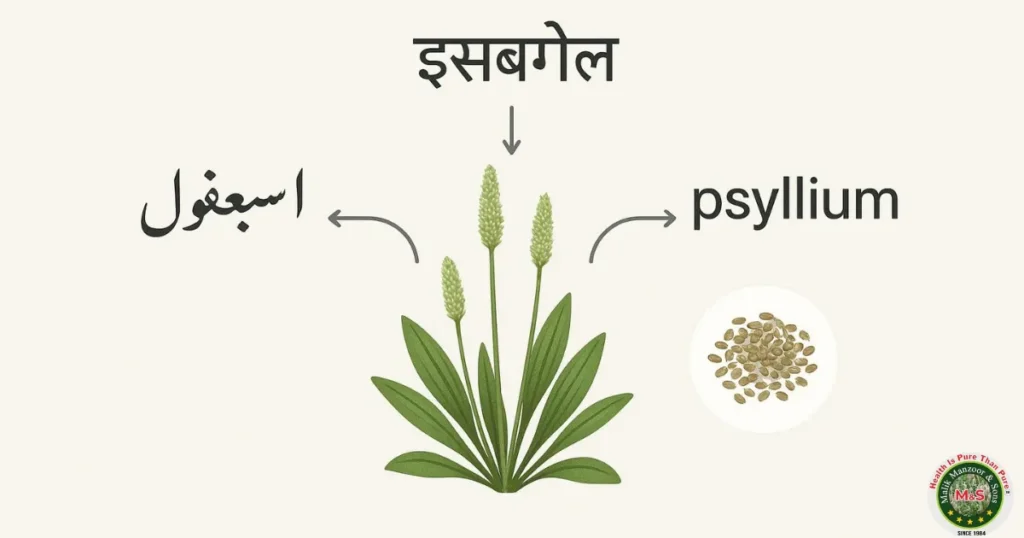
The word “psyllium” comes from the Greek word “psylla,” meaning flea, because the seeds resemble tiny fleas in size and appearance. Meanwhile, “isabgol” or “ispaghol” originates from Persian and means “horse ear” (asp = horse, ghol = ear), referring to the shape of the seeds.
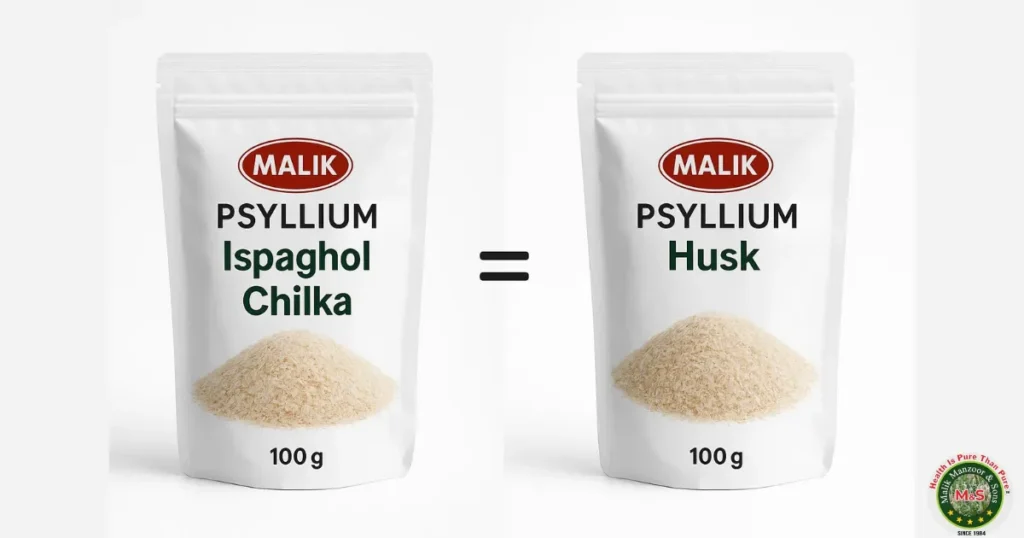
So when someone asks “ispaghol in English,” you can confidently say it’s psyllium husk. When you see products labeled “psyllium” in stores abroad, you’re looking at the same isabgol you’d find in Pakistani or Indian markets – just with a different name.
The scientific name adds another layer: Plantago ovata. This botanical name is universal across all languages and refers specifically to the plant species from which isabgol is derived. Whether you’re in Karachi, California, or Cairo, Plantago ovata means the same thing.
Understanding Ispaghol Meaning in English
Beyond just translation, understanding the ispaghol meaning in English helps you grasp what this product actually is and why it’s valued.
In English medical and nutritional contexts, psyllium husk is defined as a “soluble fiber supplement derived from the seed husks of Plantago ovata.” It’s classified as a bulk-forming laxative and dietary fiber supplement.
The term “husk” is crucial here. The isabgol in English translation specifically refers to the outer coating (husk or shell) of the tiny seeds, not the whole seed. This distinction matters because the husk contains the valuable mucilage – a gel-forming fiber that provides all the health benefits.
When English-speaking nutritionists or doctors recommend “psyllium,” they’re prescribing the same remedy that has been used in South Asian traditional medicine for centuries. The isabgol meaning in English encompasses:
- Dietary fiber source: Provides soluble fiber for digestive health
- Natural laxative: Helps with constipation relief
- Cholesterol reducer: Clinically proven to lower LDL cholesterol
- Blood sugar regulator: Slows glucose absorption
- Weight management aid: Creates a feeling of fullness
Understanding these English meanings helps you recognize isabgol products in Western stores and understand research studies about its benefits.
Why the English Name Matters: Isabgol vs. Psyllium
Does the name really matter if it’s the same product? Actually, knowing both names opens up valuable information and product options.
Access to Research:
Most scientific studies use “psyllium” in their titles. Searching for “psyllium benefits” yields thousands of peer-reviewed studies, while “isabgol benefits” returns fewer results. Knowing the English of isabgol lets you access this wealth of research.
International Shopping:
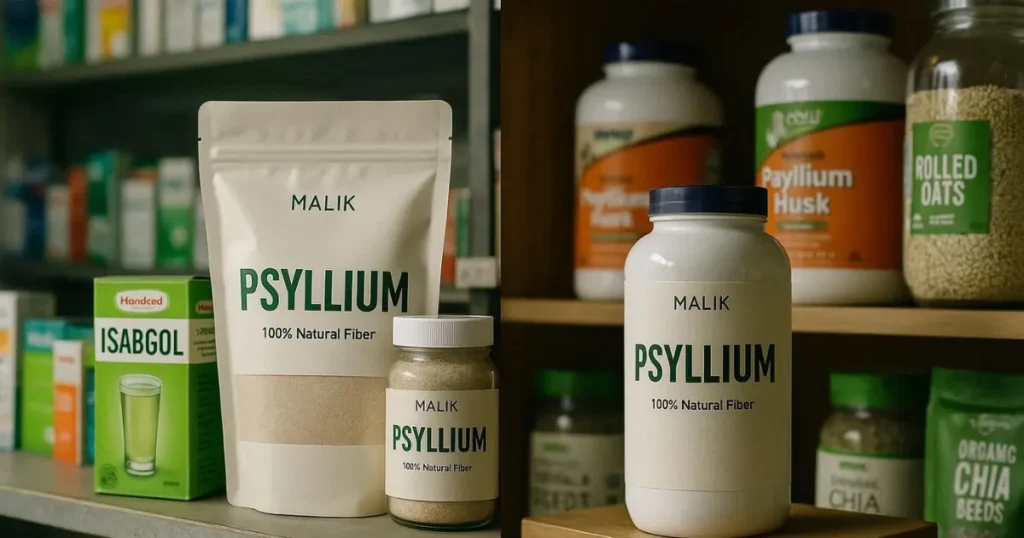
If you’re traveling or living abroad, asking for “isabgol” in a Western health store will likely get blank stares. Requesting “psyllium husk” gets you exactly what you need. I’ve had countless Pakistani friends living overseas thank me for clarifying this translation.
Product Labels:
When buying supplements internationally, the English name helps you verify that you’re getting authentic isabgol. Look for “psyllium husk” or “Plantago ovata” on labels – these confirm you’re getting the real product.
Medical Communication:
If you’re discussing digestive health with English-speaking doctors, knowing that ispaghol in English is “psyllium” ensures clear communication. This is especially important when discussing medication interactions or getting dosage recommendations.
Price Comparison:
Interestingly, products labeled “psyllium” in Western markets and “isabgol” in Pakistani markets can have significant price differences. Knowing they’re the same product helps you make informed purchasing decisions.
The Plant Behind the Name: Understanding Plantago Ovata
To fully understand isabgol in English, let’s explore the plant itself. Whether you call it isabgol or psyllium, it comes from Plantago ovata – a small annual herb that I grow across thousands of acres in Pakistan.
This plant thrives in semi-arid climates with sandy soils, which is why Pakistan (particularly Sindh and Punjab provinces) and northwestern India are major producers. The plant reaches about 12-18 inches tall, produces tiny white flowers, and develops seed capsules containing the precious seeds surrounded by the husk we harvest.
The English term “psyllium husk plant” and the Urdu “isabgol ka poda” describe the exact same botanical specimen. When cultivating Plantago ovata in our Pakistani fields, we follow growing practices refined over generations – practices that ensure the highest quality product, whether it’s sold as isabgol domestically or psyllium internationally.
What makes this plant special is its seed husk composition. The husk contains approximately 70% soluble fiber, primarily a mucilage called arabinoxylan. When this fiber contacts water, it absorbs 10-14 times its weight and forms a gel. This unique property is what gives isabgol – or psyllium in English – its remarkable health benefits.
How Isabgol/Psyllium Is Used: Same Product, Different Markets
The fascinating thing about isabgol in English translation is that usage remains remarkably consistent across cultures, even though the names differ.
In Pakistani/Indian Households:
- Mixed with milk before bedtime for overnight relief
- Stirred into yogurt (dahi) with salt for cooling digestive support
- Combined with rose water for beauty treatments
- Blended with fruit juices as a fiber-rich beverage
In Western Markets:
- Taken as capsules or tablets for convenience
- Mixed into smoothies or protein shakes
- Used in gluten-free baking as a binding agent
- Stirred into water or juice as a fiber supplement
The applications are similar – only the cultural context and packaging differ. At Malik Psyllium, we supply both markets, packaging our Pakistani-grown isabgol for domestic use and export it as “psyllium husk” for international customers. The product quality remains identical.
Health Benefits: Why Isabgol/Psyllium Is So Popular
Understanding isabgol in English wouldn’t be complete without exploring why this fiber supplement has become so popular globally. The benefits are the same regardless of what language you use:
Digestive Health:
The soluble fiber from isabgol creates bulk and softness in stool, making bowel movements comfortable and regular. This is why it’s recommended for both constipation and diarrhea – it normalizes digestive function rather than forcing it in one direction.
Cholesterol Management:
Multiple clinical studies (search “psyllium cholesterol” in English medical databases) show that 5-10 grams daily can reduce LDL cholesterol by 5-10%. The fiber binds to bile acids, forcing your body to use cholesterol to make more bile, thereby lowering overall cholesterol.
Blood Sugar Control:
For people with diabetes or prediabetes, isabgol slows the absorption of sugar into the bloodstream. This prevents dangerous spikes after meals. English-language diabetes organizations now routinely recommend psyllium as part of diabetes management.
Weight Management:
The gel-forming property creates lasting fullness. When taken before meals, isabgol expands in your stomach, signaling satiety and helping you eat less naturally. Western weight loss programs have embraced psyllium for this reason.
Heart Health:
Beyond cholesterol, studies show isabgol helps reduce blood pressure and inflammation markers. The American Heart Association recognizes psyllium as beneficial for cardiovascular health.
Gut Microbiome Support:
Recent research reveals that isabgol acts as a prebiotic, feeding beneficial gut bacteria. As these bacteria ferment the fiber, they produce short-chain fatty acids that support colon health and overall wellness.
Whether you’re reading about these benefits under “isabgol” in Urdu literature or “psyllium” in English medical journals, you’re learning about the same remarkable supplement.
Buying Isabgol/Psyllium: What to Look For
Knowing isabgol in English helps you make informed purchasing decisions, whether shopping locally in Pakistan or ordering from international suppliers.
Label Reading:
When shopping internationally, look for:
- “Psyllium husk” or “Psyllium husk powder” on the front label
- “Plantago ovata” in the ingredients list
- “100% pure” or “no additives” declarations
- -Organic certification if that’s important to you
When shopping in Pakistan or India, look for:
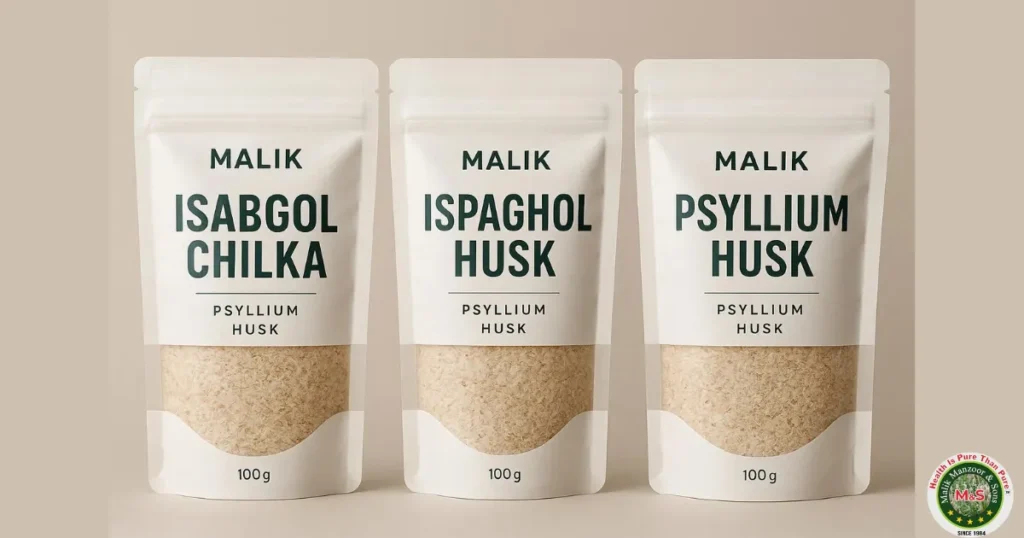
- Ispaghol chilka on packages
- Quality certifications from recognized bodies
- Clear batch numbers and expiration dates
- Reputable brand names like Malik Psyllium and Humdard.
Quality Indicators:
Regardless of whether it’s labeled isabgol or psyllium, quality indicators remain the same:
- Color: Light beige to nearly white (dark brown suggests contamination).
- Texture: Fine and uniform powder without grittiness.
- Swelling capacity: Should absorb 10-14 times its weight in water.
- Smell: Virtually odorless (musty smells indicate poor storage).
- Purity: Should be at least 95% pure husk.
Price Considerations:
Interestingly, the same psyllium products can cost significantly different amounts depending on whether they’re marketed as “isabgol” in local markets or “psyllium” internationally. Understanding this helps you find the best value.
In my experience at Malik Psyllium, we maintain consistent quality standards whether packaging for domestic or international markets. The only difference is labeling – the product inside remains the same premium-quality fiber harvested from our Pakistani fields.
Common Confusions and Clarifications.
Let me address some common questions and confusions about isabgol in English that I encounter regularly:
“Is psyllium the same as isabgol?”
Yes, absolutely. They’re identical products – just different names in different languages. Psyllium is the English translation; isabgol is the Urdu/Hindi name.
“What about ‘ispaghula’?”
“Ispaghula” is another spelling variation of the same word, sometimes used in English medical literature. Ispaghula, isabgol, and ispaghol all refer to the same product. The English of isabgol might be written as “psyllium” or “ispaghula husk” depending on the source.
“Are there different types?”
There are two main psyllium species: Plantago ovata (blonde psyllium – our isabgol) and Plantago psyllium (black psyllium). Isabgol in English usually refers to blonde psyllium from Plantago ovata, which has superior quality and swelling capacity.
“Is ‘psyllium seed’ different from ‘psyllium husk’?”
Yes! This is crucial. Psyllium husk (isabgol chilka) is the outer coating and contains the beneficial fiber. Psyllium seeds include the husk plus the inner seed, which provides less fiber per gram. When buying, make sure you’re getting husk, not whole seeds.
“Can I use recipes interchangeably?”
Absolutely. If a recipe calls for “psyllium husk,” you can use isabgol. If an Urdu remedy specifies “isabgol,” you can substitute it with psyllium husk from English-speaking markets. The measurements remain the same.
Cultural Context: Traditional Wisdom Meets Modern Science.
One of the most interesting aspects of isabgol in English translation is how it bridges traditional South Asian medicine and Western nutritional science.
Traditional Use:
In Pakistan and India, isabgol has been used for centuries in Ayurvedic and Unani medicine. It’s considered cooling, soothing, and balancing. Traditional practitioners recommended it for digestive disorders, inflammation, and even urinary issues long before Western medicine validated these uses.
Modern Validation:
Western scientific research has now confirmed many traditional uses. Clinical trials using the term “psyllium” in English medical journals validate what South Asian grandmothers knew intuitively – this fiber works for digestive health, cholesterol management, and blood sugar control.
Global Recognition:
Today, major health organizations worldwide recognize psyllium’s benefits:
- The American Heart Association recommends it for cholesterol management.
- The American Diabetes Association includes it in diabetes care guidelines.
- European and Asian medical associations endorse its use for constipation.
This convergence of traditional wisdom and modern science shows that isabgol – regardless of its English name – has always been a legitimate therapeutic agent. The Western medical establishment took longer to recognize what South Asian cultures knew for generations.
How to Use Isabgol/Psyllium Correctly.
Whether you’re following an English-language prescription for “psyllium” or an Urdu remedy for “isabgol,” the usage guidelines remain consistent. Here’s what I recommend based on decades of experience:
Basic Preparation:
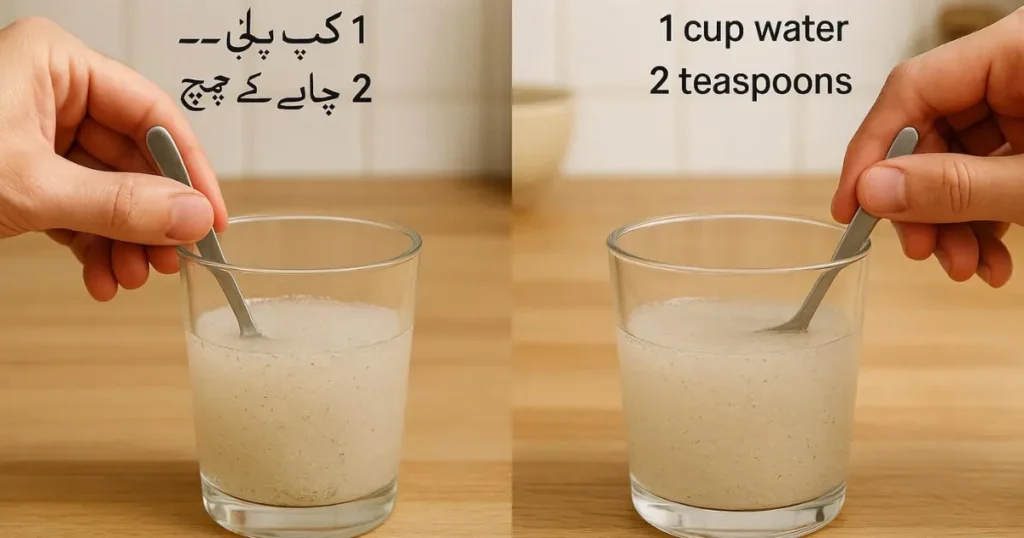
- Start with 1 teaspoon (approximately 5 grams) of husk powder.
- Mix thoroughly with at least 8 ounces of liquid (water, juice, or milk).
- Stir vigorously and drink immediately before it gels.
- Follow with another full glass of water.
Timing:
- For constipation: Take before bedtime for overnight relief.
- For cholesterol: Take with meals.
- For weight management: Take 30 minutes before meals.
- For blood sugar: Take with meals.
Critical Rules:
- Never take dry: Always mix with adequate liquid.
- Hydrate well: Drink at least 8-10 glasses of water daily.
- Start small: Begin with half a teaspoon and increase gradually.
- Space from medications: Take 2 hours before or 4 hours after medications.
Dosage Guidelines:
- General use: 1-2 teaspoons (5-10 grams) daily.
- Therapeutic use: Up to 3 teaspoons (15 grams) daily, divided into doses.
- Children: Half the adult dose, with pediatrician approval.
These guidelines apply whether you’re using a product labeled “isabgol” from a Pakistani pharmacy or “psyllium husk” from a Western health store – the substance and its requirements remain identical.
Isabgol in Different Languages: A Quick Reference.
Since we’re discussing isabgol in English, it’s helpful to know how this product is referenced across various languages, especially for those traveling or researching internationally:
English: Psyllium, Psyllium husk, Ispaghula husk
Urdu: اسپغول (Ispaghol, Isabgol)
Hindi: ईसबगोल (Isabgol)
Arabic: إسباغول (Isbaghul)
Persian: اسپغول (Espagol)
Tamil: Isabgol vithai
Bengali: Ishabgol
Scientific: Plantago ovata (universal).
- Knowing these variations helps when:
- Traveling and needing to purchase locally.
- Reading traditional medicine texts.
- Communicating with family members across languages.
- Researching in different language databases.
- Verifying product authenticity.
The Global Market: From Pakistani Fields to International Shelves.
Understanding isabgol in English also means appreciating the global supply chain. Let me share insights from my experience as both a grower and exporter.
Production:
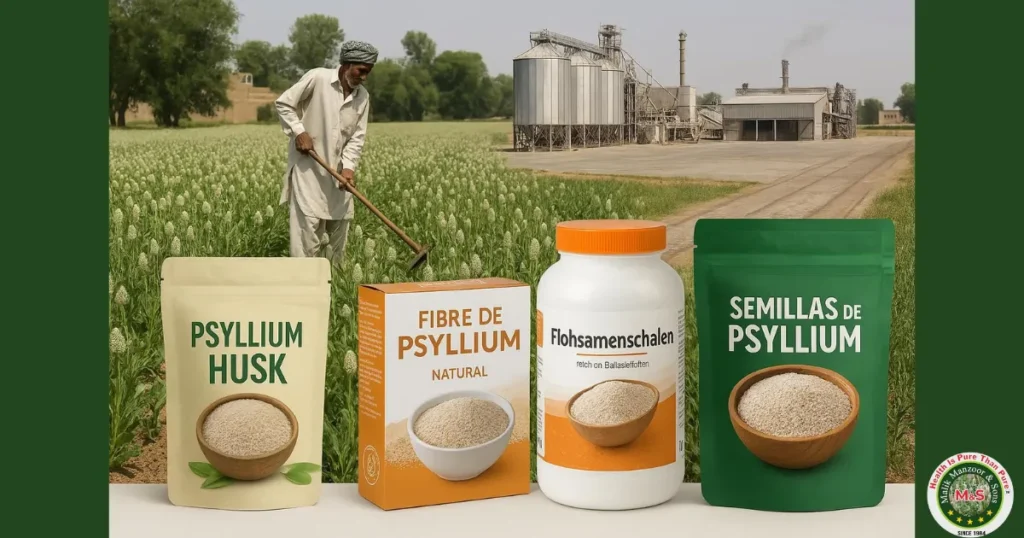
Pakistan and India produce over 80% of the world’s psyllium husk. The semi-arid regions of Sindh and Gujarat provide ideal growing conditions that can’t be easily replicated elsewhere. When you buy “psyllium” in the United States, Europe, or Australia, there’s a high probability it was grown in fields like mine in Pakistan.
Processing:
After harvesting Plantago ovata, we process the seeds to separate the valuable husk. This involves cleaning, milling, separating, and grading. At Malik Psyllium, we maintain the same quality standards whether the final package will say “isabgol” for local markets or “psyllium” for export.
Labeling:
The same batch of processed husk might be packaged with different labels:
- “Isabgol Chilka” for the Pakistani domestic market.
- “Psyllium Husk Powder” for European export.
- “Ispaghula Husk” for UK pharmaceutical companies.
- “Plantago ovata Husk” for scientific/medical markets.
Quality Standards:
International psyllium must meet strict purity standards (typically 95%+ purity), specific swelling indices, and safety testing for contaminants. These standards apply equally whether the product is sold as isabgol locally or psyllium internationally.
Medical and Scientific Literature: Using the English Name.
For those interested in researching isabgol’s health benefits, knowing the English term “psyllium” is essential for accessing scientific literature.
Research Databases:
Searching “psyllium” in PubMed (the major medical research database) returns over 1,500 studies. Searching “isabgol” returns fewer than 100. Many of those isabgol studies actually use “psyllium” as a secondary keyword.
Clinical Trials:
Major clinical trials investigating cholesterol reduction, diabetes management, and weight loss use “psyllium” in their titles and abstracts. Understanding this English of isabgol helps you access cutting-edge research.
Medical Recommendations:
When English-speaking doctors recommend fiber supplements, they write “psyllium husk” on prescriptions. Knowing this translation ensures you get the right product from pharmacies.
Nutritional Information:
Food and supplement databases in English list nutritional data under “psyllium husk.” If you’re tracking fiber intake or following a specific diet plan, searching for the English name gives you accurate information.
What is the English name for Isabgol?
Isabgol in English is called “psyllium husk” or simply “psyllium.” It can also be referred to as “ispaghula husk” in medical literature. All these terms refer to the fiber derived from Plantago ovata seeds. The English of isabgol – psyllium – comes from the Greek word for flea, while isabgol comes from Persian meaning horse ear.
Is there any difference between Isabgol and Psyllium?
No, there is absolutely no difference between isabgol and psyllium – they are the exact same product. Isabgol is the Urdu/Hindi name, while psyllium is the English name. Both come from Plantago ovata plant, both contain the same soluble fiber, and both provide identical health benefits. The only difference is linguistic and cultural context.
What is Ispaghol meaning in English?
The ispaghol meaning in English is “psyllium husk” – a soluble fiber supplement derived from the seed husks of Plantago ovata. In English medical terms, it’s defined as a bulk-forming laxative and prebiotic fiber. The term encompasses its use as a natural remedy for digestive health, cholesterol management, and blood sugar control.
Can I substitute Psyllium for Isabgol in recipes?
Yes, absolutely! Since isabgol and psyllium are identical products, you can substitute them 1:1 in any recipe. If a recipe calls for 1 teaspoon of psyllium husk, use 1 teaspoon of isabgol. Whether you’re following English gluten-free baking recipes or traditional Urdu remedies, the measurements and effects remain the same.
Where can I buy Psyllium if I can’t find Isabgol?
If you’re in a location where isabgol isn’t available under that name, look for “psyllium husk” or “psyllium husk powder” in health food stores, pharmacies, or online retailers. Check the ingredients for “Plantago ovata” to confirm authenticity. Major brands in Western markets include Metamucil, but pure psyllium husk without additives is also widely available.
Is the quality different between Isabgol and Psyllium products?
Quality depends on the manufacturer, not the name. Whether labeled as isabgol or psyllium, look for: 95%+ purity, light beige color, fine texture, good swelling capacity, and proper certifications. At Malik Psyllium, we maintain identical quality standards whether packaging for domestic markets (as isabgol) or international export (as psyllium).
How do you pronounce Psyllium correctly?
Psyllium is pronounced “SILL-ee-um” in English. The “p” is silent, similar to words like “psychology.” The stress is on the first syllable. This can be confusing for non-native English speakers, which is why many find the term “isabgol” or “ispaghol” easier to say.
Why is Isabgol sometimes spelled differently (Ispaghol, Isabgul)?
These are simply different transliterations of the same Urdu/Persian word (اسپغول) into English letters. There’s no standardized spelling, so you’ll see variations: isabgol, ispaghol, isabgul, ispaghula, or espaghol. All refer to the same product. The English term “psyllium” avoids this confusion with its standardized spelling.
Conclusion: Bridging Languages, Connecting Cultures.
Understanding what isabgol is in English – psyllium husk – does more than provide a translation. It connects traditional South Asian wellness wisdom with modern Western nutritional science. It helps you access research, communicate with healthcare providers globally, and make informed purchasing decisions wherever you are in the world.
After two decades of growing Plantago ovata in Pakistan and supplying both local and international markets, I’ve seen how language shapes perception, but the product’s value remains constant. Whether someone requests “isabgol” in Karachi or “psyllium” in California, they’re seeking the same natural fiber that has supported digestive health for centuries.
At Malik Psyllium, we’re proud to cultivate this remarkable crop using Pakistani agricultural expertise while meeting international quality standards. Our isabgol – or psyllium, if you prefer the English term – represents the best of both worlds: traditional cultivation methods refined over generations and modern processing that ensures purity and safety.
If you’re looking for a premium-quality fiber supplement, I invite you to explore our range. Whether you know it as isabgol or prefer the English name psyllium, you’re getting the same carefully cultivated, rigorously tested product from our Pakistani fields to your home.

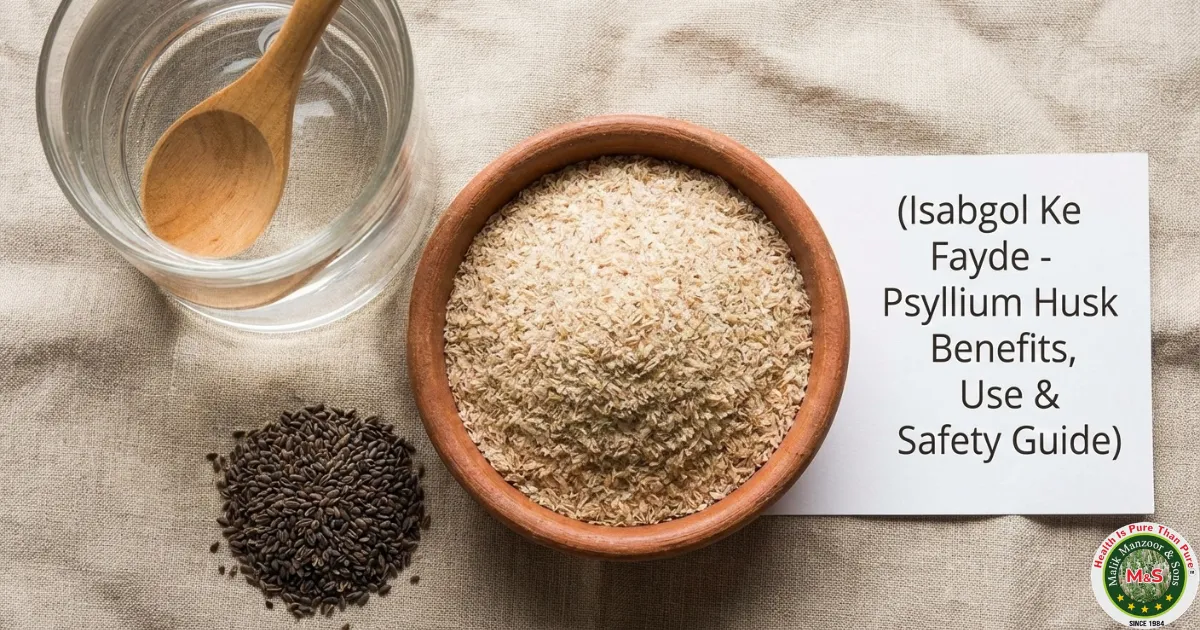
Isabgol Ke Fayde – Psyllium Husk Ke Poori Science-Based Rahnumayi – 2026
Isabgol ke fayde jaanna aaj ke daur mein zyada zaroori
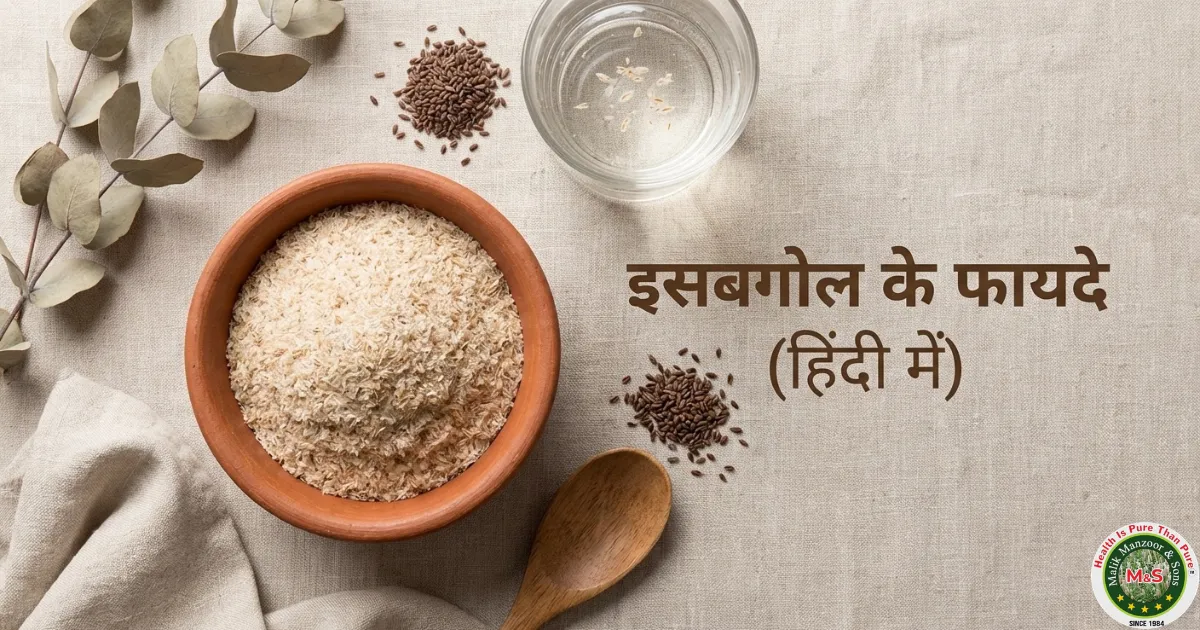
Isabgol Benefits in Hindi | Psyllium Husk Ke Fayde, Sahi Upyog Aur Savdhaniyan – 2026
Agar aap isabgol benefits in hindi mein samajhna chahte hain,