
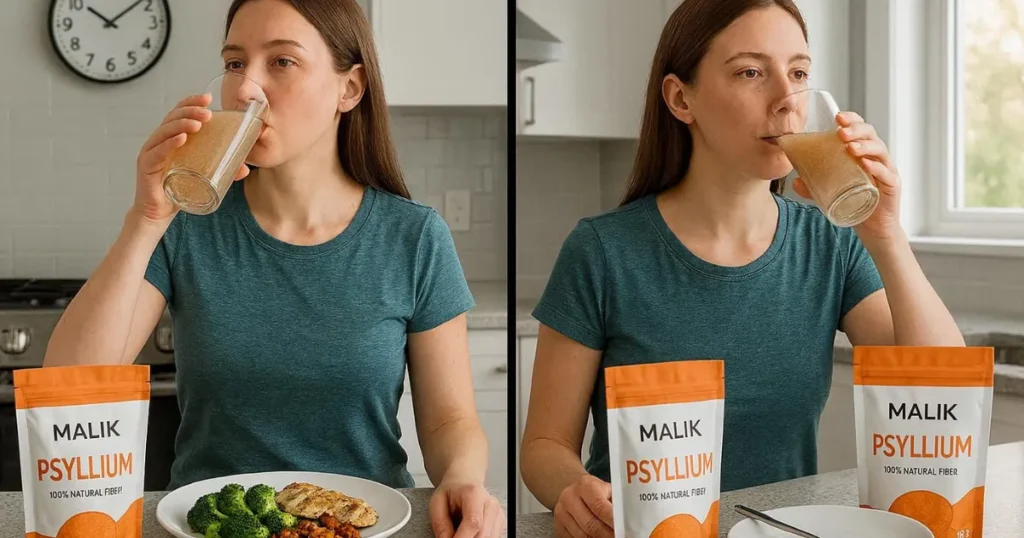
One question dominates every conversation I have about psyllium: Should I take isabgol before or after food? The answer isn’t simple – timing dramatically affects your results. Whether you’re wondering if you should take psyllium husk before or after a meal for weight loss, blood sugar control, or digestive comfort, the right timing strategy makes all the difference. Some people swear by taking psyllium husk after a meal consumption, while others get better results before eating.
In this comprehensive guide, I’ll reveal exactly when to take psyllium husk before or after meal times based on your specific health goals, backed by clinical research and real-world experience. You’ll learn the science behind timing, optimal strategies for different conditions, and common mistakes that sabotage results.
Understanding Isabgol and Meal Timing Basics
Isabgol – also called psyllium husk or ispaghula – is a soluble fiber that transforms when it meets liquid. Within minutes of mixing with water, it forms a gel that expands up to 12 times its original volume. This gel-forming action is why timing matters so much.
When you take isabgol before or after food determines how it interacts with your digestive system. Before meals, it creates fullness and slows nutrient absorption. After meals, it aids digestion and adds bulk to moving food through your intestines.
The three timing windows:
- Before meals: 15 – 30 minutes before eating
- With meals: During your meal, mixed with food or beverages
- After meals: 30 – 120 minutes following your last bite
Each window produces distinct effects. Understanding these differences lets you strategically time your intake for specific benefits.
The Science Behind Psyllium Timing
Research clearly shows that when you consume psyllium relative to meals affects its metabolic impact. A landmark study published in the European Journal of Clinical Nutrition found that taking psyllium husk before or after a meal produced measurably different outcomes for glucose and insulin response.
Pre-meal timing effects:
When you take psyllium 15 – 30 minutes before eating, the gel is already forming in your stomach. As food arrives, it mixes with this viscous fiber, slowing gastric emptying. This mechanism delays carbohydrate breakdown and glucose absorption, preventing blood sugar spikes.
Multiple studies confirm this timing reduces postprandial (after-meal) glucose by 15 – 25%. The gel also triggers stretch receptors in your stomach, signaling fullness to your brain before you’ve consumed many calories.
Post-meal timing effects:
Taking psyllium husk after a meal consumption works differently. The fiber mixes with partially digested food already in your stomach and intestines. This adds bulk, stimulates peristalsis (intestinal contractions), and helps move everything along your digestive tract.
For people with sluggish digestion or constipation, post-meal timing often produces better bowel movement regularity. The fiber doesn’t create the same pre-emptive fullness, but it enhances digestive efficiency.
Should I Take Psyllium Husk Before or After a Meal? Goals-Based Guide
Your answer to “should I take psyllium husk before or after a meal” depends entirely on what you’re trying to achieve.
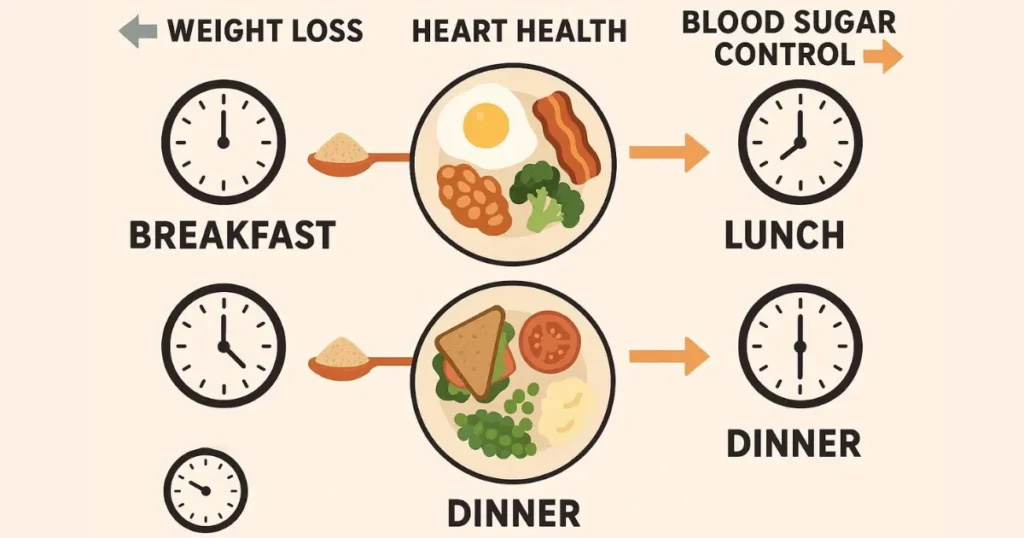
For Weight Loss and Appetite Control
Best timing:
20 – 30 minutes before meals.
Pre-meal isabgol creates substantial fullness, helping you eat 10 – 20% fewer calories naturally. In weight loss studies, participants who took 5 grams of psyllium 30 minutes before lunch and dinner lost significantly more weight than control groups over 12 weeks.
The gel occupies stomach space and slows gastric emptying, extending satiety for hours. You feel satisfied with smaller portions without conscious restriction.
Protocol:
- Mix 5 grams with 10 – 12 ounces of water
- Consume 20 – 30 minutes before your largest meals
- Don’t skip the waiting period – timing is crucial
- Follow with another glass of water 10 minutes before eating
For Blood Sugar Management
Best timing:
15 – 20 minutes before meals.
People managing diabetes or prediabetes should prioritize pre-meal timing. The viscous fiber creates a physical barrier that slows carbohydrate digestion and glucose absorption.
Clinical trials demonstrate that taking psyllium husk before or after meal times produces different glucose responses. Pre-meal dosing reduced blood sugar spikes by an average of 20%, while post-meal timing showed only 8 – 10% reduction.
Protocol:
- Take 5 grams 15 – 20 minutes before each main meal
- Critical for breakfast (prevents morning glucose spikes).
- Works synergistically with diabetes medications.
- Monitor blood sugar to find your optimal timing.
For Constipation and Digestive Regularity.
Best timing:
After meals or between meals.
If your primary goal is relieving constipation, taking psyllium husk after meal consumption often works better. The fiber adds bulk to food already in your digestive system, stimulating natural bowel movements.
Many people find that taking isabgol 30 – 60 minutes after dinner produces comfortable morning bowel movements. The overnight processing time allows the fiber to work thoroughly.
Protocol:
- Take 5 grams 30 – 90 minutes after your largest meal.
- Evening timing promotes next-morning regularity.
- Can also take between meals (mid-morning or mid-afternoon).
- Maintain consistent timing for predictable results.
For Cholesterol Reduction.
Best timing:
Before or with meals, twice daily.
Psyllium lowers cholesterol by binding to bile acids in your intestines. Your liver then pulls cholesterol from your bloodstream to produce new bile acids. This mechanism works whether you take isabgol before or after food, though most research uses pre-meal or with-meal timing.
The FDA-approved health claim for cholesterol reduction specifies 7 grams daily, typically split as 3.5 grams with breakfast and 3.5 grams with dinner.
Protocol:
- Take 3.5 – 5 grams just before or during breakfast.
- Take 3.5 – 5 grams just before or during dinner.
- Consistency matters more than precise timing.
- Allow 8 – 12 weeks to see measurable cholesterol improvements.
For IBS and Digestive Comfort.
Best timing:
Flexible – experiment to find what works.
People with irritable bowel syndrome (IBS) show highly individual responses to psyllium timing. Some do better with pre-meal dosing, others with post-meal, and some prefer between-meal timing.
Start with 2.5 grams after your morning meal. If that causes discomfort, try before breakfast instead. The key is finding your personal sweet spot.
Protocol:
- Start conservatively (2.5 grams once daily).
- Try different timing windows for one week each.
- Track symptoms in a simple journal.
- Stick with whatever timing produces the least gas and bloating.
For General Digestive Health.
Best timing:
Flexible – morning or evening.
When you’re simply maintaining digestive wellness without specific issues, timing flexibility is fine. Many people default to morning (easy to remember) or evening (promotes morning bowel movements).
Consistency trumps perfect timing. Taking psyllium husk before or after meal times matters less when you’re not addressing acute concerns.
Protocol:
- Choose one consistent time daily.
- Morning: 30 minutes before breakfast.
- Evening: 1 – 2 hours after dinner.
- Never right before bed (allow processing time).
Detailed Timing Strategies by Meal.
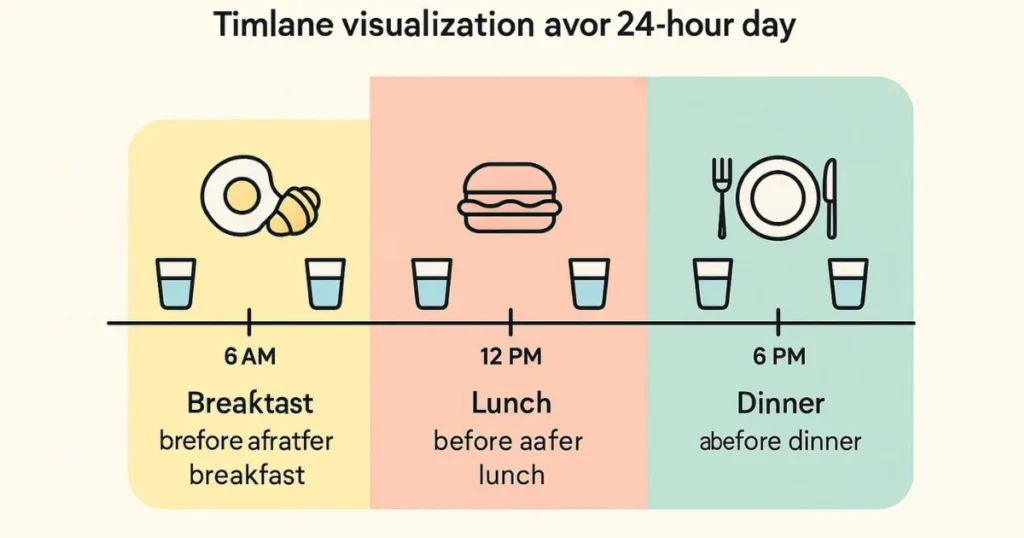
Breakfast Timing.
Option 1: 30 minutes before breakfast.
Best for blood sugar control and morning appetite management. Mix your psyllium immediately upon waking, then shower, dress, or prepare your meal. By the time you sit down to eat, the fiber is optimally positioned.
Pakistani psyllium’s superior swelling capacity – often 12:1 compared to 8:1 from other regions – means the gel forms more completely during this 30-minute window.
Option 2: With breakfast.
Add psyllium directly to smoothies, oatmeal, or yogurt. This approach works well for cholesterol management and general fiber supplementation. The fiber mixes with your meal, creating steady digestion throughout the morning.
Option 3: After breakfast.
If you find pre-meal psyllium kills your appetite too much, taking it 30 – 60 minutes after breakfast still provides digestive benefits without suppressing your morning nutrition intake.
Lunch Timing.
Option 1: 20 – 30 minutes before lunch.
Ideal for weight management. The mid-day meal often involves eating out or grabbing quick food. Pre-lunch isabgol helps you make better choices and eat appropriate portions when faced with large restaurant servings.
I’ve worked with hundreds of customers who credit pre-lunch psyllium with breaking the cycle of afternoon overeating and energy crashes.
Option 2: After lunch.
If lunch is your largest meal, taking psyllium husk after meal consumption aids the heavier digestive load. This timing also prevents the 2 PM energy slump that comes from blood sugar spikes.
Dinner Timing.
Option 1: 15 – 25 minutes before dinner.
Best for evening appetite control and blood sugar management. Many people consume their most caloric meal at dinner. Pre-dinner psyllium naturally moderates portion sizes without feeling restrictive.
Option 2: 1 – 2 hours after dinner.
My most popular recommendation for constipation management. Taking isabgol after your evening meal allows overnight processing, leading to comfortable morning bowel movements.
This timing also prevents late-night snacking. The fullness from psyllium satisfies lingering appetite without adding calories.
Isabgol Before or After Food: The Comprehensive Comparison.
Let me break down the pros and cons of each approach:

Taking Isabgol before Food.
Advantages:
- Maximum appetite suppression for weight control.
- Optimal blood sugar spike prevention.
- Creates a protective gel barrier before nutrients arrive.
- Strongest metabolic benefits.
- Helps with portion control effortlessly.
Disadvantages:
- Requires planning and a waiting period.
- May reduce appetite too much if underweight.
- Can feel inconvenient with busy schedules.
- Some people find the timing disruptive.
- Must be consistent for best results.
Best candidates:
- People managing diabetes or prediabetes.
- Anyone trying to lose weight.
- Those with reactive hypoglycemia.
- People who struggle with portion control.
- Individuals seeking maximum metabolic benefits.
Taking Psyllium Husk after a Meal.
Advantages:
- Easier to remember (take after you’ve already eaten).
- Excellent for constipation relief.
- Doesn’t suppress appetite or nutrient intake.
- Aids the digestion of food already consumed.
- Promotes next-morning regularity.
Disadvantages:
- Minimal blood sugar control benefits.
- No appetite suppression effect.
- Less effective for weight management.
- Doesn’t prevent glucose spikes.
- Won’t help with portion control.
Best candidates:
- People with constipation as the primary concern.
- Those who don’t need appetite control.
- Individuals with good metabolic health.
- Anyone struggling to gain/maintain weight.
- People focused purely on digestive regularity.
Taking Psyllium with Food.
Advantages:
- Most convenient (no waiting required).
- Easy to incorporate into meals.
- Good for cholesterol management.
- Blends well with smoothies, oatmeal, and soups.
- Moderate benefits across multiple areas.
Disadvantages:
- Compromised blood sugar control.
- Reduced appetite suppression.
- Can affect nutrient absorption if timing is poor.
- May alter meal texture/taste.
- Less targeted than before/after strategies.
Best candidates:
- People prioritizing convenience.
- Those managing cholesterol.
- Anyone wanting general fiber benefits.
- Individuals without specific metabolic concerns.
- People who forget standalone supplement timing.
Common Timing Mistakes and How to Avoid Them.
Mistake 1: Inconsistent Timing.
Switching between morning, afternoon, and evening randomly prevents your body from establishing a rhythm. Your digestive system thrives on consistency.
Solution: Choose one primary timing strategy and stick with it for at least 2 weeks before adjusting.
Mistake 2: Taking Too Close to Medications.
Whether you take isabgol before or after food, maintain 2 – 4 hours separation from medications. Psyllium can reduce drug absorption.
Solution: Create a medication-psyllium schedule. Example: medications at 8 AM, psyllium at 11 AM or noon.
Mistake 3: Insufficient Waiting Period.
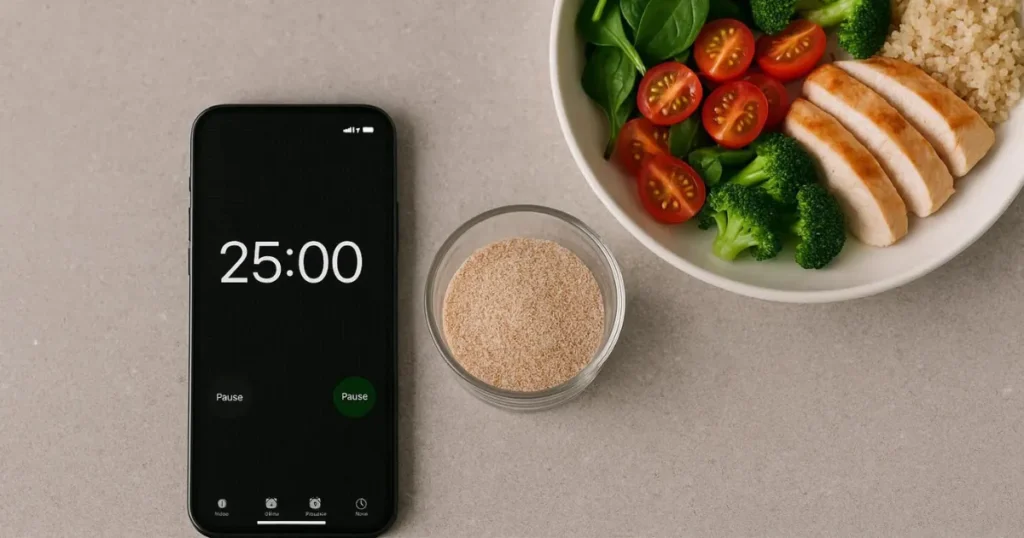
Taking psyllium 5 – 10 minutes before meals doesn’t allow adequate gel formation. You lose most pre-meal benefits.
Solution: Set a timer. Mix your psyllium, start your 20 – 30 minute timer, then prepare your meal.
Mistake 4: Taking Immediately Before Bed.
Late-night psyllium can cause discomfort and disrupted sleep. Your digestive system needs time to process while you’re upright.
Solution: Take your evening dose at least 2 hours before bed. If dinner is at 7 PM, take psyllium by 8:30 PM at the latest.
Mistake 5: Inadequate Hydration Regardless of Timing.
This is the biggest mistake. Whether you take psyllium husk before or after meal times, insufficient water causes problems.
Solution: Minimum 8 ounces when mixing, plus another 8 ounces within 30 minutes. Non-negotiable for safe use.
Mistake 6: Expecting Immediate Results.
Pre-meal timing doesn’t show benefits after one use. Your body needs several days to adapt.
Solution: Commit to 1 – 2 weeks of consistent timing before evaluating effectiveness.
Advanced Timing Protocols for Specific Situations.
For Shift Workers.
Irregular schedules complicate timing. Anchor your psyllium to your wake-sleep cycle rather than clock time.
Protocol:
- Upon waking: Take 5 grams 30 minutes before first meal.
- Before largest meal: Take 5 grams 20 minutes prior.
- Maintain 12-hour spacing between doses.
- Consistency matters more than exact timing.
For Intermittent Fasting.
Should I take psyllium husk before or after a meal when practicing IF? This depends on your fasting window.
During fasting window:
- Psyllium technically breaks a fast (triggers insulin slightly).
- However, 5 grams contains only 2 – 3 net carbs.
- Many IF practitioners still use it during fasting for appetite control.
Breaking your fast:
- Take psyllium 15 – 20 minutes before your first meal.
- Helps prevent overeating after extended fasting.
- Moderates blood sugar response to breaking fast.
For Athletes and Active Individuals.
Timing around workouts matters. You don’t want fiber sitting heavily during intense exercise.
Protocol:
- Morning workouts: Take psyllium after exercise, before breakfast.
- Evening workouts: Take psyllium 2+ hours before or 1+ hour after.
- Never within 90 minutes before intense training.
- Post-workout timing aids recovery and prevents constipation from protein-heavy diets.
For Keto and Low-Carb Dieters.
Taking isabgol before or after food works excellently on ketogenic diets. The fiber doesn’t impact ketosis.
Protocol:
- Pre-meal timing prevents keto hunger.
- Post-dinner timing addresses keto constipation.
- Mix with high-fat liquids (coconut milk, heavy cream).
- Particularly helpful during initial keto adaptation.
Real-World Timing Success Stories.
Weight Loss: Pre-Meal Timing.
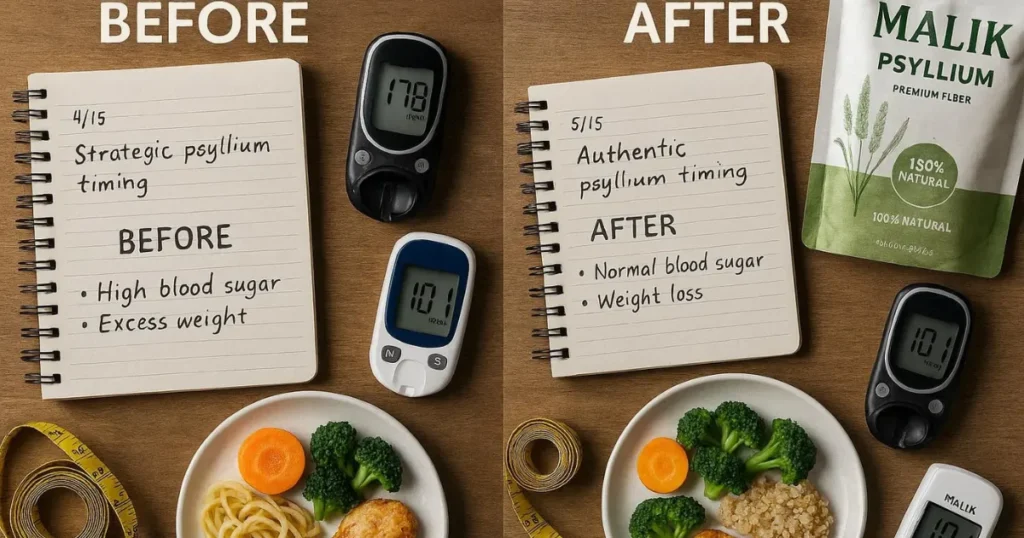
A 38-year-old customer struggled with portion control at dinner. I recommended 5 grams of Malik Psyllium 25 minutes before her evening meal. Within three weeks, she naturally reduced dinner portions by 30% without feeling deprived. Over six months, she lost 28 pounds, crediting the pre-dinner isabgol timing as her “secret weapon.”
Diabetes Management: Strategic Before-Meal Use.
A 55-year-old with Type 2 diabetes couldn’t control post-breakfast glucose spikes. We implemented 5 grams of psyllium 20 minutes before breakfast. His average morning glucose dropped from 180 mg/dL to 145 mg/dL within two weeks. Three months later, his HbA1c improved from 8.1% to 7.2%.
Constipation Relief: Post-Dinner Protocol.
A 42-year-old with chronic constipation tried everything. I suggested 7.5 grams of psyllium one hour after dinner. She experienced her first comfortable morning bowel movement in years within three days. Two years later, she maintains this exact timing with perfect consistency.
Psyllium Husk Before or After Meal: Cultural Perspectives.
Timing traditions vary globally, offering insights into effective practices.
South Asian Approach.
In Pakistan and India, taking isabgol before or after food follows traditional patterns. Many people take isabgol at night with milk or buttermilk, 1 – 2 hours after dinner. This evening timing promotes morning elimination – a practice supported by both tradition and modern research.
Pakistani psyllium’s exceptional quality makes this timing particularly effective. The high purity (85 – 99% compared to 60 – 75% from other sources) means the fiber works optimally even with post-meal consumption.
Western Clinical Approach.
Western research typically emphasizes pre-meal timing for metabolic benefits. Most cholesterol and blood sugar studies use psyllium 15 – 30 minutes before meals or with meals.
Middle Eastern Tradition.
Middle Eastern cultures often take psyllium between meals as a standalone supplement, mixed with water or rose water. This timing provides benefits without interfering with meal digestion.
Each approach has merit. The global diversity in timing strategies confirms there’s no single “correct” answer – only what works best for your specific situation.
Should I Take Psyllium Husk Before or After a Meal for Maximum Fiber Benefits?
If you’re asking, should I take psyllium husk before or after a meal purely to increase fiber intake without specific health concerns, the answer is: whichever timing you’ll maintain consistently.
General fiber supplementation timing:
The average person needs 25 – 38 grams of fiber daily but consumes only 15 grams. Adding 5 – 10 grams through psyllium bridges this gap regardless of meal timing.
For pure fiber benefits without targeted metabolic goals:
- Morning timing establishes routine.
- Evening timing promotes morning regularity.
- Twice-daily timing maximizes total fiber intake.
- With-meal timing offers convenience.
Choose based on your lifestyle and preferences. Consistency beats perfect timing when your goal is simply meeting daily fiber requirements.
Hydration Requirements by Timing.
Water needs remain constant whether you take isabgol before or after food, but the experience differs:
Pre-Meal Hydration.
Taking psyllium 20 – 30 minutes before eating requires:
- 10 – 12 ounces when mixing (gel formation time).
- 8 ounces 10 minutes before a meal.
- Normal water with a meal.
- Total: 18 – 20 ounces in the 30-minute window.
This substantial fluid intake contributes to fullness, enhancing appetite suppression.
Post-Meal Hydration.
Taking psyllium husk after meal consumption requires:
- 8 – 10 ounces when mixing.
- 8 ounces within 30 minutes after.
- Avoid drinking immediately after – allow meal digestion.
- Total: 16 – 18 ounces in the hour following your meal.
Some people find post-meal hydration less comfortable if they’re already full from eating. Start with smaller psyllium doses (2.5 – 3 grams) if this describes you.
Adjusting Timing Based on Results.
Monitor your body’s response and adjust accordingly:
Signs pre-meal timing works well:
- Natural portion control.
- Steady energy levels after meals.
- Improved blood sugar readings.
- Gradual weight loss (if that’s your goal).
- No excessive fullness or discomfort.
Signs to switch to post-meal timing:
- Too much appetite suppression.
- Difficulty finishing nutritious meals.
- Feeling overly full or uncomfortable.
- Pre-meal routine feels disruptive.
- Not addressing constipation effectively.
Signs to try with-meal timing:
- Struggling with a standalone supplement routine.
- Need cholesterol benefits without metabolic focus.
- Prefer simplicity over optimization.
- No specific health concerns requiring targeted timing.
Your body provides clear feedback. Listen carefully during your first 2 – 4 weeks and adjust based on results, not arbitrary rules.
Meal Composition and Timing Interactions.
What you eat influences whether you should take psyllium husk before or after a meal:
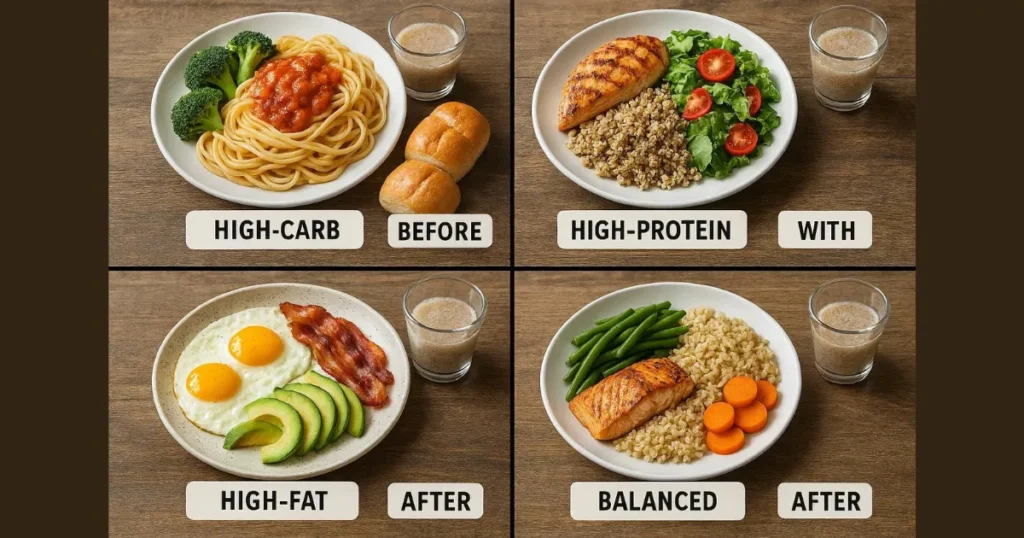
High-Carbohydrate Meals.
Pre-meal timing is crucial. The fiber slows rapid carbohydrate digestion, preventing glucose spikes. This matters most for:
- Breakfast cereals or toast.
- Pasta dishes.
- Rice-based meals.
- Bread-heavy sandwiches.
- Desserts or sweet foods.
High-Protein Meals.
Timing flexibility increases with protein-rich meals. Protein naturally slows digestion, so post-meal psyllium works well for:
- Eggs and meat breakfasts.
- Chicken or fish lunches.
- Steak dinners.
- Protein shakes.
High-Fat Meals.
Fat also slows gastric emptying. With fatty meals, either timing works:
- Avocado toast.
- Nut-based dishes.
- Creamy sauces.
- Fried foods.
- Full-fat dairy meals.
Mixed Meals.
Most meals contain all three macronutrients. For balanced meals, default to your primary health goal when deciding on timing.
Special Considerations for Psyllium Timing.
During Pregnancy.
Pregnant women often take psyllium for constipation. Post-meal timing typically feels more comfortable during pregnancy:
- Take 1 – 2 hours after dinner.
- Avoid pre-meal timing if morning sickness is present.
- Never compromise on hydration.
- Consult your healthcare provider first.
For Elderly Users.
Older adults may prefer post-meal timing because:
- Doesn’t interfere with already-reduced appetite.
- Addresses constipation (common in seniors).
- Easier to remember after established meal routines.
- Less risk of excessive fullness.
With Multiple Medications.
Complex medication schedules require strategic timing:
- Map out medication times first.
- Find 2 – 4 hour windows without medications.
- Often leads to mid-morning or mid-afternoon timing.
- May require taking psyllium between meals rather than before/after.
Creating Your Personalized Timing Plan.
Step 1: Define Your Primary Goal.
Choose one main objective:
- Weight loss → Pre-meal timing.
- Blood sugar control → Pre-meal timing.
- Constipation → Post-meal or between-meal timing.
- Cholesterol → Before or with meals.
- General health → Flexible timing.
Step 2: Assess Your Schedule.
Consider:
- Morning routines (rushed or relaxed?).
- Meal predictability.
- Work schedule.
- Medication timing.
- Exercise timing.
Step 3: Start with One Timing Strategy.
Don’t switch daily. Commit to one approach for 2 weeks minimum.
Step 4: Track and Evaluate.
Keep simple notes:
- What time you took psyllium.
- How you felt.
- Results observed.
- Any challenges.
Step 5: Adjust if Needed.
After 2 weeks, adjust based on results. Fine-tune timing by 5 – 10 minute increments rather than completely changing strategies.
Step 6: Maintain Consistency.
Once you find your optimal timing, stick with it for months. Consistency compounds benefits over time.
Quality Impact on Timing Effectiveness.
Premium psyllium enhances results regardless of timing. Pakistani psyllium’s superior characteristics – 85 – 99% purity, 12:1 swelling ratio, fine particle size – create better gel formation whether you take isabgol before or after food.
Lower-quality psyllium from other regions often disappoints because:
- Slower, incomplete gel formation.
- Less predictable results.
- Higher doses needed for equivalent effects.
- More variable texture and consistency.
When I provide psyllium through Malik Psyllium, customers report more consistent results across all timing strategies. Quality amplifies the benefits of proper timing rather than compensating for poor timing choices.
Is isabgol better before or after food for weight loss?
Before food is significantly better for weight loss. Taking 5 grams 20 – 30 minutes before meals creates fullness, helping you naturally eat 10 – 20% fewer calories without feeling deprived or restricted.
Can I take psyllium husk after meal times for blood sugar control?
Post-meal timing provides minimal blood sugar benefits. Pre-meal timing (15 – 20 minutes before eating) reduces glucose spikes by 15 – 25%, while post-meal timing shows only 8 – 10% reduction in studies.
What’s the best time for isabgol before or after food for constipation?
After food works best for constipation. Take 5 – 7.5 grams 1 – 2 hours after dinner for comfortable morning bowel movements. The overnight processing time allows optimal digestive benefits.
Should I take psyllium husk before or after a meal if I’m on medications?
Take psyllium at least 2 hours before or 4 hours after medications, regardless of meal timing. This prevents fiber from interfering with drug absorption and effectiveness.
How long before a meal should I take psyllium for appetite control?
Take psyllium 20 – 30 minutes before meals for maximum appetite suppression. This allows complete gel formation before food arrives, creating substantial fullness and enabling natural portion control.
Can I take psyllium husk after meal consumption on an empty stomach?
This phrasing is contradictory – after a meal means your stomach isn’t empty. For true empty stomach use (between meals), timing is flexible and works well for general fiber supplementation.
Does taking isabgol before or after food affect cholesterol reduction?
Both timings work for cholesterol management. Most research uses pre-meal or with-meal timing, but the mechanism (binding bile acids) functions regardless. Consistency matters more than precise timing.
Is it safe to take psyllium husk before or after meal times twice daily?
Yes, taking psyllium twice daily (totaling 10 grams) is safe for most adults. Common strategy: 5 grams before breakfast and 5 grams before dinner, or after breakfast and after dinner.
Conclusion.
So, should you take isabgol before or after food? The answer depends on your goals. For weight loss and blood sugar control, take psyllium husk 15 – 30 minutes before meals. For constipation relief and digestive regularity, taking psyllium husk after meal consumption – typically 1 – 2 hours after dinner – works excellently. For cholesterol management, either pre-meal or with-meal timing produces results when used consistently.
The question “should I take psyllium husk before or after a meal” has no universal answer because different timing strategies serve different purposes. Pre-meal timing maximizes metabolic benefits through appetite control and nutrient absorption modulation. Post-meal timing optimizes digestive mechanics and bowel regularity. With-meal timing offers convenience and moderate benefits across multiple areas.
Understanding the science behind psyllium husk before or after meal timing empowers you to make strategic choices. Monitor your body’s response, maintain consistency, never compromise on hydration, and adjust based on results rather than assumptions. Whether you choose morning, evening, before meals, or after meals, the combination of proper timing, adequate water intake, and premium Pakistani psyllium creates a powerful tool for digestive health, metabolic wellness, and overall vitality. Start with the timing strategy matching your primary goal, commit to it for at least two weeks, and let your results guide any necessary adjustments.

Isabgol Ke Fayde – Psyllium Husk Ke Poori Science-Based Rahnumayi – 2026
Isabgol ke fayde jaanna aaj ke daur mein zyada zaroori
Isabgol Benefits in Hindi | Psyllium Husk Ke Fayde, Sahi Upyog Aur Savdhaniyan – 2026
Agar aap isabgol benefits in hindi mein samajhna chahte hain,