
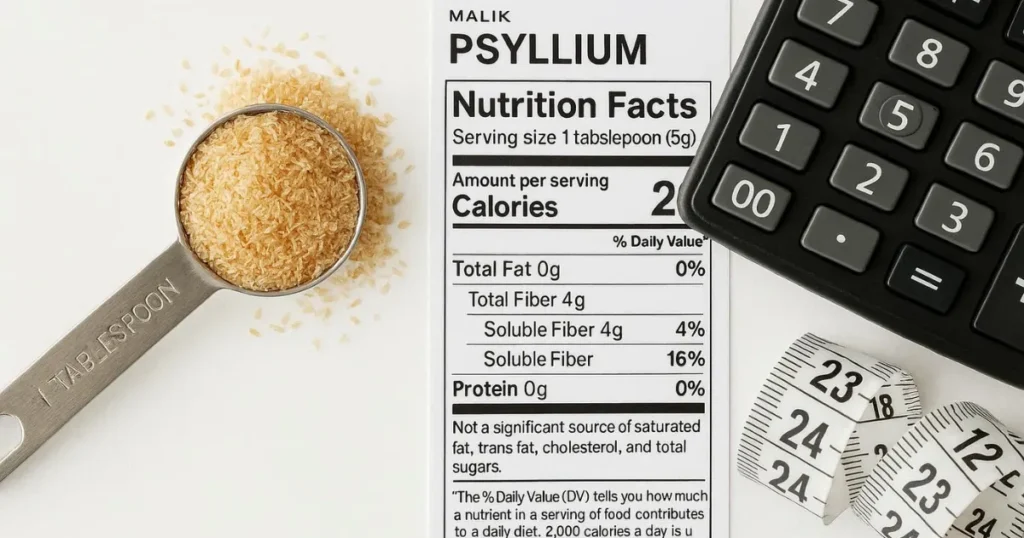
Understanding how much fiber in psyllium husk is essential for anyone looking to improve digestive health, manage cholesterol, or optimize their daily fiber intake. Many people ask about the exact amount of fiber in psyllium husk because proper dosage directly impacts results and helps avoid potential side effects.
This comprehensive guide answers your most pressing questions: how much fiber in 1 tablespoon of psyllium husk, what the fiber composition looks like, and how to use this information to achieve your health goals effectively. Whether you’re comparing fiber sources, calculating your daily intake, or simply curious about nutritional content, you’ll find precise, research-backed answers that help you make informed decisions about incorporating ispaghula husk into your wellness routine.
Exact Fiber Content: Breaking Down the Numbers
Let me provide the precise measurements you’re looking for when asking how much fiber in ispaghula husk.
Standard Serving Size (1 Tablespoon/ 10 grams).
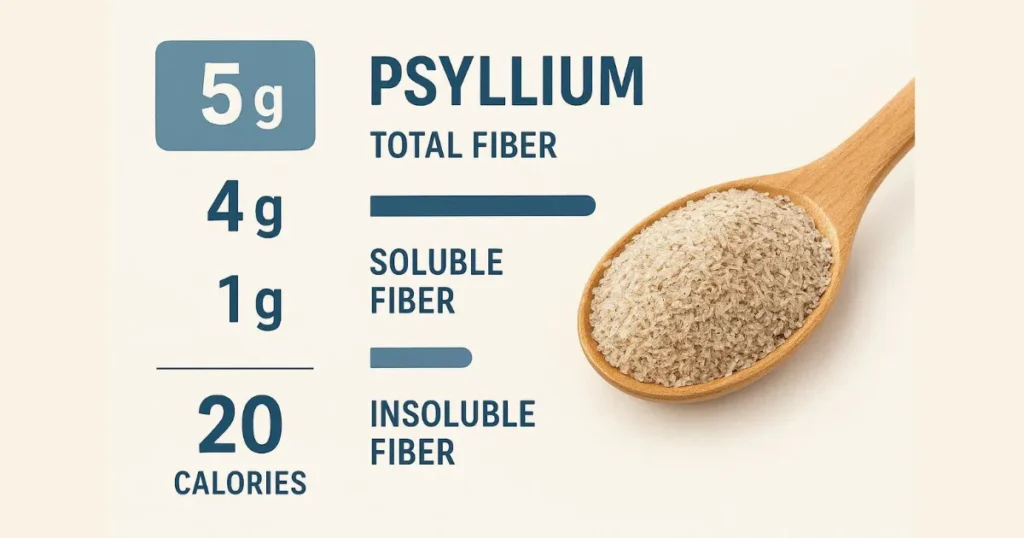
One tablespoon of pure psyllium husk contains:
- Total dietary fiber: 7-8 grams.
- Soluble fiber: 3-5 grams.
- Insoluble fiber: 2-3 grams.
- Net carbohydrates: 1-2 grams.
- Calories: 30-35.
- Protein: Less than 1 gram.
- Fat: Negligible (less than 0.5 grams).
Smaller Measurements.
For those starting with lower doses:
- 1 teaspoon (5 grams): 3.5-4 grams total fiber.
- 1/2 tablespoon (5 grams): 3.5-4 grams total fiber.
- 2 tablespoons (20 grams): 14-16 grams total fiber.
Why the Range?
The slight variation in fiber content depends on:
- Purity grade (85% vs. 95% vs. 99%).
- Processing method (whole husk vs. powder).
- Growing conditions and harvest timing.
- Moisture content in the product.
Pakistani psyllium consistently shows higher fiber density due to superior mucilage content – typically 12-15% compared to 8-10% from other regions.
Understanding the Fiber Composition.
The amount of fiber in psyllium husk isn’t just about quantity – the type of fiber matters tremendously for how it functions in your body.
Soluble Fiber Component (60-70%).
The soluble fiber in psyllium consists primarily of mucilage – a complex polysaccharide made of arabinose and xylose sugars. When you mix psyllium with water, this soluble fiber:
- Forms a viscous gel that expands 10-14 times its original volume.
- Slows digestion and glucose absorption.
- Binds to bile acids and cholesterol.
- Feeds beneficial gut bacteria (prebiotic effect).
- Creates feelings of fullness and satiety.
This gel-forming property is what makes psyllium uniquely effective compared to other fiber sources. Pakistani psyllium consistently produces stronger gel formation due to higher mucilage percentages.
Insoluble Fiber Component (25-35%).
The insoluble fiber portion:
- Doesn’t dissolve in water.
- Adds bulk to stool.
- Speeds transit time through the intestines.
- Provides mechanical stimulation to intestinal walls.
- Prevents constipation through physical action.
Together, these two fiber types create synergistic effects that address multiple digestive issues simultaneously – both constipation and diarrhea can be improved with the same fiber source.
Comparing Psyllium to Other Fiber Sources.
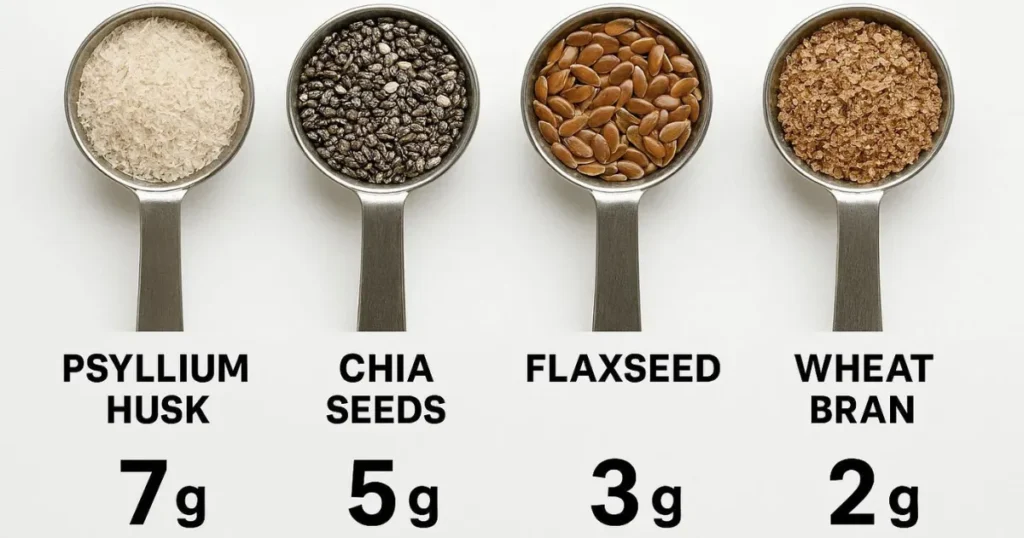
Understanding how much fiber in 1 tablespoon of psyllium husk compared to alternative sources helps you appreciate its concentrated power.
Fiber Content Comparison (Per Tablespoon).
| Fiber Source | Total Fiber | Soluble Fiber | Calories |
| Psyllium husk | 7-8g | 3-5g | 30-35 |
| Chia seeds | 4-5g | 2-3g | 60-70 |
| Flaxseed (ground) | 3-4g | 1-2g | 55-60 |
| Wheat bran | 2-3g | 0.5-1g | 15-20 |
| Oat bran | 2-3g | 1-2g | 30-35 |
| Inulin powder | 5-6g | 5-6g | 25-30 |
As you can see, psyllium delivers significantly more total fiber per tablespoon than most alternatives, with exceptional soluble fiber content that drives its therapeutic benefits.
Why Fiber Density Matters.
Because of this high fiber concentration, you need less psyllium to reach your daily fiber goals. If you’re aiming for the recommended 25-38 grams of daily fiber, just 2-3 tablespoons of psyllium husk can provide 30-50% of your target, making it remarkably efficient and cost-effective.
Daily Fiber Requirements and Optimal Dosage.
Let me help you understand how the amount of fiber in psyllium husk fits into your daily nutritional needs.
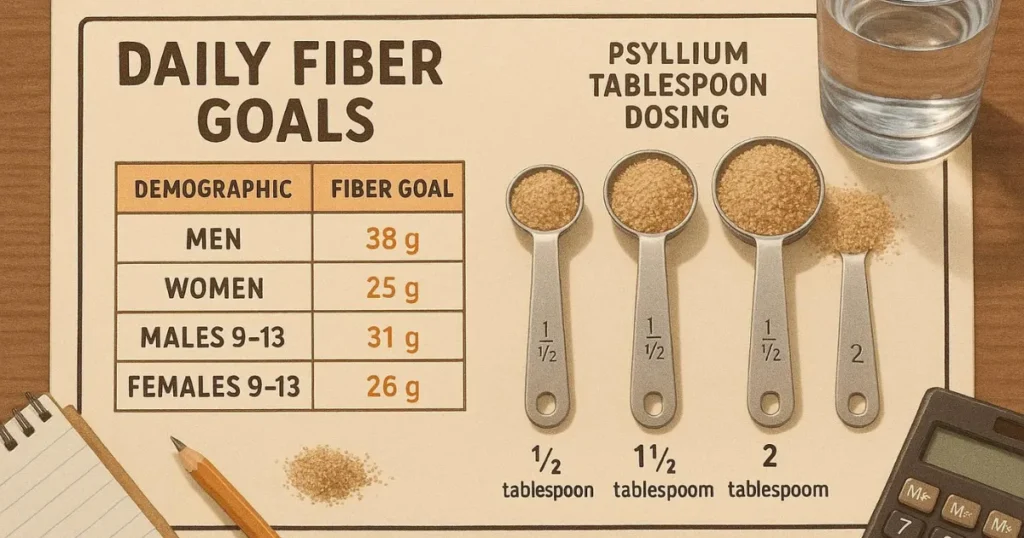
Recommended Daily Fiber Intake.
Health organizations recommend:
- Women: 21-25 grams daily.
- Men: 30-38 grams daily.
- Children (varies by age): 14-31 grams daily.
However, average fiber intake in Western countries is only 15-20 grams daily – well below optimal levels. This fiber gap contributes to widespread digestive issues, elevated cholesterol, and blood sugar dysregulation.
Using Psyllium to Bridge the Gap.
If you’re consuming 15 grams of fiber from food and need 30 grams total, you have a 15-gram deficit. This could be filled with:
- 2 tablespoons of psyllium (14-16 grams fiber).
- 3 teaspoons of psyllium (10.5-12 grams fiber).
- 1.5 tablespoons of psyllium (10.5-12 grams fiber).
Starting Dosage Recommendations.
I always advise beginning conservatively:
Week 1: 1 teaspoon (5 grams) once daily.
- Provides 3.5-4 grams fiber.
- Allows digestive adaptation.
- Minimizes potential gas and bloating.
Week 2: 1 teaspoon twice daily.
- Provides 7-8 grams fiber.
- Morning and evening doses.
- Maintains steady digestive support.
Week 3+: 1 tablespoon twice daily (if needed).
- Provides 14-16 grams fiber.
- Optimal therapeutic dose.
- Suitable for cholesterol and blood sugar management.
Never exceed 30 grams of psyllium daily (approximately 3 tablespoons) without medical supervision.
Factors Affecting Fiber Content in Psyllium.
Not all psyllium products contain identical fiber amounts. Several factors influence how much fiber in psyllium husk you’re actually getting.
Purity Grade.
- 85% purity: Contains more seed material, delivering approximately 6-6.5 grams fiber per tablespoon.
- 95% purity: Standard pharmaceutical grade with 7-7.5 grams fiber per tablespoon.
- 98-99% purity: Premium grade delivering 7.5-8 grams fiber per tablespoon.
Higher purity means you’re getting more fiber and less non-fiber plant material per serving.
Geographic Origin.
Pakistani psyllium grown in Sindh and Punjab provinces consistently shows:
- Higher mucilage percentages (12-15% vs. 8-10%).
- Better fiber retention during processing.
- Superior gel-forming capacity.
- More reliable fiber content across batches.
Processing Method.
Whole husk and finely ground husk powder contain similar total fiber, but powder has slightly higher density due to reduced air pockets between particles. This can result in marginally higher fiber per tablespoon when measuring by volume rather than weight.
Storage Conditions.
Improper storage can degrade fiber quality over time. Exposure to moisture, heat, or light can:
- Reduce mucilage activity.
- Decrease gel-forming capacity.
- Lower effective fiber content.
- Compromise therapeutic efficacy.
Store psyllium in cool, dry conditions in airtight containers to maintain optimal fiber content.
Health Benefits Driven by Fiber Content.
The substantial amount of fiber in psyllium husk translates directly into measurable health benefits backed by extensive research.
Digestive Health and Regularity.
The 7-8 grams of fiber per tablespoon:
- Adds sufficient bulk to normalize stool consistency.
- Absorbs 10-14 times its weight in water.
- Softens hard stools in constipation.
- Firms loose stools in diarrhea.
- Stimulates healthy peristaltic movements.
Most people experience improved bowel regularity within 12-72 hours of starting psyllium supplementation.
Cholesterol Reduction.
Clinical studies demonstrate that consuming 7-10 grams of psyllium fiber daily (approximately 1-1.5 tablespoons) can:
- Reduce LDL cholesterol by 5-10%.
- Lower total cholesterol by 4-8%.
- Maintain or slightly increase HDL (good) cholesterol.
- Reduce cardiovascular disease risk over time.
The soluble fiber binds to bile acids in your intestines, forcing your liver to use cholesterol to produce new bile acids, thereby lowering blood cholesterol levels.
Blood Sugar Management.
The gel formed by psyllium’s soluble fiber:
- Slows carbohydrate digestion and glucose absorption.
- Prevents rapid blood sugar spikes after meals.
- Improves insulin sensitivity over time.
- Reduces HbA1c levels in diabetic patients.
Research shows that taking 5-10 grams of psyllium husk powder with meals can significantly improve glycemic control.
Weight Management.
The high fiber content creates:
- Extended feelings of fullness and satiety.
- Reduced hunger between meals.
- Lower overall calorie intake naturally.
- Improved appetite regulation.
Studies indicate that people consuming adequate fiber (including psyllium supplementation) consume 10-15% fewer calories daily without conscious restriction.
Calculating Your Personal Fiber Needs.
Let me show you practical calculations for integrating the fiber content in ispaghula husk into your personal nutrition plan.
Step 1: Determine Your Fiber Gap.
Example calculation for a 35-year-old woman:
- Recommended daily fiber: 25 grams.
- Current dietary fiber intake: 16 grams (estimated).
- Fiber gap: 9 grams needed.
Step 2: Calculate Psyllium Dosage.
To fill a 9-gram fiber gap:
- Option 1: 1.5 tablespoons psyllium (10.5-12 grams fiber).
- Option 2: 3 teaspoons psyllium (10.5-12 grams fiber).
- Option 3: 1 tablespoon + 1 teaspoon (10.5-11.5 grams fiber).
Step 3: Split Doses throughout the Day.
For a 9-gram fiber goal from psyllium:
- Morning: 1 teaspoon (3.5-4 grams fiber).
- Afternoon: 1 teaspoon (3.5-4 grams fiber).
- Evening: 1/2 tablespoon (2.5-3 grams fiber).
- Total: 9.5-11 grams fiber from psyllium.
This approach maintains steady fiber delivery throughout the day, optimizing digestive benefits while minimizing potential gas or bloating.
Proper Preparation to Maximize Benefits.
Understanding how much fiber in 1 tablespoon of psyllium husk is only useful if you prepare it correctly to access those benefits.
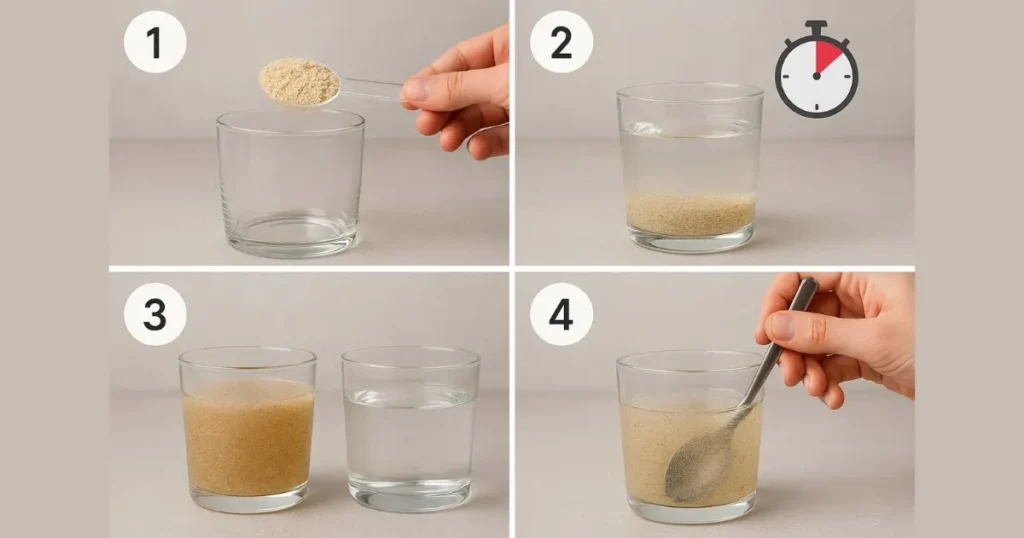
Basic Mixing Method.
For 1 tablespoon (7-8 grams fiber):
- Pour 8-10 ounces of cool water into a glass.
- Add 1 tablespoon psyllium husk.
- Stir vigorously for 10-15 seconds.
- Drink immediately before the gel forms.
- Follow with another 8-ounce glass of water.
Why Immediate Consumption Matters.
The fiber begins absorbing water and forming gel within 30-60 seconds. If you wait too long, you’ll be trying to drink a thick gel rather than a liquid mixture. Some people prefer this texture, but most find it easier to consume quickly.
Hydration is Critical.
For every tablespoon of psyllium (7-8 grams fiber), drink at least:
- 8-10 ounces with the mixture.
- 8-10 ounces immediately after.
- Additional water throughout the day.
Insufficient water intake with high-fiber supplements can cause esophageal blockages, intestinal obstruction, severe constipation, and dehydration.
Alternative Preparation Methods.
You can also mix the fiber content in psyllium husk into:
- Smoothies: Blend for 30+ seconds.
- Yogurt or kefir: Mix thoroughly and consume within 5 minutes.
- Oatmeal: Stir in just before eating.
- Protein shakes: Blend well.
- Soup or stew: Add just before serving.
Common Misconceptions about Fiber Content.
Let me address frequent misunderstandings about how much fiber in psyllium husk and what those numbers mean.
Myth 1: All Psyllium Contains Identical Fiber.
False. The amount of fiber in psyllium husk varies significantly based on purity grade, geographic origin, processing quality, and product freshness. Always check the nutrition label for specific fiber content per serving.
Myth 2: More Fiber Always Equals Better Results.
Not necessarily. Consuming excessive fiber (50-70+ grams daily) can cause bloating, gas, mineral absorption interference, and intestinal discomfort. The goal is adequate fiber intake, not maximum fiber intake.
Myth 3: Fiber Content Equals Effectiveness.
While fiber quantity matters, quality matters more. The mucilage content and gel-forming capacity determine therapeutic efficacy. Pakistani psyllium with 7 grams of high-quality fiber may be more effective than lower-quality psyllium with 8 grams.
Myth 4: You Can Get Enough from Food Alone.
Theoretically yes, practically difficult. Reaching 30-38 grams of daily fiber requires consuming 6-8 servings of vegetables, 2-3 servings of fruit, 3-4 servings of whole grains, and 1-2 servings of legumes. Most people consistently fall short.
Myth 5: Ground and Whole Husk Have Different Fiber.
They contain essentially identical total fiber per gram. The difference is particle size, which affects gel formation speed, texture when mixed with liquid, and ease of mixing – not total fiber content.
Special Dietary Considerations.
The amount of fiber in psyllium husk makes it adaptable to various dietary approaches and health conditions.
Low-Carb and Ketogenic Diets.
With only 1-2 net carbs per tablespoon (total carbs minus fiber), psyllium fits perfectly into keto macros. The 7-8 grams of fiber don’t impact ketosis since fiber isn’t digested and absorbed.
Many people on low-carb diets experience constipation from reduced fiber intake. Two tablespoons of psyllium in keto recipes provides 14-16 grams of fiber without compromising ketosis.
Diabetes Management.
The substantial soluble fiber content helps slow glucose absorption after meals, reduce post-prandial blood sugar spikes, improve long-term glycemic control, and potentially reduce insulin requirements. People with diabetes should take psyllium with meals and monitor blood sugar response.
Pregnancy and Breastfeeding.
The fiber content in psyllium is safe during pregnancy and can help address constipation – a common complaint affecting 11-38% of pregnant women. Start with 1 teaspoon (3.5-4 grams fiber) daily and increase gradually to 1-2 tablespoons if needed. Always consult your obstetrician first.
Children and Adolescents.
Calculate pediatric dosing based on age:
- Ages 6-11: Start with 1/2 teaspoon (1.5-2 grams fiber).
- Ages 12-18: Start with 1 teaspoon (3.5-4 grams fiber).
- Always adjust based on tolerance and response.
Athletes and Active Individuals.
High-calorie diets for athletic performance should include proportionally more fiber. Athletes consuming 3,000-5,000 calories daily should aim for 35-50 grams of total fiber, with psyllium providing a convenient, concentrated source.
Quality Testing for Accurate Fiber Content.
At Malik Psyllium, we implement rigorous testing protocols to ensure accurate fiber content labeling.
Laboratory Analysis Methods.
We use standardized testing procedures including:
Total Dietary Fiber Testing (AOAC Method 985.29):
Enzymatic-gravimetric analysis that measures both soluble and insoluble fiber components accurately.
Swelling Index Testing:
Measures water absorption capacity. Quality psyllium should exceed 40, meaning it swells to more than 40 times its dry volume – this correlates directly with effective fiber content.
Viscosity Measurements:
Using rotational viscometers, we measure gel strength at specific concentrations. Higher viscosity indicates more functional soluble fiber.
Mucilage Content Analysis:
Determines the percentage of mucilage – the key active component. Pakistani psyllium consistently tests at 12-15%.
Purity Assessment:
Acid-insoluble ash testing identifies sand and soil content. Premium products should be below 2%, ensuring that labeled fiber content represents actual psyllium, not contaminants.
Why Testing Matters.
Without proper testing, you can’t accurately know how much fiber in psyllium husk you’re consuming. Some manufacturers overstate fiber content on labels, use lower purity grades than claimed, include fillers or adulterants, or fail to account for moisture content.
Maximizing Fiber Absorption and Benefits.
Simply knowing the amount of fiber in psyllium husk isn’t enough – you need to optimize absorption and utilization.
Timing Strategies.
For Cholesterol Management: Take psyllium with meals to maximize bile acid binding when your body releases bile for fat digestion.
For Blood Sugar Control:
Consume 15-30 minutes before meals or with the first bite to slow glucose absorption throughout the meal.
For Weight Management:
Take 20-30 minutes before meals with 12-16 ounces of water to maximize satiety effects.
For Digestive Regularity:
Consistency matters more than timing. Take at the same time daily – many prefer morning and evening doses.
Medication Interactions.
The high fiber content in psyllium can interfere with medication absorption. Take psyllium at least 2 hours before or after diabetes medications, thyroid hormones, antidepressants, blood thinners, cholesterol medications, and antibiotics.
Combining with Probiotics.
The fiber in psyllium feeds beneficial gut bacteria. Combining psyllium with probiotic supplements or fermented foods (yogurt, kefir, sauerkraut, kimchi) amplifies benefits, including enhanced short-chain fatty acid production, improved intestinal barrier function, better nutrient absorption, and stronger immune response.
Gradual Introduction.
Even knowing the exact fiber content, start low and increase gradually:
- Week 1: 25% of the target dose.
- Week 2: 50% of the target dose.
- Week 3: 75% of the target dose.
- Week 4+: Full target dose.
This allows your gut microbiome to adapt to increased fiber, minimizing gas, bloating, and discomfort.
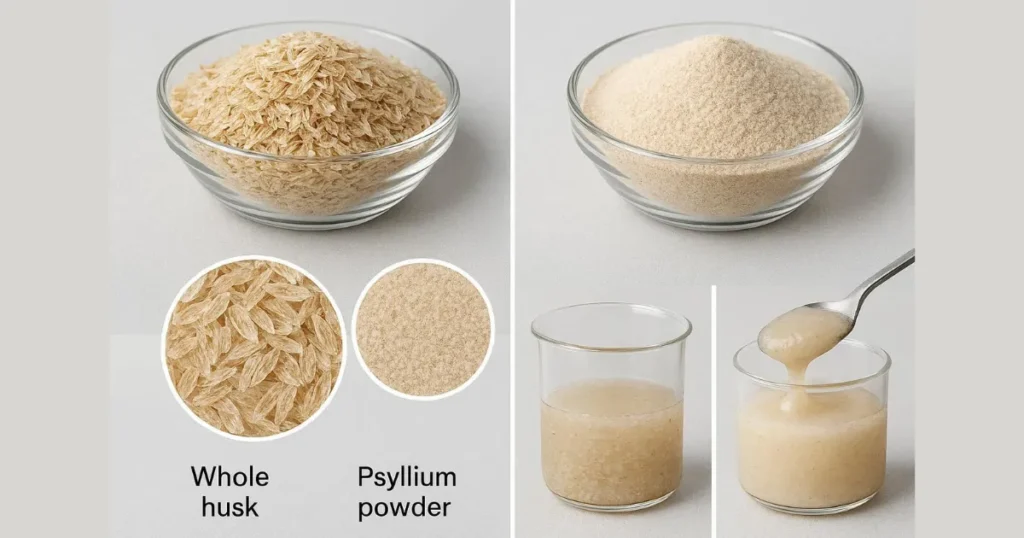
Whole Husk vs. Powder: Fiber Content Differences.
Understanding how processing affects the amount of fiber in psyllium husk helps you choose the right product form.
Whole Husk Characteristics.
- Larger particle size (0.5-2mm).
- Slower water absorption.
- Less viscous gel formation.
- Easier to mix without clumping.
- Fiber content: 6.5-7.5 grams per tablespoon.
Husk Powder Characteristics.
- Fine particle size (under 0.3 mm).
- Rapid water absorption.
- Maximum viscosity gel formation.
- Requires more vigorous mixing.
- Fiber content: 7-8 grams per tablespoon.
Which Form Contains More Fiber?
By weight, they’re identical – 100 grams of whole husk contains the same fiber as 100 grams of powder. The difference appears when measuring by volume (tablespoons):
- 1 tablespoon whole husk = approximately 9 grams weight = 6.5-7.5 grams fiber.
- 1 tablespoon husk powder = approximately 10-11 grams weight = 7-8 grams fiber.
For precise fiber dosing, weighing your psyllium is more accurate than using volume measurements.
Cost-Effectiveness: Fiber per Dollar.
Understanding how much fiber in 1 tablespoon of psyllium husk helps you evaluate cost-effectiveness compared to alternatives.
Comparative Cost Analysis (Per 10 grams of fiber).
- Psyllium husk: $0.15-0.30 (1.25-1.5 tablespoons).
- Chia seeds: $0.40-0.60 (2-2.5 tablespoons).
- Ground flaxseed: $0.25-0.45 (2.5-3 tablespoons).
- Fiber supplement capsules: $0.60-1.20 (multiple capsules).
- Inulin powder: $0.35-0.55 (2 tablespoons).
Psyllium offers exceptional value because its high fiber concentration means you need less product to achieve the same fiber intake. A 1-pound bag of bulk psyllium husk provides approximately 150-170 grams of fiber – enough for 3-4 months of daily supplementation at moderate doses.
Quality vs. Price Considerations.
While lower-priced psyllium may seem attractive, consider that lower purity grades deliver less fiber per serving, inferior mucilage content reduces effectiveness, and potential contamination affects quality. Premium Pakistani psyllium costs 20-40% more but delivers 15-25% more effective fiber per gram and superior therapeutic results.
Storage Impact on Fiber Quality.
Proper storage maintains the fiber content and quality over time.
Optimal Storage Conditions.
- Temperature: Below 25°C (77°F).
- Humidity: Below 60%.
- Light exposure: Minimal (opaque containers).
- Container: Airtight with moisture barrier.
Signs of Degraded Fiber Quality.
Watch for indicators that fiber content or quality has declined:
- Clumping that doesn’t break apart.
- Reduced swelling when mixed with water.
- Off odors or musty smell.
- Color darkening.
- Reduced gel viscosity.
Shelf Life Expectations.
When properly stored:
- Whole husk: 24-36 months at full potency.
- Husk powder: 18-24 months at full potency.
- Opened containers: Use within 6-12 months.
After these periods, the total fiber content remains similar, but mucilage activity and gel-forming capacity may decline, reducing therapeutic effectiveness.
How much fiber in 1 tablespoon of psyllium husk exactly?
One tablespoon (approximately 10 grams) of pure psyllium husk contains 7-8 grams of total dietary fiber, including 3-5 grams of soluble fiber and 2-3 grams of insoluble fiber. This represents approximately 70-80% fiber by weight – among the highest concentrations in any natural food source.
How much fiber in ispaghula husk compared to regular fiber sources?
Ispaghula husk (psyllium) contains 7-8 grams of fiber per tablespoon, compared to chia seeds (4-5 grams), ground flaxseed (3-4 grams), wheat bran (2-3 grams), and oat bran (2-3 grams). Psyllium delivers 50-150% more fiber per tablespoon than most alternatives.
What is the amount of fiber in psyllium husk powder vs. whole husk?
By weight, they contain identical fiber – 100 grams of either form provides the same fiber content. However, by volume, powder is slightly denser: 1 tablespoon of powder contains 7-8 grams fiber, while 1 tablespoon of whole husk contains 6.5-7.5 grams due to air pockets.
How much psyllium do I need to get 10 grams of fiber?
To obtain 10 grams of fiber, consume approximately 1.25-1.5 tablespoons (12.5-15 grams) of psyllium husk. This can be split across multiple doses throughout the day for better tolerance and consistent digestive support, such as 1 tablespoon morning and 1/2 tablespoon evening.
Does the fiber content in psyllium vary by quality or origin?
Yes, significantly. Pakistani psyllium typically contains 12-15% mucilage content versus 8-10% from other regions, resulting in superior gel formation and therapeutic effectiveness. Additionally, purity grades affect fiber content: 99% purity delivers more fiber per tablespoon than 85% purity products.
Can too much fiber from psyllium husk be harmful?
Yes, exceeding 30 grams of psyllium daily (approximately 4 tablespoons) without medical supervision can cause bloating, gas, intestinal discomfort, mineral absorption issues, and potential bowel obstruction if consumed without adequate water. Start low and increase gradually while maintaining excellent hydration.
How much water should I drink with psyllium based on fiber content?
For every tablespoon of psyllium (7-8 grams fiber), drink at least 8-10 ounces of water with the mixture plus another 8-10 ounces immediately after. For 2 tablespoons daily, aim for 10-12 glasses of water throughout the day for safe digestion.
Is the fiber in psyllium husk soluble or insoluble?
Psyllium contains both types: approximately 60-70% is soluble fiber (mucilage) that forms gel, and 25-35% is insoluble fiber that adds bulk. This unique combination addresses both constipation and diarrhea while providing cholesterol-lowering and blood sugar benefits from the soluble portion.
Conclusion.
Understanding exactly how much fiber in psyllium husk – typically 7-8 grams per tablespoon – empowers you to make informed decisions about your digestive health and overall wellness. This concentrated fiber source provides exceptional value, delivering more soluble fiber per serving than virtually any alternative while supporting cholesterol management, blood sugar control, weight management, and digestive regularity.
The amount of fiber in psyllium husk makes it remarkably efficient for bridging the fiber gap that affects most people consuming modern diets. Just 1-2 tablespoons daily can transform your digestive comfort and contribute significantly to long-term metabolic health when used consistently and properly.
Pakistani psyllium, particularly from the Sindh and Punjab regions, offers superior fiber quality with higher mucilage content that translates to better therapeutic results. When choosing psyllium products, prioritize purity grade, mucilage content, and quality testing over price alone.
Start with conservative doses, stay well-hydrated, separate from medications by 2 hours, and gradually increase to your optimal dosage based on individual response. The fiber content in each serving becomes a powerful tool for health optimization when used thoughtfully as part of a balanced lifestyle.

Isabgol Ke Fayde – Psyllium Husk Ke Poori Science-Based Rahnumayi – 2026
Isabgol ke fayde jaanna aaj ke daur mein zyada zaroori
Isabgol Benefits in Hindi | Psyllium Husk Ke Fayde, Sahi Upyog Aur Savdhaniyan – 2026
Agar aap isabgol benefits in hindi mein samajhna chahte hain,