

The question “Can psyllium husk cause bloating?” is one of the most common concerns I encounter. The short answer? Yes, psyllium husk bloating can happen – but it’s usually temporary, preventable, and often a sign your body is adjusting to increased fiber intake.
Here’s what most people don’t realize: psyllium husk bloating isn’t necessarily a bad thing. In fact, some initial gas and bloating often indicates your gut microbiome is responding positively to the fiber. However, excessive or prolonged bloating suggests improper usage, inadequate hydration, or dosing issues that need correction.
Interestingly, many people successfully use psyllium husk for bloating relief once they understand proper usage. The same fiber that can cause temporary gas during adjustment becomes a powerful tool for reducing chronic bloating when used correctly. If you’ve searched “psyllium husk bloating reddit” threads, you’ve probably seen mixed experiences – some people swear it caused unbearable gas, while others credit it with eliminating their bloating entirely.
This comprehensive guide explains why psyllium husk can cause gas, how to prevent bloating during the adjustment period, and how to leverage psyllium’s properties to actually reduce chronic digestive discomfort. You’ll learn the difference between normal adjustment symptoms and problematic reactions, plus practical strategies to make psyllium work for your body without the uncomfortable side effects.
Understanding Why Psyllium Husk Bloating Occurs
Before addressing solutions, let’s explore the mechanisms behind psyllium husk bloating and gas production.
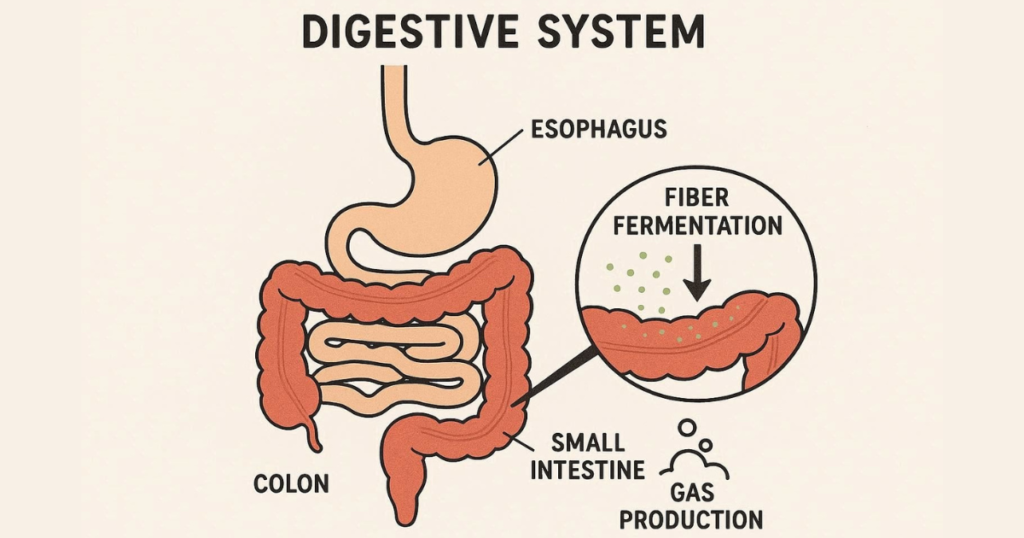
The Fermentation Process
Psyllium husk contains approximately 70% soluble fiber. When this fiber reaches your colon, beneficial bacteria ferment it as their food source. This fermentation process produces gases – primarily hydrogen, methane, and carbon dioxide – as natural byproducts.
For people unaccustomed to high fiber intake, this bacterial activity increases dramatically when psyllium is introduced. Your gut microbiome essentially throws a feast, and the resulting gas production creates the bloating and discomfort many experience initially.
This isn’t harmful. It’s actually evidence that psyllium is feeding your beneficial bacteria. However, the uncomfortable sensation can be significant until your microbiome stabilizes.
Water Absorption and Volume
Psyllium absorbs 10-20 times its weight in water, creating substantial bulk in your digestive system. This physical expansion contributes to feelings of fullness and bloating, especially if you’re not drinking adequate water.
Without sufficient liquid, psyllium can’t form its characteristic gel properly. Instead, it sits in your intestines like a dry sponge, creating pressure, discomfort, and constipation – which then causes additional bloating as waste accumulates.
Dosing Too High, Too Fast
The most common cause of severe psyllium husk bloating is starting with excessive doses. Many people think “more fiber equals better results” and begin with tablespoon-sized servings. This overwhelming fiber load creates intense fermentation, excessive gas production, and significant discomfort.
Your gut needs time to build up the bacterial populations that efficiently process fiber. Overwhelming it with massive doses causes problems.
Individual Microbiome Differences
Everyone’s gut bacteria composition is unique. Some people have microbiomes that readily adapt to increased fiber, experiencing minimal bloating. Others have bacterial profiles that produce more gas during fermentation, leading to pronounced symptoms.
People with small intestinal bacterial overgrowth (SIBO), IBS, or dysbiosis often experience more severe psyllium husk bloating than those with balanced gut bacteria. This doesn’t mean they can’t use psyllium – it means they need more gradual introduction and possibly lower maintenance doses.
Can Psyllium Husk Cause Bloating? The Complete Answer
Let me give you the nuanced answer based on real-world experience with thousands of psyllium users.
Yes, Psyllium Can Initially Cause Bloating If:
You start with doses that are too high:
Beginning with 1-2 tablespoons daily almost guarantees bloating. Your microbiome can’t adapt that quickly.
Hydration is inadequate:
Taking psyllium without 8-10 glasses of water daily creates dry, bulky stool that causes constipation and bloating.
You have existing digestive conditions:
IBS, SIBO, or inflammatory bowel conditions make bloating more likely and more severe.
You take it with large meals:
Psyllium mixed with a significant food volume creates excessive fullness and pressure.
Your microbiome is compromised:
Recent antibiotic use, poor diet, or digestive imbalances make adjustment harder.
No, Psyllium Doesn’t Cause Long-Term Bloating If:
You start slowly:
Beginning with 1/4- 1/2 teaspoon and increasing gradually over 2-3 weeks prevents overwhelming your system.
Hydration is excellent:
Drinking 10-12 glasses of water daily allows proper gel formation and comfortable transit.
Timing is appropriate:
Taking psyllium between meals, not with them, reduces fullness sensations.
Quality is high:
Premium Pakistani psyllium with 95%+ purity creates more predictable, comfortable results than low-grade products.
You’re patient:
Giving your body 7-14 days to adapt allows microbiome adjustment without quitting prematurely.
The pattern is clear: proper usage prevents bloating, while improper usage guarantees it.
Using Psyllium Husk for Bloating Relief
Here’s the paradox: the same psyllium that can cause temporary bloating during adjustment becomes one of the most effective natural remedies for chronic bloating once your body adapts.
How Psyllium Reduces Bloating Long-Term
Regulates bowel movements:
Consistent elimination prevents waste buildup that causes bloating. Psyllium normalizes transit time, reducing fermentation of undigested food.
Removes excess gas:
The bulking action helps move gas through your system rather than letting it accumulate and cause pressure.
Feeds beneficial bacteria:
Over time, psyllium shifts your microbiome toward bacteria that produce less gas and support digestive comfort.
Reduces constipation and bloating:
By softening stool and promoting regularity, psyllium eliminates one of the primary bloating causes.
Balances water content:
Proper psyllium use with adequate hydration maintains optimal intestinal moisture, preventing both constipation and diarrhea – both of which cause bloating.
The Transition Period
Most people experience this progression:
Days 1-3:
Mild to moderate gas and bloating as bacteria begin fermenting increased fiber. Discomfort is noticeable but manageable.
Days 4-7:
Peak bloating symptoms. This is when most people quit, thinking psyllium doesn’t work for them. Push through – this is normal adaptation.
Days 8-14:
Gradual symptom reduction. Bloating decreases, bowel movements normalize, and comfort improves.
Days 15+:
Minimal to no bloating. Digestive comfort exceeds pre-psyllium baseline for most users. Chronic bloating from other causes often improves.
Understanding this timeline helps you persist through the adjustment period instead of giving up during the most uncomfortable phase.
Does Psyllium Husk Cause Gas? Managing This Common Side Effect
Psyllium husk can cause gas, especially during the first 1-2 weeks. Let me explain how to manage this effectively.
Why Gas Production Increases
When beneficial bacteria ferment psyllium fiber, gas is the inevitable byproduct. The amount varies based on:
- Your starting fiber intake (lower baseline = more gas initially).
- Bacterial composition (some species produce more gas than others).
- Psyllium dose (higher doses = more fermentation = more gas).
- Hydration levels (inadequate water worsens gas).
- Food combinations (certain foods + psyllium increase fermentation).
Types of Gas and What They Mean.
Odorless gas with pressure:
Normal fermentation. Your bacteria are processing fiber appropriately. This typically resolves within 7-10 days.
Foul-smelling gas:
May indicate excessive protein fermentation, dysbiosis, or digestive imbalances. If this persists beyond two weeks, reduce the psyllium dose or consult a healthcare provider.
Painful, trapped gas:
Suggests inadequate hydration or too-rapid dose escalation. Reduce dose, increase water intake, and ensure physical movement to help gas pass.
Constant, severe gas:
Not normal. This indicates intolerance, underlying digestive conditions, or contaminated psyllium. Discontinue and seek medical evaluation.
Strategies to Minimize Gas Production.
Start incredibly small:
Begin with just ⅛- 1/4 teaspoon daily. This sounds ridiculously low, but it allows your microbiome to adapt without overwhelming gas production.
Increase very gradually:
Add ⅛- 1/4 teaspoon every 3-4 days. Slow progression prevents gas spikes.
Take between meals:
Psyllium consumed 1-2 hours after eating produces less gas than psyllium mixed with food.
Ensure excellent hydration:
10-12 glasses of water daily supports proper fiber processing and reduces fermentation byproducts.
Consider digestive enzymes:
Taking plant-based digestive enzymes with psyllium can reduce gas production during the adjustment period.
Try probiotics:
High-quality probiotics may help balance gut bacteria toward less gas-producing species.
Spread doses throughout the day:
Instead of one large dose, split psyllium into 2-3 smaller servings to reduce fermentation intensity.
Preventing Psyllium Husk Bloating: Practical Protocols.
Prevention is far easier than treating severe bloating after it occurs. Here’s my proven protocol for bloating-free psyllium use.
The Gradual Introduction Method.
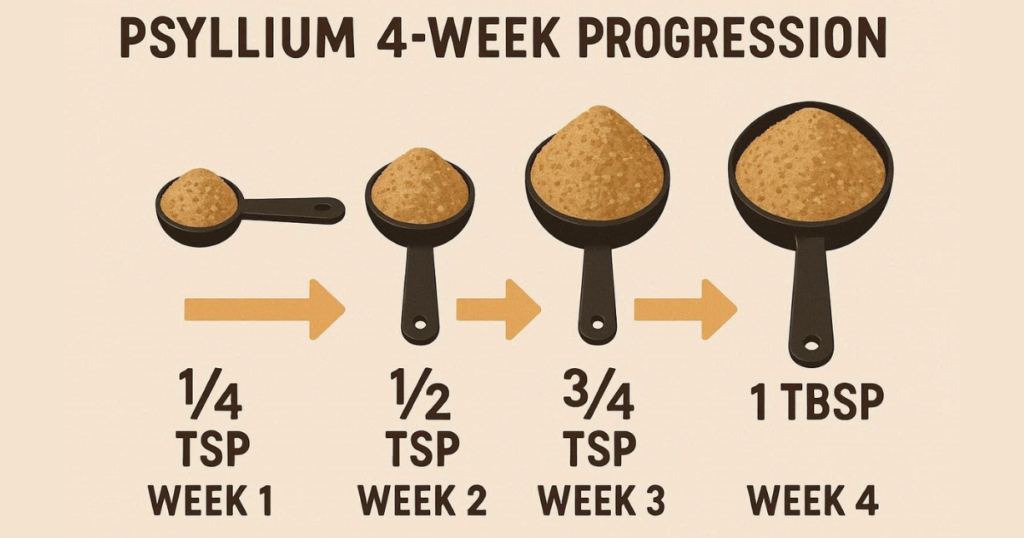
Week 1:
Take 1/4 teaspoon once daily, mixed with 10 ounces of water, 1 hour after breakfast. Drink an additional 8 ounces of water 30 minutes later.
Week 2:
Increase to 1/2 teaspoon once daily, same timing and hydration protocol.
Week 3:
Increase to 3/4 teaspoon once daily, or split into 1/2 teaspoon twice daily (morning and evening).
Week 4+:
Reach your target dose of 1-2 teaspoons daily, split into 1-2 servings.
This four-week progression allows complete microbiome adaptation with minimal bloating. Yes, it’s slower than many protocols recommend, but it dramatically reduces uncomfortable symptoms.
Hydration Requirements.
Inadequate water is the number one cause of psyllium husk bloating complaints. Here’s the proper hydration protocol:
- With psyllium dose: 8-10 ounces of liquid mixed with psyllium, consumed immediately.
- 30 minutes after: Another 8 ounces of water.
- Throughout the day: Minimum of 8-10 additional glasses of water.
- Total daily: At least 10-12 glasses (80-96 ounces) of water.
Track your water intake for the first two weeks. Most people dramatically underestimate how much they’re actually drinking.

Timing Strategies.
Best times to take psyllium:
- Mid-morning (between breakfast and lunch).
- Mid-afternoon (between lunch and dinner).
- 2-3 hours after dinner (but not right before bed).
Worst times to take psyllium:
- Immediately before or after large meals.
- Right before bed (can cause overnight bloating).
- On an empty stomach first thing in the morning (some people tolerate this poorly).
Experiment to find what works for your body, but the between-meal approach works best for most people.
Movement and Physical Activity.
Physical activity helps move gas through your digestive system and reduces bloating sensations. After taking psyllium:
- Walk for 10-15 minutes.
- Do gentle yoga or stretching.
- Avoid lying down immediately.
- Stay upright for at least 30 minutes.
Movement dramatically reduces gas accumulation and bloating discomfort.
Quality Differences and Their Impact on Bloating.
Not all psyllium is created equal, and quality significantly affects bloating potential.
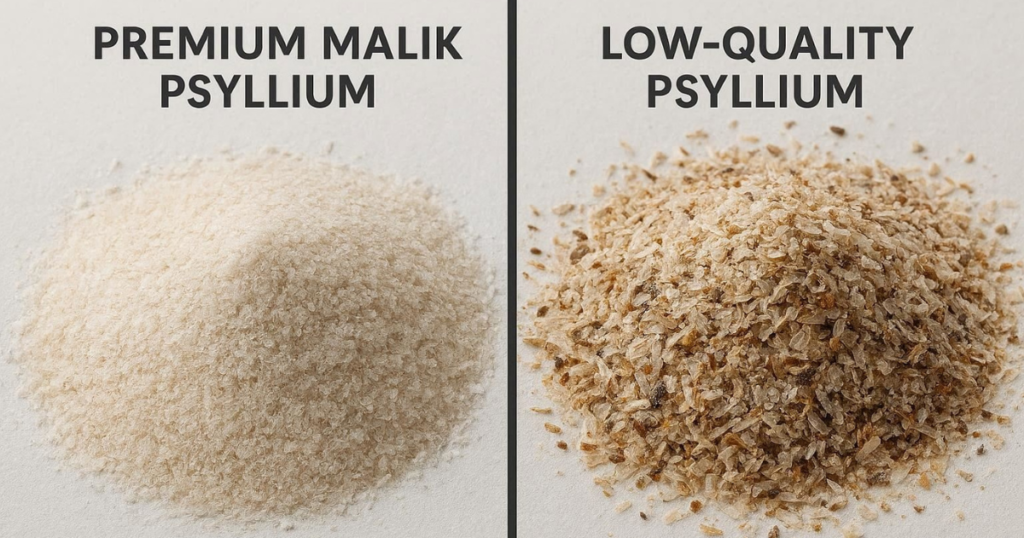
Why Pakistani Psyllium Causes Less Bloating.
Premium Pakistani psyllium, particularly from Sindh province, offers 95-99% purity. This means:
Minimal contaminants:
No seed particles or processing residues that create additional fermentation and gas.
Consistent fiber content:
Predictable results that let you dial in your optimal dose without bloating surprises.
Fine particle size:
Better mixing and smoother digestion compared to coarse, poorly processed psyllium.
Clean processing:
Advanced cleaning methods remove components that can trigger excessive gas production.
At Malik Psyllium, our multi-stage processing ensures maximum purity. Users consistently report less initial bloating compared to lower-grade products, likely because their bodies aren’t dealing with impurities alongside the fiber.
Lower Quality Psyllium Problems.
Cheap, poorly processed psyllium often contains:
- Seed particles that ferment differently from the husk.
- Processing dust that irritates digestive systems.
- Inconsistent fiber content makes dosing unpredictable.
- Contaminants that trigger inflammation and gas.
These issues significantly increase psyllium husk bloating likelihood and severity.
Common Mistakes That Guarantee Bloating.
Let me share the patterns I’ve observed in people who experience severe, prolonged bloating with psyllium.
Mistake 1: The “All or Nothing” Approach.
Starting with tablespoon-sized doses because “I want fast results” guarantees intense bloating. Your gut can not adapt to massive fiber increases overnight.
Mistake 2: Inadequate Water Intake.
Thinking the 8 ounces mixed with psyllium is sufficient hydration. It’s not. You need 10-12 glasses total daily.
Mistake 3: Taking Psyllium with Large Meals.
Adding fiber to an already full stomach creates excessive pressure and bloating. Take psyllium between meals instead.
Mistake 4: Giving Up During Peak Adjustment.
Quitting on days 5-7 when bloating peaks. This is exactly when you should persist – the worst is nearly over.
Mistake 5: Inconsistent Timing.
Taking psyllium randomly – sometimes morning, sometimes evening, sometimes with meals – prevents your body from establishing a comfortable rhythm.
Mistake 6: Ignoring Movement.
Sitting still after taking psyllium allows gas to accumulate. Movement is essential for comfort.
Mistake 7: Combining with Gas-Producing Foods.
Taking psyllium alongside beans, cruciferous vegetables, dairy (if intolerant), or artificial sweeteners multiplies gas production.
Psyllium Husk Bloating Reddit Insights: Real User Experiences.
Online communities like Reddit provide valuable real-world data about psyllium husk bloating experiences. Here are patterns from thousands of user reports:
Common Success Stories.
Users who successfully overcame initial bloating typically:
- Started with very small doses (1/2 teaspoon or less).
- Increased water intake significantly.
- Waited 2-3 weeks before judging results.
- Used high-quality, pure psyllium products.
- Took psyllium between meals, not with them.
Common Failure Patterns.
Users who quit due to unbearable bloating typically:
- Started with tablespoon-sized doses.
- Didn’t increase water intake adequately.
- Gave up after 3-5 days.
- Used cheap, low-quality psyllium.
- Took psyllium with large meals or right before bed.
The Timeline Consensus.
Most successful users report:
- Days 1-3: Minimal symptoms.
- Days 4-7: Peak bloating and gas.
- Days 8-12: Rapid improvement.
- Days 14+: Minimal to no bloating, improved digestion overall.
This matches clinical observations and reinforces the importance of persistence through the adjustment period.
When Psyllium Bloating Indicates a Problem.
While temporary bloating is normal, certain patterns suggest underlying issues requiring medical attention.
Red Flags Requiring Medical Evaluation.
Severe pain with bloating:
Sharp, intense abdominal pain suggests possible obstruction or serious digestive issues.
Bloating worsening after 2 weeks:
Normal adjustment shouldn’t extend beyond 14 days. Continued worsening suggests intolerance or underlying conditions.
Bloody stool with bloating:
Never normal. Stop psyllium immediately and consult your doctor.
Fever with bloating:
May indicate infection or inflammatory complications.
Complete inability to pass gas:
Suggests possible obstruction requiring emergency evaluation.
Vomiting with bloating:
Potential obstruction or severe intolerance.
Severe bloating despite minimal doses:
If even ⅛ teaspoon causes extreme symptoms, you may have SIBO, severe dysbiosis, or psyllium intolerance.
Conditions That Increase Bloating Risk.
SIBO (Small Intestinal Bacterial Overgrowth):
Excessive bacteria in the small intestine ferment fiber more intensely, creating severe bloating. SIBO patients often need medical treatment before tolerating psyllium.
IBS (Irritable Bowel Syndrome):
Some IBS subtypes respond poorly to fiber supplementation. IBS-D (diarrhea predominant) patients may tolerate psyllium better than IBS-C (constipation predominant).
Inflammatory Bowel Disease:
Crohn’s or ulcerative colitis patients may experience increased inflammation and bloating with psyllium during flare-ups.
Gastroparesis:
Delayed stomach emptying makes psyllium feel heavy and bloating more pronounced.
If you have diagnosed digestive conditions, work with your gastroenterologist to introduce psyllium safely, or consider alternative fiber sources.
Alternative Approaches for Bloating-Prone Individuals.
If standard psyllium protocols still cause unacceptable bloating, try these modifications:
Ultra-Gradual Introduction.
Start with just a pinch – literally ⅛ teaspoon or less – and increase by tiny increments every 5-7 days instead of every 3-4 days. This glacially slow progression suits highly sensitive digestive systems.
Pre-Treatment with Probiotics.
Take high-quality probiotics for 2-4 weeks before introducing psyllium. This can optimize your microbiome for better fiber tolerance.
Psyllium-Probiotic Combination.
Some people do better taking psyllium simultaneously with probiotics, as the beneficial bacteria help process the fiber more efficiently.
Smaller, More Frequent Doses.
Instead of 1/2 teaspoon twice daily, try 1/4 teaspoon four times daily. Smaller doses create less fermentation intensity at any given time.
Capsule Format.
Psyllium capsules release fiber more gradually than powder, which can reduce bloating for some people. However, you’ll need multiple capsules to reach effective doses.
Digestive Enzyme Support.
Taking plant-based digestive enzymes with psyllium may reduce gas production during the adjustment period by improving overall digestion.
Long-Term Perspective: Psyllium’s Bloating Benefits.
Once past the adjustment period, most people find psyllium actually reduces chronic bloating from other sources:

Hormonal bloating:
Regular psyllium use helps eliminate excess estrogen, reducing menstrual bloating for many women.
Food intolerance bloating:
By speeding transit time, psyllium reduces how long problematic foods ferment in your intestines.
Constipation and bloating:
The primary cause of chronic bloating for many people. Psyllium’s gentle regulation of bowel movements eliminates this entirely.
Water retention bloating:
Psyllium’s impact on hormone balance and sodium regulation can reduce fluid retention and bloating.
Dysbiosis bloating:
Over time, psyllium shifts microbiome composition toward less gas-producing, more beneficial bacterial species.
The key is getting through the initial adjustment period to access these long-term psyllium benefits.
Can psyllium husk cause bloating when you first start taking it?
Yes, psyllium husk bloating is common initially as your gut bacteria adjust to increased fiber. This typically peaks around days 4-7 and resolves by week 2-3. Start with small doses and increase gradually.
Why does psyllium husk cause gas, and how can I prevent it?
Psyllium husk can cause gas through bacterial fermentation. Prevent it by starting with 1/4 teaspoon or less, increasing slowly over 3-4 weeks, drinking 10-12 glasses of water daily, and taking psyllium between meals.
Is psyllium husk good for bloating relief?
Yes, psyllium husk for bloating relief works excellently once your body adapts. After the 1-2 week adjustment period, psyllium reduces chronic bloating by regulating bowel movements, removing excess gas, and balancing gut bacteria.
How long does psyllium husk bloating last?
Psyllium husk bloating typically lasts 7-14 days during the adjustment period. If bloating persists beyond 3 weeks, you may be using too much, not drinking enough water, or have underlying digestive issues.
What do Reddit users say about psyllium husk bloating?
Psyllium husk bloating Reddit discussions show mixed experiences. Successful users started small, stayed hydrated, and waited 2-3 weeks. Those who quit experienced intense bloating from excessive doses and inadequate water intake.
How much water should I drink to prevent psyllium bloating?
Drink 8-10 ounces with each psyllium dose, plus 10-12 glasses throughout the day (total 80-100 ounces daily). Inadequate hydration is the primary cause of severe psyllium husk bloating.
Should I stop taking psyllium if I experience bloating?
Don’t stop immediately unless bloating is severe or accompanied by pain. Reduce your dose by half, ensure adequate hydration, and give your body another week. Most bloating resolves with proper dosing and hydration.
Does high-quality psyllium cause less bloating than cheap brands?
Yes, premium Pakistani psyllium (95-99% purity) causes less bloating due to minimal contaminants and consistent fiber content. Low-quality products contain impurities that increase gas production and digestive irritation.
Conclusion.
Understanding can psyllium husk can cause bloating requires recognizing both the temporary adjustment symptoms and the long-term relief it provides. Yes, psyllium can initially cause bloating and gas – but these symptoms are usually temporary, manageable, and completely preventable with proper protocols.
The key to avoiding severe psyllium husk bloating lies in gradual introduction, exceptional hydration, appropriate timing, and patience during the 1-2 week adjustment period. Most people who experience unbearable bloating started with excessive doses, didn’t drink enough water, or gave up right when their bodies were about to adapt.
Once adjusted, psyllium becomes one of the most effective natural remedies for chronic bloating from constipation, hormonal fluctuations, and digestive imbalances. The same fiber that causes temporary fermentation gas during adjustment shifts your microbiome toward beneficial bacteria that actually reduce bloating long-term.
Quality matters significantly. Pakistani psyllium from reputable sources like Malik Psyllium offers 95-99% purity, creating more predictable results with less bloating than low-grade alternatives. When you know exactly what you’re getting in every dose, managing the adjustment period becomes straightforward.
If you’ve been avoiding psyllium due to bloating concerns – or quit previously because of gas – give it another try using the protocols in this guide. Start incredibly small (1/4 teaspoon or less), increase glacially slowly (every 3-4 days), drink substantially more water than you think necessary (10-12 glasses daily), and commit to three weeks before judging results. Most people discover that psyllium husk for bloating relief works remarkably well once they move past the brief adjustment period – transforming from temporary discomfort to lasting digestive wellness.

Isabgol Ke Fayde – Psyllium Husk Ke Poori Science-Based Rahnumayi – 2026
Isabgol ke fayde jaanna aaj ke daur mein zyada zaroori
Isabgol Benefits in Hindi | Psyllium Husk Ke Fayde, Sahi Upyog Aur Savdhaniyan – 2026
Agar aap isabgol benefits in hindi mein samajhna chahte hain,