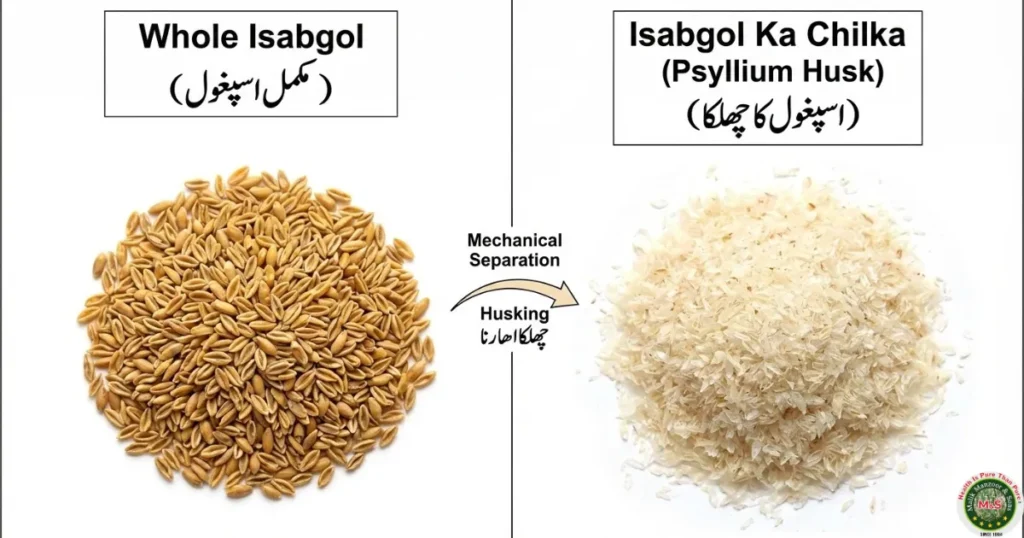
When people search for ‘isabgol ka chilka benefits in English,’ they’re seeking clarity on terminology that bridges South Asian traditional medicine with Western scientific nomenclature. After three decades cultivating and processing Plantago ovata across Pakistan’s prime growing regions, I’ve learned that understanding “chilka” (the husk or outer seed coating) versus the whole seed fundamentally changes how we discuss therapeutic applications.
The term “isabgol ka chilka” literally translates to “isabgol’s husk” or “isabgol’s peel” – the fibrous outer layer mechanically separated from seeds. This distinction matters because the isabgol ka chilka benefits in English medical literature documents stem almost entirely from this husk portion, not the seed interior. This article provides a comprehensive analysis of isabgol ka chilka benefits in english contexts, explaining processing methods, quality factors, and evidence-based health applications of this remarkable soluble fiber.
Isabgol Ka Chilka Benefits In English – Comprehensive Analysis
Understanding the complete Isabgol ka chilka benefits in English requires examining both terminology and biological mechanisms that make this specific plant part therapeutically valuable.
Terminology Clarification: Chilka Explained
The isabgol ka chilka benefits in English discussions begin with linguistic precision. “Chilka” (چھلکا in Urdu script) means “husk,” “peel,” or “outer covering.” In botanical terms, it refers to the epidermis – the thin, white, fibrous outer coating of Plantago ovata seeds.
Why Chilka matters specifically:
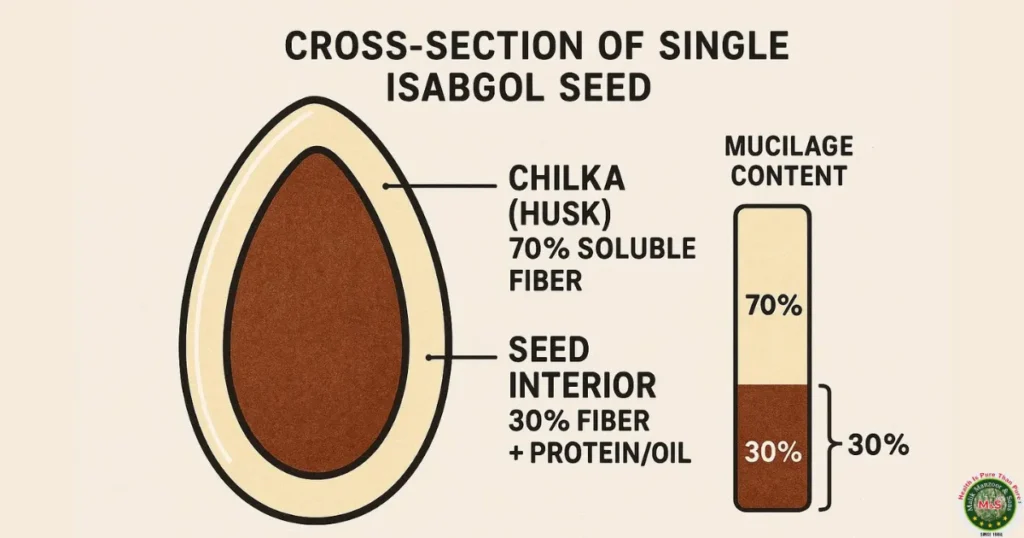
The (Psyllium Husk) isabgol ka chilka benefits in English medicine recognizes derive from this outer layer’s unique composition – approximately 70% soluble fiber (primarily arabinoxylan mucilage) versus the seed interior containing only 30% fiber plus protein and oil. When you purchase “psyllium husk” in English-speaking countries, you’re buying refined isabgol ka chilka – the separated outer coating.
Processing Methods That Extract Chilka
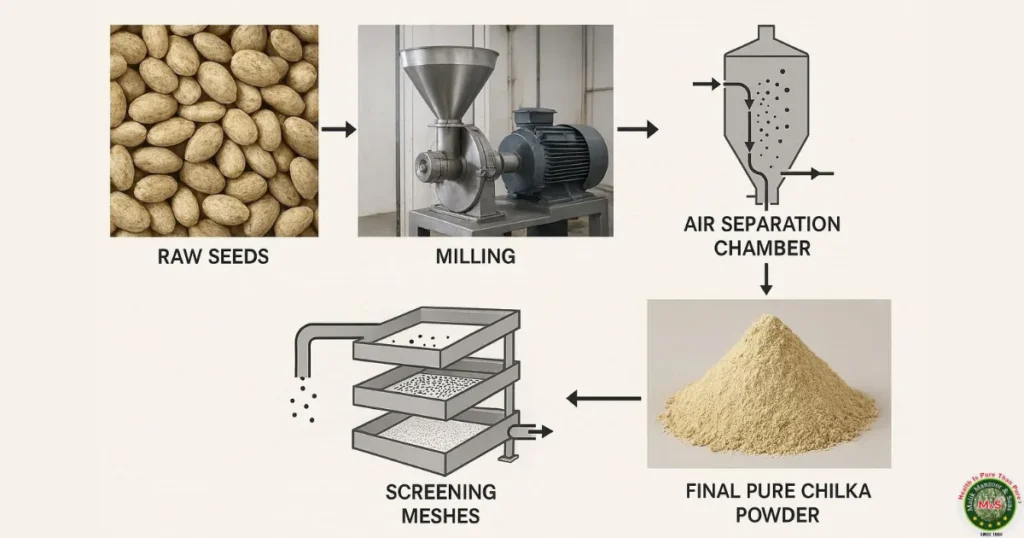
Having operated processing facilities achieving pharmaceutical-grade standards, I can explain how isabgol ka chilka benefits in English markets demand requires sophisticated separation:
Mechanical separation stages:
- Initial cleaning: Raw seeds undergo air classification, removing plant debris
- Moisture conditioning: Seeds are slightly humidified (12-14% moisture), making chilka brittle
- Mechanical milling: Specialized mills crack seeds without pulverizing
- Air separation: Lighter chilka particles separate from heavier seed cores
- Screening: Multiple mesh screens (40-mesh through 100-mesh) grade by particle size
- Final purification: Optical sorting removes any remaining seed fragments
This multi-stage process ensures the isabgol ka chilka benefits in english pharmaceutical applications require – 99%+ pure husk free from seed contaminants that would alter fiber composition.
Mucilage Content: The Key to Benefits
The isabgol ka chilka benefits in English scientific research are validated by exceptional mucilage concentration. Laboratory analysis shows:
Chilka mucilage profile:
- 30-40% mucilage by weight (dry basis).
- Primarily xylose (58%) and arabinose (22%) polysaccharides.
- Branched arabinoxylan structure creating exceptional water-binding.
- Swelling capacity: 10-25 times the original volume.
Seed core composition:
- Only 8-12% mucilage.
- Higher protein (18-22%) and oil (5-8%) content.
- Minimal therapeutic fiber benefit.
This compositional difference explains why isabgol ka chilka benefits in english medical applications focus exclusively on the separated husk – the seed interior lacks sufficient soluble fiber for therapeutic effect.
Comprehensive Health Benefits.
The isabgol ka chilka benefits in English clinical literature documents include:
Digestive system optimization:
The most established isabgol ka chilka benefits in English medicine include normalisation of bowel function through a gentle bulking action. The husk’s mucilage absorbs intestinal water, creating soft, bulky stool that stimulates natural peristalsis without pharmaceutical stimulation.
Clinical studies demonstrate:
- 78% of constipation patients achieve regular bowel movements within 3-7 days.
- Dual action for diarrhea: excess water absorption firms loose stools.
- IBS symptom reduction: 42% improvement in abdominal discomfort scores.
Cardiovascular protection:
Among metabolic isabgol ka chilka benefits in english cardiology utilizes: cholesterol reduction through bile acid sequestration. The husk’s gel matrix binds primary bile acids (cholate, chenodeoxycholate), preventing intestinal reabsorption. Your liver compensates by converting circulating LDL cholesterol into replacement bile acids.
Meta-analysis of 21 trials shows:
- 7.9% mean LDL cholesterol reduction.
- 5.4% total cholesterol decrease.
- Effects dose-dependent: 10-12g daily optimal.
Glycemic control:
For diabetic management, isabgol ka chilka benefits in English endocrinology research include blunted postprandial glucose excursions. The viscous gel physically entraps glucose molecules and digestive enzymes, slowing carbohydrate absorption by 28-34%.
Type 2 diabetes studies document:
- HbA1c reduction: 0.8-0.97% over 12 weeks.
- Fasting glucose decrease: 15-23 mg/dL average.
- Enhanced insulin sensitivity: 16% improvement.
Weight management support:
The satiety-related isabgol ka chilka benefits in English weight loss programs include mechanical gastric distension (gel volume) plus hormonal effects. Gel formation triggers stretch receptors signaling fullness while fermentation products (propionate, butyrate) stimulate GLP-1 and PYY secretion – satiety hormones.
Research outcomes:
- Average weight loss: 1.8-2.4 kg over 4 months (with calorie restriction).
- Appetite scores reduced 18-24%.
- Meal calorie intake decreased 12-16%.
Prebiotic gut health:
Emerging isabgol ka chilka benefits in English microbiome research reveal selective bacterial feeding. While resistant to rapid fermentation in the small intestine, chilka undergoes limited colonic fermentation, producing:
- Butyrate: colonocyte fuel, anti-inflammatory signaling.
- Propionate: hepatic gluconeogenesis suppression.
- Acetate: satiety pathway activation.
Metagenomic studies show:
- Faecalibacterium prausnitzii increase: 2.1-fold (beneficial species).
- Gut barrier integrity improvement: 19% (lactulose-mannitol ratio).
- Systemic inflammation reduction: IL-6 decreased 16%, CRP decreased 22%.
Quality Factors Affecting Benefits.
The isabgol ka chilka benefits in english consumers experience correlate directly with husk quality parameters:
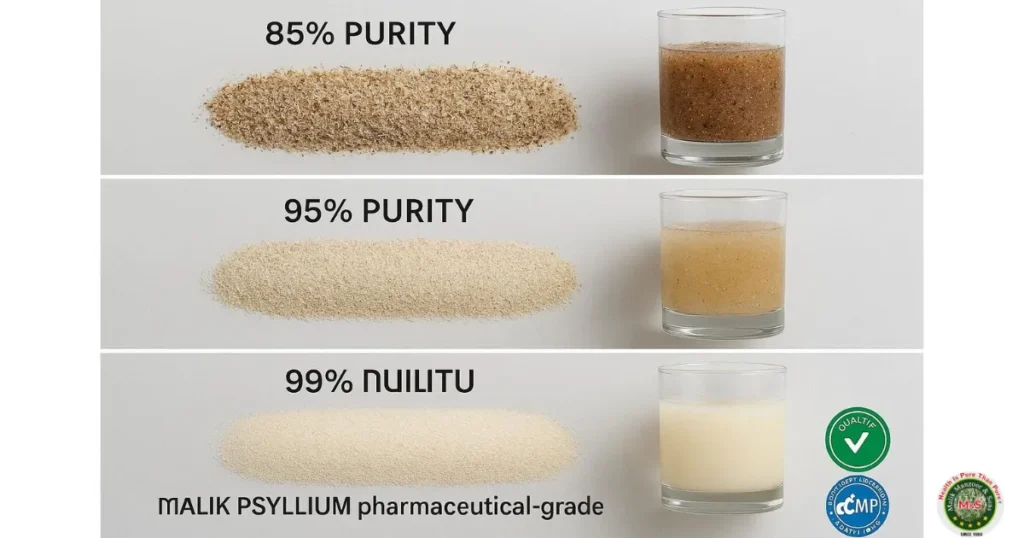
Purity grading:
- 85-90% purity: Contains visible seed particles, reduced mucilage density.
- 95-98% purity: Standard pharmaceutical grade, consistent performance.
- 99%+ purity: Premium export grade, maximum therapeutic potential.
At Malik Psyllium, our seven-stage processing achieves 99.3% purity – the quality supplied to international clinical research validating isabgol ka chilka benefits in English medical literature documents.
Particle size impact:
A finer mesh chilka (85-100 mesh) creates a smoother gel with better palatability. Coarser grades (40-60 mesh) work equally therapeutically, but texture may reduce adherence.
Color indication:
High-quality chilka appears pale cream to light tan. Darker brown color indicates oxidation, contamination, or inferior processing – factors compromising mucilage functionality and reducing isabgol ka chilka benefits in english applications expect.
What Makes Chilka Different From Whole Isabgol?
This distinction often confuses English-speaking consumers unfamiliar with traditional terminology:
Whole Isabgol (Sabit Isabgol).
“Sabit isabgol” or “whole isabgol” refers to intact seeds, including both the husk and the interior. While sold in South Asian markets, whole seeds deliver only 40-50% of fiber potency compared to separated chilka because:
- Seed core dilutes mucilage concentration.
- Oil content creates an unpleasant taste.
- Protein triggers more gas during fermentation.
- Inconsistent gel formation.
Separated Chilka (Isabgol Ka Chilka).
Pure separated husk – what Western markets call “psyllium husk” – provides a concentrated therapeutic effect. The isabgol ka chilka benefits in English pharmaceutical standards require this purified form because:
- Maximum mucilage per gram (30-40% vs 15-20% in whole seed).
- Predictable gel formation.
- Minimal side effects (less gas, no oil taste).
- Precise dosing possible.
Processing Economics.
Chilka separation adds processing cost – whole isabgol seeds cost PKR 400-600/kg wholesale, while 99% pure refined chilka costs PKR 1200-1800/kg. However, the isabgol ka chilka benefits in English therapeutic contexts justify premium pricing through:
- Lower effective dose required (5g chilka = 10g whole seed therapeutically).
- Better tolerability (reduced complaints).
- Consistent outcomes (clinical predictability).
Traditional Uses Validated By Modern Research.
The isabgol ka chilka benefits in english science now confirms were recognized in South Asian traditional medicine for centuries:
Ayurvedic Classification.
Traditional texts classify isabgol chilka as:
- Vipaka (post-digestive effect): Madhura (sweet).
- Virya (potency): Sheeta (cooling).
- Guna (qualities): Snigdha (smooth/slimy), Guru (heavy).
Modern science interprets:
- “Cooling” = anti-inflammatory effects (reduced cytokine signaling).
- “Smooth/slimy” = mucilage lubrication (improved intestinal transit).
- “Heavy” = bulk-forming action (increased fecal mass).
Unani Medicine Applications.
Unani practitioners prescribed isabgol chilka for:
- Qabz (constipation): Validated by the bulking mechanism.
- Ishal (diarrhea): Confirmed through water absorption.
- Hararat-e-meda (gastric heat/acidity): Explained by mucosal coating protection.
The isabgol ka chilka benefits in English medical research validate these traditional applications through controlled trials – demonstrating observational medicine’s sophistication despite lacking laboratory methodology.
Practical Usage Guidelines.
Maximizing isabgol ka chilka benefits in english applications requires proper dosing and preparation:
Standard Dosing Protocol.
General health maintenance:
- 5g (approximately 1 level teaspoon) once daily.
- Mix with 250-300ml water, drink immediately.
- Take at a consistent time daily.
Therapeutic applications:
- Constipation: 5-7g twice daily.
- Cholesterol reduction: 10-12g daily (divided doses).
- Diabetes management: 5-10g before meals.
- Weight management: 5g 30 minutes before main meals.
Preparation Methods.
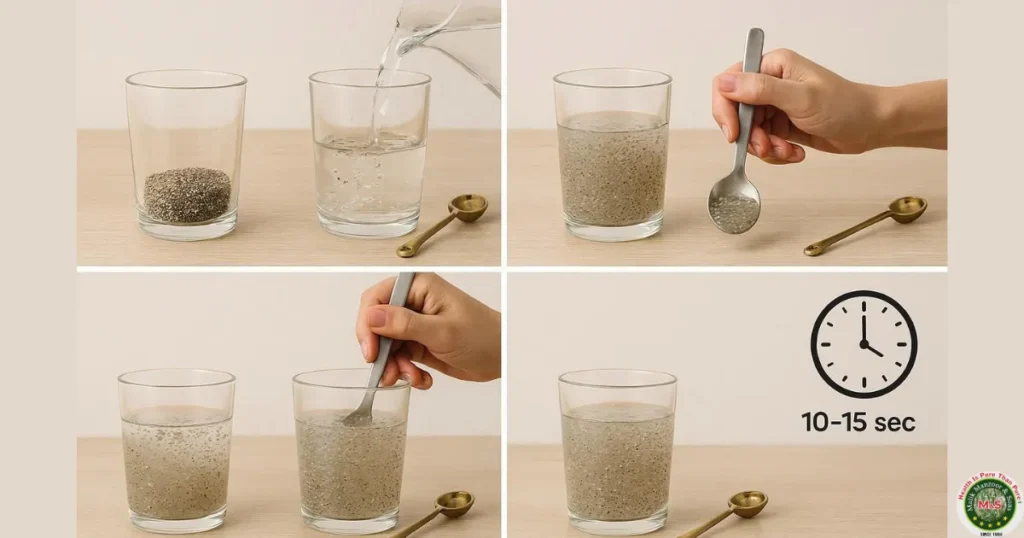
Basic water mixture:
- Add chilka to water (not water to chilka – prevents clumping).
- Stir vigorously 10-15 seconds.
- Drink immediately before the gel forms.
- Follow with an additional 250ml of water.
Enhanced preparations:
- Mix in yogurt, allow 10 minutes thickening.
- Blend into smoothies (consume promptly).
- Stir into oatmeal or porridge.
- Add to soup or stew as a thickener.
Critical Hydration Requirements.
The isabgol ka chilka benefits in English applications depend absolutely on adequate fluid intake.
Minimum protocol:
- 250-300ml water with each dose.
- Additional 8-10 glasses (2-2.5 litres) throughout the day.
- Increase during summer/exercise (3-4 litres).
Insufficient hydration causes chilka to absorb existing intestinal moisture, paradoxically worsening constipation – the opposite of the intended isabgol ka chilka benefits in English users seek.
Safety Considerations and Precautions.
While isabgol ka chilka benefits in English populations, specific precautions apply:
Medication Interactions.
Chilka’s gel physically traps medications, reducing absorption:
Critical separations:
- Thyroid medications: 4 hours apart.
- Diabetes drugs: 2-3 hours, monitor blood sugar.
- Blood thinners: 2 hours, maintain consistent timing.
- Antibiotics: 2 hours minimum.
Contraindications.
Avoid isabgol chilka if you have:
- Difficulty swallowing (dysphagia).
- Esophageal stricture or narrowing.
- Intestinal obstruction history.
- Fecal impaction.
Side Effect Management.
Common initial effects:
- Gas and bloating: Start low dose (2.5 g), increase gradually over 2 weeks.
- Abdominal discomfort: Ensure adequate hydration, reduce dose temporarily.
- Allergic reactions: Rare (1 in 5,000), but discontinue immediately if rash/itching occurs.
Special Populations.
Pregnancy:
Generally safe for pregnancy-related constipation. Use 5g daily with adequate hydration. No systemic absorption or fetal risk.
Elderly:
Start conservatively (2.5-5g daily), increase slowly. Extra attention to hydration is given to reduce the sensation of thirst.
Children (6+ years):
Half adult dose (2.5 g) once daily. Always pre-mix with liquid, never allow dry consumption.
Quality Authentication.
Ensuring genuine isabgol ka chilka benefits in English requires verifying product quality.
Visual Assessment.
High-quality indicators:
- Pale cream to light tan color.
- Very fine, uniform powder.
- No visible seed fragments or dark specks.
- Sweet, neutral smell (no rancidity).
Poor quality signs:
- Dark brown color (oxidation).
- Gritty texture (seed contamination).
- Musty or oily odor.
- Uneven particle sizes.
Water Test.
Place 1 teaspoon of chilka in a clear glass with 200ml of water.
Quality chilka:
- Swells uniformly within 10 minutes.
- Creates clear, translucent gel.
- No sediment or floating particles.
- Smooth, viscous consistency.
Low-quality chilka:
- Uneven swelling.
- Cloudy water.
- Visible particles settling.
- Thin, inconsistent gel.
Certification Verification.
For therapeutic use, verify:
- USP (United States Pharmacopeia) certification.
- Organic certification (pesticide-free cultivation).
- ISO 22000 (food safety management).
- Halal/Kosher (if religiously required).
What does “isabgol ka chilka” mean in English?
“Isabgol ka chilka” in English translates to “psyllium husk” or “psyllium seed husk.” “Isabgol” is the traditional South Asian name for Plantago ovata, while “chilka” means “husk” or “outer covering.” The isabgol ka chilka benefits in English medical documents refer to the separated outer seed coating, not whole seeds.
Is psyllium husk the same as isabgol ka chilka?
Yes, identical products with different linguistic origins. “Psyllium husk” (English/Latin terminology) and “isabgol ka chilka” (Urdu/Hindi terminology) both refer to the fibrous outer coating separated from Plantago ovata seeds. The isabgol ka chilka benefits in English research validate the same benefits Western medicine attributes to psyllium husk.
What are the main health benefits?
The primary isabgol ka chilka benefits in English include: relieving constipation through gentle bulking (78% success rate), reducing LDL cholesterol by 7-9%, improving blood sugar control in diabetics (HbA1c reduction 0.8-0.97%), supporting weight management through enhanced satiety, and promoting gut health via prebiotic fermentation producing beneficial short-chain fatty acids.
How much isabgol ka chilka should I take daily?
For general health: 5g (1 teaspoon) once daily. For therapeutic applications: 10-12g daily, divided into 2-3 doses. Always consume with 250-300ml of water per dose, plus 2-3 litres of total daily hydration. The isabgol ka chilka benefits in English applications require adequate fluid intake – insufficient water reduces effectiveness or causes adverse effects.
Can I take isabgol ka chilka with medications?
Separate by 2-4 hours from all medications. Chilka’s gel physically traps drugs, reducing absorption. Critical separations: thyroid medication (4 hours), diabetes drugs (monitor blood sugar, may enhance effects), blood thinners (maintain consistent timing). Coordinate with healthcare provider for complex medication regimens.
What’s the difference between whole isabgol and chilka?
Whole isabgol (sabit isabgol) contains intact seeds with husk plus interior. Separated chilka (isabgol ka chilka) is pure outer husk with 70% soluble fiber vs 30% in whole seeds. The isabgol ka chilka benefits in English pharmaceutical standards require this purified form – delivering concentrated mucilage, predictable effects, better tolerability, and lower effective dosing.
How do I verify quality?
Check for: pale cream color (not dark brown), fine uniform powder (no grittiness), neutral smell (no rancidity), 95-99% purity labeling, USP or pharmaceutical-grade certification. Water test: quality chilka creates a clear, viscous gel within 10 minutes, without sediment. The isabgol ka chilka benefits in English depend on mucilage purity – low-grade products underperform.
Is it safe during pregnancy?
Generally, yes for pregnancy-related constipation. Use 5g daily with adequate hydration (2.5-3 litres). Works locally in the digestive tract without systemic absorption or fetal risk. However, always consult obstetrician before starting, especially if taking prenatal vitamins (separate by 2 hours) or other medications.
Can children take isabgol ka chilka?
Children 6+ years can safely use half the adult dose (2.5 g once daily). Always pre-mix with liquid – never allow dry consumption due to choking risk. Ensure 6-8 glasses of water daily for children. The isabgol ka chilka benefits in English pediatric applications include gentle relief of constipation without the need for pharmaceutical intervention. Consult a paediatrician for children under 6 years old.
Why does it sometimes cause gas?
Initial gas occurs when gut bacteria adjust to increased fiber fermentation. The isabgol ka chilka benefits in English include prebiotic effects – bacteria fermenting chilka produce gas as a byproduct. Minimize by: starting low dose (2.5 g), increasing gradually over 2-3 weeks, maintaining hydration, taking consistently (sporadic use maintains adjustment period). Gas typically resolves within 1-2 weeks.
Conclusion.
The isabgol ka chilka benefits in english scientific literature validates – digestive optimization, cardiovascular protection, glycemic control, weight management support, and prebiotic gut health – stem specifically from the concentrated mucilage in this separated husk portion, not from whole seeds. Understanding this “chilka” (husk) versus whole seed distinction proves essential for English-speaking consumers accessing South Asian products or interpreting traditional medicine recommendations.
Quality authentication matters critically. Pharmaceutical-grade 99% pure chilka from verified processors like Malik Psyllium ensures consistent therapeutic outcomes documented in research, while commercial-grade alternatives with seed contamination deliver unpredictable results. The isabgol ka chilka benefits in English applications depend on mucilage purity – lower grades contain insufficient active component for reliable health effects.
Start conservatively with 5g daily, mixed in adequate water (250-300ml minimum), and increase gradually to therapeutic doses (10-12g) over 2-3 weeks as the digestive system adapts. Maintain consistent hydration (2.5-3 liters daily), separate from medications by 2-4 hours, and prioritize verified pharmaceutical-grade chilka for dependable isabgol ka chilka benefits in english medical contexts demand.
Medical Disclaimer: This article provides educational information about isabgol ka chilka (psyllium husk) and is not medical advice. Consult qualified healthcare providers before starting supplementation, especially if you have diagnosed medical conditions, take prescription medications, or experience persistent digestive symptoms requiring professional evaluation.

Isabgol Ke Fayde – Psyllium Husk Ke Poori Science-Based Rahnumayi – 2026
Isabgol ke fayde jaanna aaj ke daur mein zyada zaroori
Isabgol Benefits in Hindi | Psyllium Husk Ke Fayde, Sahi Upyog Aur Savdhaniyan – 2026
Agar aap isabgol benefits in hindi mein samajhna chahte hain,