After decades working with psyllium cultivation and processing, I’ve observed a persistent gap between how most people understand this fiber – as a simple digestive supplement – and what clinical research actually demonstrates about its broader health effects across multiple body systems.
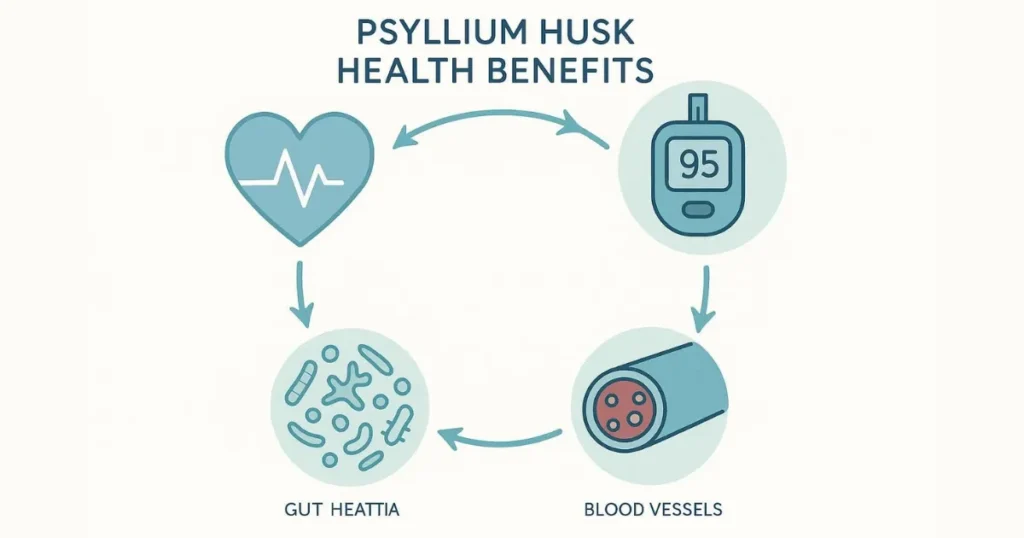
Psyllium husk health benefits extend well beyond bowel regularity. This fiber, derived from Plantago ovata seed coatings, influences cardiovascular function, metabolic health, inflammatory pathways, and even immune system activity through mechanisms that researchers have only recently begun to fully characterize.
Working directly with psyllium producers in Pakistan’s major growing regions and supplying global pharmaceutical and nutraceutical markets, I’ve seen firsthand how clinical-grade psyllium is incorporated into treatment protocols for conditions far removed from constipation – cardiovascular disease prevention, diabetes management, and metabolic syndrome intervention.
This guide examines the documented systemic health benefits of psyllium husk through both published research and practical clinical applications, explaining what this soluble fiber does beyond your digestive tract.
Understanding Psyllium’s Systemic Influence
Most fiber supplements work locally in your digestive system, not anywhere else. Psyllium differs because its effects trigger metabolic cascades with body-wide implications.
When psyllium gel forms in your intestine, it doesn’t simply add bulk to stool. The gel physically interacts with nutrients, bile acids, and bacterial metabolites in ways that send signals throughout your body – to your liver, pancreas, cardiovascular system, and immune tissues.
The Mucilage Factor
Psyllium husk contains highly concentrated mucilage – a complex polysaccharide that swells dramatically when hydrated. This isn’t ordinary plant fiber. The arabinoxylan structure in psyllium can hold 10-20 times its weight in water, creating a viscous gel with unique biological properties.
This gel formation matters because:
- It physically traps molecules (bile acids, cholesterol, glucose) that would otherwise be rapidly absorbed
- It slows intestinal transit enough to alter nutrient processing
- It resists fermentation in the upper digestive tract but undergoes limited fermentation in the colon, producing bioactive metabolites
The result: changes in your gut that translate to measurable effects in blood chemistry, hormone levels, and systemic inflammation markers.
Cardiovascular Health Benefits
Among psyllium husk health benefits, cardiovascular protection has the strongest clinical evidence base. Multiple meta-analyses examining dozens of controlled trials demonstrate consistent effects on cardiovascular risk markers.
Cholesterol Reduction through Bile Acid Sequestration
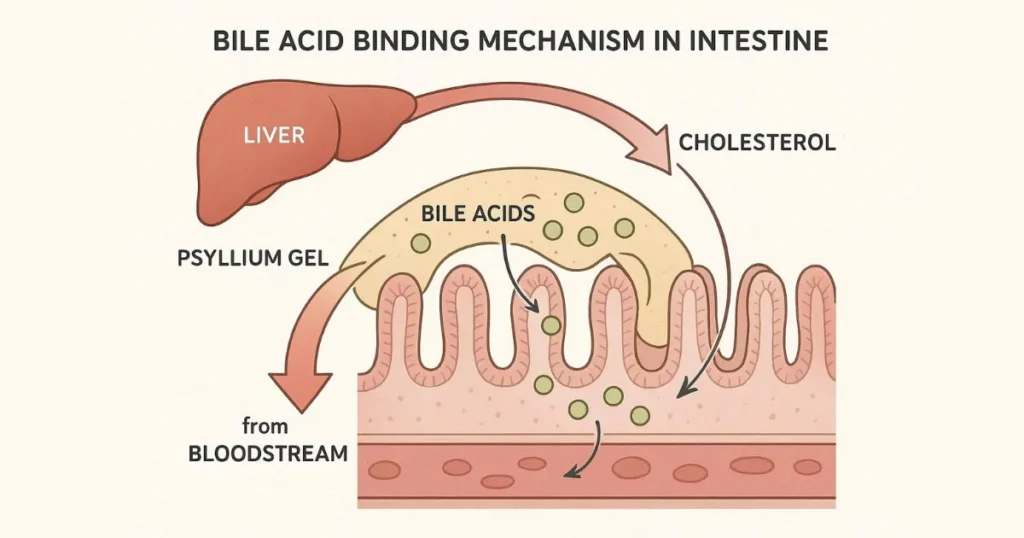
Psyllium lowers LDL (“bad”) cholesterol through a well-characterized mechanism. The fiber gel binds bile acids in your intestine, preventing their reabsorption. Your liver synthesizes bile acids from cholesterol, so when intestinal bile acid reabsorption drops, your liver pulls cholesterol from your bloodstream to make replacement bile.
Clinical data shows:
- 7-10% reduction in LDL cholesterol with 10-12 grams daily psyllium intake
- 5-7% reduction in total cholesterol maintained over 8+ weeks
- No reduction in HDL cholesterol (beneficial cholesterol remains stable).
- Additive effects with statin medications in some studies.
The U.S. Food and Drug Administration recognizes psyllium’s cholesterol-lowering capacity, authorizing heart health claims for products providing at least 7 grams daily. This isn’t common – the FDA grants such claims only when evidence meets rigorous standards.
From a sourcing perspective, cholesterol-lowering efficacy correlates with gel viscosity, which depends on purity and particle size. Higher-grade psyllium (95-99% purity, fine mesh) produces more consistent gel formation and more predictable cholesterol effects than lower-grade material.
Blood Pressure Modulation.
Less widely discussed but equally documented: psyllium’s effect on blood pressure. A 2018 meta-analysis of 11 controlled trials found psyllium supplementation reduced systolic blood pressure by an average of 2.4 mm Hg and diastolic pressure by 2.0 mm Hg.
These numbers may seem modest, but population studies indicate that even 2 mm Hg reductions in blood pressure translate to measurable decreases in cardiovascular event risk across large populations.
The mechanism likely involves multiple pathways:
- Improved insulin sensitivity (insulin resistance drives hypertension).
- Reduced inflammatory signaling.
- Modulation of gut bacterial metabolites that influence blood vessel function.
- Direct effects on arterial stiffness through improved metabolic parameters.
Triglyceride Management.
Some studies report modest reductions in serum triglycerides with regular psyllium use, though effects here are less consistent than cholesterol benefits. When triglyceride reductions occur, they typically range from 5-15% and appear most pronounced in people with elevated baseline triglycerides rather than those with normal levels.
Metabolic Health and Blood Sugar Regulation.
For people with diabetes, prediabetes, or metabolic syndrome, psyllium husk health benefits include measurable improvements in glucose metabolism.
Postprandial Glucose Control.
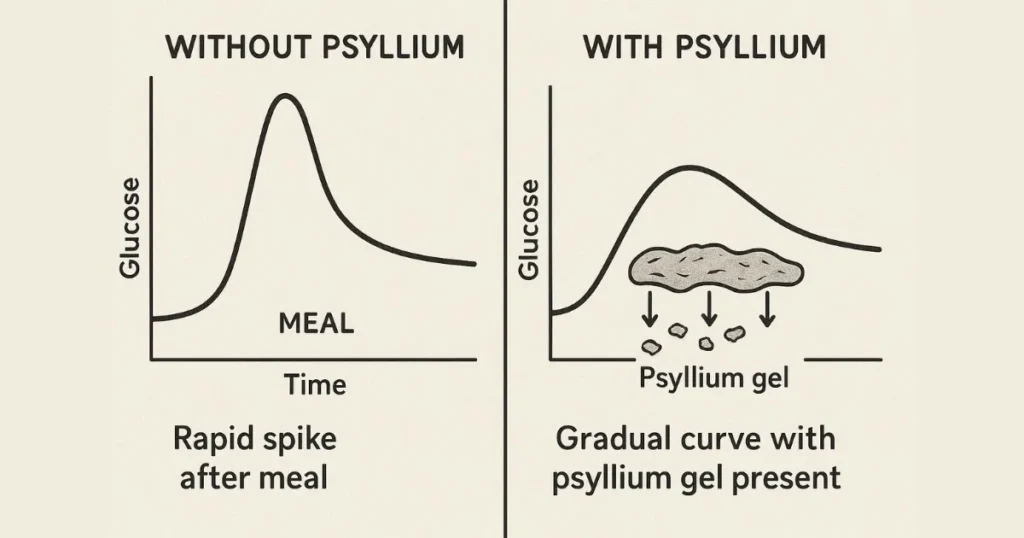
Psyllium’s gel formation in the small intestine slows carbohydrate digestion and glucose absorption. This creates a more gradual rise in blood sugar after meals, rather than sharp spikes that stress insulin-producing pancreatic beta cells.
Research demonstrates:
- Reduced postprandial glucose excursions when psyllium is consumed before or with meals.
- Lower glycemic index of meals consumed with psyllium.
- Improved insulin response patterns suggesting less pancreatic strain.
A 2020 study in patients with type 2 diabetes showed that 10 grams of psyllium daily taken before meals for 8 weeks resulted in significant reductions in fasting glucose (approximately 15-20 mg/dL average decrease) and hemoglobin A1c (0.5-0.9% reduction), a marker of long-term blood sugar control.
These effects matter because better glycemic control reduces microvascular complications – retinopathy, nephropathy, neuropathy – that drive diabetes-related disability.
Insulin Sensitivity Enhancement.
Beyond immediate glucose-lowering effects, evidence suggests psyllium may improve insulin sensitivity over time. The mechanism likely involves:
- Reduced inflammatory signaling: Chronic inflammation impairs insulin receptor function.
- Improved gut barrier integrity: Reduced endotoxin translocation from gut to bloodstream.
- Changes in incretin hormone secretion: Gut hormones that regulate insulin release.
When insulin sensitivity improves, your body requires less insulin to manage the same glucose load. This reduces strain on pancreatic beta cells and may help preserve insulin secretion capacity in people with progressive type 2 diabetes.
Metabolic Syndrome Intervention.
Metabolic syndrome – the cluster of hypertension, elevated blood sugar, excess abdominal fat, and abnormal cholesterol levels – represents a major cardiovascular risk state. Psyllium addresses multiple metabolic syndrome components simultaneously:
- Lowers LDL cholesterol.
- Reduces blood pressure.
- Improves glycemic control.
- May modestly reduce waist circumference through enhanced satiety.
A 2019 analysis found that psyllium supplementation in people with metabolic syndrome produced statistically significant improvements across multiple risk markers, suggesting it may serve as an adjunct intervention in metabolic syndrome management protocols.
Weight Management and Satiety Effects.
Claims about psyllium as a weight loss miracle oversell the evidence, but legitimate satiety and modest weight management effects exist.
Appetite Regulation Through Multiple Mechanisms.
Psyllium influences hunger and fullness through several pathways:
Physical gastric distension:
The gel occupies space in your stomach, triggering stretch receptors that signal fullness to your brain before you’ve consumed as many calories.
Delayed gastric emptying:
Psyllium slows the rate at which food leaves your stomach, extending the period you feel satisfied after eating.
Gut hormone modulation:
Some evidence suggests psyllium influences the secretion of satiety hormones, including glucagon-like peptide-1 (GLP-1) and peptide YY (PYY), which communicate fullness signals to appetite control centers in your brain. These are the same hormone pathways targeted by GLP-1 agonist medications used for weight management.
Ghrelin suppression:
Ghrelin is your primary “hunger hormone.” Limited data suggest psyllium may attenuate ghrelin spikes that typically occur before meals.
Weight Loss Research Reality.
A comprehensive 2023 meta-analysis examining psyllium’s weight effects found:
- Mean weight reduction: 0.8-2.2 kg over 12-24 weeks.
- BMI reduction: 0.3-0.8 points on average.
- Waist circumference reduction: 2.2 cm mean decrease.
These are modest effects – not comparable to pharmaceutical weight loss interventions or bariatric surgery. However, they represent meaningful adjunct support when combined with caloric restriction and lifestyle modification.
The key insight:
Psyllium doesn’t cause weight loss through metabolic acceleration or fat burning. It assists weight management by making calorie restriction more tolerable through enhanced satiety. For people struggling with hunger during calorie-restricted diets, this can make the difference between adherence and abandonment.
Prebiotic Effects and Immune Function.
Though less fermented than other fibers, psyllium still undergoes partial bacterial fermentation in your colon, producing metabolites with systemic effects.
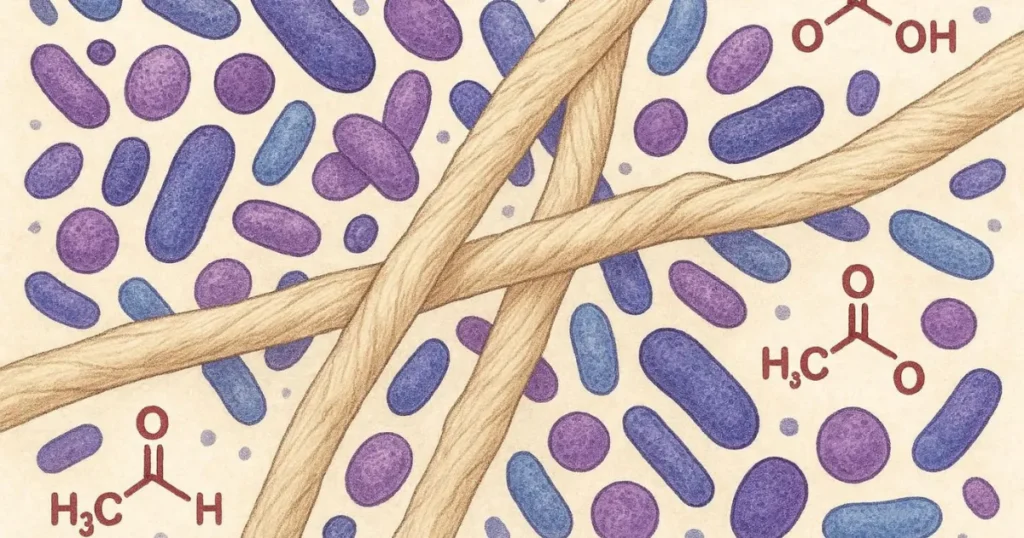
Short-Chain Fatty Acid Production.
When gut bacteria ferment psyllium, they generate short-chain fatty acids (SCFAs) – primarily acetate, propionate, and butyrate. These small molecules travel beyond your gut and influence distant tissues:
Butyrate serves as the preferred fuel for colonocytes (colon lining cells) and has anti-inflammatory properties. It also influences gene expression related to barrier function, potentially reducing intestinal permeability.
Propionate travels to your liver and may influence glucose and lipid metabolism, potentially contributing to psyllium’s metabolic benefits.
Acetate enters systemic circulation and may influence appetite regulation through central nervous system signaling.
Gut Microbiome Modulation.
While psyllium isn’t a potent prebiotic like inulin or fructooligosaccharides, it does influence bacterial populations:
- Increases beneficial bacteria, including certain Lactobacillus and Bifidobacterium species.
- Supports microbial diversity, generally associated with better health outcomes.
- Provides substrate for bacteria that produce anti-inflammatory metabolites.
Immune System Interaction.
The gut houses approximately 70% of your immune system. Changes in gut bacterial populations and their metabolites influence systemic immune function.
SCFAs produced from psyllium fermentation can:
- Modulate inflammatory cytokine production: Reducing pro-inflammatory signaling molecules.
- Support regulatory T cell development: These immune cells prevent excessive inflammation.
- Strengthen gut barrier integrity: Reducing translocation of bacterial components that trigger systemic inflammation.
Research connecting psyllium specifically to immune outcomes remains limited compared to cardiovascular and metabolic data, but the mechanistic pathways are well-established for other fermentable fibers producing similar SCFA profiles.
Inflammatory Marker Reduction.
Chronic low-grade inflammation underlies numerous disease processes – cardiovascular disease, type 2 diabetes, metabolic syndrome, and age-related decline.
Several studies examining psyllium supplementation in people with metabolic syndrome or diabetes have documented reductions in inflammatory markers including:
- C-reactive protein (CRP): A widely-used inflammation marker.
- Interleukin-6 (IL-6): A pro-inflammatory cytokine.
- Tumor necrosis factor-alpha (TNF-α): Another pro-inflammatory signaling molecule.
The anti-inflammatory effects likely result from multiple mechanisms:
- Improved glycemic control reduces inflammation triggered by chronic hyperglycemia.
- SCFA production from bacterial fermentation has direct anti-inflammatory properties.
- Improved gut barrier function reduces endotoxin leakage that drives systemic inflammation.
- Weight reduction, even modest, decreases inflammatory signaling from adipose tissue.
Practical Application for Systemic Health Benefits.
To achieve the cardiovascular, metabolic, and anti-inflammatory benefits documented in clinical research, specific usage patterns matter.
Dosing for Health Outcomes.
Research demonstrating systemic health benefits typically uses:
- Cholesterol reduction: 10-12 grams daily, divided into 2-3 doses.
- Blood sugar management: 5-10 grams daily, taken before meals.
- Blood pressure effects: 10-15 grams daily.
- Weight management support: 6-10 grams daily.
Compare this to constipation relief, which often responds to 5-7 grams daily. Systemic health benefits generally require higher and more sustained intake.
Timing Strategy.
For metabolic benefits, consuming psyllium 15-30 minutes before meals optimizes effects on postprandial glucose and enhances satiety. For cardiovascular benefits related to cholesterol, timing matters less than consistency – the bile acid sequestration effect accumulates with regular daily use.
Form and Quality Considerations.
Having processed psyllium for pharmaceutical applications, I can confirm that purity and particle size influence efficacy for systemic health outcomes.
Purity level:
Higher purity (95-99%) ensures consistent gel formation. Lower-grade psyllium with more seed particles produces less predictable viscosity.
Mesh size:
A finer mesh (85-mesh or higher) creates a more uniform gel. This consistency matters when you’re relying on specific metabolic effects rather than just adding bulk.
Source verification:
Pakistan produces the majority of global pharmaceutical-grade psyllium. At Malik Psyllium, our processing follows specifications developed for clinical research – the same material used in studies documenting cardiovascular and metabolic benefits.
For systemic health applications, prioritize pharmaceutical-grade or USP-grade psyllium over food-grade material. The difference in processing standards translates to more predictable outcomes.
Safety Considerations for Long-Term Use.
When using psyllium husk for health benefits rather than occasional constipation relief, you’re committing to sustained daily intake. Long-term safety considerations become more relevant.
Generally Recognized as Safe.
Psyllium has extensive safety data from both research trials and decades of commercial use. Most people tolerate it well long-term when consumed with adequate fluids.
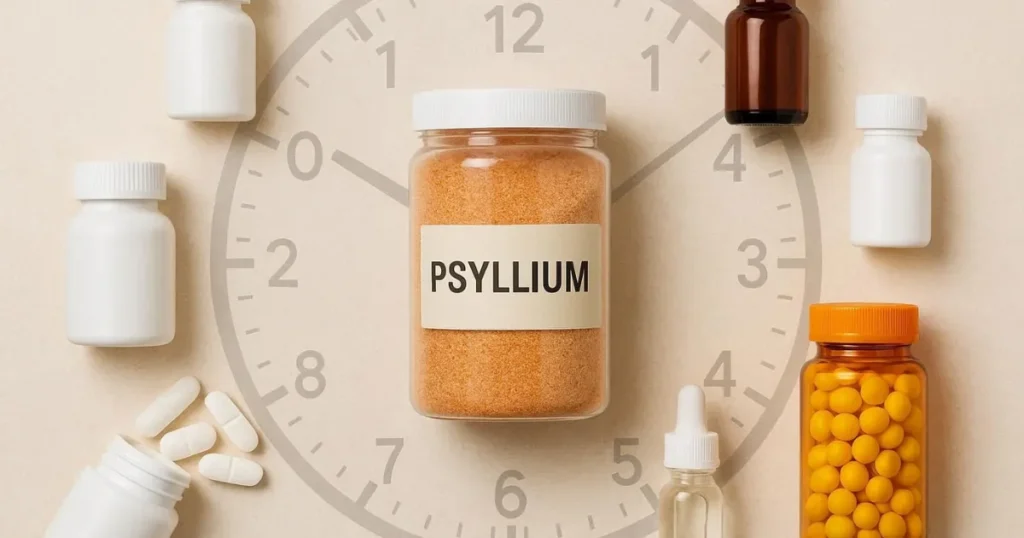
Medication Interactions Require Management.
The same bile acid binding that lowers cholesterol can also trap medications. Critical considerations:
Diabetes medications:
Psyllium’s glucose-lowering effects may enhance the effects of hypoglycemic medications, requiring dose adjustments. Monitor blood sugar closely when starting psyllium if you take insulin or sulfonylureas.
Cardiovascular medications:
Separate psyllium from digoxin, warfarin, and other medications with narrow therapeutic windows by at least 2-3 hours.
Thyroid replacement:
Levothyroxine absorption can be affected. Take thyroid medication at least 4 hours before or after psyllium.
Lithium:
Potential reduced absorption reported. Maintain consistent timing and monitor lithium levels if using both.
Adequate Hydration Remains Critical.
For systemic health benefits requiring 10-15 grams daily, water intake becomes even more important than for lower doses. Insufficient fluid with high psyllium intake risks intestinal obstruction.
Consume at least 240-300ml of water with each dose, plus adequate fluids throughout the day – typically 2-3 liters total for most adults.
Individual Response Variation.
Not everyone responds identically to psyllium. Cholesterol reductions range from minimal to 15-20%, glucose effects vary based on baseline glycemic control, and weight management support depends heavily on adherence and overall dietary patterns.
Clinical monitoring allows you to verify whether psyllium produces meaningful effects for your specific health parameters. Lipid panels, hemoglobin A1C, and fasting glucose measurements before and after 8-12 weeks of consistent use reveal individual response patterns.
Integration into Comprehensive Health Strategies.
Psyllium husk health benefits are real and documented, but they represent adjunctive support rather than primary treatment for serious conditions.
Cardiovascular Disease Prevention.
For people with elevated LDL cholesterol who don’t yet require statin medications, or those seeking to enhance statin effects, psyllium offers evidence-based support. However, it doesn’t replace fundamental interventions – dietary pattern changes, physical activity, smoking cessation, and weight management when indicated.
Think of psyllium as one component of a comprehensive cardiovascular risk reduction approach, not a standalone solution.
Diabetes Management.
Psyllium can improve glycemic control measurably, but it doesn’t eliminate the need for medication in people with established diabetes. It works best as adjunctive therapy supporting pharmaceutical interventions and lifestyle modifications.
For people with prediabetes seeking to prevent progression to type 2 diabetes, psyllium combined with weight management and physical activity may help delay or prevent that progression.
Metabolic Syndrome Intervention.
Because psyllium influences multiple components of metabolic syndrome simultaneously – cholesterol, blood pressure, glucose, and potentially waist circumference – it fits naturally into metabolic syndrome management protocols.
However, the modest effects on each individual parameter mean that psyllium enhances, but doesn’t replace, lifestyle interventions that remain the foundation of metabolic syndrome treatment.
How much psyllium husk do I need for cardiovascular benefits?
Research on cholesterol reduction typically uses 10-12 grams daily, divided into 2-3 doses. This is higher than the 5-7 grams often recommended for constipation relief. Start lower and gradually increase over 1-2 weeks to minimize digestive side effects while reaching therapeutic dosing.
Can psyllium replace cholesterol-lowering medications?
No. While psyllium produces measurable LDL cholesterol reductions (7-10% on average), this doesn’t approach the 30-50% reductions achieved with statin medications. Psyllium works best as adjunctive therapy – either for people who don’t yet require statins or to enhance statin effects in those already taking them.
How long before I see cardiovascular or metabolic benefits?
Cholesterol reductions typically become measurable within 4-6 weeks of consistent daily use. Blood sugar improvements may appear sooner, within 2-3 weeks. For optimal results, maintain consistent intake for at least 8-12 weeks before evaluating effectiveness through lab testing.
Does psyllium help with weight loss?
Psyllium provides modest weight management support through enhanced satiety, with research showing average reductions of 0.8-2.2 kg over 12-24 weeks. It’s not comparable to pharmaceutical weight loss interventions or bariatric surgery, but can help make calorie restriction more tolerable.
What type of psyllium is best for systemic health benefits?
Pharmaceutical-grade or USP-grade psyllium with 95-99% purity and fine mesh size (85-mesh or higher) ensures consistent gel formation. This consistency matters more for cardiovascular and metabolic applications than for simple constipation relief, where lower-grade material may suffice.
Can I take psyllium if I have diabetes?
Psyllium can benefit people with diabetes through improved glycemic control, but coordination with your healthcare provider is essential. Psyllium may enhance the glucose-lowering effects of diabetes medications, potentially requiring dose adjustments. Monitor blood sugar closely when starting psyllium alongside diabetes medications.
Are there side effects with higher doses for health benefits?
Gas, bloating, and initial digestive changes remain the most common effects even at higher doses (10-15 grams daily). These typically diminish within 1-2 weeks. Adequate hydration becomes even more critical at higher doses to prevent obstruction risk. Always separate psyllium from medications by 2-4 hours.
How does psyllium compare to other fiber supplements for health benefits?
Psyllium’s unique gel-forming property and resistance to rapid fermentation distinguish it from wheat bran, methylcellulose, or inulin. The specific cardiovascular and metabolic benefits documented for psyllium don’t necessarily apply to all fiber types – different fibers have different mechanisms and effects.
Conclusion.
Psyllium husk health benefits extend considerably beyond its traditional use for constipation relief. The fiber’s unique gel-forming properties create a cascade of metabolic and cardiovascular effects supported by substantial clinical evidence.
The documented systemic benefits – LDL cholesterol reduction of 7-10%, blood pressure decreases of 2-4 mm Hg, improved glycemic control with A1c reductions of 0.5-0.9%, and modest weight management support – represent clinically meaningful improvements when sustained over time. These effects accumulate to reduce cardiovascular risk and improve metabolic health, extending far beyond digestive function.
However, realistic expectations matter. Psyllium isn’t a pharmaceutical replacement or a shortcut around fundamental health practices. It functions best as a scientifically supported adjunctive therapy, enhancing the effectiveness of dietary improvements, physical activity, and medical management when required.
For people committed to evidence-based health optimization, pharmaceutical-grade psyllium at appropriate dosing (typically 10-12 grams daily for systemic benefits) represents a low-cost, well-tolerated intervention with legitimate health impact across multiple body systems. Quality matters – higher purity grades ensure consistent gel formation, which drives these therapeutic effects.
As with any supplement targeting specific health outcomes, medical supervision enables proper integration with existing treatments, medication adjustments when needed, and monitoring to verify the individual response.
Medical Disclaimer:
This article provides educational information about psyllium husk’s documented health effects and is not medical advice. Psyllium may interact with medications and affect existing health conditions. Consult a healthcare provider before using psyllium for cardiovascular, metabolic, or other health benefits, especially if you have diagnosed conditions or take prescription medications.

Isabgol Ke Fayde – Psyllium Husk Ke Poori Science-Based Rahnumayi – 2026
Isabgol ke fayde jaanna aaj ke daur mein zyada zaroori
Isabgol Benefits in Hindi | Psyllium Husk Ke Fayde, Sahi Upyog Aur Savdhaniyan – 2026
Agar aap isabgol benefits in hindi mein samajhna chahte hain,