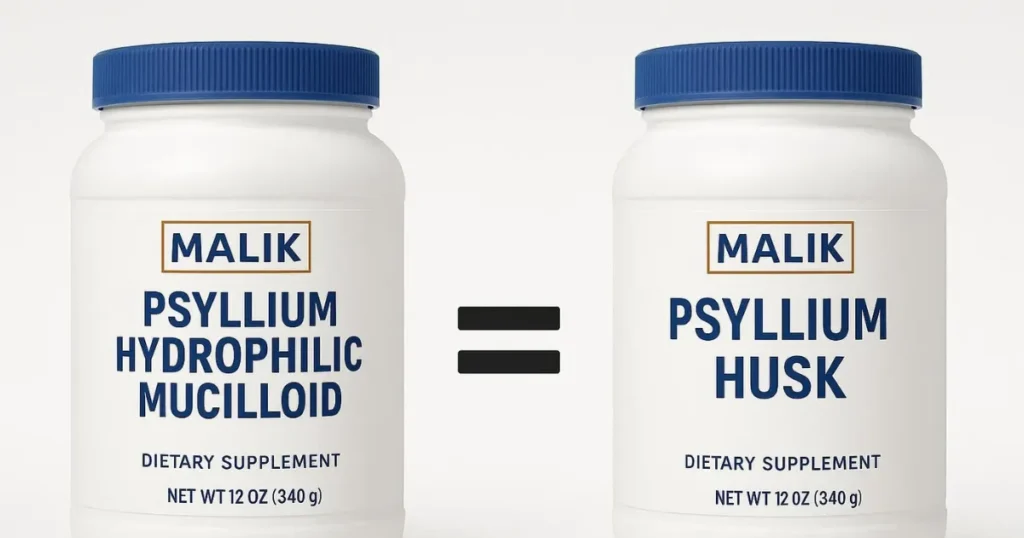
Pharmacy shelves and supplement labels often create confusion with technical terminology. When you encounter “psyllium hydrophilic mucilloid” on one product and “psyllium husk” on another, determining whether these terms describe the same substance becomes important for making informed purchasing decisions. The terminology differences matter for understanding what you’re actually consuming and how it works.
The question “Is psyllium hydrophilic mucilloid the same as psyllium husk?” appears frequently in health forums, pharmacy consultations, and product reviews. While the terms relate closely, subtle distinctions exist that affect product formulation, regulatory classification, and sometimes therapeutic applications. Understanding these differences helps you navigate product labels confidently and choose the right psyllium supplement for your specific needs.
This comprehensive guide clarifies the relationship between these terms, explores what each designation means, examines how they’re used in different contexts, and explains the practical implications for consumers. You’ll discover why both terms exist, whether they’re truly interchangeable, what quality factors matter regardless of terminology, and how to evaluate products based on actual composition rather than just marketing language. Let’s demystify these technical terms and help you make better-informed decisions about psyllium supplementation.
Understanding Psyllium Husk: The Basic Form
Psyllium husk represents the outer coating of Plantago ovata seeds. This husk contains the fiber-rich component harvested for therapeutic use. When we discuss psyllium husk, we’re referring to the natural, minimally processed seed coating that contains both soluble and insoluble fiber.
The composition includes approximately 70% soluble fiber and 30% insoluble fiber. This natural ratio delivers the digestive benefits, cholesterol reduction, and blood sugar moderation that research validates. Pakistani psyllium husk achieves 85-90% purity levels – the highest globally due to ideal growing conditions.
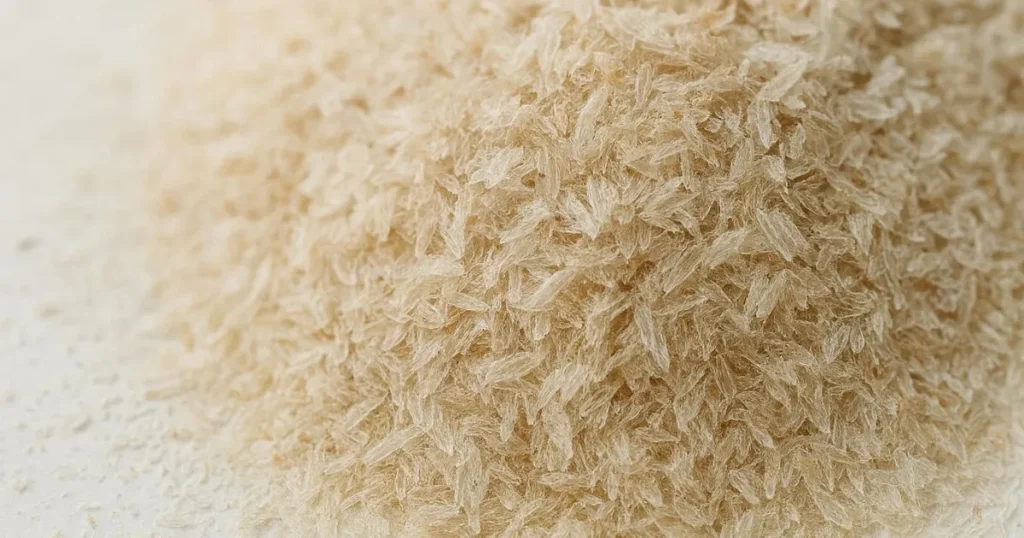
Psyllium husk appears as light blonde to tan powder or flakes. The particle size varies depending on processing, but the fundamental substance remains the seed coat separated from the inner seed kernel. This basic form serves as the foundation for understanding whether psyllium hydrophilic mucilloid is the same as psyllium husk.
Defining Hydrophilic Mucilloid: The Technical Term
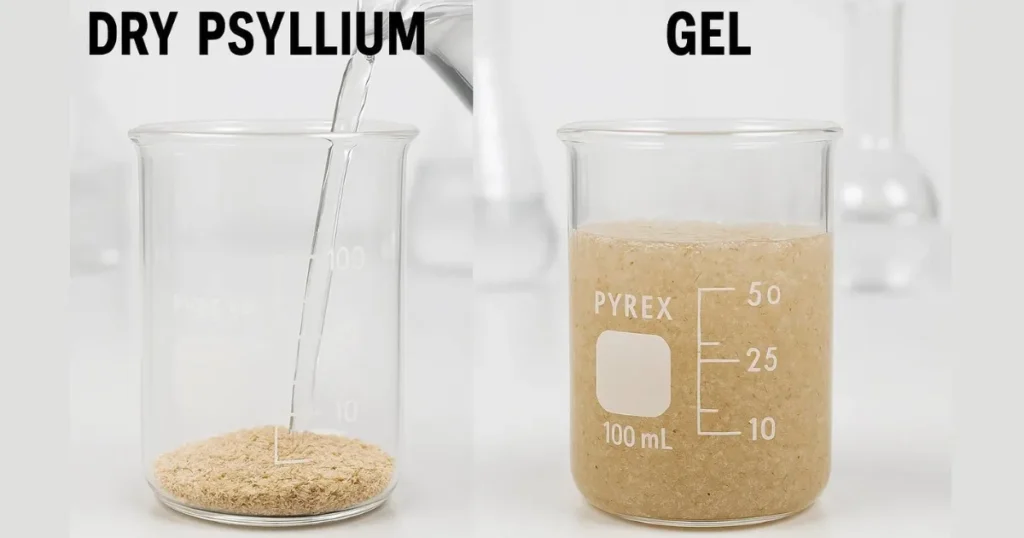
“Hydrophilic mucilloid” describes a substance that attracts water (hydrophilic) and forms a gel-like consistency (mucilloid). This pharmaceutical terminology emphasizes the mechanism of action rather than the source material. Let me explain why this distinction matters.
The term “mucilloid” specifically refers to substances that swell when hydrated, creating viscous, gel-like solutions. “Hydrophilic” indicates strong water attraction. Together, “hydrophilic mucilloid” describes how psyllium functions rather than what it is botanically.
When you see “psyllium hydrophilic mucilloid” on pharmaceutical labels, it typically indicates a standardized, pharmaceutical-grade preparation. The terminology appears in medical contexts, prescriptions, and regulatory documentation, where precise functional description matters more than botanical origin.
So, is psyllium hydrophilic mucilloid the same as psyllium husk? Functionally, they derive from the same source, but the terminology signals different processing standards and regulatory classifications.
The Relationship between the Two Terms
The answer to whether psyllium hydrophilic mucilloid is the same as psyllium husk requires a nuanced understanding. They originate from identical botanical sources – Plantago ovata seed husks – but represent different standardization and classification approaches.
Source Material: Identical
Both terms describe products derived exclusively from psyllium seed husks. No other ingredients or sources are involved in pure formulations. The Plantago ovata plant provides the raw material for both designations.
Processing Standards: Different
“Psyllium husk” often indicates more natural, less standardized products. You might find varying particle sizes, colors, and expansion ratios depending on crop quality and processing methods. “Psyllium hydrophilic mucilloid” typically undergoes more rigorous standardization, ensuring consistent particle size, purity levels, and gel-forming capacity.
At Malik Psyllium, we produce both designations from the same premium Pakistani crop, adjusting processing protocols to meet different regulatory and market requirements.
Regulatory Classification: Different
Pharmaceutical contexts prefer “psyllium hydrophilic mucilloid” terminology. This designation appears in official pharmacopeias, prescription products, and medical literature. “Psyllium husk” dominates dietary supplement, food, and natural product markets.
The regulatory distinction explains why medical professionals might prescribe “psyllium hydrophilic mucilloid” while health food stores sell “psyllium husk” – even when the underlying substance remains essentially identical.
Practical Usage: Essentially Identical
For consumers wondering is psyllium hydrophilic mucilloid the same as psyllium husk functionally, the answer is yes. Both products deliver the same therapeutic benefits: digestive regulation, cholesterol reduction, blood sugar moderation, and satiety enhancement. The mechanisms work identically because the active component – soluble fiber that forms mucilage – remains the same.
Why Two Different Names Exist
Understanding why both terms persist helps clarify whether psyllium hydrophilic mucilloid is the same as psyllium husk in practical terms.
Historical Pharmaceutical Conventions
Pharmaceutical terminology traditionally emphasizes mechanism over source. Describing psyllium as “hydrophilic mucilloid” follows this convention, clearly communicating how the substance works to medical professionals who might be unfamiliar with botanical names.
This nomenclature arose when psyllium first entered pharmaceutical formularies decades ago. The term persisted in medical contexts even as consumer products adopted simpler “psyllium husk” labeling.
Marketing and Consumer Understanding
“Psyllium husk” provides an intuitive understanding for general consumers. The term directly references the plant source without requiring pharmaceutical vocabulary knowledge. Natural product markets favor this accessible terminology.
Consumer research shows people find “psyllium husk” more approachable and natural-sounding than technical pharmaceutical language. Marketing departments recognized this preference, leading to widespread “psyllium husk” labeling in retail contexts.
Regulatory Requirements
Different regulatory bodies use different terminology. The United States Pharmacopeia (USP) standardizes “psyllium hydrophilic mucilloid” for pharmaceutical applications. Dietary supplement regulations often use “psyllium husk” or “psyllium seed husk.”
Products meeting pharmaceutical standards typically use the hydrophilic mucilloid designation to signal compliance with rigorous specifications. This regulatory distinction matters for manufacturers even when consumers might view the terms as interchangeable.
Quality Factors That Matter More Than Terminology
Whether labeled as psyllium hydrophilic mucilloid or psyllium husk, certain quality indicators prove more important than nomenclature when evaluating products.
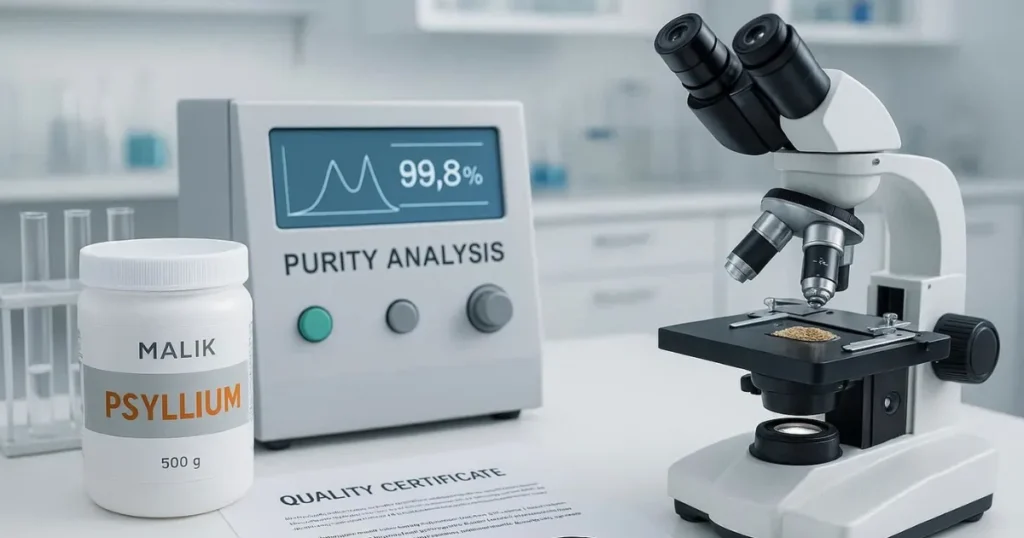
Purity Levels
Premium psyllium should achieve 85-90% purity regardless of terminology. This indicates minimal contamination with seed fragments, plant debris, or other materials. Pakistani psyllium consistently achieves these superior purity levels compared to other sources.
Lower purity products (70-80%) contain more non-fiber material that doesn’t contribute to therapeutic benefits. Purity matters more than whether the label says hydrophilic mucilloid or husk when determining actual effectiveness.
Particle Size Consistency
Standardized particle size ensures predictable gel formation and consistent therapeutic effects. Whether asking is psyllium hydrophilic mucilloid the same as psyllium husk, focus instead on whether particle size specifications appear on the label.
Inconsistent particle sizes create unpredictable hydration characteristics – some portions expand properly while others don’t. This variability affects digestive comfort and therapeutic reliability.
Mucilage Content
The mucilage percentage determines gel-forming capacity and therapeutic potency. Premium psyllium should contain a high mucilage concentration regardless of terminology. Pakistani growing conditions produce exceptional mucilage content that exceeds other regions.
Laboratory testing quantifies mucilage content objectively. Products meeting pharmaceutical hydrophilic mucilloid standards undergo this testing routinely, while some psyllium husk products might not. However, premium husk products from reputable suppliers also verify mucilage content.
Source Origin
Pakistani psyllium demonstrates superior quality compared to other sources due to climate, soil composition, and traditional cultivation methods. Whether labeled hydrophilic mucilloid or husk, Pakistani origin indicates a higher likelihood of premium quality.
Indian psyllium, while available, typically shows lower purity and mucilage content. Source origin impacts quality more significantly than terminology choice.
Medical vs. Dietary Supplement Contexts
The context determines which term you’ll encounter, even though the question remains: is psyllium hydrophilic mucilloid the same as psyllium husk fundamentally?
Prescription Products
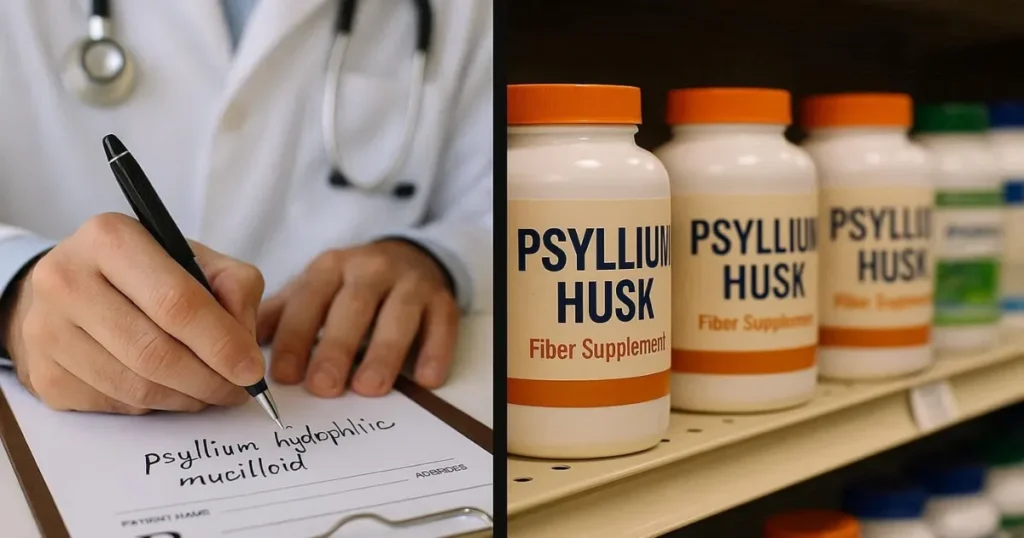
Doctors prescribe “psyllium hydrophilic mucilloid” when recommending pharmaceutical-grade fiber supplementation. Prescription products meet strict manufacturing standards, undergo quality testing, and carry pharmaceutical labeling requirements.
These products often cost more than dietary supplements but provide guaranteed consistency and purity. The pharmaceutical designation ensures every batch meets identical specifications.
Over-the-Counter Medical Products
OTC laxatives and fiber supplements often use “psyllium hydrophilic mucilloid” terminology to signal medical-grade quality even without prescription requirements. This labeling suggests compliance with pharmaceutical standards rather than just dietary supplement regulations.
Brand-name laxatives frequently choose this terminology to emphasize medical credibility and differentiate themselves from generic dietary supplements.
Natural Health Supplements
Health food stores, online retailers, and natural product companies predominantly use “psyllium husk” terminology. This reflects the dietary supplement regulatory framework and consumer preference for natural-sounding descriptions.
These products range from pharmaceutical-grade quality to less standardized preparations. The terminology alone doesn’t indicate quality – you must evaluate purity, source, and manufacturer reputation independently.
Bulk and Food-Grade Products
Bulk psyllium sold for cooking, baking, or homemade remedies almost exclusively uses “psyllium husk” terminology. These products target consumers seeking economical options for regular use in food preparation.
Food-grade standards differ from pharmaceutical specifications, though quality can still be excellent depending on the supplier. The husk terminology fits the culinary application context better than pharmaceutical language.
Practical Implications for Consumers
Understanding whether psyllium hydrophilic mucilloid is the same as psyllium husk helps you make better purchasing decisions based on actual needs rather than terminology confusion.
Therapeutic Equivalence
For digestive health, cholesterol management, blood sugar control, and weight management, products labeled either way deliver identical benefits when quality is equivalent. The therapeutic mechanism – soluble fiber forming gel in your digestive tract – works the same regardless of nomenclature.
Don’t assume “hydrophilic mucilloid” automatically means superior quality or that “husk” indicates inferior product. Evaluate each product based on purity, source, and manufacturer reputation rather than terminology alone.
Price Considerations
Products labeled “psyllium hydrophilic mucilloid” often cost more due to pharmaceutical processing, testing, and quality assurance protocols. However, this premium doesn’t always translate to noticeably better results for typical users.
High-quality “psyllium husk” from reputable suppliers like Malik Psyllium often delivers equivalent therapeutic benefits at a lower cost. The bulk of the price difference reflects regulatory compliance costs rather than actual product superiority.
Insurance Coverage
Prescription “psyllium hydrophilic mucilloid” may be covered by health insurance when prescribed for specific medical conditions. Dietary supplement “psyllium husk” typically isn’t covered, even when used for identical purposes.
If insurance coverage matters, ask your doctor specifically for a prescription using the pharmaceutical terminology. The prescription designation often determines coverage more than actual product composition.
Dosage Precision
Pharmaceutical “psyllium hydrophilic mucilloid” products provide precise dosing with measured packets or premeasured servings. This convenience supports consistent supplementation for those preferring not to measure powder themselves.
Bulk “psyllium husk” requires self-measuring but offers flexibility in adjusting doses to individual needs. Neither approach is inherently better – choose based on your preference for convenience versus flexibility.
Common Misconceptions about the Terms
Several myths surround the question of whether psyllium hydrophilic mucilloid is the same as psyllium husk. Let me address the most prevalent misunderstandings.
Misconception: Hydrophilic Mucilloid Is Synthetic
Some consumers believe “hydrophilic mucilloid” indicates synthetic or chemically modified psyllium. This is false. Both terms describe natural plant-derived fiber. The pharmaceutical terminology simply emphasizes functional characteristics rather than botanical origin.
No chemical modification occurs. The substance remains pure psyllium seed husk fiber in both cases.
Misconception: Different Therapeutic Applications
Some sources suggest psyllium hydrophilic mucilloid treats medical conditions, while psyllium husk serves only for general wellness. This distinction is artificial. Both forms address identical health applications with equal effectiveness when quality is comparable.
Research validating psyllium benefits doesn’t differentiate between these terminologies. The therapeutic mechanisms remain constant regardless of labeling convention.
Misconception: One Contains Additives
Neither term inherently indicates the presence or absence of additives. Both “psyllium hydrophilic mucilloid” and “psyllium husk” can be pure or formulated with flavors, sweeteners, or other ingredients. Always check the complete ingredient list rather than assuming based on terminology.
Pure products of either designation contain only psyllium. Flavored or formulated products of either type list additional ingredients explicitly.
Misconception: Different Plant Sources
All psyllium products derive from Plantago ovata seeds. The terminology difference doesn’t indicate different plant varieties or species. Whether labeled hydrophilic mucilloid or husk, the botanical source remains identical.
Quality variations stem from growing region, cultivation practices, and processing methods – not from different plant sources.
How to Choose Between Products
When faced with products labeled differently, these criteria help you select the best option regardless of whether psyllium hydrophilic mucilloid is the same as psyllium husk terminologically.
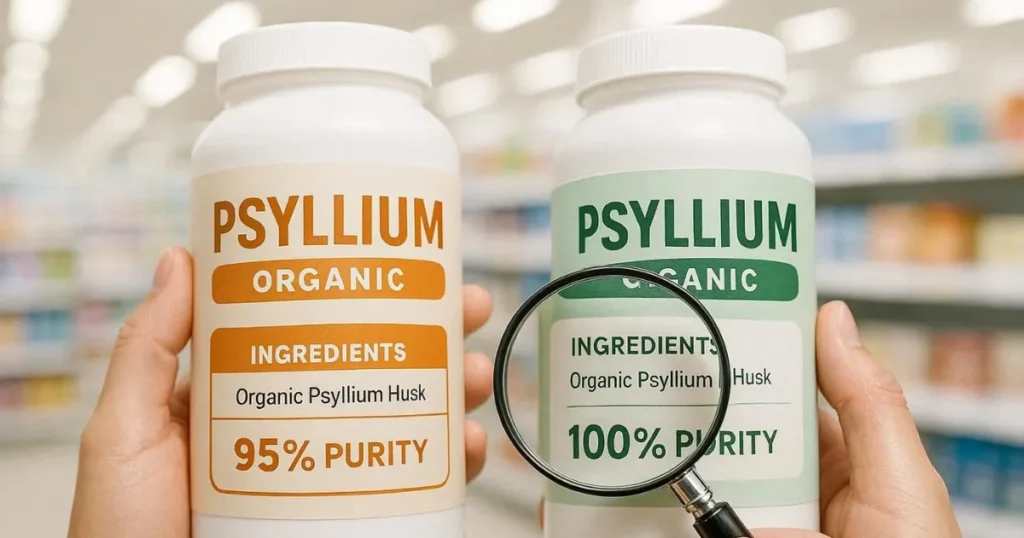
Verify Purity Percentage
Look for 85-90% purity minimum. This specification appears on quality products regardless of terminology. Lower purity means less fiber and more inactive material per serving.
Premium Pakistani psyllium consistently achieves these superior purity levels. Source verification provides better quality assurance than terminology alone.
Check for Third-Party Testing
Quality manufacturers conduct independent laboratory testing verifying purity, mucilage content, and the absence of contamination. Certifications from recognized testing laboratories indicate commitment to quality control.
This verification matters more than whether the label says hydrophilic mucilloid or husk. Both designations should back quality claims with actual testing data.
Evaluate Manufacturer Reputation
Established manufacturers with transparent sourcing, processing protocols, and quality control provide reliability regardless of the terminology used. Research the company’s history, manufacturing standards, and consumer reviews.
At Malik Psyllium, we produce both pharmaceutical-grade and dietary supplement-grade psyllium products from the same premium Pakistani crop, adjusting processing to meet different regulatory standards while maintaining consistent quality.
Consider Your Specific Needs
If you need insurance coverage or have a prescription, choose products labeled “psyllium hydrophilic mucilloid” meeting pharmaceutical standards. For general wellness and cost-effectiveness, high-quality “psyllium husk” serves equally well.
Your usage context – medical treatment versus preventive wellness – might determine which terminology proves more practical even when the underlying substance remains essentially identical.
Regulatory Standards and Certifications
Understanding regulatory frameworks clarifies why both terms persist and whether psyllium hydrophilic mucilloid is the same as psyllium husk from a compliance perspective.
USP Standards
The United States Pharmacopeia establishes standards for “psyllium hydrophilic mucilloid” specifying purity, particle size, mucilage content, and contamination limits. Products meeting these specifications can claim USP compliance.
These rigorous standards ensure batch-to-batch consistency and therapeutic reliability. Pharmaceutical products typically comply with USP specifications regardless of whether consumers understand the technical terminology.
Dietary Supplement Regulations
“Psyllium husk” dietary supplements follow FDA Good Manufacturing Practices but aren’t held to identical standards as pharmaceutical products. This regulatory difference doesn’t necessarily indicate lower quality – many supplement manufacturers exceed minimum requirements voluntarily.
Quality supplement companies implement pharmaceutical-grade quality control even for products labeled as dietary supplements. The regulatory classification affects mandatory standards but doesn’t limit voluntary quality commitment.
International Standards
Different countries use different terminology and standards. European Pharmacopoeia, British Pharmacopoeia, and other international references may use various designations. This global variation further demonstrates that terminology reflects regulatory convention more than actual product differences.
When evaluating imported products, understanding the relevant pharmacopoeia standards matters more than parsing terminology variations.
The Role of Processing Methods
How psyllium is processed affects quality more than whether the final product is labeled as psyllium hydrophilic mucilloid or psyllium husk.
Milling and Particle Size Control
Finely milled psyllium creates a smooth texture and predictable gel formation. Coarser milling produces a grittier texture but identical therapeutic effects. Pharmaceutical-grade processing typically achieves a more uniform particle size distribution.
This processing precision explains some quality differences between products, though excellent particle size control can occur with either terminology designation.
Cleaning and Purification
Removing seed fragments, plant debris, and contamination determines final purity. Multi-stage cleaning and sieving processes elevate purity to pharmaceutical levels. Less rigorous processing leaves more impurities.
Premium manufacturers implement thorough purification regardless of whether the final product carries pharmaceutical or dietary supplement labeling. Processing investment matters more than terminology choice.
Quality Testing Protocols
Batch testing for mucilage content, expansion ratio, microbiological contamination, and heavy metals ensures consistent quality. Pharmaceutical products undergo mandatory testing. Dietary supplements may or may not, depending on manufacturer standards.
Choose products from manufacturers who voluntarily test even dietary supplements to pharmaceutical standards. This quality commitment transcends the hydrophilic mucilloid versus husk terminology debate.
Is Psyllium Hydrophilic Mucilloid the Same as Psyllium Husk?
Yes, psyllium hydrophilic mucilloid is the same as psyllium husk in terms of botanical source and therapeutic function. Both derive from Plantago ovata seed coatings. The terminology differs due to regulatory contexts -” hydrophilic mucilloid” appears in pharmaceutical settings while “husk” dominates dietary supplements. The active ingredient remains identical.
Why Do Some Products Use Hydrophilic Mucilloid Instead of Husk?
Products use “psyllium hydrophilic mucilloid” terminology to signal pharmaceutical-grade quality meeting pharmacopeial standards. This designation appears in medical contexts, prescriptions, and products emphasizing rigorous testing. The term describes the mechanism (water-attracting gel-former) while “psyllium husk” describes the source. Both refer to the same substance.
Is Hydrophilic Mucilloid Better Quality Than Regular Psyllium Husk?
Not necessarily. While “psyllium hydrophilic mucilloid” often indicates pharmaceutical processing standards, high-quality “psyllium husk” from reputable suppliers can be equally pure and effective. Quality depends on purity percentage, source origin, and testing rather than terminology. Premium Pakistani psyllium husk often exceeds pharmaceutical specifications.
Can I Substitute Psyllium Husk for Hydrophilic Mucilloid in Prescriptions?
Consult yourDoes Psyllium Hydrophilic Mucilloid Contain Additives? healthcare provider before substituting. While psyllium hydrophilic mucilloid is the same as psyllium husk therapeutically, prescriptions specify pharmaceutical-grade products meeting exact standards. High-quality dietary supplement psyllium husk works identically but may not satisfy insurance requirements or prescription specifications. Verify equivalence with your doctor.
Does Psyllium Hydrophilic Mucilloid Contain Additives?
Not inherently. “Psyllium hydrophilic mucilloid” can be pure or formulated with flavors and sweeteners, just like “psyllium husk” products. The terminology doesn’t indicate additive presence or absence. Always check the complete ingredient list. Pure products of either designation contain only psyllium seed husk fiber.
Which Term Is Correct: Mucilloid or Husk?
Both terms correctly describe psyllium products, but serve different contexts. “Psyllium husk” accurately names the botanical source. “Psyllium hydrophilic mucilloid” accurately describes the pharmaceutical function. Neither is incorrect – they reflect different naming conventions for the same substance. Use whichever terminology appears on products meeting your quality and regulatory requirements.
Are There Different Types of Psyllium Hydrophilic Mucilloid?
Psyllium hydrophilic mucilloid refers specifically to seed husk fiber, though products vary in purity, particle size, and formulation. Some include flavoring or sweeteners, while others remain pure. Quality variations exist based on source region and processing. Pakistani psyllium provides superior purity compared to other sources regardless of terminology used.
Will Insurance Cover Psyllium Husk or Only Hydrophilic Mucilloid?
Insurance typically covers products prescribed using the pharmaceutical terminology “psyllium hydrophilic mucilloid” for specific medical conditions. Dietary supplement “psyllium husk” usually isn’t covered even when identical therapeutically. If coverage matters, request prescriptions specifically for pharmaceutical-grade products. The terminology and prescription status often determine coverage more than actual product composition.
Conclusion
So, is psyllium hydrophilic mucilloid the same as psyllium husk? The answer is both yes and no, depending on your perspective. Botanically and functionally, they describe identical substance – the fiber-rich seed husk of Plantago ovata that forms a therapeutic gel when hydrated. The therapeutic benefits, mechanisms of action, and health applications remain constant regardless of terminology.
However, the terms signal different regulatory classifications, processing standards, and market contexts. “Psyllium hydrophilic mucilloid” typically indicates pharmaceutical-grade products meeting rigorous USP or pharmacopeial standards with precise specifications and mandatory testing. “Psyllium husk” dominates dietary supplement and natural product markets with more variable quality standards, though premium products like those from Malik Psyllium exceed pharmaceutical specifications regardless of labeling terminology.
For consumers, the practical takeaway is clear: don’t choose products based on terminology alone. Instead, evaluate purity levels (aim for 85-90%), verify Pakistani source for superior quality, check for third-party testing, and assess manufacturer reputation. Whether labeled as hydrophilic mucilloid or husk, these quality factors determine actual therapeutic value far more reliably than nomenclature conventions.
The persistence of both terms reflects pharmaceutical history, regulatory frameworks, and marketing preferences rather than meaningful product differences. Understanding this helps you navigate labels confidently, make cost-effective purchasing decisions, and access the proven health benefits that psyllium offers – regardless of what terminology appears on the package. Focus on quality indicators that matter: purity, source, processing standards, and testing verification. These factors ensure you receive therapeutic-grade psyllium capable of delivering the digestive, cardiovascular, and metabolic benefits that research validates, whether the label reads “psyllium hydrophilic mucilloid” or simply “psyllium husk.”

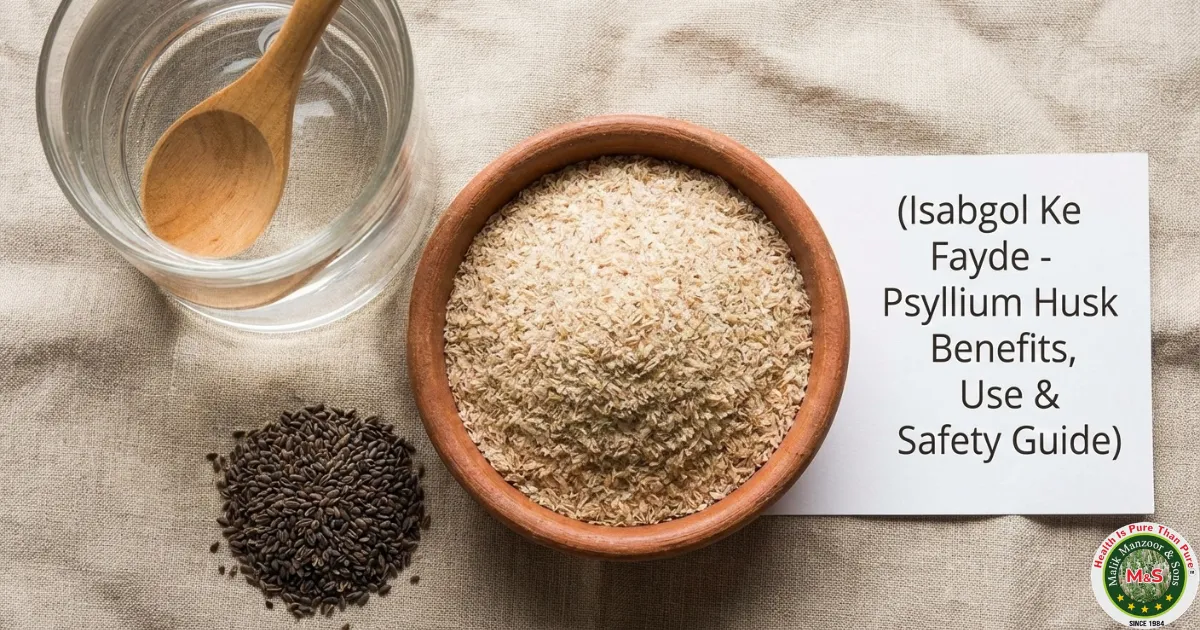
Isabgol Ke Fayde – Psyllium Husk Ke Poori Science-Based Rahnumayi – 2026
Isabgol ke fayde jaanna aaj ke daur mein zyada zaroori
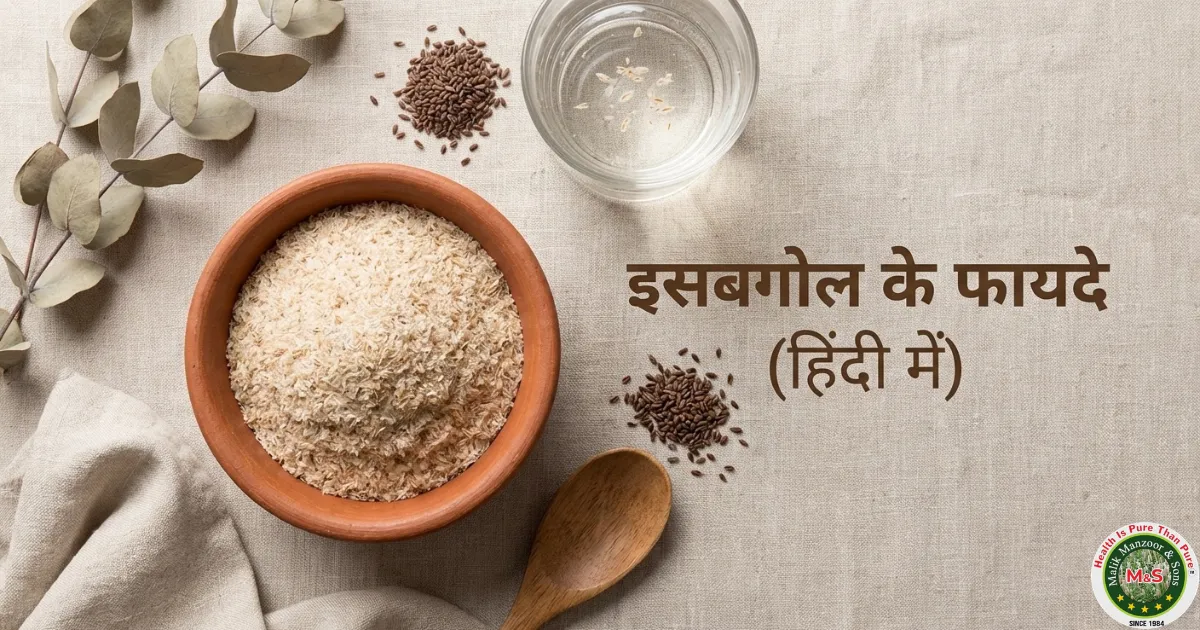
Isabgol Benefits in Hindi | Psyllium Husk Ke Fayde, Sahi Upyog Aur Savdhaniyan – 2026
Agar aap isabgol benefits in hindi mein samajhna chahte hain,