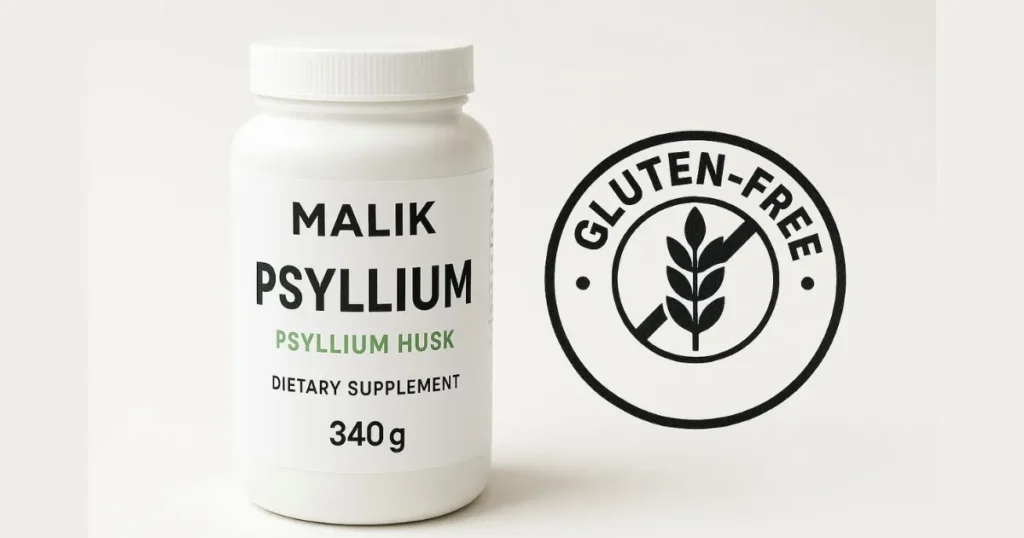
If you’re managing celiac disease or gluten sensitivity, the question “is psyllium husk gluten free” is critically important. The short answer? Pure psyllium husk is naturally gluten free – but cross-contamination during processing, packaging, or storage can introduce gluten into products that should be safe.
This distinction matters tremendously. Even trace amounts of gluten trigger immune responses in people with celiac disease, causing intestinal damage, uncomfortable symptoms, and long-term health complications. You can’t afford to trust vague claims or assume all psyllium products are created equal.
The botanical name for psyllium is Plantago ovata, also called ispaghula or isabgol in South Asian countries. When people ask “is ispaghula husk gluten free,” they’re asking about the same plant. The husk itself contains zero gluten because it comes from a plant completely unrelated to wheat, barley, rye, or other gluten-containing grains.
However, cross-contamination represents a real risk. Some manufacturers process psyllium in facilities that also handle wheat products. Others use packaging materials exposed to gluten. Storage conditions can introduce contamination. Without proper protocols and third-party certification, even naturally gluten-free products can become unsafe.
This comprehensive guide provides everything you need to know about psyllium husk gluten-free status. You’ll learn why pure psyllium is naturally safe, where contamination risks occur, how to verify products are truly gluten-free, which certifications matter, and how to use psyllium safely in celiac-friendly and gluten-free diets. Let’s ensure your fiber supplementation supports your health without compromising your careful gluten avoidance.
Understanding Gluten and Why It Matters
Before diving into psyllium’s gluten-free status, let’s clarify what gluten is and why strict avoidance is essential for some people.
What Is Gluten?
Gluten is a protein composite found in certain grains:
Primary gluten sources:
- Wheat (including varieties like spelt, kamut, farro).
- Barley.
- Rye.
- Triticale (wheat-rye hybrid).
Foods commonly containing gluten:
- Bread, pasta, cereals.
- Baked goods and pastries.
- Beer and malt beverages.
- Sauces, gravies, and processed foods.
- Many supplements and medications (as fillers).
Gluten provides elasticity and structure in baked goods, which is why gluten-free baking requires alternative binding agents.
Celiac Disease vs. Gluten Sensitivity.
Celiac disease is an autoimmune condition where gluten triggers the immune system to attack the small intestine. Even tiny amounts (20 parts per million or less) cause damage. Symptoms include digestive issues, nutrient malabsorption, fatigue, skin problems, and neurological effects.
Non-celiac gluten sensitivity causes similar symptoms without the autoimmune intestinal damage. People with this condition also benefit from gluten avoidance, though tolerance thresholds may vary.
Both conditions require strict gluten-free diets, making verification of supplement ingredients absolutely critical.
Is Psyllium Husk Gluten Free? The Botanical Answer.
Let me explain why pure psyllium husk is inherently gluten-free from a botanical perspective.
Psyllium’s Plant Family.
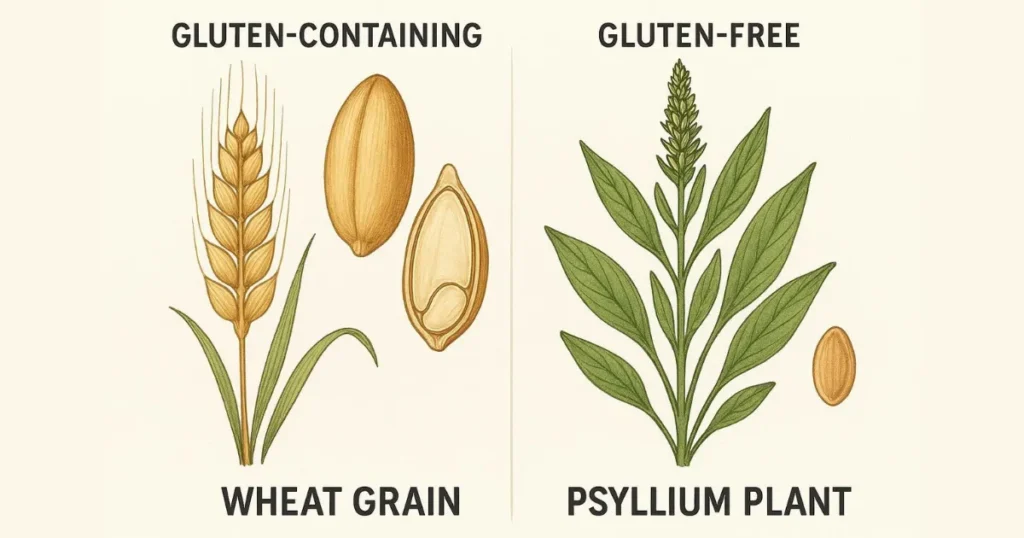
Psyllium (Plantago ovata) belongs to the Plantaginaceae family – plantains. This is completely separate from:
- Poaceae family (which includes wheat, barley, rye).
- Any grain that contains gluten proteins.
Because psyllium and gluten-containing grains aren’t even distantly related botanically, pure psyllium husk contains absolutely zero gluten naturally.
What the Husk Actually Is.
The psyllium husk is the outer coating of tiny psyllium seeds. It’s:
- 70% soluble fiber (primarily mucilage).
- No wheat, barley, or rye components.
- No gluten proteins whatsoever.
- Completely plant-based fiber from a non-grain source.
Think of it this way: asking if psyllium contains gluten is like asking if an apple contains gluten. The plant itself simply doesn’t produce these proteins.
Why “Ispaghula Husk Gluten Free” Means the Same Thing.
In South Asian countries, particularly Pakistan and India, where most psyllium is grown, it’s commonly called ispaghula or isabgol. When someone asks “is ispaghula husk gluten free,” they’re asking about the exact same product – just using its regional name.
The answer remains identical: pure ispaghula husk is naturally gluten-free because it comes from Plantago ovata, which produces no gluten proteins.
Cross-Contamination: The Real Gluten Risk.
While pure psyllium is naturally gluten-free, cross-contamination during cultivation, processing, or packaging can introduce gluten. Understanding these risks helps you make informed choices.
Agricultural Cross-Contamination.
Growing conditions:
Psyllium is sometimes grown in rotation with wheat or other grains. If fields previously grew wheat, residual grain seeds might mix with psyllium during harvest.
Shared equipment:
Harvesting and threshing machinery used for multiple crops can transfer grain particles between harvests if not properly cleaned.
Storage facilities:
Grain elevators or storage bins used for both psyllium and wheat can introduce cross-contamination.
Premium growers in Pakistan’s Sindh province often dedicate fields exclusively to psyllium cultivation, reducing agricultural cross-contamination risks significantly.
Processing Plant Contamination.
Shared facilities:
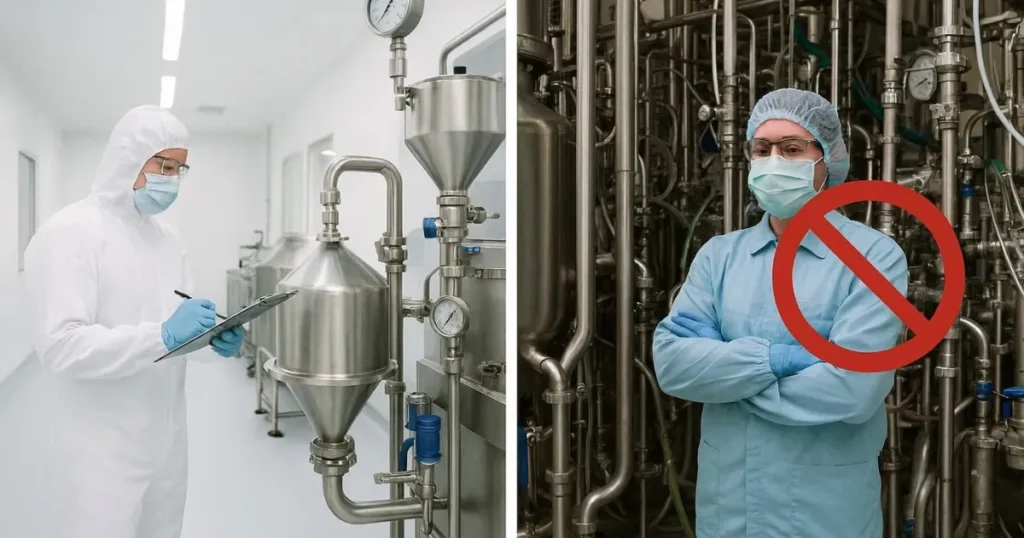
The biggest risk occurs when manufacturers process psyllium in the same facility as wheat-based products. Even with cleaning protocols, trace gluten can persist.
Shared equipment:
Grinding, sifting, or packaging machinery used for multiple products can transfer gluten particles.
Airborne contamination:
Wheat flour becomes airborne easily. In multi-product facilities, gluten-containing dust can settle on supposedly gluten-free products.
Inadequate cleaning:
Some facilities don’t implement proper allergen control programs, allowing cross-contamination between production runs.
Packaging and Storage Risks.
Packaging materials:
Some facilities use packaging previously exposed to gluten products.
Warehouse storage:
Products stored alongside gluten-containing items risk exposure through damaged packaging, spills, or poor handling.
Transportation:
Shared shipping containers or trucks can introduce cross-contamination.
These risks explain why certification matters more than ingredients alone when verifying psyllium is truly gluten-free.
How to Verify Psyllium Products Are Truly Gluten Free.
Confirming your psyllium is safe for celiac disease requires more than reading ingredients. Here’s what to look for.
Third-Party Gluten-Free Certification.
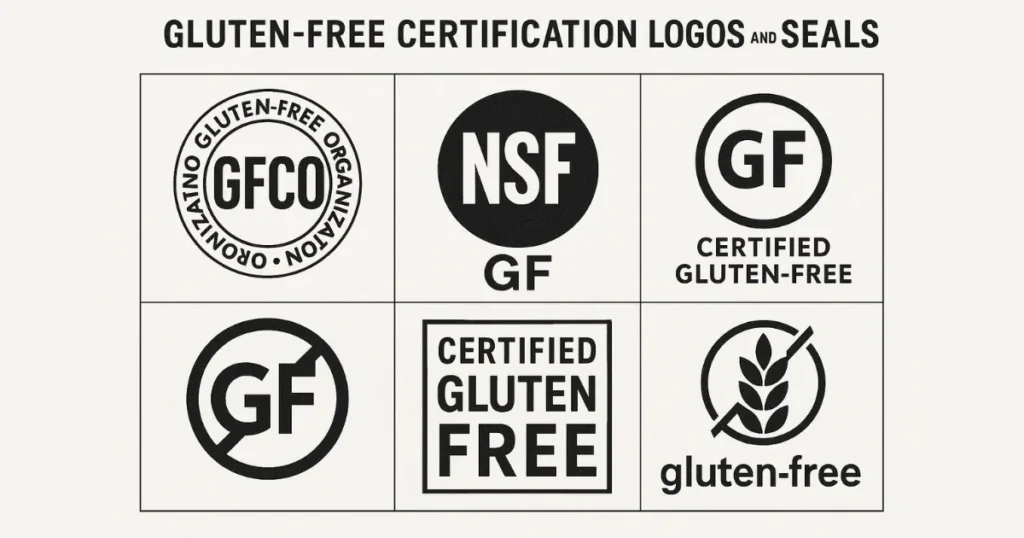
The gold standard for safety is third-party certification from recognized organizations:
Certified Gluten-Free (GF) seals to look for:
- Gluten-Free Certification Organization (GFCO) – tests to <10 ppm.
- NSF International Gluten-Free – tests to <20 ppm.
- Celiac Support Association Recognition Seal.
- Beyond Celiac Gluten-Free Certification Program.
These certifications require:
- Regular facility inspections.
- Product testing for gluten content.
- Verification of sourcing and processing protocols.
- Ongoing compliance monitoring.
Products with these certifications have been independently verified as safe, not just self-declared.
Understanding PPM (Parts Per Million).
Different countries and organizations use different thresholds:
- United States (FDA): Products must contain <20 ppm gluten to be labeled “gluten-free”.
- European Union: Also uses <20 ppm standard.
- GFCO (strictest): Requires <10 ppm for certification.
Most people with celiac disease tolerate <20 ppm safely, though some highly sensitive individuals may react to even lower levels.
Reading Labels Carefully.
When evaluating psyllium products:
Look for explicit statements:
- “Certified Gluten-Free”.
- “Tested for Gluten”.
- “Processed in a dedicated gluten-free facility”.
Red flags to avoid:
- “May contain wheat” warnings.
- “Processed in a facility that also processes wheat”.
- No gluten-free statement at all.
- Vague claims like “naturally gluten-free” without certification.
Ingredients to watch for:
- Added flavorings (may contain gluten).
- “Natural flavors” (could include barley malt).
- Maltodextrin (usually safe but occasionally wheat-derived).
Pure, unflavored psyllium husk should have only one ingredient: psyllium husk (or ispaghula husk).
Contacting Manufacturers.
For products without certification, contact manufacturers directly:
Questions to ask:
- Is your psyllium tested for gluten content?
- What are the test results (ppm)?
- Is it processed in a dedicated gluten-free facility?
- What cross-contamination prevention measures exist?
- Do you source from dedicated gluten-free growers?
Reputable manufacturers readily provide this information. Evasive or vague responses suggest inadequate allergen controls.
Pakistani Psyllium and Gluten-Free Standards.
Pakistan produces the world’s highest-quality psyllium, and understanding quality standards helps ensure gluten-free safety.
Why Pakistani Psyllium Excels.
Pakistan’s Sindh province provides ideal growing conditions for Plantago ovata. The region’s climate, soil, and agricultural practices produce psyllium with:
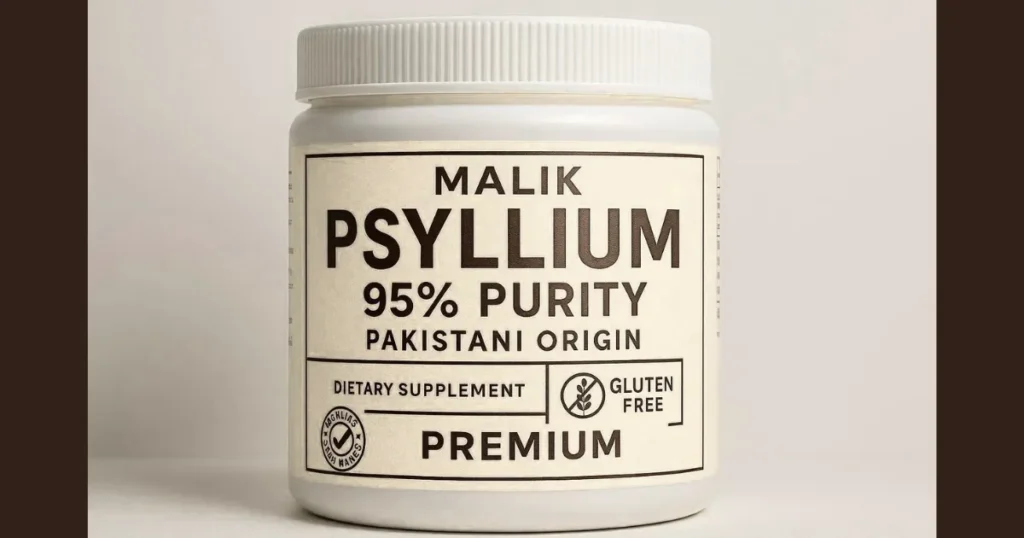
- 95-99% purity levels.
- Superior mucilage content.
- Consistent quality.
Many Pakistani psyllium operations maintain dedicated psyllium-only fields and facilities, reducing cross-contamination risks from the agricultural stage forward.
Quality Control in Pakistani Processing.
Premium Pakistani processors like those supplying Malik Psyllium implement rigorous quality protocols:
- Multi-stage cleaning: Removes any foreign matter, including stray grain seeds.
- Dedicated equipment: Psyllium-only processing machinery prevents cross-contamination.
- Regular testing: Batch testing for purity and potential contaminants.
- Pharmaceutical-grade processing: Many facilities follow GMP (Good Manufacturing Practices) standards.
These controls make Pakistani psyllium among the safest gluten-free fiber options globally.
Certification in International Markets.
When Pakistani psyllium is exported to the US, Europe, or other markets, it often undergoes additional certification:
- Third-party gluten testing.
- FDA compliance verification.
- EU regulatory compliance.
- Country-specific certification programs.
This multilayered verification provides additional safety assurance for celiac consumers.
Using Psyllium Husk in Gluten-Free Diets.
Beyond safety verification, psyllium offers specific benefits for those following gluten-free diets.
Why Gluten-Free Diets Need Psyllium.
Gluten-free diets often lack fiber because:
- Many high-fiber grains (wheat, barley) are eliminated.
- Gluten-free substitutes (white rice flour, corn starch) contain less fiber.
- Processed gluten-free foods are often low in nutrients.
This fiber deficit can cause:
- Constipation (extremely common on gluten-free diets).
- Blood sugar irregularities.
- Cholesterol increases.
- Reduced satiety and weight gain.
Psyllium provides concentrated soluble fiber that addresses these deficiencies without gluten exposure.
Psyllium in Gluten-Free Baking.
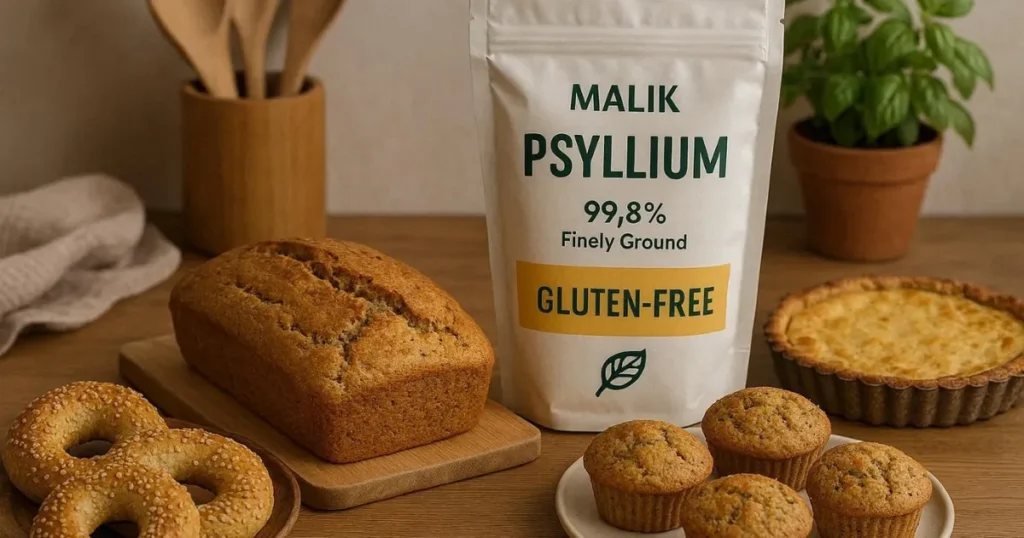
Psyllium husk is also valuable as a binding agent in gluten-free baking:
How it works:
- Forms gel-like structure mimicking gluten’s elasticity.
- Binds ingredients together.
- Improves texture and prevents crumbling.
- Adds moisture retention.
Typical usage:
- 1-3 teaspoons psyllium husk powder per recipe.
- Mix with dry ingredients before adding liquids.
- Allow batter to rest 10-15 minutes for gel formation.
This dual purpose – fiber supplement and baking ingredient – makes psyllium especially valuable for celiac households.
Dosing for Digestive Health.
For celiac patients using psyllium as fiber supplementation:
Starting protocol:
- Begin with 1/4- 1/2 teaspoon daily.
- Increase gradually over 2-3 weeks.
- Target 1-2 teaspoons daily for maintenance.
- Always consume 8-10 oz of water per dose.
Gradual introduction prevents bloating and allows your digestive system to adapt, especially important if you’ve been low-fiber due to dietary restrictions.
Psyllium Benefits for Celiac Disease Management.
Beyond being gluten-free and safe, psyllium offers specific advantages for people with celiac disease.
Supporting Intestinal Healing.
Celiac disease damages intestinal villi – tiny finger-like projections that absorb nutrients. Psyllium supports healing through:
Butyrate production:
Gut bacteria fermenting psyllium produce butyrate, which nourishes colon cells and supports intestinal barrier function.
Gentle bulking:
Soft, formed stools reduce intestinal irritation during the healing phase.
Microbiome support:
Psyllium feeds beneficial bacteria that support immune function and reduce inflammation.
Addressing Common Celiac Complications.
Constipation relief:
One of the most common post-diagnosis complaints. Psyllium’s gentle bulk-forming action provides reliable relief.
Cholesterol management:
Some celiacs experience cholesterol increases after diagnosis (possibly related to dietary changes). Psyllium reduces LDL cholesterol by 5-10%.
Blood sugar control:
Gluten-free diets can spike blood sugar due to refined starches. Psyllium moderates glucose absorption.
Weight management:
Many people gain weight after going gluten-free. Psyllium’s satiety effect supports healthy weight maintenance.
Nutrient Absorption Considerations.
While psyllium is beneficial, timing matters:
Best practices:
- Take psyllium 2-4 hours away from multivitamins or supplements.
- This prevents fiber from reducing nutrient absorption.
- Especially important during early healing when absorption is compromised.
Proper timing allows you to enjoy psyllium’s benefits without interfering with nutrient repletion.
Common Concerns about Psyllium and Gluten.
Let me address frequent questions and misconceptions about psyllium’s gluten-free status.
“Can Psyllium Cause Gluten-Like Reactions?”.
Some people report digestive symptoms similar to gluten reactions when taking psyllium. However, these are typically:
Normal fiber adjustment: Gas, bloating, or changes in bowel movements as your system adapts to increased fiber.
Inadequate hydration: Too little water causes constipation and discomfort.
Too-rapid dosing: Starting with excessive amounts overwhelms digestion.
Unrelated food sensitivities: Symptoms coinciding with, but not caused by, psyllium.
True gluten reactions involve specific immune responses that psyllium cannot trigger unless contaminated.
“Is All Psyllium From the Same Plant?”.
Yes, commercial psyllium comes exclusively from Plantago ovata, whether called:
- Psyllium husk.
- Ispaghula husk.
- Isabgol.
- Blonde psyllium.
All these names refer to the same gluten-free plant. Some formulations use whole seeds (less common) versus husks, but both come from the same gluten-free source.
“Can Psyllium Replace Gluten in Baking?”.
Partially. Psyllium provides binding and structure but doesn’t replicate gluten’s exact properties. For best results:
Combine psyllium with:
- Xanthan gum or guar gum.
- Gluten-free flour blends.
- Eggs (if not vegan).
- Adequate liquid.
This combination creates a better texture than psyllium alone. Think of psyllium as one component of gluten-free baking, not a complete gluten replacement.
Quality Markers for Safe, Gluten-Free Psyllium.
When selecting psyllium for celiac-safe use, these quality indicators provide additional confidence.
Purity Percentage.
Look for:
- 95-99% purity ratings.
- “Pharmaceutical grade” or “USP verified”.
- Minimal additives or fillers.
Higher purity means fewer potential contaminants, including trace gluten from processing environments.
Country of Origin Transparency.
Reputable brands disclose:
- Where psyllium is grown (Pakistan’s Sindh province is premium).
- Processing facility locations.
- Quality control protocols.
Transparency suggests rigorous standards and accountability.
“Do I Need to Worry About Ispaghula Husk Gluten Free Status Differently?”.
No. Whether labeled “psyllium” or “ispaghula husk gluten free” status is identical – both refer to Plantago ovata husks. The different names simply reflect regional terminology (psyllium in Western markets, ispaghula in South Asian markets).
The same verification principles apply regardless of naming:
- Look for gluten-free certification.
- Verify dedicated processing.
- Check for cross-contamination controls.
Batch Testing and Lot Numbers.
Quality manufacturers:
- Test each production batch.
- Provide lot numbers for traceability.
- Make test results available upon request.
- Maintain detailed records.
This allows for investigation if any contamination concerns arise.
Packaging Integrity.
Proper packaging prevents contamination:
- Sealed, airtight containers.
- Inner safety seals.
- Tamper-evident closures.
- Clear labeling of allergen information.
Damaged packaging compromises even certified gluten-free products.
Alternative Gluten-Free Fiber Options.
While psyllium is excellent, knowing alternatives helps if you have sensitivities or want variety.
Other Gluten-Free Soluble Fibers.
Acacia fiber (gum arabic):
- Naturally gluten-free.
- Very gentle on digestion.
- Less fermentation than psyllium.
- Good for highly sensitive individuals.
Glucomannan (konjac root):
- Gluten-free Asian fiber source.
- Strong gelling properties.
- Effective for weight management.
- Requires careful dosing.
Inulin/chicory root fiber:
- Naturally gluten-free prebiotic.
- Supports beneficial bacteria.
- Can cause gas in sensitive people.
- Good for blood sugar control.
Ground flaxseed:
- Gluten-free whole food fiber.
- Provides omega-3 fatty acids.
- Must be refrigerated.
- Less soluble fiber than psyllium.
Gluten-Free Insoluble Fibers.
Rice bran:
- Naturally gluten-free.
- High in insoluble fiber.
- Good for constipation.
- Supports cholesterol management.
Chia seeds:
- Complete gluten-free superfood.
- Contains both fiber types.
- Provides protein and omega-3s.
- Easier to incorporate into foods.
Each fiber type offers unique benefits. Many people rotate between options or combine them for comprehensive digestive support.
Practical Tips for Celiac-Safe Psyllium Use.
Integrating psyllium into your gluten-free lifestyle safely requires these practical considerations.
Storage to Prevent Contamination.
At home:
- Store psyllium in airtight containers.
- Keep separate from any gluten-containing products.
- Use dedicated measuring spoons.
- Label clearly if multiple people use the kitchen.
Cross-contamination prevention:
- Never dip gluten-exposed utensils into psyllium.
- Wash your hands before handling.
- Clean preparation surfaces thoroughly.
- Store away from wheat flour or breadcrumbs.
Preparing Gluten-Free Psyllium Drinks.
Basic preparation:
- Mix 1 teaspoon psyllium with 8-10 oz cold water.
- Stir vigorously and drink immediately.
- Follow with another glass of water.
Flavor enhancements (verify gluten-free):
- Add to certified gluten-free juice.
- Mix with gluten-free smoothies.
- Stir into gluten-free protein shakes.
- Combine with certified herbal teas.
Always verify that all added ingredients are certified gluten-free.
Monitoring Your Response.
Track how psyllium affects your symptoms:
Expected improvements:
- More regular bowel movements.
- Reduced constipation.
- Better satiety.
- Improved energy (from better nutrient absorption).
Concerning symptoms:
- Return of celiac symptoms (investigate contamination).
- Severe digestive distress (may indicate other issues).
- Allergic reactions (rare psyllium allergy).
If celiac symptoms return after adding psyllium, discontinue and verify the product’s gluten-free status through testing or manufacturer contact.
Working with Healthcare Providers.
Managing celiac disease with fiber supplementation benefits from professional guidance.
When to Consult Your Doctor.
Discuss psyllium use with your healthcare team if:
- You’re newly diagnosed with celiac disease.
- Still experiencing symptoms despite a gluten-free diet.
- Take medications (psyllium can affect absorption).
- Have other digestive conditions.
- Considering psyllium for baking applications.
Your gastroenterologist or dietitian can provide personalized recommendations.
Coordinating with Celiac-Specialized Dietitians.
Registered dietitians specializing in celiac disease can:
- Verify your gluten-free product choices.
- Recommend certified brands.
- Help optimize fiber intake.
- Address nutritional deficiencies.
- Provide gluten-free baking guidance using psyllium.
Professional support ensures safe, effective dietary management.
Is psyllium husk gluten free and safe for celiac disease?
Yes, pure psyllium husk is naturally gluten free because it comes from Plantago ovata, not wheat/barley/rye. However, choose certified gluten-free products tested for cross-contamination to ensure celiac safety.
Is ispaghula husk gluten free?
Yes, ispaghula husk is gluten free – it’s another name for psyllium husk from the same Plantago ovata plant. The gluten-free status is identical regardless of whether it’s called psyllium or ispaghula.
How do I know if my psyllium product is truly gluten free?
Look for third-party gluten-free certification (GFCO, NSF), verify it’s tested to <20 ppm (or <10 ppm for GFCO), and confirm processing in dedicated gluten-free facilities. Contact manufacturers for test results.
Can cross-contamination make psyllium unsafe for celiacs?
Yes, while psyllium is naturally gluten free, cross-contamination during growing, processing, or packaging can introduce gluten. Always choose certified gluten-free products with proper testing and dedicated facilities.
What gluten-free certifications should I look for on psyllium?
Look for GFCO (tests <10 ppm), NSF Gluten-Free (< 20 ppm), Celiac Support Association seal, or Beyond Celiac certification. These indicate independent testing and facility verification for cross-contamination prevention.
Does psyllium help with constipation from gluten-free diets?
Yes, psyllium effectively relieves constipation common on gluten-free diets. It provides concentrated soluble fiber that gluten-free foods often lack. Start with 1/2 teaspoon daily and increase gradually with plenty of water.
Can I use psyllium husk in gluten-free baking?
Yes, psyllium works as a binding agent in gluten-free baking, mimicking some of gluten’s properties. Use 1-3 teaspoons per recipe, combine with other binders, and ensure your psyllium is certified gluten-free.
Is Pakistani psyllium safer for celiac disease?
Pakistani psyllium from dedicated facilities offers 95-99% purity and often comes from psyllium-only fields, reducing cross-contamination risks. Look for Pakistani-sourced products with gluten-free certification for maximum safety.
Conclusion.
Understanding is psyllium husk gluten free? It requires distinguishing between natural gluten-free status and real-world contamination risks. Pure psyllium husk from Plantago ovata contains zero gluten – the plant is botanically unrelated to wheat, barley, or rye. The same applies to ispaghula husk, which is simply psyllium’s South Asian name.
However, agricultural cross-contamination, shared processing facilities, and inadequate allergen controls can introduce gluten into otherwise safe products. This makes certification more important than ingredients alone. Third-party gluten-free certification from organizations like GFCO (testing to <10 ppm) or NSF (< 20 ppm) provides the independent verification celiacs need.
Pakistani psyllium offers particular advantages for gluten-free safety. Premium processors in Sindh province maintain dedicated psyllium-only fields and facilities, implement pharmaceutical-grade processing, and achieve 95-99% purity levels. When combined with third-party certification, this creates exceptionally safe products for celiac consumers.
At Malik Psyllium, our commitment to purity begins in the fields and continues through every processing stage, with rigorous testing and quality controls that meet international gluten-free standards. We understand that for people with celiac disease, “naturally gluten-free” isn’t enough – verified safety through testing and certification is essential.
Psyllium offers tremendous benefits for gluten-free diets: relieving common constipation, providing missing fiber, supporting intestinal healing, and serving as a baking ingredient. By choosing certified gluten-free psyllium from reputable sources and following proper storage and preparation practices, you can safely enjoy these benefits while maintaining the strict gluten avoidance your health requires.

Isabgol Ke Fayde – Psyllium Husk Ke Poori Science-Based Rahnumayi – 2026
Isabgol ke fayde jaanna aaj ke daur mein zyada zaroori
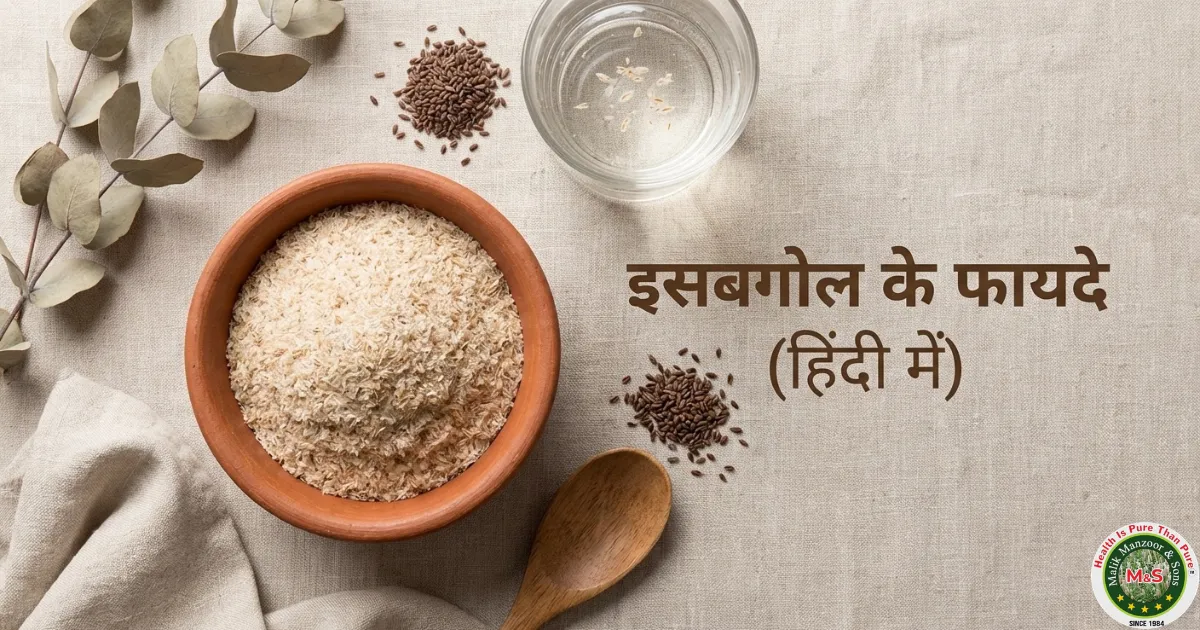
Isabgol Benefits in Hindi | Psyllium Husk Ke Fayde, Sahi Upyog Aur Savdhaniyan – 2026
Agar aap isabgol benefits in hindi mein samajhna chahte hain,