
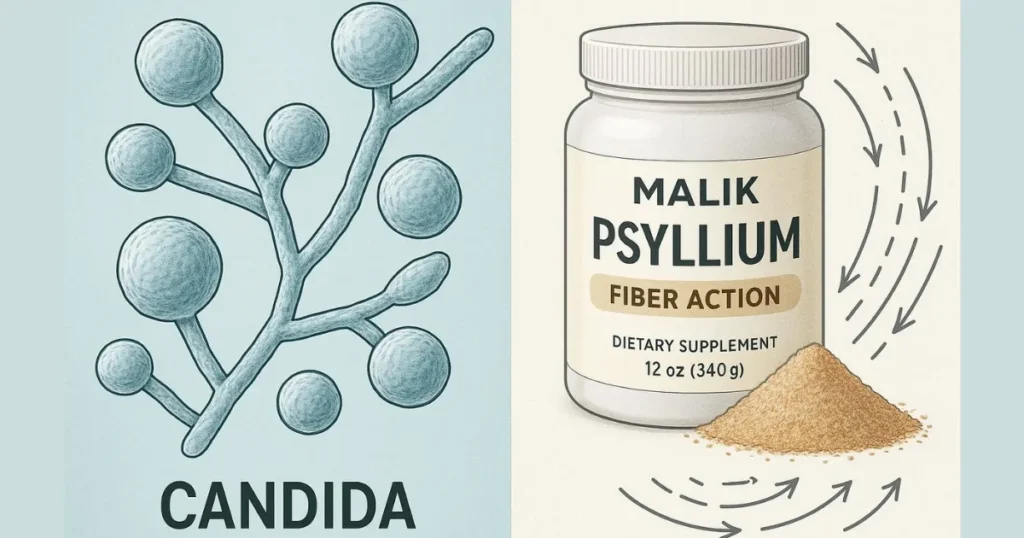
The relationship between psyllium husk and candida is one of the most debated topics in natural health circles. Some practitioners claim psyllium feeds yeast overgrowth and should be avoided entirely during candida treatment. Others argue that psyllium husk candida protocols are essential for removing toxins and dead yeast from your system.
So which is it? Does psyllium help or harm when you’re battling candida overgrowth?
The answer is more nuanced than most blogs admit. Psyllium doesn’t directly feed candida – it’s not a sugar or simple carbohydrate that yeast metabolizes. However, the fermentation process that occurs when gut bacteria digest psyllium fiber can create conditions that either support or suppress candida growth, depending on your individual microbiome, dosing, and overall protocol.
This comprehensive guide cuts through the conflicting advice to give you evidence-based clarity on using psyllium husk and candida treatment together. You’ll learn how psyllium affects yeast overgrowth, when it helps eliminate candida, when it might worsen symptoms, proper dosing protocols for anti-candida diets, and how to determine whether psyllium is right for your specific situation. Whether you’re newly diagnosed with candida overgrowth or struggling with persistent symptoms despite treatment, this guide provides the practical information you need to make informed decisions.
Understanding Candida Overgrowth and Its Digestive Impact
Before exploring psyllium’s role, let’s clarify what candida overgrowth actually is and how it affects your gut.
What Is Candida?
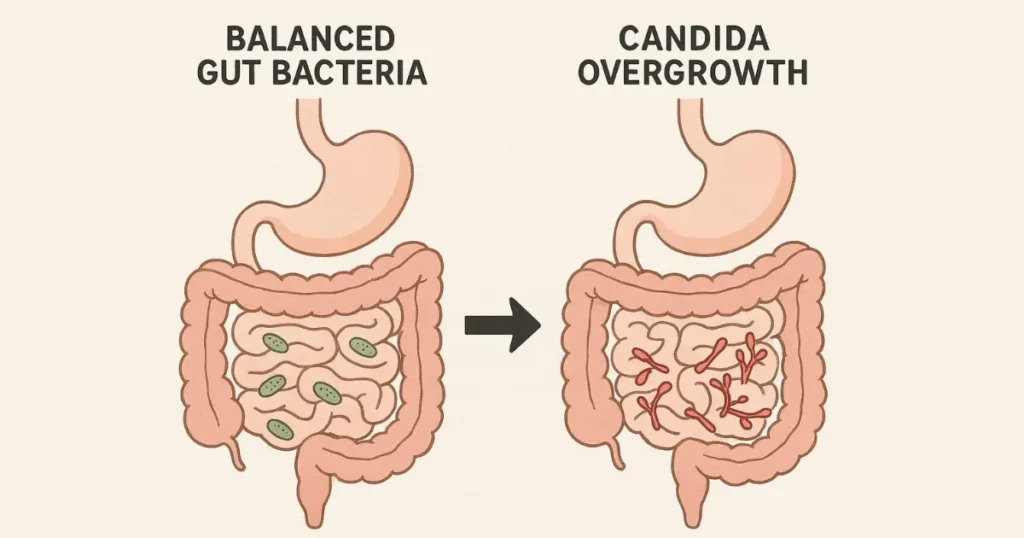
Candida albicans is a type of yeast that naturally lives in your digestive tract, mouth, and on your skin. In healthy individuals, beneficial bacteria keep candida populations in check. The problems begin when this balance is disrupted.
- Common causes of candida overgrowth:
- Antibiotic use (kills beneficial bacteria).
- High-sugar, refined-carbohydrate diets.
- Chronic stress affecting immunity.
- Birth control pills or hormone imbalances.
- Weakened immune system.
- Diabetes or poor blood sugar control.
When candida grows unchecked, it can cause digestive symptoms, fatigue, brain fog, skin issues, and systemic inflammation.
How Candida Affects Gut Function.
Overgrown candida disrupts normal digestive processes in several ways:
Damages intestinal lining:
Candida produces enzymes that can penetrate gut walls, contributing to increased intestinal permeability (” leaky gut”).
Alters gut motility:
Yeast overgrowth often causes constipation, diarrhea, or alternating patterns that make elimination irregular.
Disrupts microbiome balance:
Candida competes with beneficial bacteria for resources and physical space in your intestines.
Produces toxic metabolites:
As candida grows and dies, it releases compounds that burden your liver and create inflammatory responses.
This digestive dysfunction is where psyllium husk and candida protocols intersect – proper elimination becomes crucial for removing dead yeast and toxins.
Does Psyllium Husk Feed Candida?
This is the central concern most people have. Let me address it directly with the science.
The Short Answer: No, Not Directly.
Psyllium husk doesn’t feed candida the way sugar or simple carbohydrates do. Candida thrives on glucose and other simple sugars. Psyllium is a complex soluble fiber that candida cannot metabolize directly.
However, the complete picture is more complex.
The Fermentation Factor.
When psyllium reaches your colon, beneficial bacteria ferment it, producing short-chain fatty acids (SCFAs) like butyrate, acetate, and propionate. This fermentation process is generally beneficial, but here’s where individual variation matters:
In healthy guts:
SCFA production supports colon health, reduces inflammation, and creates an acidic environment that suppresses pathogenic organisms, including excessive candida.
In dysbiotic guts:
If your microbiome is severely imbalanced (which is common with candida overgrowth), fermentation can produce excessive gas, create temporary fuel sources that some opportunistic organisms might utilize, and cause uncomfortable bloating.
This doesn’t mean psyllium feeds candida directly – it means the fermentation byproducts interact with your existing microbial ecosystem in ways that vary individually.
Research Perspective.
Studies examining fiber and fungal overgrowth show:
- High-fiber diets generally reduce candida colonization by supporting beneficial bacteria.
- Soluble fiber specifically promotes gut barrier function, which candida overgrowth damages.
- Fermentable fibers support immune function through SCFA production.
- No evidence shows psyllium directly increases candida growth rates.
The key is distinguishing between “feeds candida” (which psyllium doesn’t do) and “might cause temporary discomfort during die-off” (which it can, in some people).
How Psyllium Husk Candida Protocols Work.
Many integrative practitioners include psyllium in anti-candida protocols for specific reasons. Let me explain the rationale.
Toxin and Die-Off Removal.
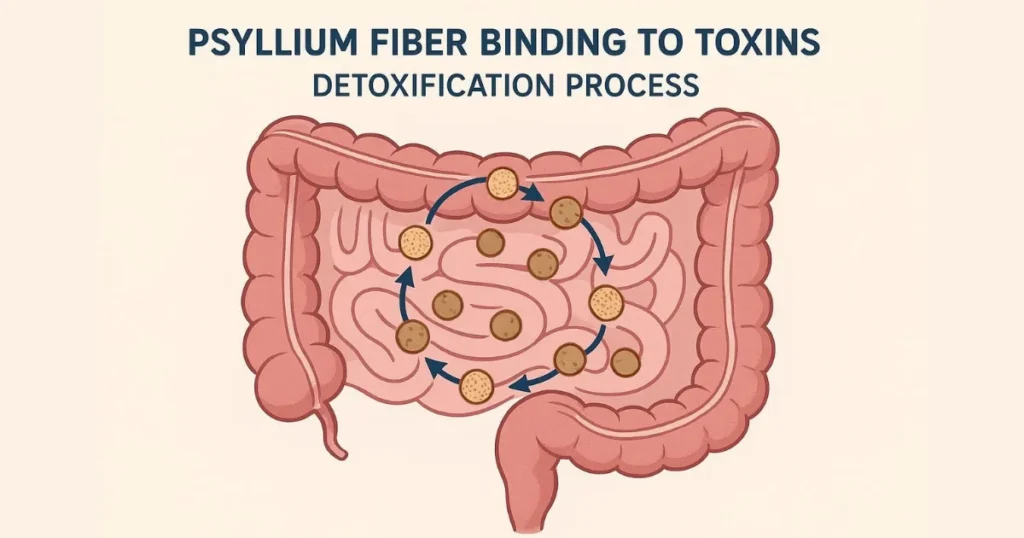
When you treat candida overgrowth with antifungals (whether pharmaceutical or natural), massive amounts of yeast die rapidly. This creates a phenomenon called “die-off” or Herxheimer reaction, where toxins from dying yeast flood your system faster than your liver can process them.
How psyllium helps:
- Binds to toxins in the intestinal tract.
- Bulks stool for more efficient removal.
- Reduces transit time, speeding toxin elimination.
- Prevents constipation that would allow toxins to be reabsorbed.
This toxin-binding property makes psyllium valuable during aggressive antifungal treatment.
Maintaining Regular Elimination.
Candida overgrowth often causes constipation or irregular bowel movements. Dead yeast and toxins that aren’t eliminated promptly can be reabsorbed, worsening symptoms and prolonging recovery.
Psyllium’s gentle bulk-forming action promotes daily elimination without the harsh effects of stimulant laxatives, which can further disrupt gut balance.
Supporting Gut Barrier Function.
The soluble fiber in psyllium feeds beneficial bacteria that produce butyrate – the primary fuel source for colon cells. This supports gut barrier integrity, which candida overgrowth compromises.
A stronger gut barrier means:
- Less systemic absorption of candida toxins.
- Reduced inflammatory responses.
- Better overall immune function.
- Faster healing of intestinal damage.
Crowding Out Pathogenic Organisms.
By feeding beneficial bacteria, psyllium helps restore microbial balance. As beneficial species multiply and strengthen, they physically crowd out candida and other opportunistic organisms, competing for attachment sites and nutrients.
When Psyllium Might Worsen Candida Symptoms.
Despite potential benefits, some people experience worsened symptoms with psyllium during candida treatment. Understanding why helps you determine whether it’s right for you.
Severe Dysbiosis and SIBO.
If you have small intestinal bacterial overgrowth (SIBO) alongside candida, fermentable fibers like psyllium can worsen symptoms. The bacteria in your small intestine (where they shouldn’t be in large numbers) ferment the fiber, creating excessive gas, bloating, and discomfort.
Signs SIBO might be present:
- Bloating within 1-2 hours after eating.
- Excessive gas regardless of diet.
- Burping or reflux.
- Alternating constipation and diarrhea.
If you suspect SIBO, get tested before adding psyllium to your protocol.
Die-Off Intensification.
For some people, psyllium makes die-off symptoms more intense by mobilizing toxins too quickly. If your liver is already overburdened or your detoxification pathways are sluggish, adding psyllium might worsen brain fog, fatigue, or flu-like symptoms temporarily.
This doesn’t mean psyllium is harmful – it means your system needs gentler toxin removal or additional liver support before introducing it.
Individual Intolerance.
Some people simply don’t tolerate psyllium well, candida or not. This might manifest as:
- Immediate bloating or discomfort.
- Worsened constipation (if hydration is inadequate).
- Allergic reactions (rare but possible).
- Digestive upset that doesn’t improve with time.
If you’ve tried proper dosing with adequate hydration for 2-3 weeks and still experience problems, psyllium might not be the right fiber choice for you.
Proper Psyllium Protocols for Anti-Candida Diets.
If you decide to use psyllium husk and candida treatment together, proper protocols maximize benefits while minimizing risks.
Starting Protocol for Candida Overgrowth.
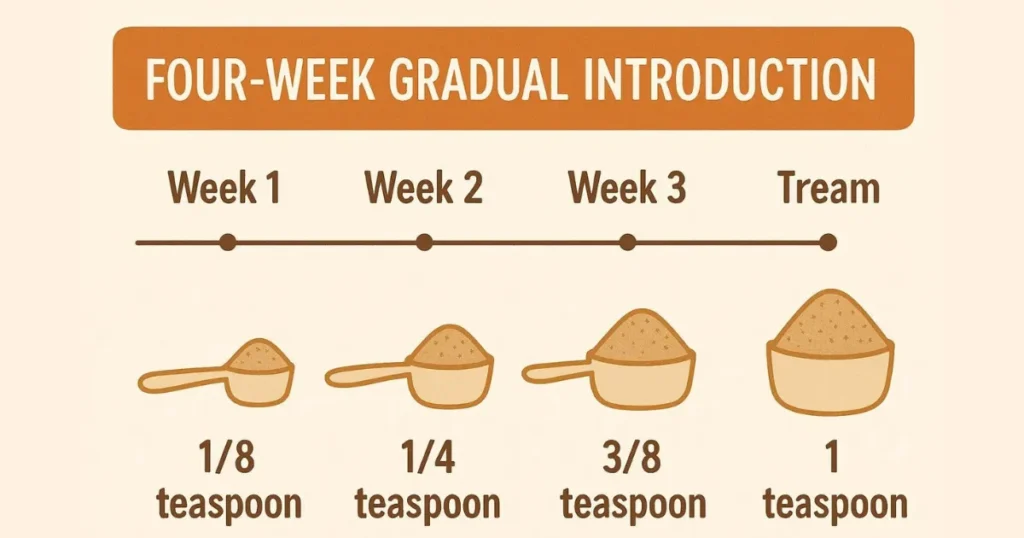
Begin conservatively, especially if your digestion is already compromised:
- Week 1: ⅛ teaspoon once daily with 10 oz water, taken between meals.
- Week 2: 1/4 teaspoon once daily if well-tolerated.
- Week 3: 1/2 teaspoon once daily or 1/4 teaspoon twice daily.
- Week 4+: 1-2 teaspoons daily, split into 1-2 doses.
This gradual approach prevents overwhelming your system during an already stressful healing period.
Timing Considerations.
Best timing for candida protocols:
- Take psyllium 30-60 minutes before antifungal supplements/medications.
- This allows fiber to coat the intestinal tract before die-off begins.
- Or take 2-3 hours after antifungals to bind toxins released during die-off.
- Avoid taking psyllium with probiotics – separate by 2-3 hours.
Meal timing:
- Take psyllium between meals, not with them.
- An empty or near-empty stomach allows better toxin binding.
- If nausea occurs, try taking it with a small amount of protein.
Hydration Is Critical.
Inadequate water worsens constipation and reduces psyllium’s toxin-binding effectiveness.
Minimum requirements:
- 8-10 oz water mixed with each psyllium dose.
- Another 8 oz within 30 minutes.
- 10-12 glasses total throughout the day.
- More if you’re using antifungals that burden the liver.
Dehydration during candida treatment intensifies die-off symptoms and reduces toxin elimination.

Combining with Other Anti-Candida Strategies.
Psyllium works best as part of a comprehensive candida treatment.
Dietary approach:
- Low-sugar, low-refined-carb diet.
- Plenty of non-starchy vegetables.
- Quality proteins and healthy fats.
- Fermented foods (if tolerated).
Antifungal support:
- Natural antifungals (oregano oil, caprylic acid, garlic).
- Or pharmaceutical options (fluconazole, nystatin).
- Rotate antifungals every 2-4 weeks to prevent resistance.
Probiotic restoration:
- High-quality, multi-strain probiotics.
- Take separately from psyllium (2-3 hours apart).
- Focus on strains that compete with candida.
Liver support:
- Milk thistle, NAC, or other hepatic support.
- Crucial for processing die-off toxins.
- Consider adding if die-off symptoms are severe.
Psyllium Husk and Candida: Individual Assessment.
Determining whether psyllium is right for your candida protocol requires honest self-assessment.
Signs Psyllium Is Helping.
Positive indicators:
- Improved bowel regularity.
- Reduced die-off symptoms over time.
- Less bloating and gas (after initial adjustment).
- Feeling lighter and more energetic.
- Clearer thinking as toxins are removed.
- Steady progress in candida symptoms.
If you’re experiencing these improvements, psyllium is likely supporting your protocol.
Signs You Should Modify or Stop.
Warning indicators:
- Worsening bloating that doesn’t improve after 2 weeks.
- Increased brain fog or fatigue.
- Severe constipation despite adequate water.
- Worsening candida symptoms.
- Allergic reactions or intolerance.
- SIBO symptoms appearing or intensifying.
These signs suggest you need to either reduce dosage, adjust timing, address underlying issues (like SIBO), or choose alternative fiber sources.
Alternative Fiber Options.
If psyllium doesn’t work for you, consider:
- Acacia fiber: Less fermentable, gentler for sensitive guts.
- Partially hydrolyzed guar gum: Low-FODMAP, well-tolerated by most.
- Ground flaxseed: Provides fiber plus omega-3s, with less fermentation.
- Glucomannan: Similar bulk-forming action, different fermentation profile.
Each fiber type has different properties – experiment to find what works for your body.
Quality Considerations for Candida Protocols.
When managing candida, psyllium purity becomes even more important than usual.
Why Premium Quality Matters.
- Lower-quality psyllium may contain:
- Mold or fungal contamination (problematic when fighting fungal overgrowth).
- Processing residues that stress the liver.
- Inconsistent fiber content affecting dosing predictability.
- Seed particles that can irritate the compromised gut lining.
Pakistani psyllium, particularly from Sindh province, offers 95-99% purity – the highest globally available. This pharmaceutical-grade quality ensures you’re getting pure fiber without contaminants that could complicate candida treatment.
At Malik Psyllium, our multi-stage cleaning process specifically removes potential fungal contamination and processing residues. For people managing yeast overgrowth, this purity isn’t just about effectiveness – it’s about avoiding additional fungal exposure.
Storage Considerations.
Proper storage prevents mold growth on psyllium:
- Keep in airtight containers.
- Store in cool, dry places.
- Avoid bathroom storage (humidity promotes mold).
- Check expiration dates.
- Discard if you notice any musty smell or clumping.
These precautions are especially important when you’re actively fighting fungal overgrowth.
Common Myths about Psyllium and Candida.
Let me address some widespread misconceptions in the candida community.
Myth 1: “All Fiber Feeds Candida”.
False. Candida cannot metabolize complex fibers directly. It thrives on sugars and simple carbohydrates. While fermentation byproducts create a complex ecosystem, fiber itself doesn’t feed yeast.
Myth 2: “You Should Avoid All Fermentable Foods During Candida Treatment”.
Overly restrictive. While limiting fermentable FODMAPs can help some people, completely avoiding all fermentable fiber prevents beneficial bacteria from thriving – and you need those beneficial bacteria to outcompete candida.
Myth 3: “Psyllium Causes Die-Off Symptoms”.
Not exactly. Psyllium doesn’t kill candida – antifungals do. Psyllium may intensify die-off symptoms temporarily by mobilizing toxins for elimination, but this is different from causing the die-off itself.
Myth 4: “If Psyllium Makes You Bloated, You Definitely Have Candida”.
Not necessarily. Bloating with psyllium can result from inadequate water, too-rapid dosing, SIBO, or simply normal adjustment to increased fiber. It’s not a candida-specific symptom.
Monitoring Your Progress.
Tracking your response helps determine whether psyllium supports your candida protocol.
Keep a Symptoms Journal.
Document daily:
- Bowel movements (frequency, consistency).
- Energy levels and brain fog.
- Die-off symptoms (if any).
- Bloating or digestive discomfort.
- Overall candida symptoms.
This data helps you identify patterns and make informed adjustments.
Testing Considerations.
Consider these tests to track progress:
- Comprehensive stool analysis (shows candida levels, microbiome balance).
- Organic acids test (indicates yeast metabolites).
- SIBO breath test (if you suspect small intestinal issues).
Objective data supplements subjective symptom tracking.
Adjusting Your Protocol.
Based on your response:
If doing well:
Continue current dosing, gradually work toward 1-2 teaspoons daily for maintenance.
If moderately uncomfortable:
Reduce dose by half, increase hydration, and add liver support.
If significantly worsening:
Stop psyllium temporarily, address underlying issues (SIBO testing, liver support), consider alternative fibers.
If plateaued:
Adjust timing, try splitting doses differently, ensure other protocol elements (diet, antifungals, probiotics) are optimized.
Integration with Professional Treatment.
While psyllium is a natural supplement, managing candida overgrowth often requires professional guidance.
When to Work with a Practitioner.
Seek professional help if:
- Candida symptoms persist despite 3+ months of treatment.
- You have severe or systemic candida.
- You’re unsure whether symptoms are candida-related.
- You have other health conditions requiring coordination.
- Die-off symptoms are overwhelming.
Functional medicine doctors, naturopaths, or integrative practitioners experienced in candida treatment can provide personalized protocols.
Communicating About Psyllium Use.
- If working with a practitioner:
- Inform them about any supplements you’re taking, including psyllium.
- Discuss timing with antifungals and other interventions.
- Report any unusual symptoms or reactions.
- Follow their dosing recommendations, which may differ from general guidelines.
Professional oversight ensures safe, effective treatment coordination.
Does psyllium husk feed candida overgrowth?
No, psyllium husk and candida have no direct feeding relationship. Candida thrives on sugars, not complex fibers. Psyllium actually supports beneficial bacteria that compete with candida, though individual fermentation responses vary.
Can I use psyllium husk during candida treatment?
Yes, many people successfully use psyllium husk candida protocols to remove toxins and maintain elimination during antifungal treatment. Start with small doses, ensure excellent hydration, and monitor your response carefully.
Why does psyllium make my candida symptoms worse?
If symptoms worsen, you may have SIBO, inadequate hydration, liver congestion, or be experiencing intensified die-off. Reduce dosage, increase water intake, add liver support, or try gentler fibers like acacia.
How much psyllium should I take for candida overgrowth?
Start with ⅛- 1/4 teaspoon daily and increase gradually over 3-4 weeks to 1-2 teaspoons daily. Take with 8-10 oz of water per dose. Individual tolerance varies – adjust based on your response.
Should I take psyllium with antifungals for candida?
Take psyllium 30-60 minutes before antifungals or 2-3 hours after. This allows fiber to either coat your intestines protectively or bind toxins released during die-off. Don’t take them simultaneously.
Can psyllium help with candida die-off symptoms?
Yes, psyllium helps remove toxins from dying candida, potentially reducing brain fog, fatigue, and other die-off symptoms. However, if it intensifies symptoms, reduce dosage or add liver support.
What’s better for candida: psyllium husk or other fibers?
Psyllium works well for many people, but individual responses vary. If psyllium causes problems, try acacia fiber, partially hydrolyzed guar gum, or ground flaxseed. Experiment to find what suits your system.
How long should I use psyllium during candida treatment?
Continue throughout your antifungal treatment (typically 3-6 months) and maintain lower doses afterward to support healthy elimination and microbiome balance. Long-term use is safe for most people.
Conclusion.
The relationship between psyllium husk and candida is more nuanced than simple “helps” or “harms” classifications. Psyllium doesn’t directly feed candida – that’s a myth based on misunderstanding fermentation processes. Instead, it supports beneficial bacteria, aids toxin removal, and promotes the regular elimination that’s crucial during antifungal treatment.
However, individual responses vary significantly. Some people thrive with psyllium husk candida protocols, experiencing reduced die-off symptoms and faster recovery. Others find it worsens bloating or intensifies discomfort, often due to underlying SIBO, inadequate hydration, or severely compromised gut function.
The key to success lies in gradual introduction, exceptional hydration, proper timing with antifungals, and honest self-assessment. Start incredibly small – ⅛ teaspoon – and increase slowly over several weeks. Drink substantially more water than you think necessary. Monitor your symptoms carefully, adjusting dosage based on your body’s responses rather than rigid protocols.
Quality matters significantly when managing fungal overgrowth. Pakistani psyllium from reputable sources like Malik Psyllium offers pharmaceutical-grade purity (95-99%) that ensures you’re not introducing additional fungal contamination or impurities that could complicate treatment. When fighting yeast overgrowth, every element of your protocol matters – including supplement quality.
Work with qualified practitioners when possible, especially if symptoms are severe or persistent. Psyllium can be a valuable tool in candida management, but it’s most effective as part of comprehensive treatment, including dietary changes, targeted antifungals, probiotic restoration, and lifestyle modifications. Listen to your body, adjust as needed, and give the protocol time to work – candida recovery typically takes months, not weeks, and patience combined with consistency yields the best results.

Isabgol Ke Fayde – Psyllium Husk Ke Poori Science-Based Rahnumayi – 2026
Isabgol ke fayde jaanna aaj ke daur mein zyada zaroori
Isabgol Benefits in Hindi | Psyllium Husk Ke Fayde, Sahi Upyog Aur Savdhaniyan – 2026
Agar aap isabgol benefits in hindi mein samajhna chahte hain,