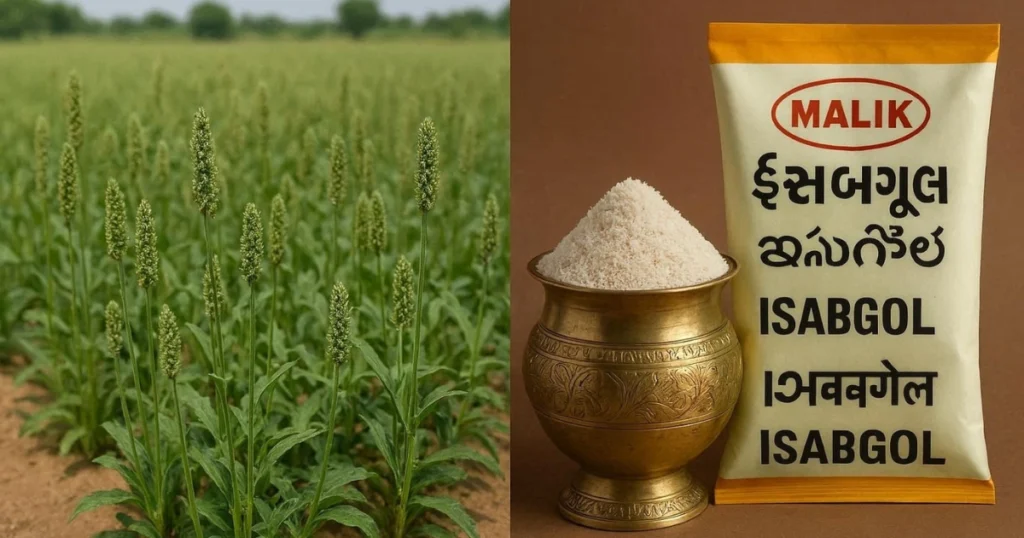
What is the psyllium husk Indian name, and why does India play such a significant role in this fiber supplement industry? The psyllium husk Indian name is “Isabgol” (also spelled Ispaghula), derived from Persian words meaning “horse ear,” referring to the seed shape. Understanding psyllium husk India production and market dynamics matters because India is the world’s second-largest producer after Pakistan, growing psyllium primarily in Gujarat and Rajasthan states. When searching for organic India psyllium husk or exploring Indian brands, you’re tapping into centuries of traditional Ayurvedic medicine wisdom combined with modern agricultural practices.
In this comprehensive guide, I’ll explain everything about the psyllium husk Indian name and industry—traditional terminology across Indian languages, major production regions in India, how Indian psyllium compares to Pakistani varieties, popular Indian brands including organic India psyllium husk options, where India’s psyllium industry stands globally, and why quality differences matter when choosing between sources for your health and wellness needs.
Psyllium Husk Indian Name Explained
The Primary Name: Isabgol
The psyllium husk Indian name “Isabgol” comes from Persian etymology:
- “Isap” = Horse
- “Gol” = Ear
This refers to the seed’s resemblance to a horse’s ear in shape. The name traveled to India through Persian and Mughal influences, becoming deeply embedded in Indian medical terminology.
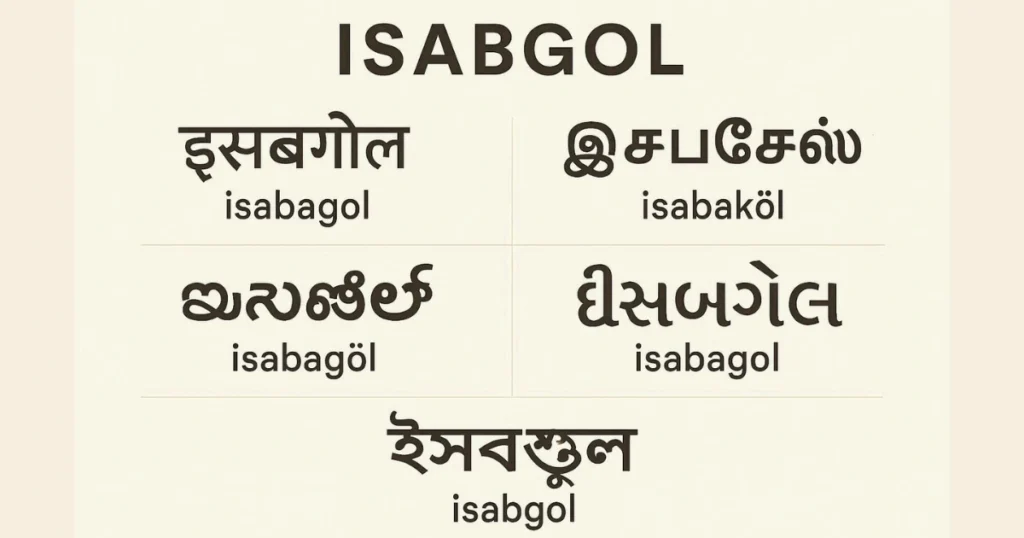
Regional Indian Names
Hindi/Urdu:
- इसबगोल (Isabgol)
- इसबगोल की भूसी (Isabgol ki Bhusi – Isabgol husk)
Sanskrit:
- अश्वगोला (Ashvagola) – “Horse sphere”
- स्निग्धजीरा (Snigdhajira)
Tamil:
- ஈஸ்பகுலா (Isabgula)
Telugu:
- ఇసబ్గోల్ (Isabgol)
Gujarati:
- ઈસબગોલ (Isabgol) – Important since Gujarat is major producer
Bengali:
- ইসবগুল (Isabgul)
Understanding the psyllium husk Indian name across languages helps when buying from regional suppliers or communicating with local vendors throughout India.
Psyllium Husk India: Production and Cultivation
Major Growing Regions
Gujarat:
The primary psyllium husk India production center, particularly:
- Mehsana district
- Banaskantha district
- Patan region
Gujarat produces approximately 80-85% of India’s total psyllium output, with cultivation concentrated in North Gujarat’s semi-arid regions.
Rajasthan:
Secondary production region:
- Jodhpur district
- Jalore district
- Smaller yields than Gujarat
Climate requirements:
- Semi-arid conditions
- Moderate rainfall
- Well-drained sandy-loam soil
- Cool winters for optimal growth
Cultivation Practices
Traditional methods:
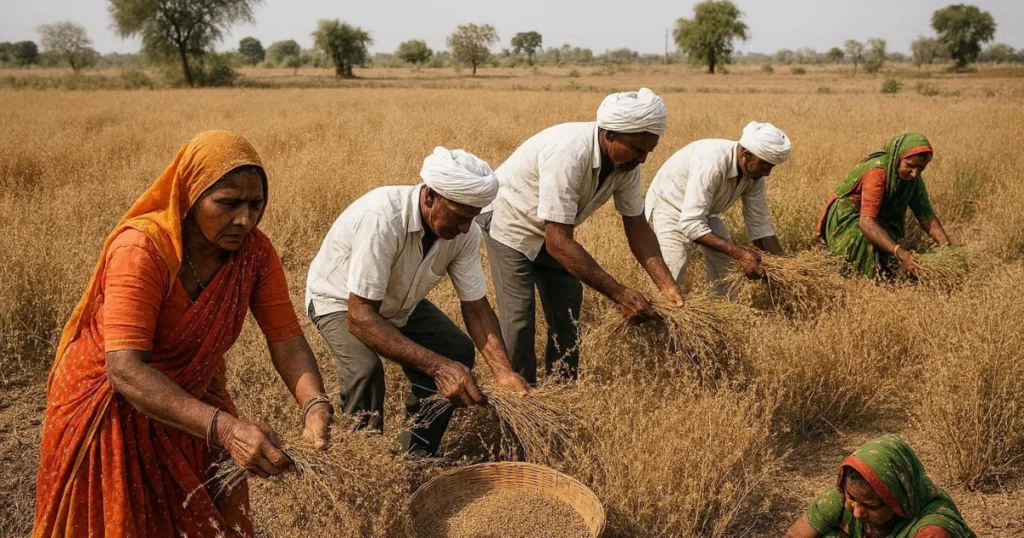
Indian farmers have grown isabgol for generations using traditional agricultural practices passed down through families.
Modern developments:
- Improved seed varieties
- Better irrigation techniques
- Organic certification initiatives
- Contract farming arrangements
Harvest season:
February to April is prime harvest time for psyllium husk India production, when farmers collect seeds and process the fiber-rich husks.
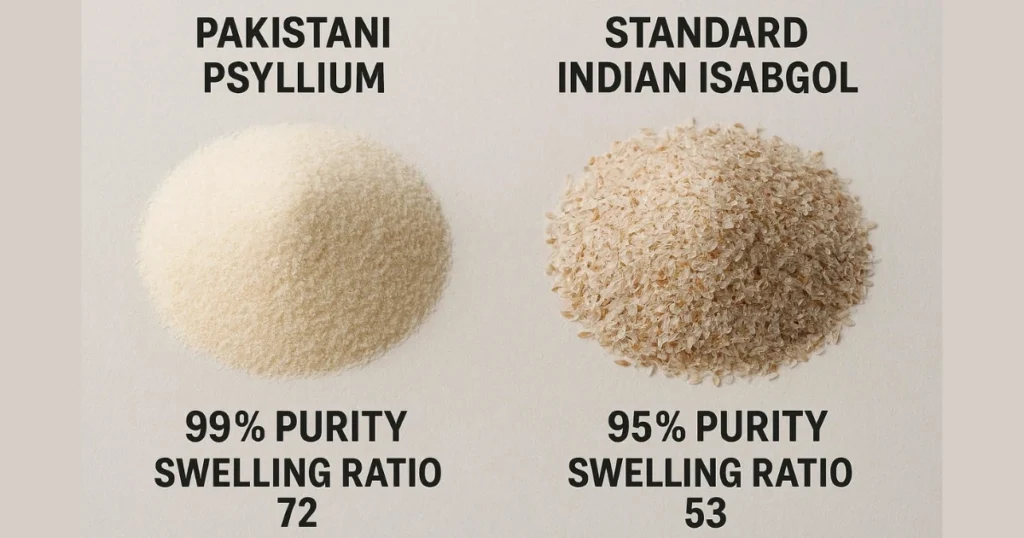
Quality Comparison: Indian vs Pakistani Psyllium
While India produces significant quantities of psyllium husk, quality differences with Pakistani psyllium are worth understanding.
Pakistani Psyllium (Market Leader)
Quality characteristics:
- 85-99% purity typical
- 12:1 swelling ratio
- Finer particle size
- Lighter, more uniform color
- Grown in ideal Sindh climate
- More consistent batch quality
Why Pakistan leads:
Sindh province’s unique combination of climate, soil composition, and traditional cultivation expertise produces the world’s highest-quality psyllium. Pakistan supplies 80% of global demand.
Indian Psyllium
Quality characteristics:
- 60-75% typical purity
- 8:1 swelling ratio
- Slightly coarser texture
- More variable color (tan to brown)
- Quality varies by region and processor
Advantages:
- Large-scale production capacity
- Established domestic market
- More affordable pricing
- Strong Ayurvedic tradition
Quality challenges:
Indian psyllium often contains more impurities and lower fiber concentration, requiring larger doses for equivalent effects compared to premium Pakistani varieties.
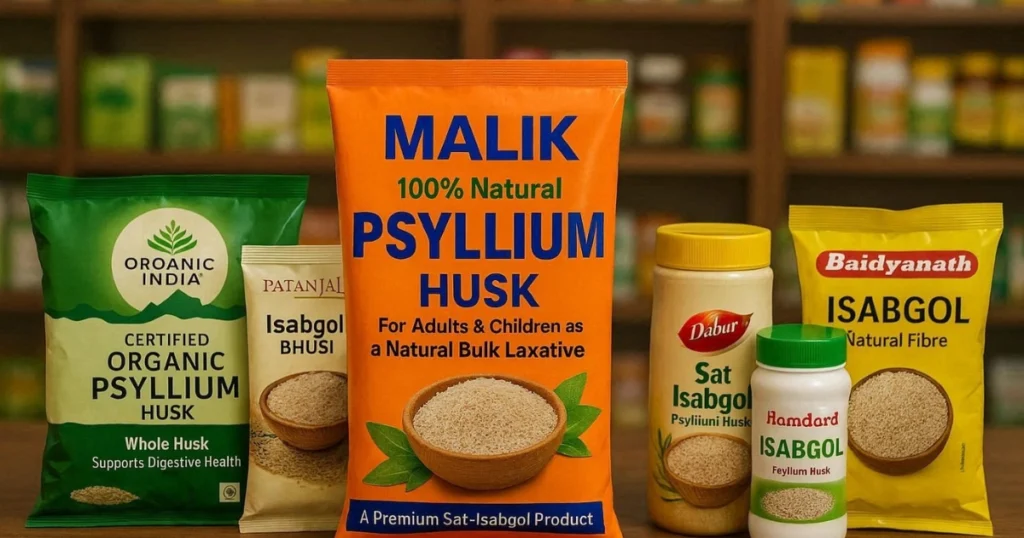
Organic India Psyllium Husk and Major Brands
Organic India Brand
Organic India is one of the most recognized names in organic India psyllium husk market:
Product features:
- USDA organic certified
- Non-GMO verified
- Fair trade practices
- Sustainable farming
- Transparent sourcing
Quality level:
Organic India psyllium husk typically achieves 75-85% purity—better than standard Indian psyllium but still below premium Pakistani standards.
Availability:
Widely available in health food stores globally, including USA, Europe, and online platforms.
Other Major Indian Brands
Patanjali Isabgol:
- Ayurveda-focused brand
- Affordable pricing
- Wide distribution in India
- Variable quality depending on batch
Dabur Sat Isabgol:
- Established pharmaceutical company
- “Sat” means refined/pure
- Available throughout India
- Consistent quality for Indian market
Hamdard Isabgol:
- Traditional Unani medicine brand
- Long market presence
- Trusted in Muslim communities
- Decent quality standards
Baidyanath Isabgol:
- Ayurvedic heritage brand
- Multiple product variants
- Good domestic availability
- Mid-range quality
Zandu Isabgol:
- Pharmaceutical company product
- Modern processing methods
- Reliable quality control
- Available in pharmacies nationwide
Using Psyllium Husk in Indian Tradition
Ayurvedic Applications
The psyllium husk Indian name “Isabgol” appears throughout Ayurvedic texts with specific therapeutic applications:
Traditional uses:
- Constipation (Kabz) relief
- Cooling excess heat (Pitta pacification)
- Digestive regulation
- Internal cleansing
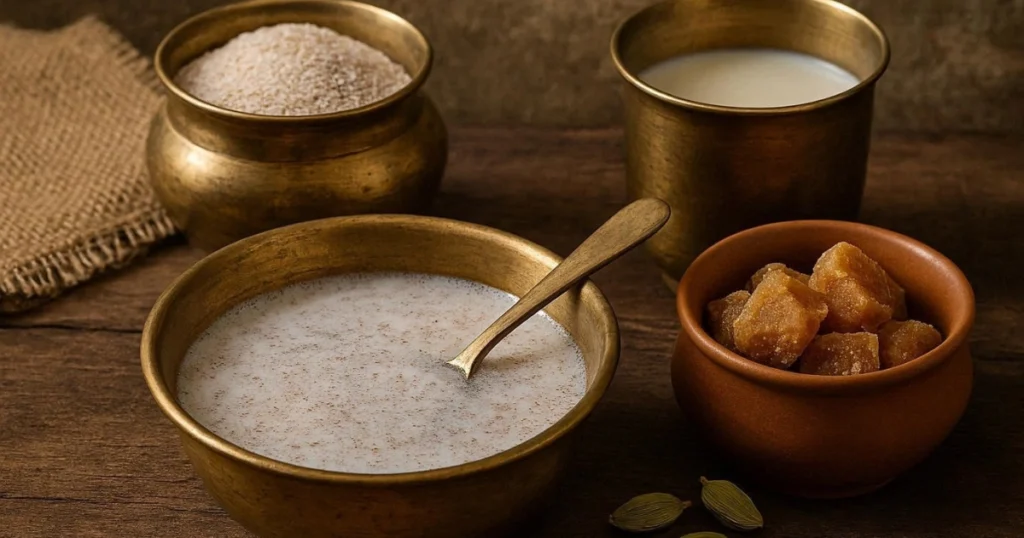
Classical preparations:
- With warm milk before bed
- Mixed with buttermilk for cooling
- Combined with yogurt for gut health
- Added to herbal formulations
Modern Indian Usage
Common household practices:
- Grandmothers’ remedy for constipation
- Weight management supplement
- Diabetes control aid
- Cholesterol reduction method
Indian families often keep isabgol as a staple home remedy, similar to how Western households keep antacids or fiber supplements.
Health Benefits of Isabgol
Digestive Health
Constipation relief:
The primary use of psyllium husk India-wide is treating constipation. The fiber absorbs water, softens stool, and promotes regular elimination naturally.
Dual action:
Uniquely treats both constipation and diarrhea by normalizing stool consistency—a benefit recognized in Indian traditional medicine for centuries.
Weight Management
Growing application in urban India where obesity rates are rising. Taking isabgol before meals creates fullness, reducing calorie intake by 10-20% naturally.
Blood Sugar Control
Critical for India’s high diabetes prevalence. Psyllium slows carbohydrate absorption, preventing blood sugar spikes—increasingly prescribed by Indian doctors alongside medications.
Heart Health
Regular use reduces cholesterol levels, addressing cardiovascular disease concerns in Indian populations adopting Western dietary patterns.
Where to Buy in India
Retail Availability
Medical stores:
Every neighborhood in India has medical shops stocking multiple isabgol brands. Simply ask for “Isabgol” or “Isabgol ki bhusi.”
Ayurvedic shops:
Specialized stores offering traditional and organic options, including organic India psyllium husk.
Supermarkets:
Major chains like Big Bazaar, Reliance Fresh, and More carry isabgol in health sections.
Online platforms:
- Amazon India
- Flipkart
- 1mg
- PharmEasy
- Netmeds
Price Range in India
- Budget options: ₹40-80 per 100g
- Mid-range brands: ₹100-150 per 100g
- Organic India psyllium husk: ₹180-250 per 100g
- Premium imports: ₹300-500 per 100g
Price often reflects quality—cheaper products typically have lower purity and effectiveness.
Quality Indicators When Buying
Visual Assessment
High-quality isabgol:
- Light cream to pale tan color
- Fine, uniform powder texture
- Fresh, neutral smell
- No dark spots or discoloration
Lower-quality signs:
- Dark brown or gray color
- Coarse, inconsistent texture
- Musty or stale odor
- Visible impurities or foreign matter
Label Information
Look for:
- 95%+ purity rating
- Clear expiration date
- Batch number for traceability
- Organic certification (if claimed)
- Manufacturing details
Avoid:
- Products without purity information
- Unclear sourcing
- Suspiciously low pricing
- Damaged or moisture-exposed packaging
Pakistani Psyllium: The Quality Standard
While discussing psyllium husk India, it’s important to acknowledge that Pakistani psyllium from Sindh province sets the global quality benchmark.
Why Pakistani psyllium leads:
Superior growing conditions:
Sindh’s unique microclimate—specific temperature ranges, soil mineral content, and humidity levels—cannot be replicated elsewhere, including India’s Gujarat region.
Processing expertise:
Generations of specialized knowledge in cultivation, harvesting, and processing techniques produce unmatched purity.
Quality consistency:
Premium sources like Malik Psyllium maintain 85-99% purity across batches, far exceeding typical Indian psyllium’s 60-75% purity.
Global preference:
Pharmaceutical companies and health brands worldwide preferentially source Pakistani psyllium for its superior swelling capacity (12:1 vs India’s 8:1) and effectiveness.
The Global Market Context
Production Statistics
Global production:
- Pakistan: ~80% of world supply
- India: ~15% of world supply
- Other countries: ~5%
India’s role:
While India produces significant quantities, most serves domestic consumption rather than export. India is the world’s largest consumer of psyllium husk, with domestic demand absorbing most local production.
Export Quality vs Domestic
For export:
Indian processors select higher-grade psyllium, achieving 75-85% purity to meet international standards.
Domestic market:
Lower grades (60-70% purity) commonly sold within India, adequate for price-conscious consumers but less effective than premium options.
Making Informed Choices
When Indian Psyllium Works Well
Good choice if:
- Budget is primary concern
- Buying within India (convenient availability)
- Using for general digestive support
- Already familiar with local brands
- Organic certification is priority (Organic India)
When to Choose Pakistani Psyllium
Better choice if:
- Quality is top priority
- Managing specific health conditions (diabetes, high cholesterol)
- Want smaller effective doses
- Seeking pharmaceutical-grade purity
- Need consistent, predictable results
What is psyllium husk Indian name?
Psyllium husk Indian name is “Isabgol” (also spelled Ispaghula), derived from Persian meaning “horse ear.” Also called “Isabgol ki Bhusi” for husk specifically.
Where is psyllium husk India produced?
Psyllium husk India is primarily produced in Gujarat state (Mehsana, Banaskantha districts) accounting for 80-85% of Indian production, with secondary production in Rajasthan (Jodhpur, Jalore).
Is Organic India psyllium husk good quality?
Organic India psyllium husk achieves 75-85% purity, better than standard Indian psyllium (60-75%) but below premium Pakistani psyllium (85-99%). Good organic option for Indian market.
How does Indian isabgol compare to Pakistani psyllium?
Pakistani psyllium typically achieves 85-99% purity and 12:1 swelling vs Indian isabgol’s 60-75% purity and 8:1 swelling. Pakistani psyllium offers superior quality and consistency.
Is isabgol used in Ayurveda?
Yes, psyllium husk Indian name “Isabgol” appears in Ayurvedic texts for constipation, cooling excess heat (Pitta), digestive regulation, and internal cleansing. Traditional preparation with milk or buttermilk.
How much does organic India psyllium husk cost?
Organic India psyllium husk costs ₹180-250 per 100g in India, higher than standard brands (₹40-150) due to organic certification, quality control, and fair trade practices.
Conclusion
Understanding the psyllium husk Indian name “Isabgol” and the broader context of psyllium husk India production helps consumers make informed decisions about this essential fiber supplement. India’s significant role as the world’s second-largest producer, particularly through Gujarat’s cultivation regions, combined with centuries of Ayurvedic tradition, makes isabgol deeply embedded in Indian culture and healthcare. Major brands including organic India psyllium husk options like Organic India, Patanjali, Dabur, and Hamdard provide accessible choices for Indian consumers seeking domestically produced fiber supplements.
However, quality-conscious consumers should understand that while psyllium husk India offers convenience and affordability, Pakistani psyllium from Sindh province delivers superior purity (85-99% vs 60-75%), better swelling capacity (12:1 vs 8:1), and more consistent effectiveness. This quality difference means premium Pakistani psyllium requires smaller doses for equivalent results, potentially offering better value despite higher initial cost.
Whether choosing Indian brands for convenience and tradition or opting for premium Pakistani psyllium from sources like Malik Psyllium for superior quality, the key is selecting products with clear purity ratings, proper packaging, and reputable sourcing. The psyllium husk Indian name “Isabgol” represents not just a translation but a cultural connection to traditional wellness practices that modern science continues to validate for digestive health, weight management, blood sugar control, and cardiovascular support. Make your choice based on your priorities—budget, convenience, quality standards, and health goals—while ensuring adequate hydration (minimum 8-10 ounces water per teaspoon) regardless of which source you select.

Isabgol Ke Fayde – Psyllium Husk Ke Poori Science-Based Rahnumayi – 2026
Isabgol ke fayde jaanna aaj ke daur mein zyada zaroori
Isabgol Benefits in Hindi | Psyllium Husk Ke Fayde, Sahi Upyog Aur Savdhaniyan – 2026
Agar aap isabgol benefits in hindi mein samajhna chahte hain,