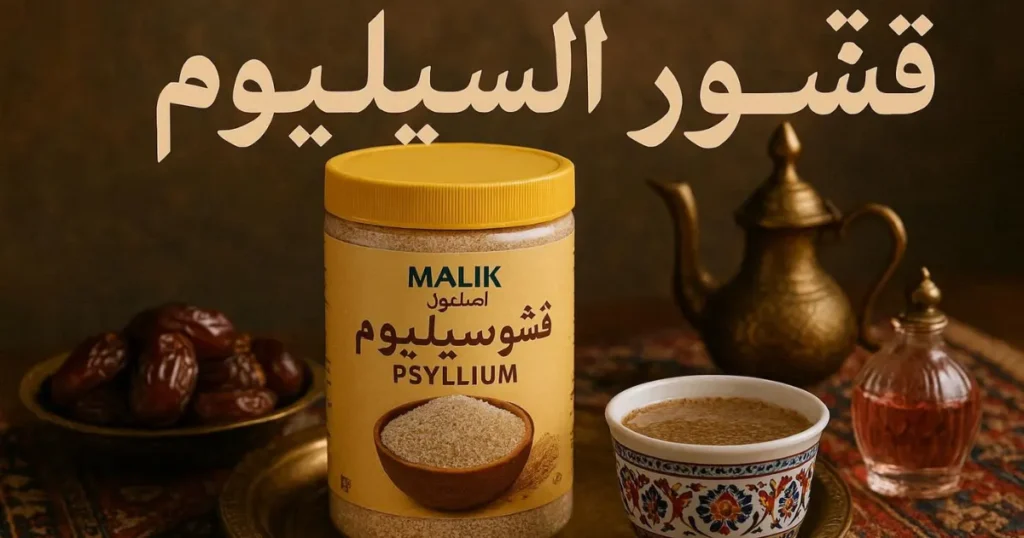
Looking for ispaghula husk in Arabic or wondering what it’s called in Saudi Arabia? The Arabic name is “قشور السيليوم” (Qusoor Al-Psyllium) or “قشر الإسبغول” (Qishr Al-Ispagol). Many Arabic-speaking communities search for ispaghol chilka in Arabic or psyllium husk in Arabic, all referring to the same natural fiber supplement. In Saudi Arabia and across the Gulf region, psyllium husk in Saudi Arabia is increasingly popular for digestive health, weight management, and overall wellness. This powerful fiber from Plantago ovata seeds has been used in traditional Middle Eastern medicine for generations.
In this guide, I’ll explain everything about ispaghula husk in Arabic—what it is, traditional and modern Arabic uses, health benefits, proper preparation methods, where to buy quality psyllium in Saudi Arabia and other Arab countries, and cultural remedies from the region.
What Is Ispaghula Husk in Arabic? (ما هي قشور السيليوم؟)
Arabic Names and Terminology
Primary Arabic names:
- قشور السيليوم (Qusoor Al-Psyllium) – Modern scientific term
- قشر الإسبغول (Qishr Al-Ispagol) – Traditional name
- لسان الحمل (Lisan Al-Hamal) – Classical Arabic “plantain tongue”
- بذور القاطونة (Budhoor Al-Qatoona) – Seeds reference
The word “قشور” (Qusoor) means “husks” or “shells,” referring to the outer seed coating where fiber concentrates.
What It Is
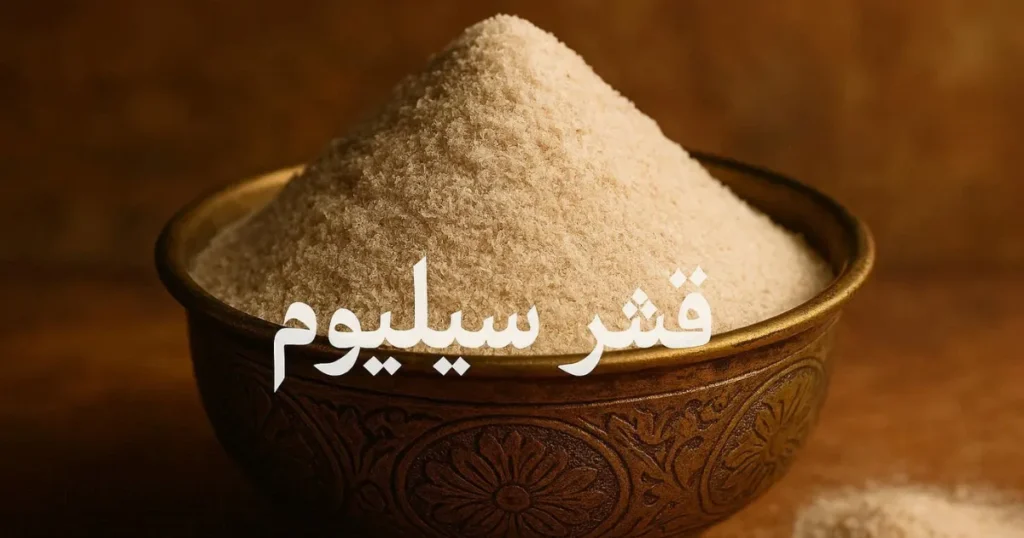
Ispaghula husk in Arabic, whether called ispagol or psyllium, comes from Plantago ovata. Pakistan grows the world’s highest-quality psyllium in Sindh province, producing 80% of global supply with unmatched purity.
Key characteristics:
- Pure soluble fiber (لا سعرات حرارية – no calories)
- Light cream to pale tan color
- Fine powder texture
- Swells 10-12 times in water
- Forms gel when hydrated
Traditional Arabic and Islamic Medicine Uses
In Unani Medicine (الطب اليوناني)
Unani medicine, widely practiced across the Arab world, has used ispaghol chilka in Arabic remedies for centuries.
Traditional Arabic preparations:
For constipation (الإمساك):
Mix 1 teaspoon psyllium husk in Arabic preparation with warm water and honey before bed. This gentle method promotes morning elimination.
For stomach heat (حرارة المعدة):
Combine with cold water or milk. Arabic medicine considers isabgol cooling for the body, balancing internal heat.
For ulcers (قرحة المعدة):
Mix with yogurt or buttermilk (لبن رائب). The soothing gel coats stomach lining, reducing irritation.
For diarrhea (الإسهال):
Despite seeming contradictory, ispaghula husk in Arabic medicine treats both constipation and diarrhea by normalizing stool consistency.
Halal certification:
Pure psyllium husk is naturally halal—it’s plant fiber with no animal products or alcohol processing.
Health Benefits of Psyllium Husk in Saudi Arabia and Arab Countries
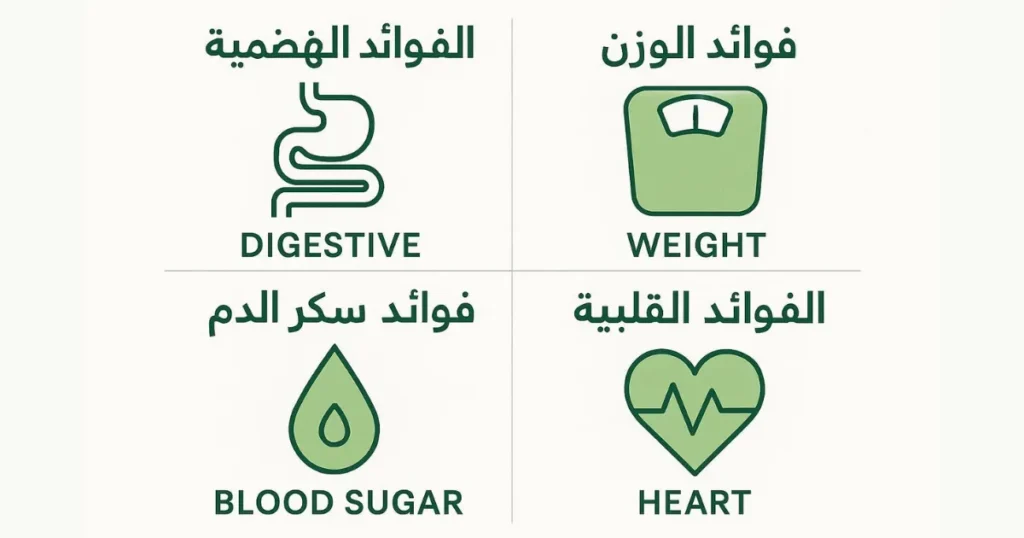
Digestive Health (صحة الجهاز الهضمي)
Constipation relief:
The primary use of ispaghula husk in Arabic-speaking communities is relieving constipation, common in Gulf countries due to diet and climate.
How it works:
Fiber absorbs water, softens stool, and promotes regular bowel movements within 12-24 hours.
Weight Management (إدارة الوزن)
Critical for Saudi Arabia and Gulf countries facing rising obesity rates. Psyllium husk in Saudi Arabia usage for weight control has grown significantly.
Arabic weight loss method:
- 1 teaspoon before meals with water
- Creates fullness (الشبع)
- Reduces calorie intake naturally
- No added calories
Blood Sugar Control (ضبط سكر الدم)
Essential for Arab countries with high diabetes prevalence. Ispaghol chilka in Arabic diabetic management slows carbohydrate absorption.
Benefits for diabetics:
- 15-20% reduction in post-meal glucose
- Improved HbA1c levels
- Works with diabetes medications
- Prevents sugar spikes
Heart Health (صحة القلب)
Regular use reduces cholesterol by binding bile acids in intestines.
Cardiovascular benefits:
- 5-10% LDL cholesterol reduction
- Improved heart health markers
- Reduced cardiovascular disease risk
- FDA-approved health claims
Ramadan Benefits
During Ramadan, many Muslims use psyllium husk in Arabic preparation:
- Before Suhoor: Promotes satiety throughout fasting
- After Iftar: Aids digestion of heavier meals
- Prevents constipation common during Ramadan
How to Use Ispaghula Husk in Arabic Method
Standard Preparation (الطريقة القياسية)
Basic Arabic method:
Ingredients:
- 1-2 teaspoons (5-10 grams) ispaghula husk
- 250ml (8-10 ounces) water, milk, or buttermilk
- Optional: honey (عسل), dates (تمر)
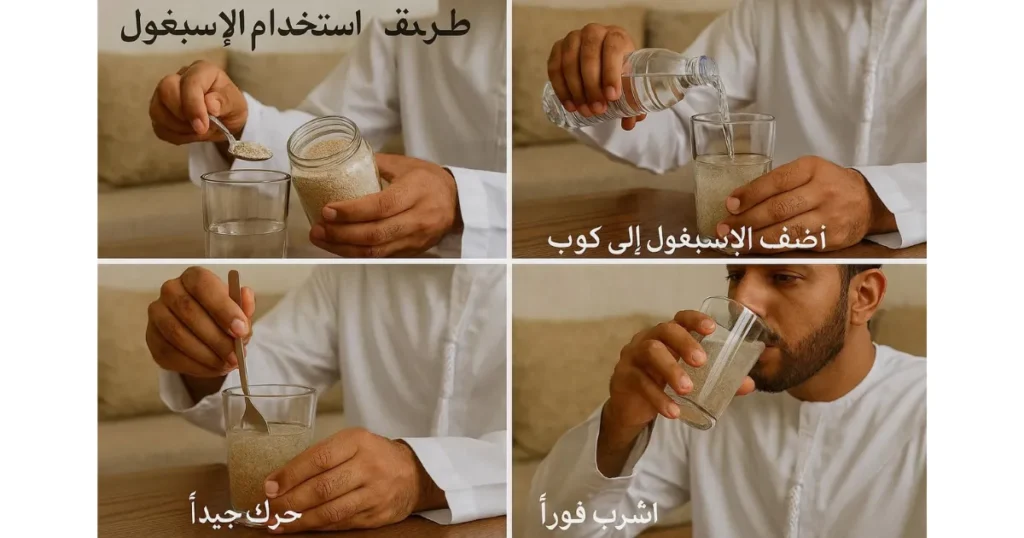
Steps:
- Add psyllium to empty glass
- Pour liquid while stirring
- Mix vigorously 15-20 seconds
- Drink immediately before thickening
- Follow with more water
Critical: Must drink immediately. Psyllium husk in Arabic usage requires fast consumption after mixing.
Traditional Arabic Recipes
Morning digestive tonic:
- 1 teaspoon isabgol
- Warm water with honey
- Squeeze of lemon
- Take on empty stomach
Evening preparation:
- 1 teaspoon psyllium husk
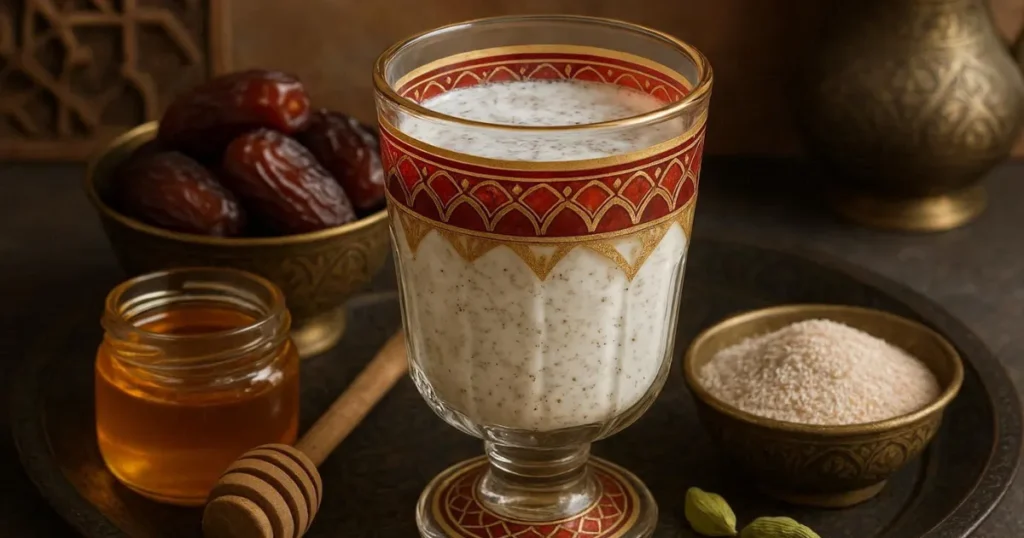
- Warm milk
- Dates or honey
- Cardamom (هيل)
- Take 2 hours after dinner
Cooling summer drink:
- 1 teaspoon ispaghula husk
- Cold buttermilk (لبن)
- Pinch of salt
- Fresh mint (نعناع)
- Refreshing and digestive
Saudi Arabian Preparation
In Saudi Arabia and Gulf countries, psyllium husk in Saudi Arabia is commonly mixed with:
- Zabadi (زبادي – yogurt)
- Laban (لبن – buttermilk)
- Dates milk
- Rose water (ماء الورد)
Dosage Guidelines for Arabic-Speaking Users
Standard Dosing (الجرعة القياسية)
Adults (البالغون):
- Start: 2.5-5 grams (½-1 teaspoon) once daily
- Standard: 5-10 grams (1-2 teaspoons) daily
- Maximum: 15 grams (3 teaspoons) split across day
Children (الأطفال) 6-12 years:
- Half adult dose
- Requires pediatrician approval
- Extra hydration important
Elderly (كبار السن):
- Start with 2.5 grams
- Increase gradually
- Monitor closely
Timing Recommendations
Morning (الصباح):
Take ispaghula husk in Arabic on empty stomach for bowel stimulation and all-day digestive comfort.
Before meals (قبل الوجبات):
For appetite control, blood sugar management, and weight loss support.
Evening (المساء):
2 hours after dinner for overnight processing and comfortable morning elimination.
Hydration Requirements (متطلبات الترطيب)
Critical rule:
Minimum 250ml (8-10 ounces) liquid per teaspoon of ispaghol chilka in Arabic preparation.
Arabic reminder: “لا إسبغول بدون ماء” (No Ispagol without water)
Inadequate water causes fiber to absorb intestinal fluid, worsening constipation instead of relieving it. This is especially critical in hot climates like Saudi Arabia where dehydration risk is higher.
Where to Buy Psyllium Husk in Saudi Arabia and Arab Countries
Saudi Arabia (المملكة العربية السعودية)
Available at:
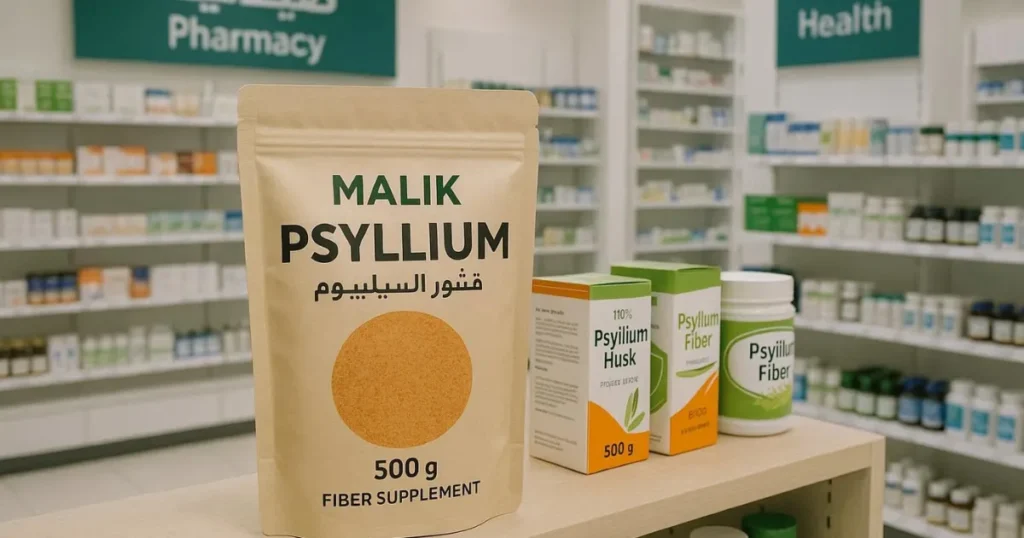
- Pharmacies (الصيدليات) – Riyadh, Jeddah, Dammam
- Health food stores (متاجر الأغذية الصحية)
- Major supermarkets (السوبر ماركت الكبرى)
- Online: Noon, Amazon.sa, iHerb
Popular brands in KSA: Ask for “Ispagol” or “Psyllium” – widely recognized.
UAE, Qatar, Kuwait, Bahrain
Widely available at:
- Pharmacies and health stores
- Carrefour, Lulu Hypermarket
- Online delivery services
- Organic food shops
Egypt, Jordan, Lebanon
Available at:
- Traditional pharmacies (الصيدليات التقليدية)
- Health supplement stores
- Some grocery chains
- Herbalist shops (العطارين)
Quality Indicators
Look for when buying psyllium husk in Arabic regions:
- Light cream color (not dark brown)
- Fine, uniform powder
- 95%+ purity rating (النقاء 95٪+)
- Proper packaging (airtight)
- Clear expiration date
- Halal certification if desired
Premium quality:
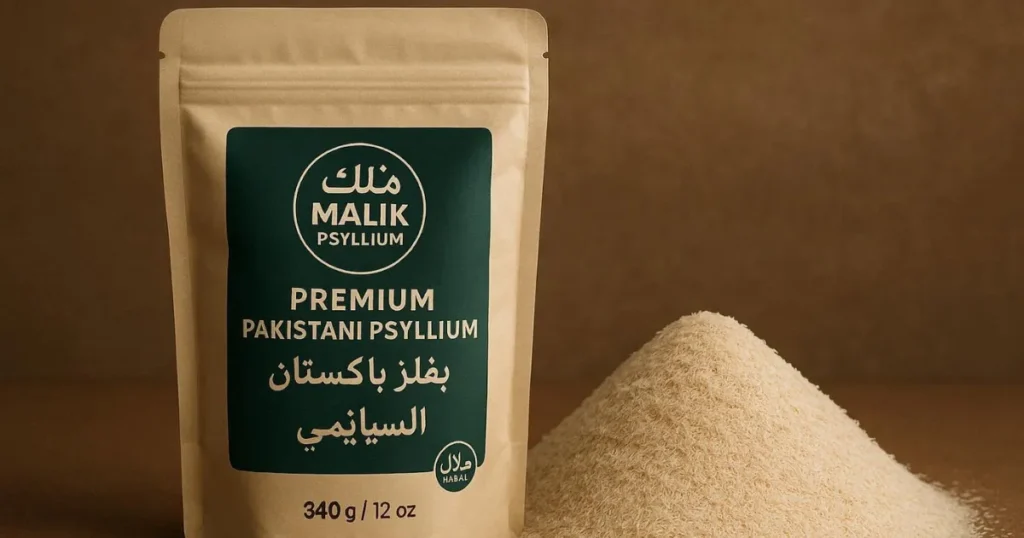
Pakistani psyllium from sources like Malik Psyllium offers superior 85-99% purity and 12:1 swelling capacity compared to standard 60-75% purity products.
Common Questions from Arabic-Speaking Communities
Is Isabgol Heating or Cooling?
Arabic and Islamic medicine consider ispaghula husk in Arabic as cooling (بارد) for the body. This makes it ideal for hot Gulf climates.
The cooling property helps balance internal heat (حرارة), which is why it’s often mixed with cold water or milk during summer.
Is It Halal?
Yes, absolutely halal (حلال). Pure psyllium husk is plant fiber with:
- No animal products
- No alcohol processing
- Naturally permissible
- Suitable for Muslim dietary laws
Many brands offer halal certification for additional assurance.
Can Diabetics Use It?
Yes, highly beneficial for diabetics. Psyllium husk in Saudi Arabia diabetic programs is recommended:
- Slows sugar absorption
- Reduces insulin spikes
- Improves glucose control
- Safe with medications
Diabetic protocol: 1 teaspoon before each main meal.
Safe during Pregnancy?
Generally yes, but consult doctor first. Many Arab women use ispaghol chilka in Arabic during pregnancy for constipation relief.
Pregnancy guidelines (الحمل):
- Start small (½ teaspoon)
- Ensure adequate hydration
- Take away from prenatal vitamins
- Monitor for discomfort
Can Children Take It?
Yes, from age 6+ with appropriate dosing. Common in Arab households for gentle constipation relief.
Children’s dose: Half the adult amount with double attention to water intake.
Cultural Differences in Arabic Regions
Gulf Countries (دول الخليج)
Saudi Arabia, UAE, Kuwait, Qatar, Bahrain:
- Often mixed with zabadi or laban
- Evening timing more common
- Combined with dates
- Ramadan usage popular
Levant Region (بلاد الشام)
Syria, Lebanon, Jordan, Palestine:
- Mixed with yogurt frequently
- Morning usage preferred
- Combined with traditional herbs
- Rose water additions common
North Africa (شمال أفريقيا)
Egypt, Morocco, Tunisia:
- Buttermilk combinations popular
- Used in traditional medicine
- Often prescribed by herbalists
- Mixed with mint or honey
All approaches work excellently—choose based on personal and cultural preference.
Side Effects and Precautions (الآثار الجانبية والاحتياطات)
Initial Effects
When starting ispaghula husk in Arabic preparation:
- Mild gas (غازات) first 3-7 days
- Increased thirst (عطش)
- More frequent bowel movements
These resolve as body adapts.
When to Avoid
Don’t use if you have:
- Difficulty swallowing (صعوبة البلع)
- Intestinal blockage (انسداد معوي)
- Psyllium allergy (rare)
Important Warnings
With medications (مع الأدوية):
Take psyllium 2-4 hours away from all medications to prevent absorption interference.
Choking prevention:
Never consume dry psyllium powder. Always mix with adequate liquid first.
Quality: Pakistani vs Other Sources
While multiple countries produce psyllium, quality varies significantly.
Pakistani psyllium (Sindh province):
- 85-99% purity
- 12:1 swelling ratio
- Finer particle size
- Lighter, uniform color
- Superior effectiveness
Other sources:
- 60-75% typical purity
- 8:1 swelling ratio
- Variable quality
- Often darker color
- Less consistent
For Arabic users seeking best results, premium Pakistani psyllium provides superior benefits even at smaller doses.
Scientific Evidence
Modern research validates traditional Arabic medicine wisdom about ispaghol chilka in Arabic uses.
Clinical Studies
Digestive health:
Multiple trials confirm psyllium relieves constipation and IBS in 60-70% of users within 2-4 weeks.
Metabolic benefits:
Research shows 7-10 grams daily reduces LDL cholesterol 5-10% and improves diabetic control.
Weight management:
Studies show participants taking psyllium before meals lost significantly more weight than controls.
This scientific validation confirms centuries of traditional use in Arabic medicine.
What is ispaghula husk called in Arabic?
Ispaghula husk in Arabic is “قشور السيليوم” (Qusoor Al-Psyllium) or “قشر الإسبغول” (Qishr Al-Ispagol). Both refer to the same digestive fiber supplement.
What is ispaghol chilka in Arabic language?
Ispaghol chilka in Arabic is “قشر الإسبغول” (Qishr Al-Ispagol). “Chilka” means husk, referring to the fiber-rich outer seed covering.
How do you say psyllium husk in Arabic?
Psyllium husk in Arabic is “قشور السيليوم” (Qusoor Al-Psyllium) or “لسان الحمل” (Lisan Al-Hamal) in classical Arabic.
Where to buy psyllium husk in Saudi Arabia?
Psyllium husk in Saudi Arabia is available at pharmacies throughout Riyadh, Jeddah, Dammam, health stores, major supermarkets, and online via Noon, Amazon.sa, iHerb.
Is isabgol halal for Muslims?
Yes, absolutely halal (حلال). Pure psyllium husk is plant fiber with no animal products, alcohol, or prohibited ingredients. Suitable for Islamic dietary laws.
How much isabgol should Arabic users take daily?
Start with 1 teaspoon (5 grams) once daily with 250ml liquid. Standard dose is 1-2 teaspoons daily. Maximum 3 teaspoons split across day.
Can diabetics use ispaghula husk in Arabic preparation?
Yes, excellent for diabetics. Take 1 teaspoon before meals to reduce blood sugar spikes. Slows carbohydrate absorption and improves glycemic control safely.
Is psyllium safe during Ramadan fasting?
Yes, take before Suhoor to promote satiety during fasting, or after Iftar to aid meal digestion. Helps prevent constipation common during Ramadan.
Conclusion
Understanding ispaghula husk in Arabic (قشور السيليوم) or ispaghol chilka in Arabic—along with psyllium husk in Arabic and where to find psyllium husk in Saudi Arabia—helps Arabic-speaking communities access this powerful natural fiber for digestive health, weight management, blood sugar control, and overall wellness. Whether you call it ispaghula, ispagol, or psyllium, this fiber from Plantago ovata offers exceptional benefits validated by both traditional Arabic medicine and modern science.
Success requires proper preparation—mixing 1-2 teaspoons with adequate liquid (minimum 250ml), drinking immediately, and maintaining consistent daily use for 1-2 weeks. Traditional Arabic preparations with zabadi, laban, dates, or honey work excellently. Start small (½-1 teaspoon daily), increase gradually, never compromise on hydration (critical in hot climates), and give your system time to adapt. Quality matters—premium Pakistani psyllium with 85-99% purity from sources like Malik Psyllium delivers superior effectiveness. Whether in Saudi Arabia, UAE, Egypt, or anywhere in the Arab world, incorporating ispaghula husk in Arabic traditional methods provides safe, natural, scientifically validated digestive wellness.

Isabgol Ke Fayde – Psyllium Husk Ke Poori Science-Based Rahnumayi – 2026
Isabgol ke fayde jaanna aaj ke daur mein zyada zaroori
Isabgol Benefits in Hindi | Psyllium Husk Ke Fayde, Sahi Upyog Aur Savdhaniyan – 2026
Agar aap isabgol benefits in hindi mein samajhna chahte hain,