

Can psyllium husk cause dehydration, and how do you prevent it? This critical question affects everyone using this powerful fiber supplement. Psyllium husk dehydration occurs when you consume psyllium without adequate water intake – the fiber absorbs intestinal fluid instead of supplemental water, potentially leading to constipation, cramping, and genuine dehydration rather than relief.
While psyllium itself doesn’t cause dehydration, improper use absolutely can. The fiber absorbs 10-12 times its weight in water, creating a gel that moves through your digestive system. Without sufficient liquid, psyllium draws moisture from your body, producing the opposite of its intended benefits.
In this comprehensive guide, I’ll explain exactly how psyllium husk dehydration happens, precise water requirements for safe use, warning signs that indicate insufficient hydration, proven prevention strategies, what to do if dehydration occurs, and special considerations for different populations. You’ll discover why quality matters, optimal timing for water intake, and how to balance psyllium’s remarkable benefits with proper hydration protocols.
Understanding Psyllium Husk Dehydration
Let me clarify what psyllium husk dehydration actually means and how it differs from general dehydration.
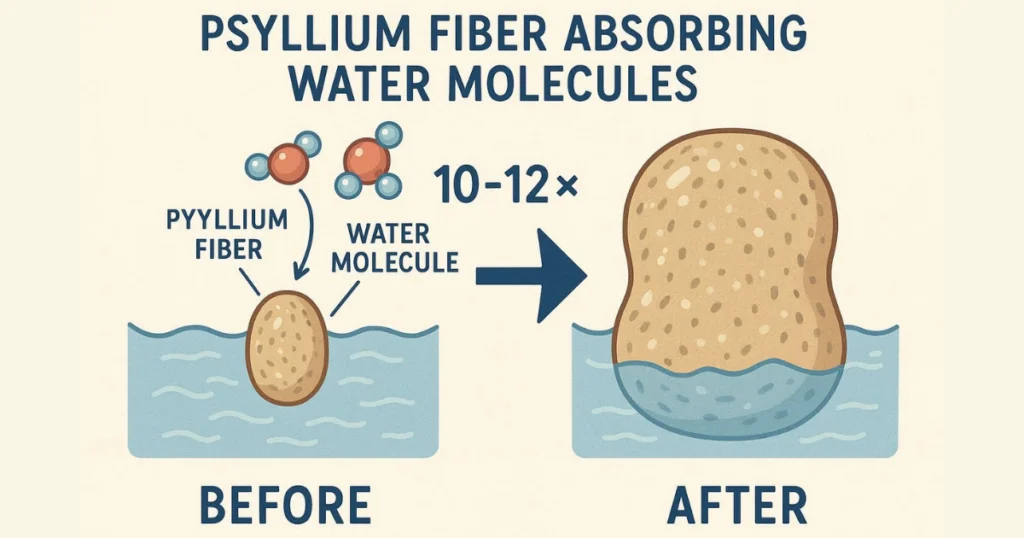
How Psyllium Works
Psyllium husk is pure soluble fiber from Plantago ovata seeds. When consumed, it doesn’t dissolve – it absorbs water and forms a gel-like substance that adds bulk to stool and promotes regular bowel movements.
The absorption mechanism:
- Psyllium can absorb 10-12 times its weight in water
- This happens rapidly – within minutes of contact with liquid
- The gel formation continues in your digestive system
- Premium Pakistani psyllium has even higher absorption capacity (12:1 vs 8:1 from other regions).
This powerful water-absorbing property is exactly what makes psyllium effective, but also why hydration matters so critically.
What Is Psyllium Husk Dehydration?
Psyllium husk dehydration occurs when the fiber absorbs more fluid from your body than you’ve provided externally. Instead of working with supplemental water to create beneficial bulk, psyllium draws moisture from your intestines and tissues.
The problematic cycle:
- You take psyllium without enough water.
- Psyllium absorbs available intestinal fluid.
- Your colon tries to extract more water to compensate.
- Stool becomes harder instead of softer.
- Constipation worsens rather than improves.
- Your body becomes increasingly dehydrated.
This isn’t true systemic dehydration initially – it’s localized fluid depletion in your digestive tract. However, severe cases can progress to full-body dehydration if uncorrected.
The Paradox.
Here’s what confuses people: psyllium is supposed to relieve constipation, yet improper use causes or worsens it. The difference is entirely about water intake.
With adequate water:
- Psyllium forms soft, bulky stool.
- Transit through the intestines improves.
- Bowel movements become regular and comfortable.
- Hydration supports overall health.
Without adequate water:
- Psyllium creates hard, dry stool.
- Transit slows or stops.
- Constipation intensifies.
- Potential for psyllium husk dehydration increases.
How Much Water Do You Need with Psyllium Husk?
Specific numbers matter here. Let me provide exact guidelines.
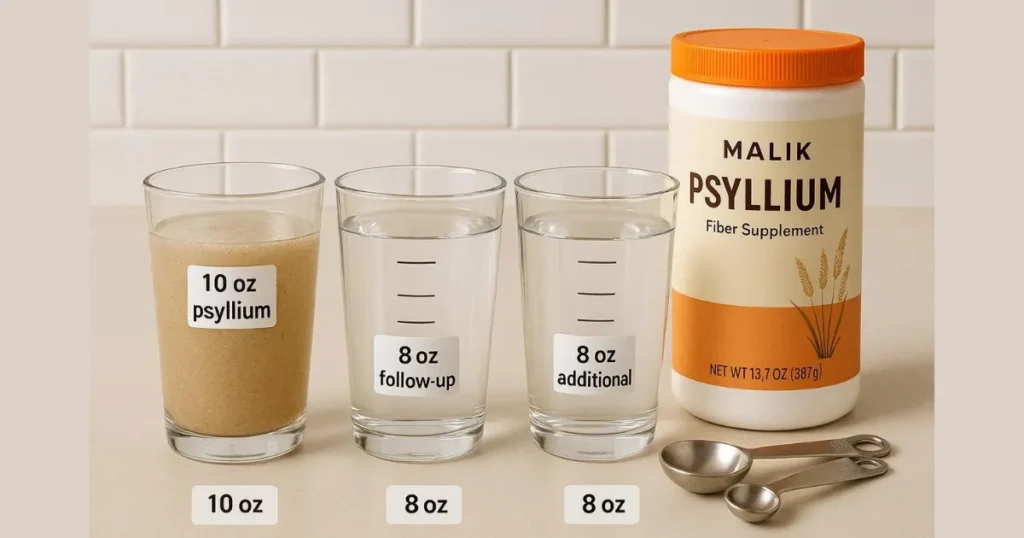
Minimum Water Requirements.
Per 5-gram dose of psyllium:
- Minimum 8-10 ounces when consuming.
- Additional 8 ounces within 30 minutes.
- Total: 16-18 ounces per 5-gram dose.
Daily totals when using psyllium:
- Base water needs: 64-80 ounces (8-10 glasses).
- Additional for psyllium: 16-18 ounces per dose.
- Total daily: 80-100+ ounces minimum.
These aren’t suggestions – they’re requirements for preventing psyllium husk dehydration.
Calculating Your Personal Needs.
Basic formula:
- Minimum 10 ounces per 5 grams of psyllium.
- Plus your normal daily water needs.
- Plus additional for exercise, climate, and diet.
Example calculation:
- Taking 10 grams of psyllium daily (2 doses of 5 grams).
- Water for psyllium: 32-36 ounces.
- Base daily needs: 64 ounces.
- Total minimum: 96-100 ounces.
Factors requiring more water:
- Hot climate or summer weather.
- Physical activity or exercise.
- High-protein or keto diets.
- Caffeine or alcohol consumption.
- High-sodium diet.
- Taking medications (especially diuretics).
Timing Your Water Intake.
When you drink matters as much as how much.
Optimal timing:
- 10 ounces immediately with the psyllium dose.
- 8 ounces within 15 minutes.
- 8 more ounces within the next 30 minutes.
- Consistent hydration throughout the day.
Don’t:
- Drink all your water at once and none with psyllium.
- Wait hours before drinking after psyllium.
- Assume morning water covers evening psyllium dose.
- Think yesterday’s hydration suffices for today’s psyllium.
Warning Signs of Psyllium Husk Dehydration.
Recognizing early warning signs prevents serious complications.
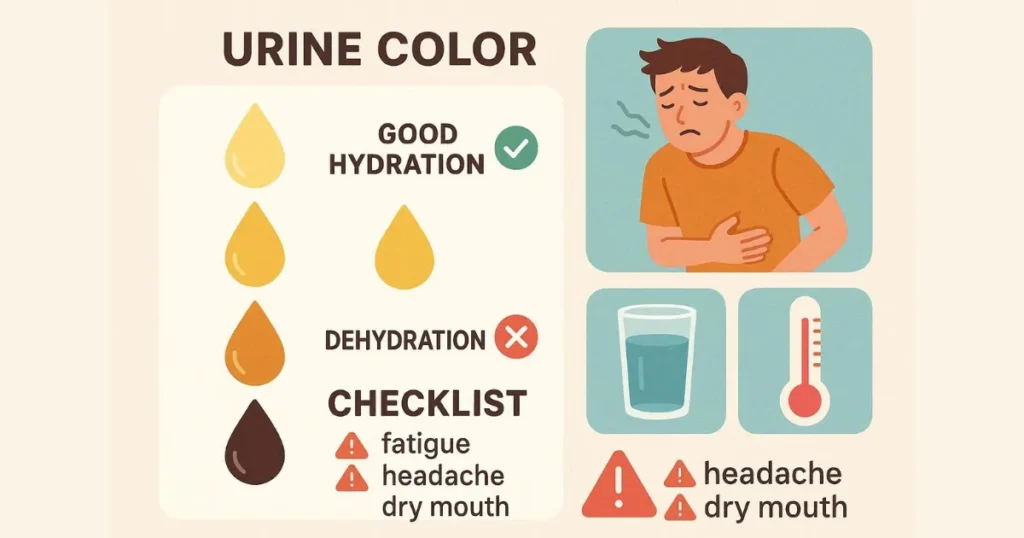
Early Warning Signs.
Digestive symptoms:
- Worsening constipation despite psyllium use.
- Hard, dry, difficult-to-pass stools.
- Abdominal cramping or bloating.
- Feeling of blockage or fullness.
- Straining during bowel movements.
Physical symptoms:
- Dark yellow or amber urine.
- Reduced urination frequency.
- Dry mouth despite drinking.
- Headache or dizziness.
- Fatigue or lethargy.
Serious warning signs requiring immediate action:
- No bowel movement for 3+ days.
- Severe abdominal pain.
- Vomiting or nausea.
- Unable to pass gas.
- Fever above 100.4 °F (38 °C).
If you experience severe symptoms, stop psyllium immediately and seek medical attention. Severe psyllium husk dehydration can cause intestinal blockage requiring emergency intervention.
Who Is Most At Risk?
Certain populations face a higher psyllium husk dehydration risk.
High-risk groups:
- Elderly individuals (reduced thirst sensation).
- Athletes or physically active people (increased fluid loss).
- People in hot climates.
- Those on high-protein or keto diets.
- Anyone taking diuretic medications.
- People with kidney conditions.
- Those with naturally low water intake habits.
If you fall into these categories, increase baseline water intake by 20-30% when using psyllium.
Preventing Psyllium Husk Dehydration.
Prevention is straightforward when you follow proper protocols.

The Golden Rules.
Rule 1:
Never compromise on water. No matter how rushed, tired, or forgetful, always consume full water amounts with psyllium. This is non-negotiable.
Rule 2:
Front-load your hydration. Drink the bulk of your water immediately with and right after psyllium, not hours later.
Rule 3:
Monitor your urine. Pale yellow urine indicates adequate hydration. Dark yellow signals you need more water.
Rule 4:
Start conservatively. Begin with 2.5-5 grams once daily until your body adapts. Only increase dosage if hydration habits are solid.
Rule 5:
Set reminders. Use phone alarms, water tracking apps, or visual cues (water bottle on desk) to maintain consistency.
Practical Prevention Strategies.
Pre-measure your water: Before taking psyllium, pour out the exact water amount you need. This visual reminder ensures adequate intake.
Use a marked water bottle:
Purchase bottles with time markers or measurement lines. Track your daily progress visually.
Pair with routine:
Take psyllium at the same time you always drink water – after brushing teeth, with meals, etc.
Flavor your water:
If plain water bores you, add lemon, cucumber, or herbal tea to increase consumption.
Track your intake:
Keep a simple log for one week. Most people discover they drink less than they think.
What to Do If Psyllium Husk Dehydration Occurs.
If you develop symptoms despite precautions, act quickly.
Immediate Actions.
Step 1:
Stop psyllium temporarily. Discontinue use until hydration normalizes and bowel movements return to baseline.
Step 2:
Increase water dramatically. Drink 16-20 ounces immediately, then 8-10 ounces every hour while awake.
Step 3:
Add electrolytes. Include electrolyte drinks, coconut water, or oral rehydration solutions. Plain water alone may not rehydrate efficiently.
Step 4:
Consume water-rich foods. Eat cucumbers, watermelon, oranges, soups, and broths to supplement liquid intake.
Step 5:
Gentle movement, Light walking stimulates digestion and promotes bowel movements. Avoid strenuous exercise until resolved.
When to Seek Medical Help.
Seek immediate care if:
- No bowel movement for 4+ days despite hydration efforts.
- Severe, unrelenting abdominal pain.
- Vomiting prevents fluid intake.
- Signs of severe dehydration (dizziness, confusion, rapid heartbeat).
- Rectal bleeding.
- Fever accompanying constipation.
Medical intervention may include laxatives, enemas, or IV fluids, depending on severity.
Resuming Psyllium Safely.
After resolving the psyllium husk dehydration.
Recovery protocol:
- Wait 3-5 days after bowel movements normalize.
- Restart with just 2.5 grams once daily.
- Consume 12-16 ounces of water per dose (extra precaution).
- Monitor closely for 1-2 weeks.
- Increase dose only if tolerating well with no symptoms.
- Maintain heightened water awareness permanently.
Many people who experience psyllium husk dehydration once become much more diligent about hydration afterward – learn from the experience without fearing psyllium itself.

Special Populations and Psyllium Husk Dehydration Risk.
Different groups need tailored approaches.
Elderly Users.
Age reduces thirst sensation and kidney function, increasing dehydration risk.
Modifications:
- Increase water to 12+ ounces per 5-gram dose.
- Set multiple hydration reminders throughout the day.
- Keep water bottles visible in every room.
- Consider starting with just 2.5 grams once daily.
- Monitor more frequently (family member assistance helpful).
Athletes and Active Individuals.
Exercise increases fluid loss through sweat, creating higher baseline water needs.
Modifications:
- Add 20-30 ounces daily for every hour of intense exercise.
- Never take psyllium immediately before workouts.
- Time psyllium doses 2+ hours before or 1+ hour after exercise.
- Include electrolyte replacement, not just water.
- Monitor hydration status with urine color.
Keto and Low-Carb Dieters.
Ketogenic diets naturally increase water loss, making psyllium husk dehydration more likely.
Modifications:
- Increase baseline water to 100-120 ounces daily minimum.
- Add extra electrolytes (sodium, potassium, magnesium).
- Take 14-16 ounces of water per 5-gram psyllium dose.
- Monitor ketone levels – dehydration can affect readings.
- Consider lower psyllium doses (5 grams total daily maximum initially).
Pregnant and Breastfeeding Women.
Pregnancy and lactation dramatically increase fluid requirements.
Modifications:
- Consult a healthcare provider before using psyllium.
- Increase water to 12-14 ounces per 5-gram dose.
- Monitor urine color vigilantly.
- Consider starting with 2.5 grams to assess tolerance.
- Never exceed 10 grams daily without medical supervision.
People on Medications.
Certain medications increase psyllium husk dehydration risk:
High-risk medications:
- Diuretics (water pills).
- Blood pressure medications (some types).
- Diabetes medications.
- Some antidepressants.
- Antihistamines.
Modifications:
- Discuss psyllium use with your doctor.
- Take medications 2-4 hours away from psyllium.
- Increase water intake by 25-30% above standard recommendations.
- Monitor for medication side effects that might be dehydration-related.
Quality and Psyllium Husk Dehydration Risk.
Psyllium quality affects hydration requirements and the risk of dehydration.
Why Quality Matters.
Premium psyllium from Pakistan exhibits a 12:1 swelling capacity, compared to 8:1 from lower-grade sources. This means:
Higher quality psyllium:
- Absorbs more water per gram.
- Requires more careful hydration.
- Works more effectively with proper water intake.
- Creates better gel formation.
Lower quality psyllium:
- Less water absorption capacity.
- May require higher doses for effectiveness.
- Creates less predictable results.
- Still requires proper hydration.
Paradoxically, premium psyllium from sources like Malik Psyllium requires more attention to hydration but works more effectively when you get it right.
Quality Indicators.
Look for:
- 95%+ purity rating.
- Pakistani origin (ideal growing conditions).
- Light cream to pale tan color.
- Fine, uniform powder.
- Clear hydration instructions on packaging.
Avoid:
- Products without purity information.
- Very dark or discolored psyllium.
- Coarse, inconsistent texture.
- Expired or improperly stored product.
- Products with added fillers or sweeteners.
Fresh, high-quality psyllium performs predictably, making it easier to establish proper hydration routines and avoid psyllium husk dehydration.
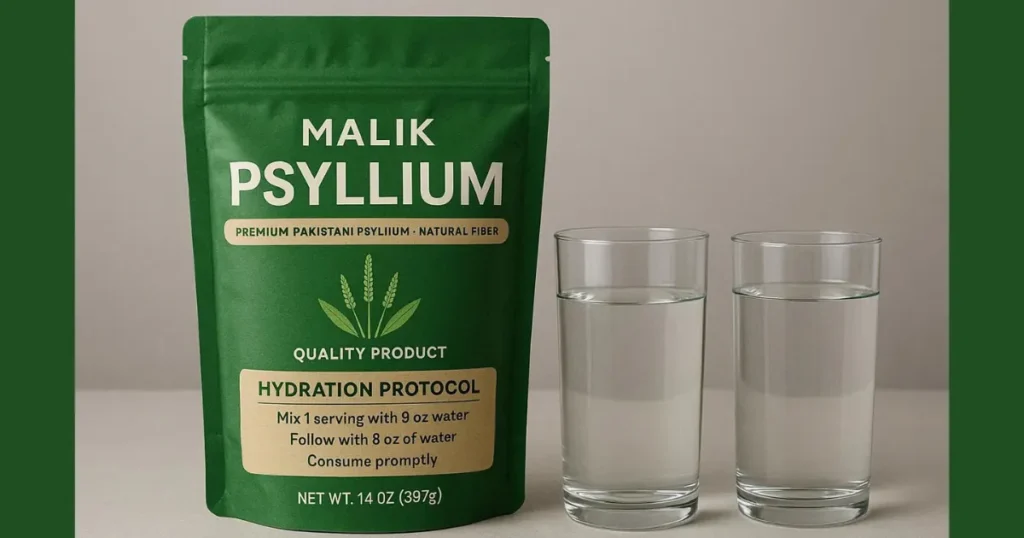
Myths and Misconceptions about Psyllium and Hydration.
Let me address common misunderstandings.
Myth 1: “Psyllium Causes Dehydration”.
Reality: Psyllium doesn’t cause dehydration – insufficient water intake does. Properly used with adequate hydration, psyllium actually helps your body maintain better fluid balance by promoting healthy digestion.
Myth 2: “Coffee or Tea Counts Toward Water Intake”.
Partial truth: While caffeinated beverages do contribute to hydration, they’re also mild diuretics. For psyllium purposes, count them at a 50% value – 10 ounces of coffee counts as 5 ounces toward your psyllium water requirement.
Myth 3: “You Only Need Water When You Feel Thirsty”.
Reality: Thirst is a late-stage dehydration signal. By the time you feel thirsty, you’re already mildly dehydrated. Systematic water intake prevents psyllium husk dehydration better than reactive drinking.
Myth 4: “All Fiber Supplements Have the Same Hydration Needs”.
Reality: Psyllium’s exceptional absorption capacity (10-12:1) exceeds most other fibers. It requires more careful hydration than many alternatives.
Myth 5: “Drinking Extra Water the Day before Covers Tomorrow’s Psyllium”.
Reality: Your body doesn’t store excess water for future use – it excretes it. You need adequate hydration the same day, ideally within hours of psyllium consumption.
Myth 6: “If you’re Not Constipated, You’re hydrated enough”.
Reality: Absence of constipation doesn’t guarantee optimal hydration. You might be barely adequate rather than truly well-hydrated. Aim for pale yellow urine as your hydration indicator.
Long-Term Hydration Strategies for Psyllium Users.
Sustainable practices matter for consistent psyllium use.
Building Hydration Habits.
Week 1: Establish baseline.
- Track current water intake without judgment.
- Identify patterns (when you drink, when you forget).
- Note situations where hydration fails.
Week 2-3: Systematic increase.
- Add one additional 8-ounce glass every 2-3 days.
- Focus on timing water around psyllium doses first.
- Use reminders and visual cues.
Week 4+: Maintenance and refinement.
- Adjust based on activity level, weather, and diet changes.
- Make hydration automatic through habit stacking.
- Periodically reassess and optimize.
Hydration Tools and Tracking.
Useful tools:
- Marked water bottles with time goals.
- Smartphone hydration tracking apps.
- Visual tracking (rubber bands moved from one wrist to the other).
- Smart bottles that track and remind.
- Simple paper log or journal.
What to track:
- Total daily water intake.
- Water consumed with each psyllium dose.
- Urine color throughout the day.
- Bowel movement quality and frequency.
- Any symptoms or concerns.
After 2-4 weeks, most people internalize proper hydration and need less active tracking.
Balancing Benefits and Hydration Requirements.
Psyllium offers remarkable benefits when used correctly.
The Benefits worth Protecting.
Digestive health:
- Regular, comfortable bowel movements.
- Softer, easier-to-pass stools.
- Reduced constipation and straining.
- Better gut bacteria balance.
Metabolic benefits:
- Improved cholesterol levels (5-10% LDL reduction).
- Better blood sugar control.
- Enhanced weight management through satiety.
- Reduced cardiovascular disease risk.
Overall wellness:
- Increased daily fiber intake (most people need this).
- Better nutrient absorption.
- Reduced inflammation.
- Improved long-term digestive health.
These benefits are substantial and scientifically validated. The hydration requirement is a small price for such significant health improvements.
Making Hydration Sustainable.
Strategies for long-term success:
Link to existing habits:
“After I brush my teeth, I drink 8 ounces of water and take my psyllium with 10 more ounces.”
Make it pleasurable:
Use water bottles you love, flavor your water naturally, and drink at preferred temperatures.
Compete with yourself:
Track daily intake and try to maintain or improve consistency.
Focus on benefits:
Notice how much better you feel with proper hydration – energy, skin quality, digestion, mental clarity all improve.
Prepare your environment:
Keep water bottles everywhere – desk, car, nightstand, and bag. Accessibility drives consumption.
Can psyllium husk cause dehydration?
Psyllium itself doesn’t cause dehydration, but taking it without adequate water (minimum 10 ounces per 5-gram dose) can lead to dehydration as the fiber absorbs intestinal fluid instead of supplemental water.
How much water should I drink with psyllium husk to prevent dehydration?
Minimum 10 ounces immediately with each 5-gram dose, plus 8 ounces within 30 minutes, plus 80-100 ounces total daily. Never compromise on these amounts.
What are the signs of psyllium husk dehydration?
Worsening constipation despite psyllium use, dark urine, hard, dry stools, abdominal cramping, reduced urination, dry mouth, headaches, and a feeling of intestinal blockage are primary warning signs.
Can you drink too much water with psyllium?
Practically no – excess water is excreted. The real risk is too little water. Aim for 16-20 ounces per 5-gram dose if concerned about dehydration risk.
What should I do if I get dehydrated from psyllium husk?
Stop psyllium immediately, drink 16-20 ounces of water immediately, then 8-10 ounces hourly, add electrolytes, consume water-rich foods, and seek medical help if severe symptoms persist beyond 24 hours.
Does coffee count toward water intake with psyllium?
Partially – count caffeinated beverages at 50% value due to mild diuretic effects. Ten ounces of coffee equals 5 ounces toward psyllium hydration requirements. Plain water is always better.
Why does psyllium husk dehydration risk increase in summer?
Hot weather increases fluid loss through sweat and respiration. Baseline water needs rise 20-30% in heat, and psyllium’s water requirements stay constant, creating higher total needs and dehydration risk.
Can quality psyllium prevent dehydration better than low-grade?
No – all psyllium requires proper hydration regardless of quality. Premium Pakistani psyllium actually absorbs more water (12:1 vs 8:1), requiring more vigilant hydration but delivering better results when done correctly.
Conclusion.
Psyllium husk dehydration is entirely preventable through proper hydration practices – the key lies in consuming adequate water (minimum 10 ounces per 5-gram dose, plus 8 more ounces within 30 minutes) and maintaining baseline daily intake of 80-100 ounces. While psyllium’s powerful water-absorbing capacity (10-12 times its weight) makes it exceptionally effective for digestive health, this same property demands disciplined hydration protocols. The fiber doesn’t cause dehydration – insufficient water intake does. When you provide adequate liquid, psyllium forms the beneficial soft gel that promotes regularity, improves cholesterol, stabilizes blood sugar, and supports overall wellness.
Recognition of early warning signs matters tremendously: worsening constipation despite psyllium use, dark urine, abdominal cramping, or reduced urination frequency all signal insufficient hydration requiring immediate correction. High-risk groups, including elderly individuals, athletes, keto dieters, and those on certain medications, need enhanced vigilance and increased water intake beyond standard recommendations. Quality impacts hydration needs – premium Pakistani psyllium with superior 12:1 swelling capacity from sources like Malik Psyllium requires more careful hydration but delivers more reliable, effective results when you meet those requirements.
The solution to psyllium husk dehydration isn’t avoiding this remarkably beneficial fiber – it’s establishing systematic hydration habits through measured water bottles, scheduled intake, progress tracking, and environmental cues that make adequate fluid consumption automatic rather than effortful. Start conservatively with 2.5-5 grams once daily, master the hydration protocol, monitor urine color and bowel movements, and gradually increase dosage only when hydration consistency is proven. The substantial benefits psyllium provides – digestive regularity, metabolic improvements, cardiovascular support – far outweigh the simple requirement of drinking enough water, making proper hydration practices a small investment for significant long-term health returns.

Isabgol Ke Fayde – Psyllium Husk Ke Poori Science-Based Rahnumayi – 2026
Isabgol ke fayde jaanna aaj ke daur mein zyada zaroori
Isabgol Benefits in Hindi | Psyllium Husk Ke Fayde, Sahi Upyog Aur Savdhaniyan – 2026
Agar aap isabgol benefits in hindi mein samajhna chahte hain,