
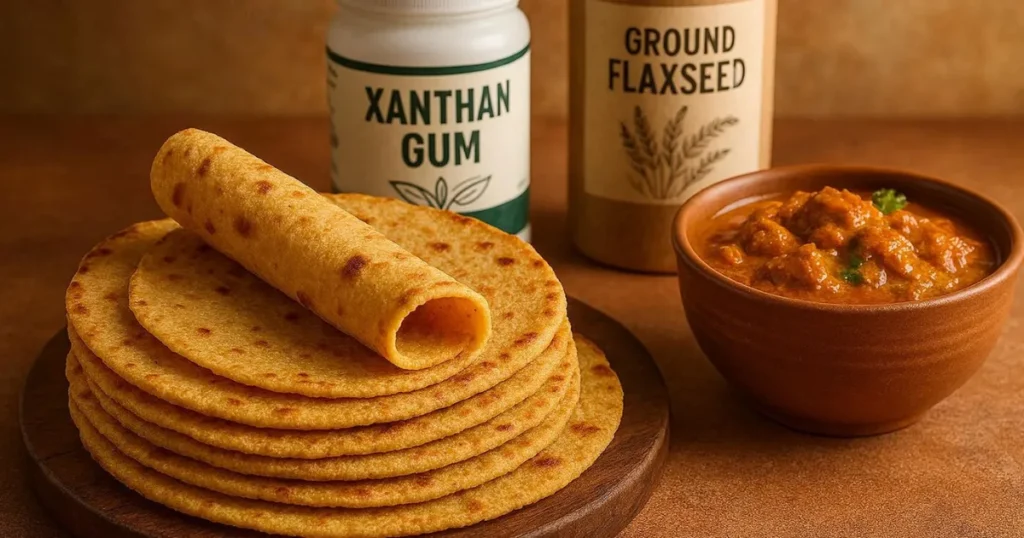
Can you make delicious keto roti without psyllium husk? Absolutely. While psyllium is popular in low-carb baking, many people seek alternatives due to allergies, texture preferences, or simple unavailability. Creating keto roti without psyllium husk requires understanding alternative binders that replicate psyllium’s binding properties – xanthan gum, flaxseed, chia seeds, or protein powder can all work effectively.
In this comprehensive guide, I’ll share proven recipes for making soft, pliable keto roti without psyllium husk that actually holds together for wrapping and rolling. You’ll discover multiple binding alternatives, techniques for achieving authentic texture, troubleshooting tips when things go wrong, and an honest comparison of psyllium-free versus psyllium-based options. Whether you’re avoiding psyllium by necessity or preference, these recipes deliver satisfying low-carb flatbreads that work perfectly for wraps, sides, or traditional Pakistani and Indian meals.
Why Make Keto Roti Without Psyllium Husk?
Before diving into recipes, let’s understand why someone would specifically want keto roti without psyllium husk.
Psyllium Allergies and Sensitivities
Some people experience allergic reactions to psyllium, ranging from mild digestive discomfort to severe respiratory issues. Psyllium allergy symptoms include:
- Bloating and gas
- Abdominal cramping
- Skin rashes or hives
- Breathing difficulties (rare but serious).
For these individuals, making keto roti without psyllium husk isn’t a preference – it’s a necessity.
Texture Preferences.
Psyllium creates a distinctive gel-like texture that some find unpleasant. The slightly slick mouthfeel doesn’t appeal to everyone, particularly those accustomed to traditional wheat-based rotis.
People who dislike psyllium’s texture often prefer the cleaner taste and simpler mouthfeel of keto roti without psyllium husk made with alternative binders.
Availability Issues.
In many regions, high-quality psyllium husk remains difficult to source. While premium Pakistani psyllium like Malik Psyllium offers superior quality, not everyone has access to reliable suppliers.
Creating keto roti without psyllium husk using more commonly available ingredients solves this accessibility problem.
Cost Considerations.
Premium psyllium can be expensive, particularly in smaller quantities. Alternative binders like flaxseed or xanthan gum sometimes cost less, making keto roti without psyllium husk more budget-friendly.
Digestive Concerns.
While psyllium benefits most people’s digestion, it can worsen symptoms for those with certain conditions like SIBO (Small Intestinal Bacterial Overgrowth) or specific IBS subtypes. These individuals need psyllium-free alternatives.
Understanding Binding Alternatives to Psyllium.
To create successful keto roti without psyllium husk, you need effective binders. Let’s examine the best alternatives:
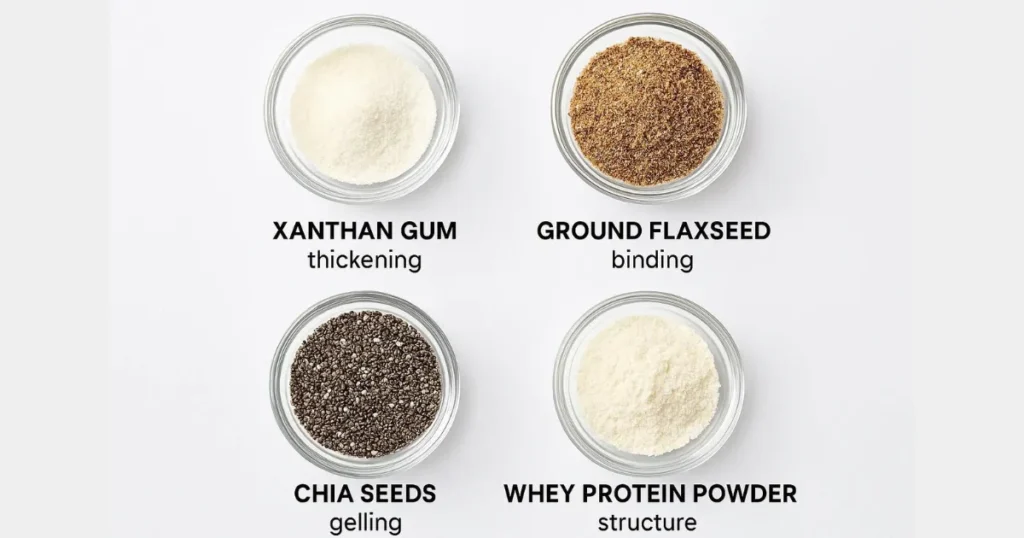
Xanthan Gum.
How it works: Xanthan gum is a polysaccharide produced by bacterial fermentation. It creates viscosity and binding without adding carbs or calories.
Advantages:
- Extremely effective binding with tiny amounts (1/2 -1 teaspoon per recipe).
- No flavor impact.
- Creates flexible, pliable texture.
- Widely available in grocery stores.
- Very low net carbs.
Disadvantages:
- Can cause digestive issues if overused.
- Creates slightly gummy texture in excess.
- More expensive per use than some alternatives.
Best for: Keto roti without psyllium husk when you want strongest binding with minimal ingredients.
Ground Flaxseed (Flax Meal).
How it works: Ground flaxseed contains mucilage that becomes gel-like when mixed with water, similar to psyllium but milder.
Advantages:
- Adds omega-3 fatty acids.
- Nutty flavor many enjoy.
- Provides additional fiber.
- Generally well-tolerated.
- Relatively inexpensive.
Disadvantages:
- Creates denser, heavier texture than psyllium.
- Brown color affects appearance.
- Needs more quantity than xanthan gum.
- Can taste slightly bitter if overused.
Best for: Keto roti without psyllium husk when you want nutritional benefits alongside binding.
Chia Seeds.
How it works: Chia seeds form gel coating when hydrated, creating binding properties throughout dough.
Advantages:
- High in omega-3s and fiber.
- Nutritional powerhouse.
- Creates interesting texture.
- Easy to find in most stores.
Disadvantages:
- Visible seeds create speckled appearance.
- Requires grinding for smooth texture.
- Needs substantial hydration time.
- More carbs than xanthan gum.
Best for: Keto roti without psyllium husk when appearance isn’t critical and you want nutritional density.
Protein Powder.
How it works: Whey or plant-based protein powder absorbs liquid and creates structure through protein coagulation during cooking.
Advantages:
- Increases protein content significantly.
- Creates firm, substantial texture.
- No special “gum” or fiber needed.
- Generally tasteless (unflavored varieties).
Disadvantages:
- Can create dry, tough texture if overused.
- Not as flexible as other binders.
- May add unwanted sweetness (flavored varieties).
- Higher cost per use.
Best for: High-protein keto roti without psyllium husk for athletes or those prioritizing protein intake.
Basic Keto Roti without Psyllium Husk Recipe (Xanthan Gum Version).
This is my most reliable recipe for keto roti without psyllium husk using xanthan gum.
Ingredients.
Dry ingredients:
- 1 cup (100g) almond flour.
- 1/2 cup (60g) coconut flour.
- 1 teaspoon xanthan gum.
- 1/2 teaspoon salt.
- 1/2 teaspoon baking powder (optional, for puffier texture).
Wet ingredients:
- 2 large eggs.
- 2 tablespoons melted ghee or coconut oil.
- 3-4 tablespoons warm water (add gradually).
Instructions.
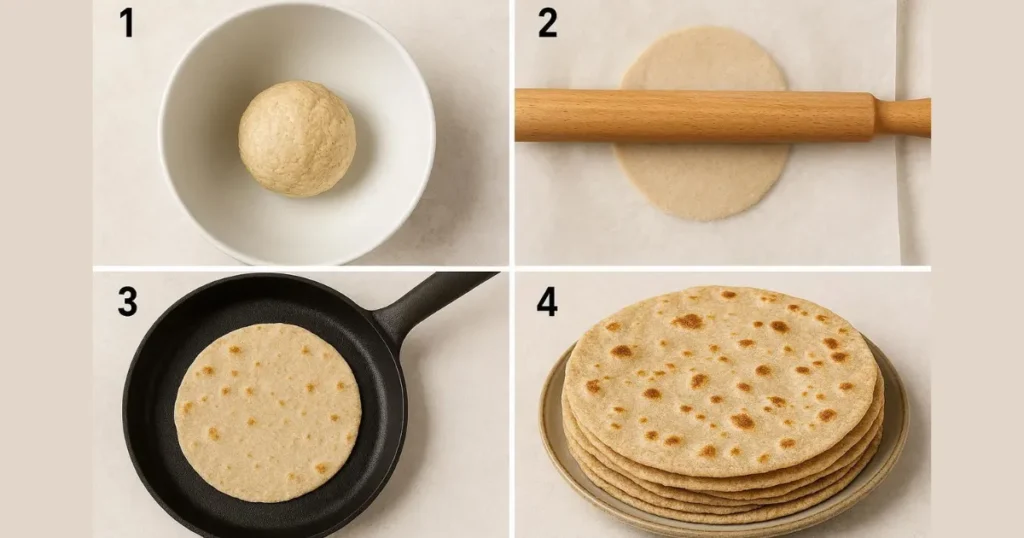
Step 1: Mix dry ingredients.
Whisk almond flour, coconut flour, xanthan gum, salt, and baking powder in a bowl. Ensure no clumps remain.
Step 2: Add wet ingredients.
Create a well in the center. Add eggs and melted ghee. Mix with a fork until crumbly.
Step 3: Add water gradually.
Add water one tablespoon at a time, mixing thoroughly. The dough should come together without being sticky. You may not need all the water.
Step 4: Knead briefly.
Knead dough for 1-2 minutes until smooth and pliable. It should feel like playdough – not sticky, not crumbly.
Step 5: Rest the dough.
Cover and rest 10-15 minutes. This allows coconut flour to fully absorb moisture.
Step 6: Divide and roll.
Divide dough into 6 equal portions. Roll each between parchment paper until very thin (about 1/8 inch thick).
Step 7: Cook.
Heat a dry skillet or tawa over medium-high heat. Cook each roti 45-60 seconds per side until brown spots appear and edges lift. Press gently with spatula for even cooking.
Step 8: Keep warm.
Stack cooked rotis and cover with kitchen towel to keep soft and pliable.
Nutritional Information (Per Roti).
- Net carbs: 3-4g.
- Total carbs: 8g.
- Fiber: 4-5g.
- Protein: 5g.
- Fat: 10g.
- Calories: 130.
This keto roti without psyllium husk delivers authentic texture with minimal carbs.
Flaxseed-Based Keto Roti without Psyllium Husk.
For those preferring flaxseed’s nutritional profile, this recipe works beautifully.
Ingredients.
- 1 cup (100g) almond flour.
- 1/2 cup (50g) ground flaxseed.
- 1/2 teaspoon salt.
- 1 teaspoon baking powder.
- 2 large eggs.
- 2 tablespoons olive oil or melted butter.
- 2-3 tablespoons warm water.
Instructions.
Follow the same basic method as the xanthan gum version, with these adjustments:
Key differences:
- Let dough rest 15-20 minutes (flax needs more hydration time).
- Dough will be darker brown due to flaxseed.
- Roll slightly thicker (flax creates more fragile texture when too thin).
- Cook over medium heat (not medium-high) to prevent burning.
Texture notes:
Flaxseed-based keto roti without psyllium husk has nuttier flavor and heartier texture. Less flexible than xanthan gum version but more nutritious.
Nutritional Information (Per Roti).
- Net carbs: 2-3g.
- Protein: 6g.
- Fat: 12g.
- Omega-3s: Excellent source.
- Calories: 145.
Protein Powder Keto Roti without Psyllium Husk.
This high-protein version appeals to athletes and those maximizing protein intake.
Ingredients.
- 3/4 cup (75g) almond flour.
- 1/4 cup (30g) unflavored whey protein isolate.
- 1/2 cup (60g) coconut flour.
- 1/2 teaspoon salt.
- 3 large eggs.
- 3 tablespoons melted butter.
- 4-5 tablespoons warm water.
Instructions.
Preparation notes:
- Protein powder absorbs substantial moisture – expect to use more water.
- Mix wet ingredients very thoroughly before adding to dry.
- Dough should be soft but not sticky.
- Roll between well-floured parchment (use extra almond flour).
Cooking tips:
- Cook over medium heat only.
- These rotis firm up significantly as they cool.
- Don’t overcook or they become tough and chewy.
Nutritional Information (Per Roti).
- Net carbs: 3g.
- Protein: 10g.
- Fat: 9g.
- Calories: 140.
Highest protein content of all keto roti without psyllium husk recipes shown here.
Tips for Perfect Texture in Keto Roti without Psyllium Husk.
Achieving authentic roti texture without psyllium requires specific techniques:
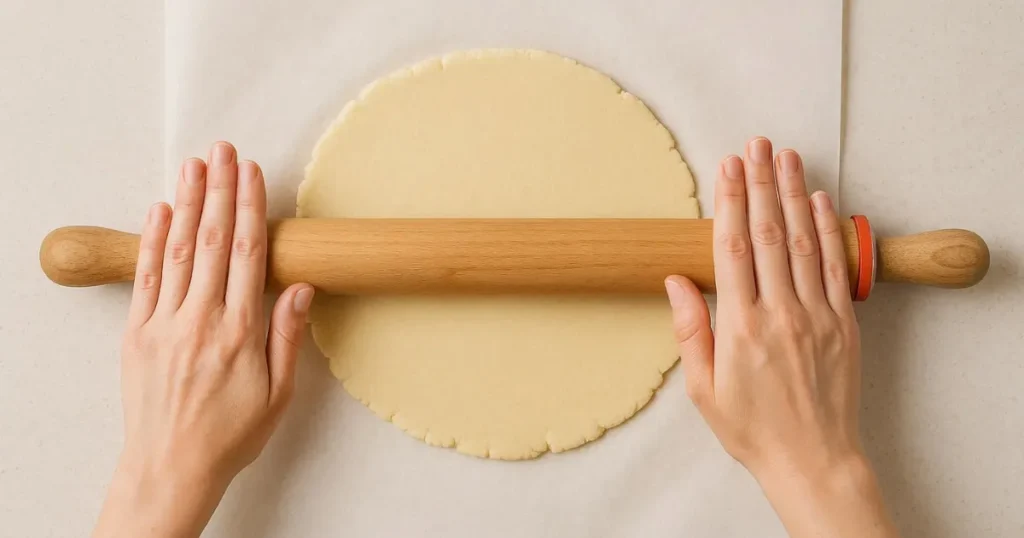
Rolling Techniques.
Use parchment paper:
Roll dough between two sheets of parchment paper for easier handling and more uniform thickness.
Apply even pressure:
Roll from center outward in all directions, rotating dough frequently for circular shape.
Go thin but not too thin:
For 1/8 inch thickness. Thinner than this causes tearing; thicker creates dense, heavy rotis.
Flour your surface:
Dust parchment with almond flour to prevent sticking, especially important for keto roti without psyllium husk since alternative binders can be stickier.
Cooking Methods.
Proper heat level:
Medium to medium-high heat is crucial. Too low and rotis won’t develop characteristic brown spots; too high and they burn before cooking through.
Dry skillet essential:
Never add oil or butter to cooking surface. Dry-cooking creates authentic texture and appearance.
Press while cooking:
Gently press with spatula or clean kitchen towel while cooking. This encourages puffing and even cooking.
Stack and cover:
Keep cooked rotis stacked under a kitchen towel. Steam keeps them soft and pliable instead of crispy.
Dough Consistency Mastery.
The right feel:
Perfect keto roti without psyllium husk dough should feel like soft playdough – smooth, pliable, not sticky or crumbly.
Adjusting moisture:
Add water by the teaspoon if too dry; add almond flour by the tablespoon if too sticky.
Resting importance:
Never skip the resting period. Coconut flour and alternative binders need time to fully hydrate, preventing crumbly texture.
Troubleshooting Common Issues.

Problem: Rotis Breaking or Tearing.
Causes:
- Insufficient binder (xanthan gum, flax, etc).
- Rolled too thin.
- Not enough moisture in dough.
- Overcooked.
Solutions:
- Increase xanthan gum by 1/4 teaspoon.
- Roll slightly thicker.
- Add 1-2 tablespoons more water to dough.
- Reduce cooking time by 15-20 seconds per side.
Problem: Too Dense or Heavy.
Causes:
- Too much coconut flour.
- Not enough leavening.
- Overworked dough.
Solutions:
- Reduce coconut flour by 2 tablespoons, replace with almond flour.
- Add 1/2 teaspoon baking powder.
- Knead minimally – just until dough comes together.
Problem: Won’t Roll Out Smoothly.
Causes:
- Dough too dry.
- Insufficient resting time.
- Binder not fully incorporated.
Solutions:
- Add water one teaspoon at a time until workable.
- Rest dough full 15 minutes before rolling.
- Mix dry ingredients very thoroughly before adding wet.
Problem: Rotis Too Crispy, Not Pliable.
Causes:
- Rolled too thin.
- Overcooked.
- Not kept covered after cooking.
Solutions:
- Aim for 1/8 inch minimum thickness.
- Cook 45-60 seconds per side maximum.
- Immediately stack and cover cooked rotis.
Flavor Variations for Keto Roti without Psyllium Husk.
Garlic Cilantro Roti.
Add to base recipe:
- 2 teaspoons garlic powder (or 3 cloves fresh garlic, minced).
- 3 tablespoons fresh cilantro, finely chopped.
- 1/2 teaspoon cumin seeds (optional).
Perfect for curries and asian-style meals.
Net carbs: 3-4g per roti.
Spiced Herb Roti.
Add to base recipe:
- 1 teaspoon dried oregano.
- 1 teaspoon dried basil.
- 1/2 teaspoon onion powder.
- 1/2 teaspoon black pepper.
Excellent for Mediterranean wraps or Italian-style dishes.
Net carbs: 3-4g per roti.
Turmeric Ginger Roti.
Add to base recipe:
- 1 teaspoon turmeric powder.
- 1/2 teaspoon ground ginger.
- 1/4 teaspoon black pepper (enhances turmeric absorption).
Anti-inflammatory benefits plus beautiful golden color.
Net carbs: 3-4g per roti.
Cheese Roti.
Add to base recipe:
- 1/2 cup finely grated parmesan or cheddar.
- 1/2 teaspoon garlic powder.
- Pinch of chili flakes.
Rich, savory option perfect for wraps or quesadillas.
Net carbs: 3.5-4.5 g per roti.
Comparing Keto Roti without Psyllium Husk to Psyllium-Based Versions.
Let me provide honest comparison based on years of experience.
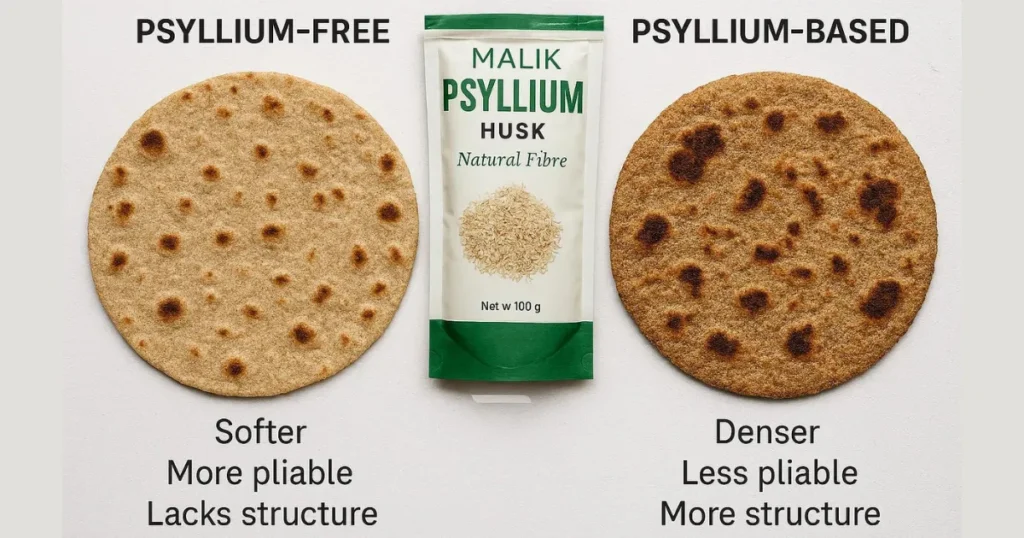
Texture Comparison.
Psyllium-based roti:
- More elastic and stretchy.
- Better for wrapping and rolling.
- Slightly slick, gel-like feel.
- Holds together better when filled.
Keto roti without psyllium husk:
- Cleaner, simpler mouthfeel.
- Less stretchy, more like traditional wheat roti.
- Can be slightly more fragile.
- Better “grain-like” texture for some palates.
Taste Comparison.
Psyllium-based roti:
- Very neutral, almost tasteless.
- No fiber flavor at all.
- Excellent for absorbing other flavors.
Keto roti without psyllium husk:
- Depends on binder used.
- Flaxseed: Nutty, slightly earthy.
- Xanthan gum: Completely neutral.
- Protein powder: Slightly sweet if flavored.
Nutritional Comparison.
| Factor | Psyllium Version | Without Psyllium |
| Net Carbs | 2-3g | 3-4g |
| Fiber | 5-6g | 3-5g |
| Protein | 4-5g | 5-10g (varies) |
| Omega-3s | None | High (if using flax) |
| Flexibility | Superior | Good |
Ease of Preparation.
Psyllium-based roti:
- Must work very quickly (psyllium thickens fast).
- Immediate rolling required.
- Less forgiving of errors.
- Requires understanding psyllium behavior.
Keto roti without psyllium husk:
- More forgiving with timing.
- Dough remains workable longer.
- Easier for beginners.
- Simpler to troubleshoot.
Cost Comparison.
Psyllium-based roti:
- Higher cost if using premium psyllium.
- Long shelf life offsets cost.
- Small quantities needed per recipe.
Keto roti without psyllium husk:
- Variable cost depending on binder.
- Xanthan gum: Moderate cost, long-lasting.
- Flaxseed: Low cost, shorter shelf life.
- Protein powder: High cost but adds protein value.
Why Some Prefer Psyllium Despite Seeking Alternatives.
Interestingly, many people who start searching for keto roti without psyllium husk eventually return to psyllium-based recipes. Here’s why:
Superior Binding Power.
Psyllium’s binding strength exceeds all alternatives. It creates rotis that:
- Wrap and fold without breaking.
- Hold wet fillings without falling apart.
- Stay pliable for hours after cooking.
- Reheat beautifully.
Zero Net Carbs.
Psyllium husk contributes 0g net carbs compared to 1-2g additional net carbs from alternative binders. For strict keto, this matters.
Digestive Benefits.
High-quality Pakistani psyllium like Malik Psyllium provides exceptional fiber that supports gut health. Alternative binders don’t match this benefit.
Consistency.
Psyllium produces reliable, predictable results batch after batch. Alternative binders can be more variable in texture and behavior.
My recommendation: If you’re avoiding psyllium due to preference rather than allergy, experiment with premium-quality psyllium first. Many people who dislike low-grade psyllium’s texture find high-purity Pakistani psyllium completely different – and prefer it to alternatives.
Using Keto Roti without Psyllium Husk in Meals.
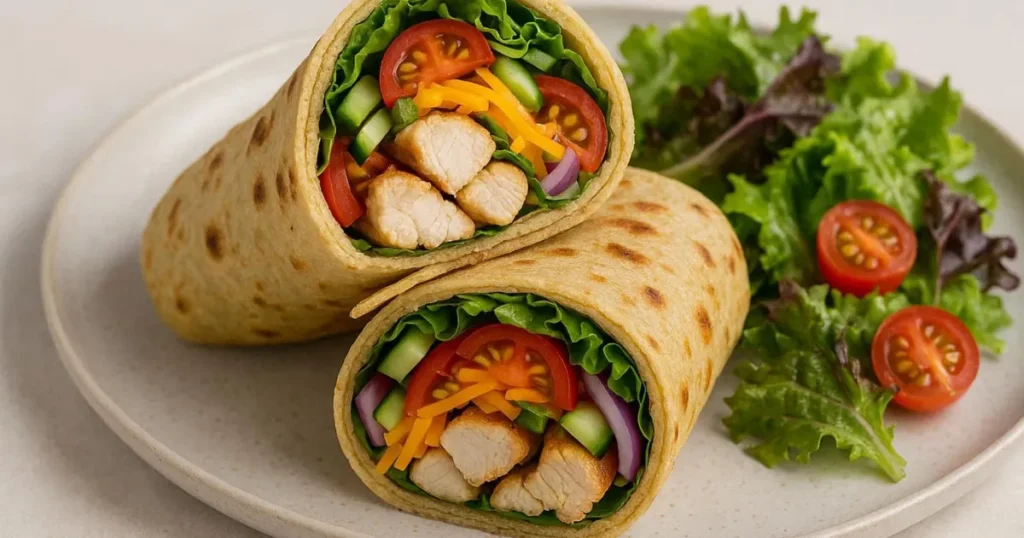
Wrap Applications.
These rotis work excellently for:
- Keto shawarma or gyros.
- Fajita wraps with grilled meat and peppers.
- Breakfast wraps with eggs and cheese.
- Lunch wraps with deli meat and vegetables.
- Pakistani and Indian-style kathi rolls.
Tip: Warm rotis slightly before filling for maximum flexibility.
Traditional Pakistani and Indian Meals.
Serve keto roti without psyllium husk alongside:
- Curries (chicken, lamb, paneer).
- Dal (lentil dishes – watch portions for carbs).
- Tandoori meats.
- Vegetable sabzi.
- Raita and chutneys.
International Applications.
Mexican cuisine:
- Soft tacos.
- Quesadillas (add cheese between two rotis).
- Burritos (smaller portions due to carbs).
Mediterranean cuisine:
- Gyros.
- Souvlaki wraps.
- Falafel wraps (use low-carb falafel).
Middle Eastern cuisine:
- Shawarma.
- Kebab wraps.
- Served with hummus (small portions).
Storage and Reheating.
Room Temperature Storage.
Duration:
2-3 days maximum.
Method:
- Cool completely before storing.
- Stack with parchment paper between each roti.
- Place in airtight container or ziplock bag.
- Keep in cool, dry place.
Keto roti without psyllium husk can dry out faster than psyllium versions, so consume within 2-3 days for best texture.
Refrigerator Storage.
Duration:
5-7 days.
Method:
- Stack with parchment paper separators.
- Store in airtight container.
- Let come to room temperature before eating, or reheat.
Freezer Storage.
Duration:
2-3 months.
Method:
- Place parchment paper between each roti.
- Wrap stack tightly in plastic wrap.
- Place in freezer bag, removing air.
- Label with date and recipe type.
Thawing:
- Room temperature: 20-30 minutes.
- Microwave: 15-20 seconds from frozen.
- Skillet: Reheat directly from frozen, 30 seconds per side.
Reheating Methods.
Skillet method (best):
Heat dry skillet over medium heat. Warm roti 15-20 seconds per side. This method restores softness and pliability.
Microwave method (fastest):
Wrap roti in damp paper towel. Microwave 10-15 seconds. Steam softens the roti.
Oven method (for multiple rotis):
Wrap stack in foil. Heat at 300 ° F for 10 minutes. Keeps rotis warm for serving.
When Psyllium-Free Isn’t Enough: Other Considerations.
Some people avoiding psyllium also need to avoid other common keto ingredients.
Nut-Free Keto Roti.
For nut allergies, replace almond flour with:
- Sunflower seed flour (most similar to almond flour).
- Pumpkin seed flour (slightly darker, earthier).
- Sesame seed flour (strong flavor, use sparingly).
Egg-Free Keto Roti.
Much more challenging without psyllium. Options:
- Flax eggs (1 tablespoon ground flax + 3 tablespoons water per egg).
- Chia eggs (same ratio as flax eggs).
- Commercial egg replacers (check net carbs carefully).
Results won’t match egg-based versions but can work adequately.
Dairy-Free Keto Roti.
Simple substitutions:
- Replace ghee with coconut oil.
- Replace butter with olive oil or avocado oil.
- Omit cheese from variations.
Most keto roti without psyllium husk recipes adapt easily to dairy-free requirements.
Can you make keto roti without psyllium husk that’s flexible?
Yes, using xanthan gum (1 teaspoon per recipe) creates flexible, pliable keto roti without psyllium husk. Flaxseed also works but produces slightly less flexible texture.
What’s the best substitute for psyllium husk in keto roti?
Xanthan gum is the best substitute, requiring only 1/2 -1 teaspoon per recipe. It creates similar binding and flexibility without psyllium’s distinctive texture.
How many carbs in keto roti without psyllium husk?
3-4g net carbs per roti using the recipes provided. Exact count varies based on specific ingredients and binder choice – xanthan gum versions have fewest carbs.
Why does my keto roti without psyllium husk break easily?
Insufficient binder, rolling too thin, or not enough moisture. Add 1/4 teaspoon more xanthan gum, roll slightly thicker, or add 1-2 tablespoons more water.
Can I use flaxseed instead of psyllium for keto roti?
Yes, ground flaxseed works well in keto roti without psyllium husk. Use 1/2 cup per recipe, expect nuttier flavor and denser texture than psyllium versions.
Is keto roti without psyllium husk healthier?
Not necessarily. Psyllium provides exceptional fiber and digestive benefits. Psyllium-free versions using flaxseed offer omega-3s but less fiber overall. Choose based on your needs.
How do I store keto roti without psyllium husk?
Room temperature for 2-3 days in airtight container, refrigerated for 5-7 days, or frozen for 2-3 months. Place parchment between rotis to prevent sticking.
Can I make keto roti without psyllium husk and without xanthan gum?
Yes, use ground flaxseed ( 1/2 cup), chia seeds (ground, 1/3 cup), or protein powder ( 1/4 cup) as alternative binders. Results vary – flaxseed works best of these three.
Conclusion.
Creating delicious keto roti without psyllium husk is absolutely achievable using alternative binders like xanthan gum, flaxseed, chia seeds, or protein powder. Each binder brings unique advantages – xanthan gum offers strongest binding with minimal quantity, flaxseed provides omega-3s and nutty flavor, chia seeds add nutritional density, and protein powder boosts protein content significantly. While psyllium-based rotis offer superior elasticity and zero net carbs, these psyllium-free alternatives deliver satisfying low-carb flatbreads perfect for wraps, traditional Pakistani and Indian meals, and international cuisine.
The key to success with keto roti without psyllium husk lies in mastering dough consistency, proper rolling technique, and correct cooking temperature. Start with the xanthan gum version for most reliable results, then experiment with flaxseed or protein powder variations based on your nutritional priorities and taste preferences. Remember to rest your dough adequately, roll to consistent 1/8-inch thickness, cook over proper medium-high heat, and keep finished rotis covered to maintain softness.
Whether you’re avoiding psyllium due to allergies, texture preferences, or simple curiosity about alternatives, these recipes deliver authentic-tasting low-carb flatbreads that work beautifully for sandwiches, wraps, and traditional meals. That said, if you’re simply experimenting rather than dealing with psyllium allergy, I encourage you to try premium-quality Pakistani psyllium from sources like Malik Psyllium – many people who dislike low-grade psyllium find high-purity versions completely different and actually prefer them to alternatives. Regardless of your choice, these recipes ensure you never have to sacrifice authentic flatbread texture on your keto journey.

Isabgol Ke Fayde – Psyllium Husk Ke Poori Science-Based Rahnumayi – 2026
Isabgol ke fayde jaanna aaj ke daur mein zyada zaroori
Isabgol Benefits in Hindi | Psyllium Husk Ke Fayde, Sahi Upyog Aur Savdhaniyan – 2026
Agar aap isabgol benefits in hindi mein samajhna chahte hain,